
Jason Shawn Alexander
Author of Hellboy: The Crooked Man and Others
About the Author
Image credit: Jason Shawn Alexander by Wikipedia user Rosepuntil
Series
Works by Jason Shawn Alexander
Associated Works
Alice's Adventures in Wonderland [adapted - Dalmatian Press] (2001) — Illustrator — 85 copies, 2 reviews
Femme Magnifique: 50 Magnificent Women who Changed the World (2018) — Contributor — 62 copies, 2 reviews
Explicitus est liber : volume 1 — Artist — 2 copies
Tagged
Common Knowledge
- Birthdate
- 1975-09-17
- Gender
- male
- Occupations
- painter
illustrator
draftsman - Awards and honors
- Society of Illustrators-West Silver Medal
- Nationality
- USA
- Birthplace
- Portland, Tennessee, USA
- Places of residence
- Portland, Tennessee, USA
Hollywood, California, USA - Associated Place (for map)
- USA
Members
Reviews
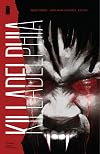
I didn't know what to expect when I started reading Killadelphia, Rodney Barnes and Jason Shawn Alexander's new comic. I had been a fan of Barnes' work on the second season of American Gods so I was eager to take a dive into some of his other work. Killadelphia looked really interesting because I love a good vampire story and it seemed like Barnes had a unique take on the genre - and boy did he ever. Killadelphia might just be the best comic I've read all year. It's this perfect blend of show more absurd-yet-scary horror and gritty, grounded, realistic drama. In many ways, it feels old fashioned and reminiscent of film noir, but in other ways it feels startlingly modern and poignant.
At first glance, Killadelphia might seem like a pretty standard mystery. In the wake of his father's death, Jimmy returns to his hometown and ends up trying to solve one of his father's unsolved cases. Of course, that investigation leads him down a slippery slope that ends in vampires. As often happens in stories of this ilk, Barnes uses this simple setup as a way of easing the reader into the story. He starts us with the story of Jimmy's fractured relationship with his father and we immediately understand why he'd be compelled to continue one of his dad's old cases. And because we understand that, we're invested in Jimmy on a personal level and are completely willing to follow him into these dark and weird corners. It's really effective and it's nice to have moments to get to know the main characters of something like this before you really put them through the ringer. And it's a rare thing to see in most mainstream comics, so I'm really glad Barnes spent the time to establish the world of Killadelphia and ground us in character drama before thrusting us into the supernatural.
But, of course, everything hits the fan pretty quickly and the comic gets really weird really fast - in the best way possible. In my opinion, all of the best vampire stories have something silly about them. I mean there's just something super melodramatic about vampires; they're dark, brooding, and kind of ridiculous yet somehow still scary. Killadelphia definitely adheres to this trend. I mean, the villain is literally John Adams, who had been a vampire for over two-hundred years, and that's a really silly idea. But it also really works. It's interesting seeing how this American founding father got from where he was in the early 1800s to this melodramatic villain trying to take over the world (including some genuinely funny gags at Hamilton - both the person and the musical). Equally interesting is seeing Adams as the leader of a cult trying to change the fabric of America - by basically upholding the status quo and just changing who's in charge. If that's not an indictment of certain aspects of American politics, I don't know what is. And, somehow, Barnes manages to make all of this feel truly frightening. There's a genuine danger being posed by Adams and you can really feel how important it is for him to be defeated. It's a remarkable feat and it's so much fun to read, even if it is a little silly.
However, once you get past the inherent absurdism of seeing a founding father as a vampire, it's easy to pick up on what Barnes is actually doing with this comic. While revolving around vampires, Killadelphia is less a story about them and more a story about humanity's past and its future. The idea of fractured relationships (particularly between parents and their children) is one frequently touched upon. Jimmy and has father have this palpably real relationship. There is love between them but there is also bitterness. It feels real in an almost painful way. It's one of those deeply relatable things that instantly connects you to a story. Some of my favorite scenes were between the two of them, especially towards the latter half of the comic. I'll always wish comics had more time for moments like these, but I'm so glad Barnes found a way to include them as they're honestly the heart and soul of the comic.
Also important is the idea of freedom. What makes a person free? Is it freedom from poverty, freedom from oppression, freedom to live one's own life? Has American ever been free for everyone or are do those in power always try to control those who lack power? All of these questions give Killadelphia a kind of thematic heft that's often missing from other supernatural fare and these ideas are explored thoroughly in these issues, particularly in scenes between Adams and some of the vampires he commands. While I initially came to the comic for the vampires, I stayed for these meaty ideas because it's in these moments that the comic feels grounded and relatable. None of us can relate to what it's like to be a vampire, but all of us can relate to the very real problems Barnes explores throughout the comic. At the end of the day, Killadelphia is this delightful mix of melodramatic horror and gritty character drama and I loved every page of it.
Every good comic is a combination of great writing and great artwork and Killadelphia is no exception. While Barnes' script is already pretty stellar, Alexander's artwork breathes life into Barnes' world. While the script luxuriates in some of the more fantastic elements, the artwork really leans into the gritty reality of the story. Alexander depicts Philadelphia as this dark, gritty city - almost like something out of a film noir. The whole thing just drips with atmosphere. It's a dark comic, visually and thematically, and Alexander does a lot of work with light and shadows - which feels wholly appropriate given the whole vampire thing. Speaking of the vampires, Alexander walks this really interesting line between depicting them as monsters and depicting them as humans. There are some vampires who still have their humanity, and he takes careful steps to ensure that's depicted, but there are other times where he leans into the more traditionally monstrous side of things. Overall, it's a really beautiful comic and Alexander's artwork elevates the script without detracting or distracting from the story being told. It's some good stuff.
All in all, Killadelphia is a compelling read from start to finish. It's a brilliant mixture of tones, combining traditional vampire melodrama with the grittier tones of familial drama. It aims a magnifying glass both at America's history and at its present, examining our flaws and our potential. It's one of those comics that entertains you while also making you think. The artwork is gorgeous and moody and adds a lot of atmosphere to the story without distracting from what's going on. At the end of the day, I cannot recommend Killadelphia enough. It's one of those comics that everyone will be talking about - and rightfully so. Now's the best time to hop on the train, because a new arc is about to start and you'll want to be there for it. show less
At first glance, Killadelphia might seem like a pretty standard mystery. In the wake of his father's death, Jimmy returns to his hometown and ends up trying to solve one of his father's unsolved cases. Of course, that investigation leads him down a slippery slope that ends in vampires. As often happens in stories of this ilk, Barnes uses this simple setup as a way of easing the reader into the story. He starts us with the story of Jimmy's fractured relationship with his father and we immediately understand why he'd be compelled to continue one of his dad's old cases. And because we understand that, we're invested in Jimmy on a personal level and are completely willing to follow him into these dark and weird corners. It's really effective and it's nice to have moments to get to know the main characters of something like this before you really put them through the ringer. And it's a rare thing to see in most mainstream comics, so I'm really glad Barnes spent the time to establish the world of Killadelphia and ground us in character drama before thrusting us into the supernatural.
But, of course, everything hits the fan pretty quickly and the comic gets really weird really fast - in the best way possible. In my opinion, all of the best vampire stories have something silly about them. I mean there's just something super melodramatic about vampires; they're dark, brooding, and kind of ridiculous yet somehow still scary. Killadelphia definitely adheres to this trend. I mean, the villain is literally John Adams, who had been a vampire for over two-hundred years, and that's a really silly idea. But it also really works. It's interesting seeing how this American founding father got from where he was in the early 1800s to this melodramatic villain trying to take over the world (including some genuinely funny gags at Hamilton - both the person and the musical). Equally interesting is seeing Adams as the leader of a cult trying to change the fabric of America - by basically upholding the status quo and just changing who's in charge. If that's not an indictment of certain aspects of American politics, I don't know what is. And, somehow, Barnes manages to make all of this feel truly frightening. There's a genuine danger being posed by Adams and you can really feel how important it is for him to be defeated. It's a remarkable feat and it's so much fun to read, even if it is a little silly.
However, once you get past the inherent absurdism of seeing a founding father as a vampire, it's easy to pick up on what Barnes is actually doing with this comic. While revolving around vampires, Killadelphia is less a story about them and more a story about humanity's past and its future. The idea of fractured relationships (particularly between parents and their children) is one frequently touched upon. Jimmy and has father have this palpably real relationship. There is love between them but there is also bitterness. It feels real in an almost painful way. It's one of those deeply relatable things that instantly connects you to a story. Some of my favorite scenes were between the two of them, especially towards the latter half of the comic. I'll always wish comics had more time for moments like these, but I'm so glad Barnes found a way to include them as they're honestly the heart and soul of the comic.
Also important is the idea of freedom. What makes a person free? Is it freedom from poverty, freedom from oppression, freedom to live one's own life? Has American ever been free for everyone or are do those in power always try to control those who lack power? All of these questions give Killadelphia a kind of thematic heft that's often missing from other supernatural fare and these ideas are explored thoroughly in these issues, particularly in scenes between Adams and some of the vampires he commands. While I initially came to the comic for the vampires, I stayed for these meaty ideas because it's in these moments that the comic feels grounded and relatable. None of us can relate to what it's like to be a vampire, but all of us can relate to the very real problems Barnes explores throughout the comic. At the end of the day, Killadelphia is this delightful mix of melodramatic horror and gritty character drama and I loved every page of it.
Every good comic is a combination of great writing and great artwork and Killadelphia is no exception. While Barnes' script is already pretty stellar, Alexander's artwork breathes life into Barnes' world. While the script luxuriates in some of the more fantastic elements, the artwork really leans into the gritty reality of the story. Alexander depicts Philadelphia as this dark, gritty city - almost like something out of a film noir. The whole thing just drips with atmosphere. It's a dark comic, visually and thematically, and Alexander does a lot of work with light and shadows - which feels wholly appropriate given the whole vampire thing. Speaking of the vampires, Alexander walks this really interesting line between depicting them as monsters and depicting them as humans. There are some vampires who still have their humanity, and he takes careful steps to ensure that's depicted, but there are other times where he leans into the more traditionally monstrous side of things. Overall, it's a really beautiful comic and Alexander's artwork elevates the script without detracting or distracting from the story being told. It's some good stuff.
All in all, Killadelphia is a compelling read from start to finish. It's a brilliant mixture of tones, combining traditional vampire melodrama with the grittier tones of familial drama. It aims a magnifying glass both at America's history and at its present, examining our flaws and our potential. It's one of those comics that entertains you while also making you think. The artwork is gorgeous and moody and adds a lot of atmosphere to the story without distracting from what's going on. At the end of the day, I cannot recommend Killadelphia enough. It's one of those comics that everyone will be talking about - and rightfully so. Now's the best time to hop on the train, because a new arc is about to start and you'll want to be there for it. show less
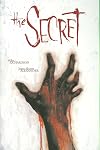
Another random library read that I wouldn't have encountered otherwise.
Mike Richardson's writing is decent and John Shawn Alexander's grim ink and watercolour style art is really nice and effective, but being a graphic novel can't do anything to hide the fact that this is just another trash 'trauma horror' movie in the vein of Jeeper's Creepers, albeit without the supernatural elements.
A prank call to the wrong person ends up in kidnap and abuse of the fridge girlfriend birthday girl of the show more protagonist who is a troubled kid doing his best and trying to save the day.
Generic plot with a generic villain and a cheap morally grey ending with the most obvious final twist.
Everything about this other than some of the dialogue and Alexander's art are pointless, male hero, fridged girlfriend tropes that have been done to death and weren't spellbinding begin with.
I'm being really harsh again, but I thought this might actually be something. Whereas, it is just tropes and the trauma of women for tension. Fuck that noise. show less
Mike Richardson's writing is decent and John Shawn Alexander's grim ink and watercolour style art is really nice and effective, but being a graphic novel can't do anything to hide the fact that this is just another trash 'trauma horror' movie in the vein of Jeeper's Creepers, albeit without the supernatural elements.
A prank call to the wrong person ends up in kidnap and abuse of the fridge girlfriend birthday girl of the show more protagonist who is a troubled kid doing his best and trying to save the day.
Generic plot with a generic villain and a cheap morally grey ending with the most obvious final twist.
Everything about this other than some of the dialogue and Alexander's art are pointless, male hero, fridged girlfriend tropes that have been done to death and weren't spellbinding begin with.
I'm being really harsh again, but I thought this might actually be something. Whereas, it is just tropes and the trauma of women for tension. Fuck that noise. show less
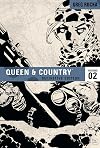
This series reads like the gritty spy television series the author wished he could watch. It has the excitement and the boredom of day to day spying. There are dangerous foreign missions of the minders mixed with office politics aplenty, spiced with particularly British high-level bastardry. In this collection several emotional shocks hit the team, one after the other, jolting them out of their torpor. The different artists for each story (as with the first volume) was a bit jarring though.

The first arc of Rodney Barnes and Jason Shawn Alexander’s Killadelphia ranked among my favorite comics of 2020. It was a breathtaking, gorgeous, layered story that blended absurd-yet-scary horror with gritty, grounded character drama. So, naturally, I was pretty excited to see where the comic would go from there. That first volume ended in a way that opened numerous narrative doors for future stories. And that’s a pretty exciting place for a second arc to find itself. Now, to be fair, show more Barnes and Alexander certainly take advantage of those numerous avenues—but it comes at the cost of narrative coherence. While the first volume of Killadelphia was something new and exciting, the second volume feels like more of the same—with all of the pros and cons that come with that. The world is explored with more depth, but the narrative is often unfocused, with an ending that’s less of an ending and more of a beginning for another story. There's too much going on and not enough time to explore it with.
Volume 2 of Killadelphia feels less like a story in its own right and more like the setup for a story you’re gonna get in the next arc. Here, Abigail Adams picks up the pieces of her (now fully-dead) husband's plan, deciding to take control of humanity by force, rather than slowly eating away at the outskirts of humanity and living in the shadows. And that’s the gist of it. She has some of her underlings attack prominent Philadelphia people—including the state’s governor and a famous rapper—resulting in Jimmy Sangster investigating the murders. On paper, that makes for a compelling story. And for a while, it is one. But it all kind of falls apart due to a lack of focus. Instead of furthering the main plotline, much of the arc is dedicated to fleshing out the stories of Abigail and her vampire family. This wouldn’t be a problem if those backstories felt more tied into the arc’s main story, especially since a lot of them are very compelling and give Abigail and her vampire family a lot more depth than they previously had. But that’s not really what happens. In one issue, numerous pages are spent developing a character’s backstory who’s almost immediately killed later in the same issue (or at the beginning of the next, I don’t quite remember). Stuff like that makes these diversions feel pointless. Why learn about a character who’s immediately killed off? Now, to be fair, a lot of this is very interesting, so your mileage may vary. It just didn’t work so well for me.
I often complain about comics trying to cram too much story into six issues, resulting in things going unexplored. And that’s definitely something that happens here. There’s a lot of world-building and a lot of character expansion, but it all feels a bit rushed. Jimmy suffers the brunt of this lack of focus, as his arc feels woefully underexplored. He seems to be adjusting to life without his father, even taking over his father’s job. But then, the moment Abigail and her vampires start attacking people, he immediately resurrects his father. And it’s kind of like… why? I mean, the comic does explain this, but it feels like a lot of the previous arc revolved around Jimmy learning to move past his father, so it’s a little underwhelming to see him return to that mindset so quickly. Abigail’s storyline doesn’t fare much better. Abigail’s plan never fully makes sense because the story never really explains what she’s going for. It always exists as a sort of vague “out of anarchy, our new society will rise” kind of thing. And maybe its vagueness is the point, but the comic doesn’t entirely communicate that. Instead, it just feels sort of underdeveloped. And, honestly, given that most of these vampires know of Abigail’s past, the fact that any of them trust her to be acting in their best interests doesn’t quite work for me. This might also be the point, but I still feel like it wasn’t communicated as well as it could’ve been. All of the pieces are there, but they never quite come together for me. In all honesty, if the goal for this arc was to expand upon the various vampires, I wish the comic hadn’t done anything with Jimmy at all. Just cut away from him entirely and really lean into the idea of this being a pause in the action, meant to expand upon the various vampires. But, alas, that’s not what happens.
I think the biggest problem for me is that this is an arc without an ending. This arc ends on the mother of all cliffhangers, without doing anything to bring the story to any kind of a conclusion, and without that ending, all of the pieces don't feel like they properly come together. The sixth issue of this arc feels less like the climax of a story and more like the middle chapter of one. And that’s really frustrating. Had the sixth issue brought the story to a close, it would’ve resulted in an arc that wasn’t quite as good as the first arc, but still enjoyable. Instead, we’ve got something that just feels formless. It’s a lot of (admittedly enjoyable) world-building, the seeds of a plot, and the promise of a satisfying ending. And that’s just… not what I look for in an arc of a comic. It’s the exact reason I don’t read comics as they come out, choosing to wait for arcs to be collected in trade paperback collections so I can read the whole story in one go. For me, a collected volume of an ongoing comic comes with the implicit promise of containing a full story—unless it explicitly tells me that’s not the case (think DC’s Doomsday Clock being split into two volumes). To be fair, this arc ends with the promise of a pretty killer conclusion in the next arc, but that kind of an ending leaves the previous six issues feeling like you'd treaded water for a while. None of this inherently means that volume 2 of Killadelphia is bad. There's a lot here that will please most longtime Killadelphia fans—of which I am one. But on the whole, there were as many things that didn't work for me as there were things that did.
All of that being said, though, there’s still a lot to like about Killadelphia: Burn Baby Burn. Most of what I liked about the first arc is carried over here. The characters are compelling, even if some of them feel a bit underserved. The dialogue is so well-written, razor-sharp, and full of wit. The atmosphere is exactly the same; there’s still that perfect mixture of horror and absurdism. The world-building is excellent and the connection that’s drawn between the oppression of vampires and the oppression these characters felt when they were human is well worth exploring, especially in the context of how easy it is to argue that Abigail is only continuing that oppression. Most enjoyable of all, though, is Jason Shawn Alexander’s artwork. The artwork here remains as gritty and grounded as it was in the first volume, with Alexander continuing to play in a sort of noir nightmare world. The vampires get to be even more horrific this time around, as the violence is more brutal than ever. This is one of those comics that’d be worth reading for the artwork alone, honestly. It’s just really gorgeous work and I continue to appreciate how well Alexander realizes Barnes’s vision.
All in all, I feel like Killadelphia is a title that might be best read as a monthly thing, ignoring the confines of various arcs. As an ongoing storyline, these issues are compelling enough. There’s a lot of cool stuff set up here with the promise of a cracking conclusion to come. But as a self-contained arc, this is a bit disappointing. It’s all set up with no payoff and that’s not really what I look for from a graphic novel collecting an arc of a comic. Reading it this way feels like you've read half a story, whereas reading it monthly probably doesn't result in such a strong feeling. It's more akin to watching a TV show that's gone on a hiatus, where you expect these kinds of cliffhangers. Still, if you’re a fan of Killadelphia, you’re gonna find a lot about this to like. It remains one of the most daring and creative comics being published right now, and I’m very excited to see where it goes in its third arc, given all that happens at the end of this one. Plus, this volume includes a backup story called “Elysium Gardens,” which is all about a group of werewolves and tackles many of the same themes as the main Killadelphia title. It looks like “Elysium Gardens” will directly tie in with Killadelphia sometime in the future, so that should be pretty exciting too. Overall, if you’re a fan of Killadelphia, you’re gonna read this title anyway. And if you’re not, I don’t think this will change your mind, but I think you should still give the series a try as the third arc looks to be an exciting one. show less
Volume 2 of Killadelphia feels less like a story in its own right and more like the setup for a story you’re gonna get in the next arc. Here, Abigail Adams picks up the pieces of her (now fully-dead) husband's plan, deciding to take control of humanity by force, rather than slowly eating away at the outskirts of humanity and living in the shadows. And that’s the gist of it. She has some of her underlings attack prominent Philadelphia people—including the state’s governor and a famous rapper—resulting in Jimmy Sangster investigating the murders. On paper, that makes for a compelling story. And for a while, it is one. But it all kind of falls apart due to a lack of focus. Instead of furthering the main plotline, much of the arc is dedicated to fleshing out the stories of Abigail and her vampire family. This wouldn’t be a problem if those backstories felt more tied into the arc’s main story, especially since a lot of them are very compelling and give Abigail and her vampire family a lot more depth than they previously had. But that’s not really what happens. In one issue, numerous pages are spent developing a character’s backstory who’s almost immediately killed later in the same issue (or at the beginning of the next, I don’t quite remember). Stuff like that makes these diversions feel pointless. Why learn about a character who’s immediately killed off? Now, to be fair, a lot of this is very interesting, so your mileage may vary. It just didn’t work so well for me.
I often complain about comics trying to cram too much story into six issues, resulting in things going unexplored. And that’s definitely something that happens here. There’s a lot of world-building and a lot of character expansion, but it all feels a bit rushed. Jimmy suffers the brunt of this lack of focus, as his arc feels woefully underexplored. He seems to be adjusting to life without his father, even taking over his father’s job. But then, the moment Abigail and her vampires start attacking people, he immediately resurrects his father. And it’s kind of like… why? I mean, the comic does explain this, but it feels like a lot of the previous arc revolved around Jimmy learning to move past his father, so it’s a little underwhelming to see him return to that mindset so quickly. Abigail’s storyline doesn’t fare much better. Abigail’s plan never fully makes sense because the story never really explains what she’s going for. It always exists as a sort of vague “out of anarchy, our new society will rise” kind of thing. And maybe its vagueness is the point, but the comic doesn’t entirely communicate that. Instead, it just feels sort of underdeveloped. And, honestly, given that most of these vampires know of Abigail’s past, the fact that any of them trust her to be acting in their best interests doesn’t quite work for me. This might also be the point, but I still feel like it wasn’t communicated as well as it could’ve been. All of the pieces are there, but they never quite come together for me. In all honesty, if the goal for this arc was to expand upon the various vampires, I wish the comic hadn’t done anything with Jimmy at all. Just cut away from him entirely and really lean into the idea of this being a pause in the action, meant to expand upon the various vampires. But, alas, that’s not what happens.
I think the biggest problem for me is that this is an arc without an ending. This arc ends on the mother of all cliffhangers, without doing anything to bring the story to any kind of a conclusion, and without that ending, all of the pieces don't feel like they properly come together. The sixth issue of this arc feels less like the climax of a story and more like the middle chapter of one. And that’s really frustrating. Had the sixth issue brought the story to a close, it would’ve resulted in an arc that wasn’t quite as good as the first arc, but still enjoyable. Instead, we’ve got something that just feels formless. It’s a lot of (admittedly enjoyable) world-building, the seeds of a plot, and the promise of a satisfying ending. And that’s just… not what I look for in an arc of a comic. It’s the exact reason I don’t read comics as they come out, choosing to wait for arcs to be collected in trade paperback collections so I can read the whole story in one go. For me, a collected volume of an ongoing comic comes with the implicit promise of containing a full story—unless it explicitly tells me that’s not the case (think DC’s Doomsday Clock being split into two volumes). To be fair, this arc ends with the promise of a pretty killer conclusion in the next arc, but that kind of an ending leaves the previous six issues feeling like you'd treaded water for a while. None of this inherently means that volume 2 of Killadelphia is bad. There's a lot here that will please most longtime Killadelphia fans—of which I am one. But on the whole, there were as many things that didn't work for me as there were things that did.
All of that being said, though, there’s still a lot to like about Killadelphia: Burn Baby Burn. Most of what I liked about the first arc is carried over here. The characters are compelling, even if some of them feel a bit underserved. The dialogue is so well-written, razor-sharp, and full of wit. The atmosphere is exactly the same; there’s still that perfect mixture of horror and absurdism. The world-building is excellent and the connection that’s drawn between the oppression of vampires and the oppression these characters felt when they were human is well worth exploring, especially in the context of how easy it is to argue that Abigail is only continuing that oppression. Most enjoyable of all, though, is Jason Shawn Alexander’s artwork. The artwork here remains as gritty and grounded as it was in the first volume, with Alexander continuing to play in a sort of noir nightmare world. The vampires get to be even more horrific this time around, as the violence is more brutal than ever. This is one of those comics that’d be worth reading for the artwork alone, honestly. It’s just really gorgeous work and I continue to appreciate how well Alexander realizes Barnes’s vision.
All in all, I feel like Killadelphia is a title that might be best read as a monthly thing, ignoring the confines of various arcs. As an ongoing storyline, these issues are compelling enough. There’s a lot of cool stuff set up here with the promise of a cracking conclusion to come. But as a self-contained arc, this is a bit disappointing. It’s all set up with no payoff and that’s not really what I look for from a graphic novel collecting an arc of a comic. Reading it this way feels like you've read half a story, whereas reading it monthly probably doesn't result in such a strong feeling. It's more akin to watching a TV show that's gone on a hiatus, where you expect these kinds of cliffhangers. Still, if you’re a fan of Killadelphia, you’re gonna find a lot about this to like. It remains one of the most daring and creative comics being published right now, and I’m very excited to see where it goes in its third arc, given all that happens at the end of this one. Plus, this volume includes a backup story called “Elysium Gardens,” which is all about a group of werewolves and tackles many of the same themes as the main Killadelphia title. It looks like “Elysium Gardens” will directly tie in with Killadelphia sometime in the future, so that should be pretty exciting too. Overall, if you’re a fan of Killadelphia, you’re gonna read this title anyway. And if you’re not, I don’t think this will change your mind, but I think you should still give the series a try as the third arc looks to be an exciting one. show less
Lists
Awards


You May Also Like


Associated Authors
Statistics
- Works
- 61
- Also by
- 10
- Members
- 1,331
- Popularity
- #19,337
- Rating
- 3.9
- Reviews
- 39
- ISBNs
- 39
- Languages
- 7