

Daniel Bergner
Author of What Do Women Want?: Adventures in the Science of Female Desire
About the Author
Novelist and journalist Daniel Bergner was raised in Washington state, the son of two dedicated public servants. While covering the annual Louisiana State Prison at Angola rodeo, he discovered corruption in the form of Warden Burl Cain, who requested a payment of $50,000 and the right of editorial show more control on Bergner's project. Bergner's eventual book on the affair, God of the Rodeo: The Search for Hope, Faith and a Six-Second Ride in Louisiana's Angola Prison, deals in part with the fact that not all public servants are as helpful or as dedicated as his parents were. (Bowker Author Biography) show less
Works by Daniel Bergner
The Other Side of Desire: Four Journeys into the Far Realms of Lust and Longing (2009) 155 copies, 6 reviews
In the Land of Magic Soldiers: A Story of White and Black in West Africa (2003) 66 copies, 2 reviews
The Mind and the Moon: My Brother's Story, the Science of Our Brains, and the Search for Our Psyches (2022) 45 copies, 1 review
Associated Works
Boots on the Ground: Stories of American Soldiers from Iraq and Afghanistan (2004) — Contributor — 8 copies
Tagged
Common Knowledge
- Birthdate
- 1960-08-23
- Gender
- male
- Map Location
- USA
Members
Reviews
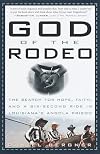
This is a fascinating glimpse inside one of the toughest prisons in the country, Louisiana's Angola, a former plantation which now houses men (predominately black men) convicted of violent crimes, a large percentage of them sentenced to life without parole. The author was given free access to the prison, inmates and staff over a period of a year, despite the warden's second thoughts and attempts to bar him after a few months. It may be a bit out of date, as it was written in 1998, but as the show more author points out, the system doesn't want us to inquire, wonder or mind what happens to these prisoners...they've been dealt with precisely so ordinary citizens don't ever have to think about them again. They will not return to society or commit further crimes against it; their only victims from now on will be themselves and each other. Well written, not the least bit sensational, despite some pretty grim and graphic details.
My cover subtitles this book "The Quest for Hope, Faith and a Six-Second Ride in Louisiana's Angola Prison". I note that other editions change that to "The Quest for Redemption in..." I think the former is more accurate.
Review written August 2016 show less
My cover subtitles this book "The Quest for Hope, Faith and a Six-Second Ride in Louisiana's Angola Prison". I note that other editions change that to "The Quest for Redemption in..." I think the former is more accurate.
Review written August 2016 show less

This is the remarkable story of Ryan Speedo Green's rise from imprisonment in a juvenile detention center to the stage of the Metropolitan Opera. Also contained within are meditations on how singing actually happens, what goes through the mind of someone who is completely off track at an early age, and on how intensely driven effort and determination can create unexpected outcomes. One of the strongest sections explores the history of " 'Ol Man River" from the musical "Showboat" - and why show more Paul Robeson, Ryan Green, and other black men bitterly resent being compelled to sing it.
Green and the writer seem to have had a mind-meld in the prose - there's almost nothing hidden from the reader and one is compelled to further research Green's career in hopes of finding even more joy from his victories. Truly inspirational. show less
Green and the writer seem to have had a mind-meld in the prose - there's almost nothing hidden from the reader and one is compelled to further research Green's career in hopes of finding even more joy from his victories. Truly inspirational. show less

A journalist’s empathetic account of people’s sexual fetishes and compulsions which includes a man with a foot fetish, one with an amputee fetish, a pedophile and a dominatrix. The four share personal reflections, and are interviewed about the impact their urges have had on their lives. Bergner also interviews a well-known psychiatrist, one of the few who treats pedophiles. I was impressed by how well Bergner conveyed the need for compassion in treating and understanding people who have show more innate compulsions that fall outside of the societal norms. I really found this to be an interesting book that helped deepen my understanding of an aberrant aspect of human nature and how important it is to have sympathy for one’s characters even if one doesn’t like them. show less
I had no expectations of enjoying this book. I picked it up because I'll be where the author will be speaking this year, but enjoy it I did.
Stepping back and forth between the Met stage to the DeJarnette Center for Human Development and Green's instructors' studios might seem disorienting, but it was insightful. Bergner's confident movement between time, person and environment was easy to follow and allowed me to understand the development of Ryan Speedo Green, the man and performer.
As a show more vocalist and the observer of lessons, I found the descriptions related to creating the sounds and the effort required from Green to be honest limited. Had the author continued the details, the uninformed reader would have found it tedious. For me, I was able to intimate what had come before and what was still to come.
And thank you Mr. Green, I will never listen to or hear Showboat the same way. show less
Stepping back and forth between the Met stage to the DeJarnette Center for Human Development and Green's instructors' studios might seem disorienting, but it was insightful. Bergner's confident movement between time, person and environment was easy to follow and allowed me to understand the development of Ryan Speedo Green, the man and performer.
As a show more vocalist and the observer of lessons, I found the descriptions related to creating the sounds and the effort required from Green to be honest limited. Had the author continued the details, the uninformed reader would have found it tedious. For me, I was able to intimate what had come before and what was still to come.
And thank you Mr. Green, I will never listen to or hear Showboat the same way. show less
Lists
Awards


You May Also Like


Associated Authors
Statistics
- Works
- 9
- Also by
- 2
- Members
- 729
- Popularity
- #34,829
- Rating
- 3.5
- Reviews
- 24
- ISBNs
- 52
- Languages
- 6