
Vera Caspary (1899–1987)
Author of Laura
About the Author
Works by Vera Caspary
The White Girl 2 copies
Ladies and Gents 2 copies
The Lady in Mink 2 copies
Etranges vérités: Laura, Bedelia, L'Etrange vérité, Erreur sur le mari, Le Manteau neuf d'Anita, (2011) 1 copy
Music in the Street 1 copy
The Murder in the Stork Club 1 copy
Sugar and Spice 1 copy
Associated Works
Troubled Daughters, Twisted Wives: Stories from the Trailblazers of Domestic Suspense (2013) — Contributor — 186 copies, 11 reviews
Tagged
Common Knowledge
- Canonical name
- Caspary, Vera
- Other names
- Caspary, Vera Louise
- Birthdate
- 1899-11-13
- Date of death
- 1987-06-13
- Gender
- female
- Education
- business college
- Occupations
- novelist
screenwriter
short story writer
playwright - Organizations
- Communist Party
League of American Writers - Agent
- Edith Haggard
- Short biography
- Vera Caspary was born in Chicago, the youngest of four children in a Russian-German Jewish immigrant family. After her high school graduation in 1917, her father enrolled her in a six-month course in a business college. Subsequently, she began working as a stenographer and held a series of menial office jobs, producing articles for magazines in her spare time. By 1927, she had become a full-time freelance writer. She was a prolific Hollywood screenwriter and also published about 20 novels. In 1949, she married one of her writing collaborators, Isidor "I.G." Goldsmith, a film producer born in Vienna. The couple split their time between Hollywood and Europe until his death in 1964.
- Nationality
- USA
- Birthplace
- Chicago, Illinois, USA
- Places of residence
- Chicago, Illinois, USA (birth)
New York, New York, USA - Place of death
- New York, New York, USA
- Associated Place (for map)
- New York, USA
Members
Discussions
GROUP READ for September 2013 - Laura by Vera Caspary (NO SPOILERS!) in 2013 Category Challenge (October 2013)
"Laura" by Vera Caspary in Book talk (July 2012)
Reviews

Noir novels by women are relatively rare. There are some notable, classic examples — Patricia Highsmith’s Stranger on a Train and her Ripley novels, Dorothy Hughes’ In a Lonely Place, . . . This one belongs on the list.
Laura is sometimes regarded as a femme fatale, but it’s not so clear. All three male characters in the novel — Waldo Lydecker, Shelby Carpenter, and later, the detective Mark McPherson — fall for her. And it doesn’t work out so well, at least for some involved. show more A couple of people die, after all.
But it’s not because Laura wishes ill for anybody. For that matter, she doesn’t even really seduce any of those male characters. It’s her very existence and her character that catalyze the action in the novel.
Vera Caspary, the author, was an ambitious, self-motivated woman in a world not so well-suited to her. But she built a place for herself in the literary world, publishing over twenty novels, plus numerous short stories, plays, and screenplays. She survived “graylisting” in the 1950s. (For Caspary’s story, read the Afterward by A. B. Emrys, in this edition of Laura).
Her own entry to writing as a profession is captured in the story of Laura Hunt. Caspary migrated herself from the stenography pool to ad copyrighter for an ad agency. Laura has followed the same path, following her own ambitions and motivations.
Laura, like Caspary, is a woman succeeding in a man’s world.
Waldo Lydecker narrates the first part of the story (Caspary assigns narrator status to Lydecker, Laura herself, and Mark McPherson as the story unfolds). Lydecker is pompous, hard to like, even a little hard to stomach as a narrator. But he has been a friend and mentor to Laura, helping her with introductions, encouragement, and advice. He’s older than Laura, not her lover, but he is as possessive and controlling as a domineering lover could be.
Lydecker is a difficult man — his cynicism and his relentless assertion of superiority leave him a lonely, aging man never happy with how the world treats him.
Ultimately he’s going to be unhappy with how Laura treats him, violating his own idea of their relationship. He treats her as his creation — her career, her appearance, everything. It’s all his doing, and his possession.
Meanwhile Laura is growing and succeeding on her own. It’s not hard to see she’s going to outgrow Lydecker.
Shelby Carpenter enters the picture as Laura’s fiancé. It’s not stretching things too much to say that the relationship between the two largely reverses the traditional gender roles, especially for the time the novel was written, in 1941. Laura finds a job for Shelby at the ad agency, and she gifts Shelby with a cigarette case — something that figures throughout the story and is remarked as the kind of gift a man gives a woman in a romantic relationship, not the reverse.
Shelby meanwhile is vapid. He’s the kind of handsome man a woman might want to go to parties with, again reversing the gender roles. Arm candy.
And he’s unfaithful. He cheats on Laura, at least with an ad agency model, Diane Redfern, who will figure centrally in the plot.
Mark McPherson enters the picture as the detective assigned to solve Laura’s apparent murder. Just before she was to be married to Shelby, someone showed up at her apartment door, knocked, and {again apparently) killed her with a shotgun blast to the face.
All this “apparently” talk is meant to avoid spoilers. You’ll have to read the book.
But you can see all the players now. Mark completes the picture, as the third person to fall for Laura. But he is different — he’s not controlling and possessive like Lydecker, and he’s not an insubstantial gigolo like Shelby. He blows hot and cold, but he falls in love with Laura, even in her absence — it’s the very idea of Laura that he falls for, even attempting to buy the portrait painting of her that hangs in her apartment.
The striking thing about the story, to me anyway, is this role of Laura as catalyst. She won’t fit into Lydecker’s picture of a woman’s place. She certainly won’t fit into a traditional marriage with her fiancé, Shelby. It’s just not going to work.
And it explodes violently. Like I said, it’s her very existence, who she is, that makes her a “femme fatale” — she’s fatal to the romantic role given to her.
I’m avoiding spoilers and being vague, I know. You’ll have to read the story. It’s unique, suspenseful, and creatively written, with its collection of three unreliable narrators swapping the lead. show less
Laura is sometimes regarded as a femme fatale, but it’s not so clear. All three male characters in the novel — Waldo Lydecker, Shelby Carpenter, and later, the detective Mark McPherson — fall for her. And it doesn’t work out so well, at least for some involved. show more A couple of people die, after all.
But it’s not because Laura wishes ill for anybody. For that matter, she doesn’t even really seduce any of those male characters. It’s her very existence and her character that catalyze the action in the novel.
Vera Caspary, the author, was an ambitious, self-motivated woman in a world not so well-suited to her. But she built a place for herself in the literary world, publishing over twenty novels, plus numerous short stories, plays, and screenplays. She survived “graylisting” in the 1950s. (For Caspary’s story, read the Afterward by A. B. Emrys, in this edition of Laura).
Her own entry to writing as a profession is captured in the story of Laura Hunt. Caspary migrated herself from the stenography pool to ad copyrighter for an ad agency. Laura has followed the same path, following her own ambitions and motivations.
Laura, like Caspary, is a woman succeeding in a man’s world.
Waldo Lydecker narrates the first part of the story (Caspary assigns narrator status to Lydecker, Laura herself, and Mark McPherson as the story unfolds). Lydecker is pompous, hard to like, even a little hard to stomach as a narrator. But he has been a friend and mentor to Laura, helping her with introductions, encouragement, and advice. He’s older than Laura, not her lover, but he is as possessive and controlling as a domineering lover could be.
Lydecker is a difficult man — his cynicism and his relentless assertion of superiority leave him a lonely, aging man never happy with how the world treats him.
Ultimately he’s going to be unhappy with how Laura treats him, violating his own idea of their relationship. He treats her as his creation — her career, her appearance, everything. It’s all his doing, and his possession.
Meanwhile Laura is growing and succeeding on her own. It’s not hard to see she’s going to outgrow Lydecker.
Shelby Carpenter enters the picture as Laura’s fiancé. It’s not stretching things too much to say that the relationship between the two largely reverses the traditional gender roles, especially for the time the novel was written, in 1941. Laura finds a job for Shelby at the ad agency, and she gifts Shelby with a cigarette case — something that figures throughout the story and is remarked as the kind of gift a man gives a woman in a romantic relationship, not the reverse.
Shelby meanwhile is vapid. He’s the kind of handsome man a woman might want to go to parties with, again reversing the gender roles. Arm candy.
And he’s unfaithful. He cheats on Laura, at least with an ad agency model, Diane Redfern, who will figure centrally in the plot.
Mark McPherson enters the picture as the detective assigned to solve Laura’s apparent murder. Just before she was to be married to Shelby, someone showed up at her apartment door, knocked, and {again apparently) killed her with a shotgun blast to the face.
All this “apparently” talk is meant to avoid spoilers. You’ll have to read the book.
But you can see all the players now. Mark completes the picture, as the third person to fall for Laura. But he is different — he’s not controlling and possessive like Lydecker, and he’s not an insubstantial gigolo like Shelby. He blows hot and cold, but he falls in love with Laura, even in her absence — it’s the very idea of Laura that he falls for, even attempting to buy the portrait painting of her that hangs in her apartment.
The striking thing about the story, to me anyway, is this role of Laura as catalyst. She won’t fit into Lydecker’s picture of a woman’s place. She certainly won’t fit into a traditional marriage with her fiancé, Shelby. It’s just not going to work.
And it explodes violently. Like I said, it’s her very existence, who she is, that makes her a “femme fatale” — she’s fatal to the romantic role given to her.
I’m avoiding spoilers and being vague, I know. You’ll have to read the story. It’s unique, suspenseful, and creatively written, with its collection of three unreliable narrators swapping the lead. show less

Unlike many reviewers, I haven’t seen the famous Otto Preminger movie although I had heard of it so I went in blind and that’s the best way to experience this book because of an unexpected event that happens relatively early on. I won’t call it a twist because I don’t think it is, but it mirrors events in the book and we are deceived.
The story is set up by Waldo Lydecker, a scathingly witty writer who is Laura’s mentor and a fabulously fussy queen. If you don’t believe me, show more behold - “...I unscrewed the carnelian cap of the silver box in which I keep my saccharine tablets. Although I spread butter lavishly on my brioches, I cling religiously to the belief that the substitution of saccharine for sugar in coffee will make me slender and fascinating.”
In this scene he’s indulging Detective Mark McPherson who has been assigned to investigate Laura’s murder. Mark questions, Waldo answers, but Waldo seems to feel that he is the one controlling the conversation. They meet several times and the popular subject of their talk is Shelby Carpenter; Laura’s fiancee. Those three men and their question, lies and subterfuges make up the first part of the book. Then there’s Laura’s diary which I have to say had some of the best lines and passages about her relationship with Shelby.
“I had used him as women use men to complete the design of a full life, playing at love for the gratification of my vanity, wearing him proudly as a successful prostitute wears her silver foxes to tell the world she owns a man. Going on thirty and unmarried, I had become alarmed. Pretending to love him and playing the mother game, I bought him an extravagant cigarette case, fourteen-karat gold, as a man might buy his wife an orchid or a diamond to expiate infidelity.
And now that tragedy has wiped away all the glib excuses, I see that our love was as bare of real passion as the mating of two choice vegetables which are to be combined for the purpose of producing a profitable new item for the markets. It was like love in the movies; contrived and opportune. And now it was over.
Two strangers sat at opposite ends of the couch. We tried to find words that had the same meaning for both of us.”
It’s a pretty wonderful summation of the illusion of having it all. Laura is a successful career woman and already she is inadequate and incomplete. A man in her position, for example her fiance, wouldn’t be thought of the same way. His remaining a bachelor would make him seems sensible, desirable and mysterious. But when a woman does it, she’s made to feel small and defective.
That cigarette case is a pivotal prop in the story although it’s not used in a way many crime writers would use it. To say more would be to give away too much. In the end the manipulator becomes the manipulated and there’s a pretty nice take-down scene. Just prior there is a terrific moment where a seemingly kind and gentle character turns sinister in just a few paragraphs. It’s a light touch and it works beautifully to make you feel unease. Bravo! show less
The story is set up by Waldo Lydecker, a scathingly witty writer who is Laura’s mentor and a fabulously fussy queen. If you don’t believe me, show more behold - “...I unscrewed the carnelian cap of the silver box in which I keep my saccharine tablets. Although I spread butter lavishly on my brioches, I cling religiously to the belief that the substitution of saccharine for sugar in coffee will make me slender and fascinating.”
In this scene he’s indulging Detective Mark McPherson who has been assigned to investigate Laura’s murder. Mark questions, Waldo answers, but Waldo seems to feel that he is the one controlling the conversation. They meet several times and the popular subject of their talk is Shelby Carpenter; Laura’s fiancee. Those three men and their question, lies and subterfuges make up the first part of the book. Then there’s Laura’s diary which I have to say had some of the best lines and passages about her relationship with Shelby.
“I had used him as women use men to complete the design of a full life, playing at love for the gratification of my vanity, wearing him proudly as a successful prostitute wears her silver foxes to tell the world she owns a man. Going on thirty and unmarried, I had become alarmed. Pretending to love him and playing the mother game, I bought him an extravagant cigarette case, fourteen-karat gold, as a man might buy his wife an orchid or a diamond to expiate infidelity.
And now that tragedy has wiped away all the glib excuses, I see that our love was as bare of real passion as the mating of two choice vegetables which are to be combined for the purpose of producing a profitable new item for the markets. It was like love in the movies; contrived and opportune. And now it was over.
Two strangers sat at opposite ends of the couch. We tried to find words that had the same meaning for both of us.”
It’s a pretty wonderful summation of the illusion of having it all. Laura is a successful career woman and already she is inadequate and incomplete. A man in her position, for example her fiance, wouldn’t be thought of the same way. His remaining a bachelor would make him seems sensible, desirable and mysterious. But when a woman does it, she’s made to feel small and defective.
That cigarette case is a pivotal prop in the story although it’s not used in a way many crime writers would use it. To say more would be to give away too much. In the end the manipulator becomes the manipulated and there’s a pretty nice take-down scene. Just prior there is a terrific moment where a seemingly kind and gentle character turns sinister in just a few paragraphs. It’s a light touch and it works beautifully to make you feel unease. Bravo! show less

Bedelia by Vera Caspary is a story that was written and published in the 1940s and although the story is set in 1913, it has that 1940s noir feel. Charles and Bedelia are newly weds who are celebrating their first Christmas together. They host a dinner party for their friends and on the surface all seems well. But as we read on and peel back the layers, we find Bedelia’s adoration towards her husband is, perhaps, a little overdone, and her concern over his indigestion is a little show more forced.
Charles, a conservative New Englander, cannot believe his good fortune in having married the stylish, affectionate, and charming Bedelia. He is willing to overlook a number of things about her that don’t seem to add up but the small lies are getting bigger and when a new neighbour confesses that he is actually a detective that has been tracking Bedelia and that she has been married and conveniently widowed a number of times he is forced to look at her with new eyes. The book then takes a dramatic turn when Charles and Bedelia are house bound by a blizzard, cut off from the rest of the world and left to confront each other.
I loved this story and found it very hard to put the book down. Caspary builds her story slowly and allows the tension to mount until the true character of Bedelia is revealed. And while Bedelia was definitely a very damaged character who was capable of great evil, it was hard to have a lot of sympathy for her insecure husband, Charles. Overall this book a masterpiece of psychological suspense that provided sinister yet fun entertainment. show less
Charles, a conservative New Englander, cannot believe his good fortune in having married the stylish, affectionate, and charming Bedelia. He is willing to overlook a number of things about her that don’t seem to add up but the small lies are getting bigger and when a new neighbour confesses that he is actually a detective that has been tracking Bedelia and that she has been married and conveniently widowed a number of times he is forced to look at her with new eyes. The book then takes a dramatic turn when Charles and Bedelia are house bound by a blizzard, cut off from the rest of the world and left to confront each other.
I loved this story and found it very hard to put the book down. Caspary builds her story slowly and allows the tension to mount until the true character of Bedelia is revealed. And while Bedelia was definitely a very damaged character who was capable of great evil, it was hard to have a lot of sympathy for her insecure husband, Charles. Overall this book a masterpiece of psychological suspense that provided sinister yet fun entertainment. show less
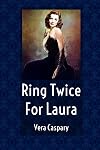
Originally published by Vera Caspary in 1942 as a seven-part story in Collier’s Magazine under the title Ring Twice for Laura, today we know it simply as Laura. This classic mystery-romance is sometimes overshadowed by the magnificent film it spawned a couple of years later, starring Dana Andrews and Gene Tierney. Director Otto Preminger's masterpiece is one of the finest mysteries in the history of motion pictures. But that lofty height is equaled by the original source for the film, show more Caspary’s terrific story. Quite simply, this is one of the finest and most unusual mystery novels ever written. Caspary used a unique narrative structure to create an atmospheric and involving novel of mystery and romance which has stood the test of time.
The story revolves around Detective Mark McPherson's investigation into the murder of Laura Hunt. McPherson has somewhat of a celebrity status within the department due to some front page cases with which he has been involved. But he is unprepared for the high society circles Laura moved in, and Caspary allows the reader to see through the detective's eyes the affectations of the rich. It is a world where people begin their insults with endearing terms like darling, then proceed to use words the roughest seaman wouldn't use to tear you apart.
Laura's benefactor and sometimes companion, Waldo Lydecker, is the poster boy for such behavior. He uses his well known newspaper column to destroy all of Laura's would-be suitors. Only the man she was set to marry, Shelby Carpenter, was able to withstand the glare of Lydecker's poison-pen scrutiny. But on the weekend before she was to be married, a knock on the door late at night, followed by a shotgun blast, cuts her life short.
Waldo Lydecker begins the narration, then McPherson picks up where he left off. It is during McPherson's narration we get to see events as they really are, bringing about for the reader an understanding of the detective's thought process and actions so twisted out of context by Lydecker. Caspery's descriptions of the encounters between Lydecker and McPherson are splendid. You can almost feel the breeze in the popular open-air restaurant where they dine and hear the young woman going from table to table singing, Smoke Gets in Your Eyes. Caspary also allows the reader to feel McPherson's frustration with the pretty-boy, Shelby Carpenter. Above all this, however, Caspary paints a picture of Laura that allows us to understand how McPherson has fallen in love with a dead girl, because we have also.
Laura could not have been more different from these people, her inner beauty inspiring loyalty in her working-class maid, Bessie. McPherson soon begins to wonder how a smart girl like Laura managed to surround herself with such morally empty people, their arrogance and gutter ethics only surpassed by their lack of character. But Caspery is smart enough to let us see into a woman's heart as well, and make us understand.
On a rainy night in Laura's swanky 5th Avenue walk-up apartment, while McPherson sits underneath her painting looking through her diary, searching for a clue to her murder, Caspary suddenly turns an already great mystery-romance novel into a classic. We simply can't put it down at this point. It is a fantastic read and stands with a handful of others in the genre as one of the best ever written.
Since this edition appears to no longer be in print, I highly recommend purchasing the book or Kindle version, because it is the same story. The difference is simply the magazine layout, which included some nice illustrations to accompany each segment of the story. Here is one example that is actually on-line — https://i.pinimg.com/originals/b4/51/f5/b451f5336b9f02cf055a9b3cd524d610.jpg — to get an idea of what it looked like in magazine form before it became the sensation that it was — and still is, for mystery lovers.
Other than the illustrations, all you will be missing apparently is the famous article Caspary wrote about the book, called My “Laura” and Otto’s. But that too, has been placed on-line by UNZ — http://www.unz.org/Pub/SaturdayRev-1971jun26-00036 — so that you can still enjoy it. The book in novel form is still available, however, and despite the passage of time, it is as fresh today as it was in the 1940s. This is one book in the mystery genre you don't want to miss. show less
The story revolves around Detective Mark McPherson's investigation into the murder of Laura Hunt. McPherson has somewhat of a celebrity status within the department due to some front page cases with which he has been involved. But he is unprepared for the high society circles Laura moved in, and Caspary allows the reader to see through the detective's eyes the affectations of the rich. It is a world where people begin their insults with endearing terms like darling, then proceed to use words the roughest seaman wouldn't use to tear you apart.
Laura's benefactor and sometimes companion, Waldo Lydecker, is the poster boy for such behavior. He uses his well known newspaper column to destroy all of Laura's would-be suitors. Only the man she was set to marry, Shelby Carpenter, was able to withstand the glare of Lydecker's poison-pen scrutiny. But on the weekend before she was to be married, a knock on the door late at night, followed by a shotgun blast, cuts her life short.
Waldo Lydecker begins the narration, then McPherson picks up where he left off. It is during McPherson's narration we get to see events as they really are, bringing about for the reader an understanding of the detective's thought process and actions so twisted out of context by Lydecker. Caspery's descriptions of the encounters between Lydecker and McPherson are splendid. You can almost feel the breeze in the popular open-air restaurant where they dine and hear the young woman going from table to table singing, Smoke Gets in Your Eyes. Caspary also allows the reader to feel McPherson's frustration with the pretty-boy, Shelby Carpenter. Above all this, however, Caspary paints a picture of Laura that allows us to understand how McPherson has fallen in love with a dead girl, because we have also.
Laura could not have been more different from these people, her inner beauty inspiring loyalty in her working-class maid, Bessie. McPherson soon begins to wonder how a smart girl like Laura managed to surround herself with such morally empty people, their arrogance and gutter ethics only surpassed by their lack of character. But Caspery is smart enough to let us see into a woman's heart as well, and make us understand.
On a rainy night in Laura's swanky 5th Avenue walk-up apartment, while McPherson sits underneath her painting looking through her diary, searching for a clue to her murder, Caspary suddenly turns an already great mystery-romance novel into a classic. We simply can't put it down at this point. It is a fantastic read and stands with a handful of others in the genre as one of the best ever written.
Since this edition appears to no longer be in print, I highly recommend purchasing the book or Kindle version, because it is the same story. The difference is simply the magazine layout, which included some nice illustrations to accompany each segment of the story. Here is one example that is actually on-line — https://i.pinimg.com/originals/b4/51/f5/b451f5336b9f02cf055a9b3cd524d610.jpg — to get an idea of what it looked like in magazine form before it became the sensation that it was — and still is, for mystery lovers.
Other than the illustrations, all you will be missing apparently is the famous article Caspary wrote about the book, called My “Laura” and Otto’s. But that too, has been placed on-line by UNZ — http://www.unz.org/Pub/SaturdayRev-1971jun26-00036 — so that you can still enjoy it. The book in novel form is still available, however, and despite the passage of time, it is as fresh today as it was in the 1940s. This is one book in the mystery genre you don't want to miss. show less
Lists
ScaredyKIT 2020 (1)
1940s (1)
Awards


You May Also Like


Associated Authors
Statistics
- Works
- 30
- Also by
- 8
- Members
- 1,023
- Popularity
- #25,180
- Rating
- 3.9
- Reviews
- 40
- ISBNs
- 56
- Languages
- 6
- Favorited
- 4