
Deryck Cooke (1919–1976)
Author of I Saw the World End: A Study of Wagner's Ring
Works by Deryck Cooke
Associated Works
English National Opera Guide : Stravinsky : Oedipus Rex : The rake's progress (1991) — Translator — 23 copies
Tagged
Common Knowledge
- Canonical name
- Cooke, Deryck
- Birthdate
- 1919-09-14
- Date of death
- 1976-10-27
- Gender
- male
- Education
- Wyggeston Grammar School
University of Cambridge - Occupations
- musician
musicologist
broadcaster - Organizations
- British Broadcasting Corporation
- Nationality
- England
UK - Birthplace
- Leicester, Leicestershire, England, UK
- Places of residence
- London, England, UK
Cambridge, Cambridgeshire, England, UK - Place of death
- Croydon, Greater London, England, UK
- Associated Place (for map)
- England, UK
Members
Reviews
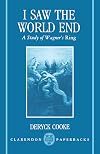
Cooke envisaged this as comprehensive analysis of Wagner's Ring. His point inter alia was that previous studies had focussed on the texts only and come up short. How sad therefore that all that was completed before his death was his analysis of the texts of Rheingold and Walküre. Before he gets to those, he spends some time explaining the shortcomings of what were at the time (1970s) the only serious studies of the Ring in English. He rightly I think dismisses Donnington's 'Wagner's Ring show more and its Symnbols' as been hopelessly encumbered by its Jungian perspective. However he either fails to see or deliberately misunderstands what Shaw's 'Perfect Wagnerite' is about. It's so obviously *not* a study of the Ring in the conventional sense of textual analysis and so clearly a manifesto of sorts that although I think it's still worth reading for a number of reasons, I don't know why for his purposes Cooke lavishes time and page space on it.
I can't help feeling what remains is a tantalising glimpse of what might have been. Interesting though some of Cooke's writings on the texts is, the book seems to move to another more exalted plain virtually every time he talks about the music. He does so with an acute combination of musicological, literary and psychological analysis but in the book as is, there are only short sections and fragments of such writing, which offer a taste of what could have been one of the truly great and definitive works on the Ring and Wagner. I should add that in order for that to happen he would also necessarily have had to strike a balance between being dutifully completist and commenting on the aspects of the work which seemed of particular interest and importance to him. As it stands, there is a bit too much of the former as the book gets into the detailed commentaries on the Rhinegold and Valkyrie texts. show less
I can't help feeling what remains is a tantalising glimpse of what might have been. Interesting though some of Cooke's writings on the texts is, the book seems to move to another more exalted plain virtually every time he talks about the music. He does so with an acute combination of musicological, literary and psychological analysis but in the book as is, there are only short sections and fragments of such writing, which offer a taste of what could have been one of the truly great and definitive works on the Ring and Wagner. I should add that in order for that to happen he would also necessarily have had to strike a balance between being dutifully completist and commenting on the aspects of the work which seemed of particular interest and importance to him. As it stands, there is a bit too much of the former as the book gets into the detailed commentaries on the Rhinegold and Valkyrie texts. show less

Although this book is a posthumous gathering of various articles and scripts that Cooke wrote over the years, it is interesting to see themes emerging. Two I would pick out are: firstly, the importance of thematic patterns. Cooke is very good and accessible on Wagner’s use of certain phrases or patterns to denote say heroism. He is very good but much more technical in an absolutely fascinating essay on thematic unity in Beethoven’s late quartets. Secondly, on setting the record straight, show more which he does with admirable clarity and complete authority. His essay on the Bruckner versions problems is so much clearer and far more illuminating than the one in the The Cambridge Companion to Bruckner, which I’ve recently read. Ditto on his essay on the sketch for Mahler’s Tenth Symphony. Cooke’s realisation of the performing version of the sketch is what he will be remembered for above all else of course and he brings that wealth of knowledge to a lucid and penetrating essay.
The other fare here is slighter but nevertheless enjoyable and there is a lovely memoir of Cooke by Bryan Magee. show less
The other fare here is slighter but nevertheless enjoyable and there is a lovely memoir of Cooke by Bryan Magee. show less
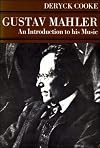
This book is an amalgam of program notes and magazine articles, grafted onto a booklet that Cooke wrote in 1960 for the BBC, which has become the introductory essay "Mahler as Man and Artist." Cooke is one of Mahler's champions who helped to kindle the worldwide conflagration that became Mahler-mania. As always, his criticism is readable, although the occasional nature of the source material does not enable the detailed analysis that would have been so welcome. This is not the only one of show more Cooke's books that leave one wondering "what might have been," had he had a decent lifespan. show less
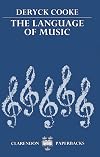
First published in 1959, this original study argues that the main characteristic of music is that it expresses and evokes emotion, and that all composers whose music has a tonal basis have used the same, or closely similar, melodic phrases, harmonies, and rhythms to affect the listener in the same ways. He supports this view with hundreds of musical examples, ranging from plainsong to Stravinsky, and contends that music is a language in the specific sense that we can identify idioms and draw show more up a list of meanings. The book's final section analyzes two symphonies, Mozart's Fortieth and Vaughan Williams's Sixth, to explore the nature of musical inspiration and the process whereby the notes actually convey emotion from composer to listener. show less
Lists
You May Also Like


Associated Authors
Statistics
- Works
- 10
- Also by
- 3
- Members
- 361
- Popularity
- #66,479
- Rating
- 4.4
- Reviews
- 6
- ISBNs
- 21
- Favorited
- 3