
Joshua Foer
Author of Moonwalking with Einstein: The Art and Science of Remembering Everything
About the Author
Image credit: By Dmadeo - Own work, CC BY-SA 3.0, https://commons.wikimedia.org/w/index.php?curid=14743922
Series
Works by Joshua Foer
Moonwalking with Einstein: The Art and Science of Remembering Everything (2011) 4,926 copies, 146 reviews
Atlas Obscura, 2nd Edition: An Explorer's Guide to the World's Hidden Wonders (2022) 507 copies, 1 review
Atlas Obscura: Wild Life: An Explorer's Guide to the World's Living Wonders (2024) — Author — 154 copies, 2 reviews
Associated Works
Tagged
Common Knowledge
- Birthdate
- 1982-09-23
- Gender
- male
- Education
- Georgetown Day School
Yale University - Occupations
- journalist
- Awards and honors
- U.S. Memory Championship (1st Place, 2006)
- Relationships
- Foer, Jonathan Safran (brother)
Foer, Franklin (brother) - Nationality
- USA
- Birthplace
- Washington, D.C., USA
- Places of residence
- Washington, D.C., USA
New Haven, Connecticut, USA - Associated Place (for map)
- USA
Members
Reviews

Memory is an elusive concept. It seems like something that comes and goes with age, and it is often assumed that some people have a better one than others. In reality it’s an art, an ability that you can exercise and improve just like anything else. The first half of the book focuses much more on the history of memorization and its benefits. The second half takes a drastic shift as the author himself gets pulled into the world of memory competitions. He decides to train and compete and he show more brings the reader along for the ride as he learns the tricks of the trade.
The concept of memory palaces was one I've heard of before but it was interesting to hear it described in more detail. To remember a long list you visualize each item in a specific location in a specific home. For example, if you have a grocery list you can place that in your childhood home. Say a jar of mayonnaise goes at the end of the driveway, a carton of eggs goes at the front door, etc. Then you “walk” through the house in your mind you see each of the items you visualized in the specific spot.
I never realized how critical memory was before the printing presses existed. People who had access to books could only refer back to what they’d memorized. Books were rare, as was the ability to read. Sharing stories through oral tradition was much more common that reading actual books.
“Creating new memories stretches out psychological time and lengthens our perception of our lives.”
There’s one section where Foer discusses the danger of routine making our lives literally seem shorter. When we are constantly creating new memories our life becomes more memorable. Going on a big trip, learning something new, having dinner with friends, each of those things becomes a specific moment in time that we remember. Whereas going home from work, watching TV every night and eating almost the same thing makes a whole week blend together. I loved this section because I try to constantly do new things in my life. I travel often, try new restaurants, see plays and visit museum exhibits, even being a tourist in my own city and spending time with friends fits in this category. To me, it seems like time still goes by quickly, but it’s packed to the brim! I can think of what happened last week in specific memories instead of seeing it blur together. I thought it was fascinating that actual studies have been done on this. And the conclusion was, you can live the healthiest life in the world, but if it’s only full of repetitive routines than it will still seem short.
BOTTOM LINE: I was fascinated by the whole book. Foer’s writing style is perfectly suited to make nonfiction content feel like a page-turner. I look forward to whatever he writes next.
“Monotony collapses time, novelty unfolds it.”
“Of all the things one could be obsessive about collecting, memories of one’s own life don’t seem like the most unreasonable. There’s something even strangely rational about it.
Side note: I will say it was a bit ironic to read this one while having “pregnancy brain”. At no point in my life have I had a harder time remembering small things! show less
The concept of memory palaces was one I've heard of before but it was interesting to hear it described in more detail. To remember a long list you visualize each item in a specific location in a specific home. For example, if you have a grocery list you can place that in your childhood home. Say a jar of mayonnaise goes at the end of the driveway, a carton of eggs goes at the front door, etc. Then you “walk” through the house in your mind you see each of the items you visualized in the specific spot.
I never realized how critical memory was before the printing presses existed. People who had access to books could only refer back to what they’d memorized. Books were rare, as was the ability to read. Sharing stories through oral tradition was much more common that reading actual books.
“Creating new memories stretches out psychological time and lengthens our perception of our lives.”
There’s one section where Foer discusses the danger of routine making our lives literally seem shorter. When we are constantly creating new memories our life becomes more memorable. Going on a big trip, learning something new, having dinner with friends, each of those things becomes a specific moment in time that we remember. Whereas going home from work, watching TV every night and eating almost the same thing makes a whole week blend together. I loved this section because I try to constantly do new things in my life. I travel often, try new restaurants, see plays and visit museum exhibits, even being a tourist in my own city and spending time with friends fits in this category. To me, it seems like time still goes by quickly, but it’s packed to the brim! I can think of what happened last week in specific memories instead of seeing it blur together. I thought it was fascinating that actual studies have been done on this. And the conclusion was, you can live the healthiest life in the world, but if it’s only full of repetitive routines than it will still seem short.
BOTTOM LINE: I was fascinated by the whole book. Foer’s writing style is perfectly suited to make nonfiction content feel like a page-turner. I look forward to whatever he writes next.
“Monotony collapses time, novelty unfolds it.”
“Of all the things one could be obsessive about collecting, memories of one’s own life don’t seem like the most unreasonable. There’s something even strangely rational about it.
Side note: I will say it was a bit ironic to read this one while having “pregnancy brain”. At no point in my life have I had a harder time remembering small things! show less
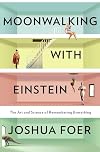
After journalist Josha Foer covered the United States Memory Championship for a magazine story, he became fascinated by the feats of memory and the mental athletes who perform them. He decided to train for the competition himself, and we get to go along for the ride. He shares some of the techniques that memory athletes use, findings from scientific research on memory, and interesting profiles of some of the quirky individuals who compete in memory contests.
This is non-fiction at its best. show more Foer weaves interesting facts in with the story of his training. I was fascinated to learn about the techniques that memory athletes use to memorize strings of numbers or decks of cards. I may even use some of the techniques myself. Some semesters, I meet 100+ students on the first day of class, and I struggle to remember their names. Foer has convinced me that I can overcome this lack of natural memory. However, even Foer admits that good memory requires concentration and practice. After all of his training, he admits that he took the subway home one night after meeting friends for dinner, completely forgetting that he had driven to the restaurant and left his car in the parking lot.
I also enjoyed Foer's reflection on whether it is worth it to develop memory skills. After all, can't we just store everything we need to know in our smartphones or Google the facts that have slipped our minds? In the end, Foer decides that memory is still an important talent, concluding, "How we perceive the world and how we act in it are products of how and what we remember. . . Our ability to find humor in the world, to make connections between previously unconnected notions, to create new ideas, to share in a common culture: All these essentially human acts depend on memory." show less
This is non-fiction at its best. show more Foer weaves interesting facts in with the story of his training. I was fascinated to learn about the techniques that memory athletes use to memorize strings of numbers or decks of cards. I may even use some of the techniques myself. Some semesters, I meet 100+ students on the first day of class, and I struggle to remember their names. Foer has convinced me that I can overcome this lack of natural memory. However, even Foer admits that good memory requires concentration and practice. After all of his training, he admits that he took the subway home one night after meeting friends for dinner, completely forgetting that he had driven to the restaurant and left his car in the parking lot.
I also enjoyed Foer's reflection on whether it is worth it to develop memory skills. After all, can't we just store everything we need to know in our smartphones or Google the facts that have slipped our minds? In the end, Foer decides that memory is still an important talent, concluding, "How we perceive the world and how we act in it are products of how and what we remember. . . Our ability to find humor in the world, to make connections between previously unconnected notions, to create new ideas, to share in a common culture: All these essentially human acts depend on memory." show less
Foer chronicles his foray into the world of memory in this intelligent and fun book. The perfect combination of the personal and the academic, Moonwalking with Einstein had me completely hooked. Intelligent. Fun. Insightful. Funny. Inventive. Fabulous. And a host of other adjectives that start with I and F.
My first brush with the study of memory occurred in my Classical Rhetoric course while in the Masters program at DePaul. We read the Rhetorica ad Herennium, a text mentioned often in show more Foer's work, and while I freely admit that this wasn't exactly the highlight of my reading life, this text and other works by Cicero gave the class a foundation for memory studies. In particular, the works discussed the use of a memory palace to solidify lists in our minds. Tricks like this sprinkle the text which I really enjoyed (and am trying to use in my daily life). At one point, Foer has the reader play along with him, using a memory palace to remember a to-do list. Three days after reading that section, I still remember the freaking list.
This, in my opinion, is narrative nonfiction at its best: personal, informative, and entertaining. The perfect combination of inquiry and experience, the book used personal experience to really dig into an academic topic. show less
My first brush with the study of memory occurred in my Classical Rhetoric course while in the Masters program at DePaul. We read the Rhetorica ad Herennium, a text mentioned often in show more Foer's work, and while I freely admit that this wasn't exactly the highlight of my reading life, this text and other works by Cicero gave the class a foundation for memory studies. In particular, the works discussed the use of a memory palace to solidify lists in our minds. Tricks like this sprinkle the text which I really enjoyed (and am trying to use in my daily life). At one point, Foer has the reader play along with him, using a memory palace to remember a to-do list. Three days after reading that section, I still remember the freaking list.
This, in my opinion, is narrative nonfiction at its best: personal, informative, and entertaining. The perfect combination of inquiry and experience, the book used personal experience to really dig into an academic topic. show less

Because the title of this book has apparently confused some people: this is not about Einstein. The title is referring to the memorization technique Foer learned, which involves populating a "memory palace" with bizarre and therefore memorable imagery that one has in some way linked to the less memorable information one wants to memorize.
I listened to the audiobook, so apologies if I have some of the details wrong. If I remember right, this book begins with Foer sitting in on a memory show more competition for an article he was writing. After the event, he spoke to one of the participants, who told him that, with enough training in the right techniques, anyone could become a memory champion. Foer was initially unconvinced but willing to give it a shot.
This book's overall framework is Foer's own memory journey from "regular guy" to competitor in the finals of the U.S. Memory Championship, but along the way he writes about the history of memorization techniques, the science of memory and learning, the world of memory championship competitors, why supposedly photographic memories don't exist, and more.
Although this was often a fascinating book, it also had some incredibly annoying and misogynistic sections. For example, Foer's mentor was part of the KL7, a "secret" society of memorizers who came across like pickup artists and stereotypical frat brothers. I forget the exact details, but joining the KL7 involved a combination of beer drinking, successful card memorization, and kissing a nearby woman. Several of the members of KL7 seemed to have learned memorization techniques primarily so they could impress women who might otherwise be put off by their behavior, lack of jobs, etc. Even Foer admitted that he got a little weird during his memory improvement journey, essentially living in his parents' basement as he practiced memorization techniques for hours and wore blinders while staring at cards and random numbers.
Foer spent so much time writing about the KL7 members and similar guys that, for a while there, it sounded like the world of memory championships was composed entirely of men. Even the techniques they employed seemed very oriented towards men - the secret of the "memory palace" memorization method, for example, involved making one's mental images as funny and/or raunchy as possible (be prepared for a heavy amount of male-gaze aspects in Foer's descriptions of his own mental imagery and the imagery he suggests readers picture when trying out the technique themselves). The few times Foer wrote about female memory championship competitors, my brain latched onto them like a traveler in the desert who's just come across on oasis.
Unfortunately, those might as well have been mirages, because Foer never spent much time on them, even when the tantalizing bits of information he included seemed to contradict what he'd written about the KL7 members' memorization techniques. For example, rather than linking the poetry she needed to memorize to particularly memorable imagery, one female memory championship competitor told Foer that her technique involved deeply understanding the poem and feeling its emotions. I really wish Foer had explored that a bit more.
I found many of the topics the book covered to be interesting, which somewhat made up for the company Foer kept while he was researching and studying memory. It also helped that I listened to the audiobook version, so there were times I could just tune out or speed through the parts that irked me so that I could get back to the more interesting stuff.
(Original review posted on A Library Girl's Familiar Diversions.) show less
I listened to the audiobook, so apologies if I have some of the details wrong. If I remember right, this book begins with Foer sitting in on a memory show more competition for an article he was writing. After the event, he spoke to one of the participants, who told him that, with enough training in the right techniques, anyone could become a memory champion. Foer was initially unconvinced but willing to give it a shot.
This book's overall framework is Foer's own memory journey from "regular guy" to competitor in the finals of the U.S. Memory Championship, but along the way he writes about the history of memorization techniques, the science of memory and learning, the world of memory championship competitors, why supposedly photographic memories don't exist, and more.
Although this was often a fascinating book, it also had some incredibly annoying and misogynistic sections. For example, Foer's mentor was part of the KL7, a "secret" society of memorizers who came across like pickup artists and stereotypical frat brothers. I forget the exact details, but joining the KL7 involved a combination of beer drinking, successful card memorization, and kissing a nearby woman. Several of the members of KL7 seemed to have learned memorization techniques primarily so they could impress women who might otherwise be put off by their behavior, lack of jobs, etc. Even Foer admitted that he got a little weird during his memory improvement journey, essentially living in his parents' basement as he practiced memorization techniques for hours and wore blinders while staring at cards and random numbers.
Foer spent so much time writing about the KL7 members and similar guys that, for a while there, it sounded like the world of memory championships was composed entirely of men. Even the techniques they employed seemed very oriented towards men - the secret of the "memory palace" memorization method, for example, involved making one's mental images as funny and/or raunchy as possible (be prepared for a heavy amount of male-gaze aspects in Foer's descriptions of his own mental imagery and the imagery he suggests readers picture when trying out the technique themselves). The few times Foer wrote about female memory championship competitors, my brain latched onto them like a traveler in the desert who's just come across on oasis.
Unfortunately, those might as well have been mirages, because Foer never spent much time on them, even when the tantalizing bits of information he included seemed to contradict what he'd written about the KL7 members' memorization techniques. For example, rather than linking the poetry she needed to memorize to particularly memorable imagery, one female memory championship competitor told Foer that her technique involved deeply understanding the poem and feeling its emotions. I really wish Foer had explored that a bit more.
I found many of the topics the book covered to be interesting, which somewhat made up for the company Foer kept while he was researching and studying memory. It also helped that I listened to the audiobook version, so there were times I could just tune out or speed through the parts that irked me so that I could get back to the more interesting stuff.
(Original review posted on A Library Girl's Familiar Diversions.) show less
Lists
Awards


You May Also Like


Associated Authors
Statistics
- Works
- 8
- Also by
- 2
- Members
- 7,727
- Popularity
- #3,154
- Rating
- 3.9
- Reviews
- 175
- ISBNs
- 76
- Languages
- 19
- Favorited
- 1

