
Leslie Kimmelman
Author of Johnny Appleseed
About the Author
Series
Works by Leslie Kimmelman
We're Amazing 1,2,3! A Story About Friendship and Autism (Sesame Street) (Big Golden Book) (2017) 77 copies, 3 reviews
Sesame Street: Celebrate You! Celebrate Me!: A Peek and Touch Book (123 Sesame Street) (2017) 71 copies
It's a Good Thing There Are Earthworms (Rookie Read-About Science: It's a Good Thing...) (2014) 63 copies, 1 review
Cookie Monster's Book of Seasons 5 copies
Where Can That Silly Monkey Be?: Your Turn, My Turn Reader (Ready-To-Read - Level Pre1 (Quality)) (2010) 4 copies
To Mars 1 copy
To Planet Earth 1 copy
To the Stars 1 copy
Read & Sing with Big Bird 1 copy
Uncle Jake Blows the Shofar 1 copy
Bed Time 1 copy
Associated Works
Tagged
Common Knowledge
- Other names
- Grodinsky , Leslie
Shepherd, Jodie - Birthdate
- 1958
- Gender
- female
- Occupations
- children's book author
publisher
editor
freelance writer - Short biography
- The very first word I learned to read was A-L-L. It was particularly appropriate because from the joyful moment I got my first library card, my goal was to read every single book in the children’s section. Books were magical to me. I still feel that way.
After graduation, I moved to New York City and began my publishing career. I spent many happy years as a children's book editor at various publishing houses. It took me a while to get used to reading on the job -- I was doing exactly what I was supposed to be doing! The more I read on the job, the more I realized I wanted to write my own books.
After a few false starts, my first book, Frannie’s Fruits, was published in 1989.
Eventually, I discovered how to get to Sesame Street. I worked at Sesame Workshop for the next 24 years, first as Senior Editor of Sesame Street Magazine and then as an editor in the publishing department and a writer of special projects. I now write full-time. I live in a small town outside New York City, where my husband and I have brought up two children and two dogs. I still read everything I can get my hands on--and write stories and poems that, I hope, introduce children to the magic of books. [adapted from the website] - Nationality
- USA
- Places of residence
- New York, New York, USA
- Associated Place (for map)
- New York, USA
Members
Reviews
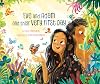
First sentence: It was Eve's first day in the Garden of Eden. Actually, it was her first day anywhere, since she was newly created. God had made her wonderfully well. Eve was not afraid of anything. She was not afraid of the wild green tangle of the garden. Not afraid of the tall leafy trees soaring up into the sky. Not afraid of the vivid, rainbow-colored flowers growing all around her, their sweet scents perfuming the air.
Eve is the star of the show in Leslie Kimmelman's light-hearted show more retelling of the creation story. (Note the shift from Adam and Eve to Eve and Adam. Adam perhaps should join Ken in singing "I'm Just Ken." Adam is introduced four pages into the text.)
The main theme seems to be that Eve (and Adam) were created by God and lived fearlessly (well, mostly). Eve finds Adam super cute and adorable but a little lacking in imagination and intelligence. Quote from the text, "Maybe it was because Adam had been first. Eve came second, and, well, practice makes perfect." (To be fair to the author, Eve does admit she is NOT perfect two seconds after saying that she was perfect.)
About a third of the way through the story, the pair are startled and frightened by rain, thunder, and lightning. This is the first time they've experienced fear but they turn to faith in God that all will be well...again. (I suppose theologians might have differing opinions on IF rain occurred before the Flood or not. I suppose this isn't the most critical issue one could have in the evangelical faith. [Note: when I say evangelical I do NOT mean anything related to politics.])
Soon one fright leads to another. Turns out ADAM is afraid of the dark. Good thing Eve isn't scared of the dark and can help calm him down. But as the darkness becomes truly darkness, even Eve becomes worried. Though not as bad as shivering Adam. The stars eventually make their appearance and the two nestle up comfy-cozy together. (The whole book presents Eve and Adam without clothes. So this nestling picture seems an odd choice. It is in some ways sweet. But in other ways, a little daring for a children's book.)
The book ends with Eve (and Adam) declaring everything GOOD. Here is where I go from mildly perturbed to indignant. God has been an "extra" at best in this little play of creation. Definitely not front and center. The book itself has been very cutesy and light-hearted. In a way. Perhaps not a harmless way. Definitely a more pointed way. A way that makes Adam look weak, pathetic, a sidekick to Eve, her companion sure enough but not her equal. But I think the "slap in the face," if you will is when the author takes Scripture--God's declaration of creation's goodness [see Genesis 1:1-31]--and ends her story this way, "Eve and Adam saw that it was good." God barely registers as a footnote in the text. In Genesis 1 and 2, God is on the move--he is ACTIVELY creating, speaking, working, declaring. Make no mistake, any [intelligent] reading of the text reveals that God is front and center, the "main character" if you will, the whole point. This picture book pushes out the Creator and makes CREATION--specifically Eve--the focal point.
As the title suggests, the picture book is "the first day, first night, second morning." The scene fades before Genesis 3.
I think I could be unimpressed but not particularly disgruntled if the picture book did not end with the phrase, "And Eve and Adam saw that it was good." I think it isn't so much the sentiment behind the literal words. I am 99.9% sure that Adam and Eve did look at God's creation and saw goodness. It is the parroting of the biblical narrative and attributing God's declaration as originating from Eve that is unsettling.
The book is in the difficult position. On the one hand, it isn't theologically or biblically sound enough for [some] Christians to want to share with little ones. And Adam and Eve narratives abound in Bible storybooks. This one isn't remarkable enough to be better than those. Will every Christian see this one as twisting Scripture? Maybe. Maybe not. Probably not. On the other hand, the subject matter itself--Adam, Eve, Garden of Eden, God--makes it a difficult sell to a general audience, a secular audience that may not want any hint of religion. For those wanting an Eve that more closely resembles the Barbie character from 2023's Barbie movie instead of the book of Genesis from the very Word of God, this one may be a good fit.
Now, I will say--and I doubt anyone is still reading--that I did not dislike the artwork. I think the story is meant to be tongue-in-cheek, playful, light-hearted, fun and silly. I don't think the author truly has made a decision to play around with the truth of Scripture. It may come off as irreverent to me, but I don't assume that that was authorial intent. show less
Eve is the star of the show in Leslie Kimmelman's light-hearted show more retelling of the creation story. (Note the shift from Adam and Eve to Eve and Adam. Adam perhaps should join Ken in singing "I'm Just Ken." Adam is introduced four pages into the text.)
The main theme seems to be that Eve (and Adam) were created by God and lived fearlessly (well, mostly). Eve finds Adam super cute and adorable but a little lacking in imagination and intelligence. Quote from the text, "Maybe it was because Adam had been first. Eve came second, and, well, practice makes perfect." (To be fair to the author, Eve does admit she is NOT perfect two seconds after saying that she was perfect.)
About a third of the way through the story, the pair are startled and frightened by rain, thunder, and lightning. This is the first time they've experienced fear but they turn to faith in God that all will be well...again. (I suppose theologians might have differing opinions on IF rain occurred before the Flood or not. I suppose this isn't the most critical issue one could have in the evangelical faith. [Note: when I say evangelical I do NOT mean anything related to politics.])
Soon one fright leads to another. Turns out ADAM is afraid of the dark. Good thing Eve isn't scared of the dark and can help calm him down. But as the darkness becomes truly darkness, even Eve becomes worried. Though not as bad as shivering Adam. The stars eventually make their appearance and the two nestle up comfy-cozy together. (The whole book presents Eve and Adam without clothes. So this nestling picture seems an odd choice. It is in some ways sweet. But in other ways, a little daring for a children's book.)
The book ends with Eve (and Adam) declaring everything GOOD. Here is where I go from mildly perturbed to indignant. God has been an "extra" at best in this little play of creation. Definitely not front and center. The book itself has been very cutesy and light-hearted. In a way. Perhaps not a harmless way. Definitely a more pointed way. A way that makes Adam look weak, pathetic, a sidekick to Eve, her companion sure enough but not her equal. But I think the "slap in the face," if you will is when the author takes Scripture--God's declaration of creation's goodness [see Genesis 1:1-31]--and ends her story this way, "Eve and Adam saw that it was good." God barely registers as a footnote in the text. In Genesis 1 and 2, God is on the move--he is ACTIVELY creating, speaking, working, declaring. Make no mistake, any [intelligent] reading of the text reveals that God is front and center, the "main character" if you will, the whole point. This picture book pushes out the Creator and makes CREATION--specifically Eve--the focal point.
As the title suggests, the picture book is "the first day, first night, second morning." The scene fades before Genesis 3.
I think I could be unimpressed but not particularly disgruntled if the picture book did not end with the phrase, "And Eve and Adam saw that it was good." I think it isn't so much the sentiment behind the literal words. I am 99.9% sure that Adam and Eve did look at God's creation and saw goodness. It is the parroting of the biblical narrative and attributing God's declaration as originating from Eve that is unsettling.
The book is in the difficult position. On the one hand, it isn't theologically or biblically sound enough for [some] Christians to want to share with little ones. And Adam and Eve narratives abound in Bible storybooks. This one isn't remarkable enough to be better than those. Will every Christian see this one as twisting Scripture? Maybe. Maybe not. Probably not. On the other hand, the subject matter itself--Adam, Eve, Garden of Eden, God--makes it a difficult sell to a general audience, a secular audience that may not want any hint of religion. For those wanting an Eve that more closely resembles the Barbie character from 2023's Barbie movie instead of the book of Genesis from the very Word of God, this one may be a good fit.
Now, I will say--and I doubt anyone is still reading--that I did not dislike the artwork. I think the story is meant to be tongue-in-cheek, playful, light-hearted, fun and silly. I don't think the author truly has made a decision to play around with the truth of Scripture. It may come off as irreverent to me, but I don't assume that that was authorial intent. show less
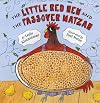
I'm usually skeptical of religious books, but this one was fantastic. The Little Red Hen makes a perfect Yiddish-speaking character, going about all the necessary tasks herself, while her "friends" Sheep, Horse, and Dog refuse to pitch in when asked. When they come knocking on her door at the beginning of her Seder, she relents and lets them in...but guess who has to do the dishes? A wonderful read-aloud.
*
Re-read March 2019
*
Re-read March 2019
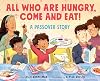
Ethan and his mom and dad prepare to celebrate Passover, but Ethan is sad that their table won't be as crowded as usual. They set four place settings (three humans and the poodle, Sadie), but the table is long and there are several more chairs, which is good, because there's a knock at the door...is it Elijah? No! It's a series of neighbors, friends, extended family...and also some random animals (hen, cat, bear). I feel that the animals were unnecessary and kind of an odd addition.
Author's show more note, haroset recipe.
See also: Just Us by Molly Beth Griffin show less
Author's show more note, haroset recipe.
See also: Just Us by Molly Beth Griffin show less

The traditional tale of the Little Red Hen, who plants and harvests her own grain, takes it to the miller, and bakes it into bread, all by herself, and then must decide whether to share the fruits of her labor with her lazy friends, is retold by Leslie Kimmelman as a Passover story in this appealing new picture-book. Determined to be prepared for the holiday, the Little Red Hen begins far in advance, planting the wheat she will need to make matzah. But "Oy gevalt!" Her friends - Dog, Horse show more and Sheep - refuse (sometimes quite rudely) all of her many requests for help. Which doesn't stop them from showing up to enjoy the Passover Seder, of course! Will the Little Red Hen send them on their way? Or will she remember the words from the Haggadah, "Let all who are hungry come and eat?"
Like Jane Breskin Zalben's Happy Passover, Rosie, this is a fun holiday tale whose purpose is not so much to explain the story and significance of Passover, as to offer an entertaining story incorporating its celebration. A brief afterword does provide some additional information about the holiday, as well as a recipe for matzah, but The Little Red Hen and the Passover Matzah is primarily a book for entertainment. I appreciated Kimmelman's reworking of the tale, which, with its theme of grain cultivation and baking, seemed particularly relevant to a story about making matzah. Paul Meisel's ink, watercolor, and pastel illustrations are lively and colorful. All in all, an appealing tale, recommended to anyone who is looking for good Passover storybooks. show less
Like Jane Breskin Zalben's Happy Passover, Rosie, this is a fun holiday tale whose purpose is not so much to explain the story and significance of Passover, as to offer an entertaining story incorporating its celebration. A brief afterword does provide some additional information about the holiday, as well as a recipe for matzah, but The Little Red Hen and the Passover Matzah is primarily a book for entertainment. I appreciated Kimmelman's reworking of the tale, which, with its theme of grain cultivation and baking, seemed particularly relevant to a story about making matzah. Paul Meisel's ink, watercolor, and pastel illustrations are lively and colorful. All in all, an appealing tale, recommended to anyone who is looking for good Passover storybooks. show less
Lists
Awards


You May Also Like


Associated Authors
Statistics
- Works
- 163
- Also by
- 1
- Members
- 9,315
- Popularity
- #2,586
- Rating
- 3.7
- Reviews
- 184
- ISBNs
- 494
- Languages
- 5