
Gilda Berger
Author of Bears
Series
Works by Gilda Berger
Is a Dolphin a Fish? Scholastic Q & A (Scholastic Question & Answer) (Scholastic Question & Answer) (2002) 391 copies
Scholastic Science Supergiants: What Makes the Light Bright, Thomas Edison? (2007) 360 copies, 2 reviews
Speedy Facts: Hurricanes Have Eyes But Can't See and Other Amazing Facts About Wild Weather (2003) 355 copies, 1 review
Scholastic Science Supergiants: Did It Take Creativity to Find Relativity, Albert Einstein? (2007) 349 copies, 1 review
Scholastic Science Supergiants: Did You Invent the Phone All Alone, Alexander Graham Bell? (2007) 251 copies
Discovering My World 6-Pack: Animals in Winter / Snowflakes Are Falling / Ice is Nice / Penguins / Cold Weather / Polar Bears (Discovering My World) (2010) 166 copies
A Tadpole Grows Up by Melvin Berger and Gilda Berger (2008, Book, Illustrated) (2008) 125 copies, 1 review
Penguins Swim But Don't Get Wet: And Other Amazing Facts about Polar Animals (Speedy Facts) (2004) 123 copies
6 Book Set ~ Busy Squirrels; Leaves, Leaves, Leaves; Owls in the Fall; Apples Grow on Trees; What Do Bats Do?; Time to Harvest (Discovering My World) (2009) 87 copies
Telephones, Televisions, and Toilets: How They Work-And What Can Go Wrong (Discovery Readers) (1993) 66 copies, 1 review
polar animal all year long 16 copies
Set 6 Discovering My World - Muscles/Bones/The Five Senses/Digestion/Heart and Lungs/The Brain 13 copies
Birds 4 copies
Tadpole to Frog 1 copy
What Do Bats do? 1 copy
Chipmunks 1 copy
PMS--Premenstrual Syndrome: An Infobook for Teenage Women, Their Friends, and Families (1985) 1 copy
Discovering My World (Solar System, Earth, Sun, Moons, Planets, Comets & Asteroids) 1 copy, 1 review
Pumpkins, Apples, BIG BOOK 1 copy
DISCOVERING MY WORLD : MOONS 1 copy
THE MOON 1 copy
Tropical Fish 1 copy
Apples, Bananas 1 copy
How Polar Animals Live 1 copy
Do All Spiders Spin Weds? 1 copy
Robins 1 copy
Winter Animals 1 copy
¡ZAS! 1 copy
Goats 1 copy
Associated Works
Tagged
Common Knowledge
- Birthdate
- 1935-06-30
- Gender
- female
- Occupations
- children's book author
elementary school teacher - Relationships
- Berger, Melvin (husband)
- Short biography
- [from Water, Water Everywhere]
Melvin and Gilda Berger have written over 150 nonfiction books for children and young adults. Their work has been honored by such prestigious organizations as the Children's Book Council, the National Council for the Social Studies, and the National Science Teachers Association. The Bergers live and work in New York. - Nationality
- USA
- Birthplace
- The Bronx, New York, USA
- Places of residence
- New York, New York, USA
East Hampton, New York, USA - Associated Place (for map)
- New York, USA
Members
Reviews
What Makes an Ocean Wave: Questions and Answers About Oceans (Scholastic Question and Answer Series) by Melvin Berger

What Makes and Ocean Wave is a GREAT book for kids interested in all aspects of oceans. This book is set up in Question and Answer format which makes it a great teaching tool. Sample questions include, "How do you measure the height of a wave, How high was the highest ocean wave on record?, Are waves dangerous?, What are tsunamis?" The answers are 2-4 sentences and easy to read and understand. The book also covers a wide variety of information surrounding oceans and sea life. I used this show more book in a Kindergarten lesson plan after we created a KW chart where the students brainstormed what they already knew about oceans and what they wanted to learn about oceans. I also used the index of the book with my students to look up information about the things they wanted to learn. I revisited this book multiple times over the week to provide information to my students and to also inspire some of their writing as we created nonfiction books about oceans. show less
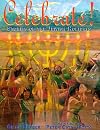
I loved this book not only because of its retelling of Jewish stories, but because it included crafts and recipes for food that go along with each of the holidays described. The first holiday described in the book is Shabbat and it instructions on how to make candle sticks, a spice box, and kugel. The main idea of this book is not only to provide an authentic and captivating retelling of Jewish holidays, but to also provide ways in which the reader can immerse themselves within the holiday.
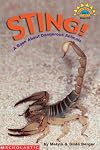
I really enjoyed this book because of two reasons. The language of the book was descriptive and informative and the writing was engaging and organized. For example, "The stinger is attached to ta special organ inside the bee. The organ is called a gland. This gland makes poison." Here the author described the anatomy of the bee and its stinger. I also appreciated all the pictures in the book as it was diverse in animals. The book displayed poisonous animals such as spiders, scorpions, frogs, show more snakes, fish, and many more. Overall, this book is about dangerous animals around the world. show less

This is a bi-lingual book about the pumpkin growing process. The book talks about when to plant the seeds and when they will be ready. It also talks about the different uses of a pumpkin. In example, bake a pumpkin pie and carve a pumpkin.
I liked the book because it's a simple way to talk about how a pumpkin is grown. I didn't know you had to plant the seeds in the spring. I carved my first pumpkin this week and I thought about that book while I was taking the seeds out.
In the classroom, I show more would buy a few pumpkins and put the students in groups. They will be given art supplies and they should paint a design on the pumpkin. I don't think we would be allowed to carve a pumpkin in school so that would be a good alternative. When they were finished the pumpkins would be displayed in the class. Also, I would read this book to the the students when we were doing a fall/pumpkin theme. Then we would do a study of the life cycle of a pumpkin. show less
I liked the book because it's a simple way to talk about how a pumpkin is grown. I didn't know you had to plant the seeds in the spring. I carved my first pumpkin this week and I thought about that book while I was taking the seeds out.
In the classroom, I show more would buy a few pumpkins and put the students in groups. They will be given art supplies and they should paint a design on the pumpkin. I don't think we would be allowed to carve a pumpkin in school so that would be a good alternative. When they were finished the pumpkins would be displayed in the class. Also, I would read this book to the the students when we were doing a fall/pumpkin theme. Then we would do a study of the life cycle of a pumpkin. show less
Lists
Awards


You May Also Like


Associated Authors
Statistics
- Works
- 309
- Also by
- 2
- Members
- 54,556
- Popularity
- #275
- Rating
- 3.9
- Reviews
- 197
- ISBNs
- 739
- Languages
- 4
