

Alice Childress (1916–1994)
Author of A Hero Ain't Nothin But a Sandwich
About the Author
Works by Alice Childress
Like One of the Family: Conversations from a Domestic's Life (1956) — Author — 149 copies, 13 reviews
Florence 1 copy
Associated Works
The Best Short Stories by Black Writers, 1899-1967: The Classic Anthology (1967) — Contributor — 200 copies, 1 review
Daughters of Africa: An International Anthology of Words and Writings by Women of African Descent from the Ancient Egyptian to the Present (1992) — Contributor — 187 copies
Black on White: Black Writers on What It Means to Be White (1998) — Contributor — 129 copies, 2 reviews
The Actor's Book of Scenes from New Plays: 70 Scenes for Two Actors, from Today's Hottest Playwrights (1988) — Contributor — 88 copies, 1 review
Revolutionary Tales: African American Women's Short Stories, from the First Story to the Present (1995) — Contributor — 54 copies
The Unforgetting Heart: An Anthology of Short Stories by African American Women, 1859-1993 (1993) — Contributor — 23 copies
Tagged
Common Knowledge
- Other names
- Henderson, Louise (pseudonym)
Herndon, Alice (pseudonym) - Birthdate
- 1916-10-12
- Date of death
- 1994-08-14
- Gender
- female
- Education
- Wadleigh High School, New York, New York, USA
- Occupations
- playwright
novelist
actor
children's book author
young adult writer - Organizations
- Freedom
- Nationality
- USA
- Birthplace
- Charleston, South Carolina, USA
- Places of residence
- New York, New York, USA
- Place of death
- Queens, New York, USA
- Associated Place (for map)
- New York, USA
Members
Reviews
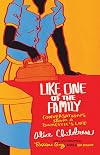
I received a copy of this book from LibraryThing Early Reviewers in exchange for an honest review. "Like One of the Family" was written some 60 years ago, and its short chapters were serialized in Paul Robeson's newspaper, "Freedom." The author was a playwright, as well as a writer, and the pieces themselves feel like a one-woman play -- as they are set up as one side of conversations between two women. Both are young, black, and work as day laborers in the houses of white families in New show more York City. The protagonist, and voice, is Mildred, a woman of some considerable strength and dignity.
My impression is that the collection is best read in a serialized manner, rather than straight through as a novel. Not for any lack in the writing, but just that otherwise the collection starts to feel a bit unrelenting. The author is both sharp and witty, and each installment seems to take as a given that a spoonful of sugar will help the medicine go down. The medicine is the message that the status quo must change -- that black citizens are due the same rights and respect as any other. And Mildred is rightfully frustrated to the point of anger that it just isn't so. The spoonful of sugar is the humor Childress employs throughout. Although she gets her point across cleverly, in doing so whites are often characterized as either mean or condescending, or merely tentative -- largely clueless about how to address or acknowledge a black domestic worker as a fellow human being. To her credit, Childress' vision is that everyone must be part of the solution (if you're quiet, you're part of the mob, whether you agree with it or not). The timelessness of this message is actually a sad reminder that we apparently still need to be told as much. How is it that we have not successfully learned this lesson and fixed the system by now? I think that were Childress still alive, she would be disappointed to learn that her vision is still just that, and not our current reality. show less
My impression is that the collection is best read in a serialized manner, rather than straight through as a novel. Not for any lack in the writing, but just that otherwise the collection starts to feel a bit unrelenting. The author is both sharp and witty, and each installment seems to take as a given that a spoonful of sugar will help the medicine go down. The medicine is the message that the status quo must change -- that black citizens are due the same rights and respect as any other. And Mildred is rightfully frustrated to the point of anger that it just isn't so. The spoonful of sugar is the humor Childress employs throughout. Although she gets her point across cleverly, in doing so whites are often characterized as either mean or condescending, or merely tentative -- largely clueless about how to address or acknowledge a black domestic worker as a fellow human being. To her credit, Childress' vision is that everyone must be part of the solution (if you're quiet, you're part of the mob, whether you agree with it or not). The timelessness of this message is actually a sad reminder that we apparently still need to be told as much. How is it that we have not successfully learned this lesson and fixed the system by now? I think that were Childress still alive, she would be disappointed to learn that her vision is still just that, and not our current reality. show less
 This review was written for LibraryThing Early Reviewers.
Childress's Mildred is a young black woman who works in other people's homes doing cleaning, laundry, and preparations for entertainment. In a series of very short (two to five pages) one-sided conversations, Mildred addresses her friend Marge and tells her about her experiences as a domestic worker. Childress shows us how employers tried various ways of getting extra work out of Mildred, and how she stood up for her rights, her working conditions, and for respect as a woman. When one show more employer mentions that she's forgotten Mildred to produce her health card, Mildred responds that she's glad she brought it up, because she had forgotten to ask the employer for health cards for herself and her family, "since I'll be handling the laundry and everything." The employer quickly backs down.
Mildred's stories range beyond her employment situations. For example, she describes going to meetings about Africa, and she talks with her sister about her nephew's activism, coming down squarely in favor of the young man's activities. Mildred is not simply a font of folksy homespun wisdom; she is a sharp critical thinker who has quite a bit to say about race, poverty, civil rights, and treating people with respect. I would love to have a chance to meet Mildred. show less
Mildred's stories range beyond her employment situations. For example, she describes going to meetings about Africa, and she talks with her sister about her nephew's activism, coming down squarely in favor of the young man's activities. Mildred is not simply a font of folksy homespun wisdom; she is a sharp critical thinker who has quite a bit to say about race, poverty, civil rights, and treating people with respect. I would love to have a chance to meet Mildred. show less
This review was written for LibraryThing Early Reviewers.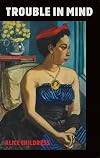
Fascinating play. Reading it, as opposed to seeing the play performed, there are interesting parallels between the action of the play and the play within the play, artfully explored by changes in speech patterns as well as other shifts in perspective. Although this was written in the middle of the twentieth century, and there are assumptions and slights that are offensive today, it play is also heart-rending in its modernity. So little has changed.
Perfect. and it makes me cry that it's still so perfect and relevant. Length is key, cause Mildred hands us out some hard truths, and the format lets us take a breath between them. Everything is rooted in a real love of peace and wanting everyone to be part of it - but without falling into the trap of trying to be nice to everyone. She is the model of "I liked you enough to tell you the truth." It is glorious and heartbreaking and I want everyone to read it.
This review was written for LibraryThing Early Reviewers.Lists
Awards


You May Also Like


Associated Authors
Statistics
- Works
- 15
- Also by
- 18
- Members
- 789
- Popularity
- #32,271
- Rating
- 3.9
- Reviews
- 25
- ISBNs
- 47
- Languages
- 1
- Favorited
- 2
