
Kim Barker
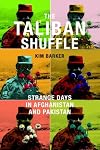
Author of The Taliban Shuffle: Strange Days in Afghanistan and Pakistan
About the Author
Image credit: photo by William Coupon
Works by Kim Barker
Tagged
Common Knowledge
- Birthdate
- ca. 1980
- Gender
- female
- Occupations
- journalist
- Map Location
- USA
Members
Reviews
Whiskey Tango Foxtrot (The Taliban Shuffle MTI): Strange Days in Afghanistan and Pakistan by Kim Barker

I'm very thankful to have been sent a copy of Whiskey Tango Foxtrot by the lovely Angela at Wunderkind PR. This book was originally published in 2011 under the title The Taliban Shuffle: Strange Days in Afghanistan and Pakistan (the new title is indeed catchier and took me longer than I'd care to admit to puzzle out). The author, Kim Barker, was a foreign correspondent for the Chicago Tribune who didn't know the language, culture, or the significance of the countries she was assigned. And show more yet, she managed to feel more at home in Afghanistan and Pakistan (to a lesser extent) than she could have ever anticipated. This is a gritty, comedic, and tragic story of war and the impotence one feels when thrust into the middle as an outsider (or an insider even). At times, I felt the pull of adventure much as Kim did. I imagined myself country hopping and getting to know the ins and outs of various peoples. (After all, I do have a degree in Anthropology.) And then there would be a vivid description of the violence and destruction of war that never seems to have an end. I marvel at her willingness (and eagerness) to stay and experience it firsthand. She says it's an addiction and she continually talks about being in its throes. It is not glamorous and she doesn't sugarcoat it. In fact, she criticizes the foreign governments who refuse to see the truth of the situation. I don't think I will ever look at reporting the same way ever again. You might have guessed that I really enjoyed it. It's a solid 10/10 especially as it highlighted an area of the world that I feel woefully ignorant of...until now!
Whiskey Tango Foxtrot is out today and is being adapted into a film due out March 4th starring Tina Fey (also Martin Freeman who I think I've recognized from the book and I'm excited). I hope that it stays relatively close to the book if not in content then in feeling. I think it's a wake-up call that is sorely needed. show less
Whiskey Tango Foxtrot is out today and is being adapted into a film due out March 4th starring Tina Fey (also Martin Freeman who I think I've recognized from the book and I'm excited). I hope that it stays relatively close to the book if not in content then in feeling. I think it's a wake-up call that is sorely needed. show less

I was completely captivated by this memoir of Kim Barker's time covering the South Asia region as a correspondant for the Chicago Tribune. It is snarky, it is funny, it is sad and infuriating and it is eyeopening. I read books that have made be want to laugh and books that have made me want to cry but rarely have I come across a book that has made me want to do both at the same time!
First of all a quick summary: Kim Barker gets the assignment to cover South Asia after 9/11 not because she is show more well qualified (she has hardly ever travelled outside the U.S. before) but because she is single and doesn't have children - in other words expendable. She travels to Afghanistan knowing next to nothing about the place and the people and is quickly overwhelmed by her task. The only thing that helps her make sense of everything is her Afghan fixer Farooq, a medical student whose ambitions to become a doctor are becoming ever more distant and who puts his energy, language skills and good sense to use in 'fixing' appointments, interviews and logistics for western journalists in an attempt to support his extended family. Barker's naivety and gaucheness start giving way to an adrenaline-addiction common to many of the westerners in Kabul at the time, as well as a growing bond with the place itself (at one point she wonders if the reason she feels so at home in Afghanistan is because she grew up in rural Montanna, which also has an abundance of armed bearded men driving around in pick-ups who hate their government!) Over the course of the next few years she will have increasingly surreal experiences and a chance to observe politicians, warlords, soldiers, contractors, aid workers, journalists, prostitutes, generals, lawyers, boyfriends and most keenly of all, herself, in Afghanistan and Pakistan, as she does the 'Taliban shuffle' shuttling between the two countries.
At this point its worth noting what this book is not. It is not a detailed account of the American war in Afghanistan/Pakistan. It is not an in-depth view of the developments of the last 10 years in the region (though it does have some pithy insights to offer along the way), it is not an analysis of American policy in the War on Terror, or military strategy, or an attempt to dissect the social and historical forces at play in the region. There is a whole crop of books that have come out over the last year or so that have attempted to do these things and readers looking for the above would be well advised to refer to them (examples include Ahmed Rashid's [Descent Into Chaos], Sebastien Junger's [WAR], Peter Bergen's [The Longest War], Seth Jones' [In the Graveyard of Empires] or Gretchen Peters' [Seeds of Terror] or Bird and Marshall's upcoming 'Afghanistan - How the West Lost Its Way').
While Barker does a good job of describing what is happening around her this is primarily a story about her journey as a person and as a reporter. As someone who reads very extensively on the topic of the war in Afghanistan, and who considers himself very well informed on the subject, what I found most useful about the book was its insight into the world of journalists, aid workers and contractors and the walled-off culture of excess they create for themselves while working in war zones. Its also a good insight into how the world of reporting works (after the Iraq invasion, Afghanistan is essentially ignored as being 'old news' for years, until in 2006 a resurgent Taliban are beginning to cause serious trouble again). Barker's reporting is also effected by the declining readership of newspapers and downsizing of reporters in the U.S. - adding an extra element of stress and tension to her life. Finally its also an interesting look at several prominent personalities in the region (several of whom seem to take a shine to Barker, not least of whom is Nawaz Sharif, former PM and leader of the Pakistan Muslim League party). Many of these episodes seem utterly extraordinary and the only thing that keeps me from being certain that she is embellishing her accounts is the knowledge that all sorts of crazy and bizarre things can and do happen every day in this country!
But putting aside the question of what we learn, or find useful, about this volume, the best reason to read it is that it is so much fun to read. At first I thought I would be irritated by Barker's accounts of her lifestyle, her loves (and break-ups) or the challenges of finding a place to drink and dance with a date in Afghanistan, but when it comes down to it, the author's personal journey is also an engaging one. show less
First of all a quick summary: Kim Barker gets the assignment to cover South Asia after 9/11 not because she is show more well qualified (she has hardly ever travelled outside the U.S. before) but because she is single and doesn't have children - in other words expendable. She travels to Afghanistan knowing next to nothing about the place and the people and is quickly overwhelmed by her task. The only thing that helps her make sense of everything is her Afghan fixer Farooq, a medical student whose ambitions to become a doctor are becoming ever more distant and who puts his energy, language skills and good sense to use in 'fixing' appointments, interviews and logistics for western journalists in an attempt to support his extended family. Barker's naivety and gaucheness start giving way to an adrenaline-addiction common to many of the westerners in Kabul at the time, as well as a growing bond with the place itself (at one point she wonders if the reason she feels so at home in Afghanistan is because she grew up in rural Montanna, which also has an abundance of armed bearded men driving around in pick-ups who hate their government!) Over the course of the next few years she will have increasingly surreal experiences and a chance to observe politicians, warlords, soldiers, contractors, aid workers, journalists, prostitutes, generals, lawyers, boyfriends and most keenly of all, herself, in Afghanistan and Pakistan, as she does the 'Taliban shuffle' shuttling between the two countries.
At this point its worth noting what this book is not. It is not a detailed account of the American war in Afghanistan/Pakistan. It is not an in-depth view of the developments of the last 10 years in the region (though it does have some pithy insights to offer along the way), it is not an analysis of American policy in the War on Terror, or military strategy, or an attempt to dissect the social and historical forces at play in the region. There is a whole crop of books that have come out over the last year or so that have attempted to do these things and readers looking for the above would be well advised to refer to them (examples include Ahmed Rashid's [Descent Into Chaos], Sebastien Junger's [WAR], Peter Bergen's [The Longest War], Seth Jones' [In the Graveyard of Empires] or Gretchen Peters' [Seeds of Terror] or Bird and Marshall's upcoming 'Afghanistan - How the West Lost Its Way').
While Barker does a good job of describing what is happening around her this is primarily a story about her journey as a person and as a reporter. As someone who reads very extensively on the topic of the war in Afghanistan, and who considers himself very well informed on the subject, what I found most useful about the book was its insight into the world of journalists, aid workers and contractors and the walled-off culture of excess they create for themselves while working in war zones. Its also a good insight into how the world of reporting works (after the Iraq invasion, Afghanistan is essentially ignored as being 'old news' for years, until in 2006 a resurgent Taliban are beginning to cause serious trouble again). Barker's reporting is also effected by the declining readership of newspapers and downsizing of reporters in the U.S. - adding an extra element of stress and tension to her life. Finally its also an interesting look at several prominent personalities in the region (several of whom seem to take a shine to Barker, not least of whom is Nawaz Sharif, former PM and leader of the Pakistan Muslim League party). Many of these episodes seem utterly extraordinary and the only thing that keeps me from being certain that she is embellishing her accounts is the knowledge that all sorts of crazy and bizarre things can and do happen every day in this country!
But putting aside the question of what we learn, or find useful, about this volume, the best reason to read it is that it is so much fun to read. At first I thought I would be irritated by Barker's accounts of her lifestyle, her loves (and break-ups) or the challenges of finding a place to drink and dance with a date in Afghanistan, but when it comes down to it, the author's personal journey is also an engaging one. show less
Whiskey Tango Foxtrot (The Taliban Shuffle MTI): Strange Days in Afghanistan and Pakistan by Kim Barker
The Good Stuff
Intriguing opening chapter
Fascinating women, I loved her dry, sarcastic and self deprecating humour
Learned a lot about Afghanistan and Pakistan. Such a fascinating and outwordly place. As an ignorant white middle class women, it seems like a hell I would never want to visit. Barker helps you understand the culture and the history. Still not on my bucket list, but I am intrigued now. But again I just want to smack them upside the head about their need for revenge.
Wild to know show more that a man trained as a surgeon would make more money at being a Fixer than as a Doctor. (Farouq)
Found myself wanting to learn about NATO and how effective they actually are
The Not So Good Stuff
Choppy and the flow of the story was just off for me. Note though I read most of it on public transportation which can be distracting at times.
You can tell she is American
I really think this part of the world should be forced to watch the episode of Doctor Who called "The Zygon Inversion" over and over until the idea about forgiveness sinks in (ok this has nothing to do with the book - but still think it holds true!)
Favorite Quotes/Passages
"Male Ethnic Pashtuns loved flowers and black eyeliner and anything fluorescent or sparkly, maybe to make up for the beige terrain that stretched forever in Afghanistan, maybe to look pretty"
I knew why. Afghanistan seemed familiar It had jagged blue-and-purple mountains, big skies and bearded men in pickup trucks loaded with guns and hate of the government It was just like Montana-just on different drugs."
"An ass grab was about humiliation and, of course, the feeling of some men in the country that Western women needed sex like oxygen, and that if a Pakistani man just happened to put himself in her path or pinch her when the sex urge came on, he'd get lucky. I blame Hollywood."
"But somehow, where skills, talent and perseverance had failed, my unremarkable ass had delivered."
“I had seen more death—the tsunami, two different earthquakes. But I could somehow understand natural disasters. This was a human disaster, and I couldn’t make sense of the hate.”
3 Dewey's
I reviewed this because Cammy recommended it and I always read what he suggests. show less
Intriguing opening chapter
Fascinating women, I loved her dry, sarcastic and self deprecating humour
Learned a lot about Afghanistan and Pakistan. Such a fascinating and outwordly place. As an ignorant white middle class women, it seems like a hell I would never want to visit. Barker helps you understand the culture and the history. Still not on my bucket list, but I am intrigued now. But again I just want to smack them upside the head about their need for revenge.
Wild to know show more that a man trained as a surgeon would make more money at being a Fixer than as a Doctor. (Farouq)
Found myself wanting to learn about NATO and how effective they actually are
The Not So Good Stuff
Choppy and the flow of the story was just off for me. Note though I read most of it on public transportation which can be distracting at times.
You can tell she is American
I really think this part of the world should be forced to watch the episode of Doctor Who called "The Zygon Inversion" over and over until the idea about forgiveness sinks in (ok this has nothing to do with the book - but still think it holds true!)
Favorite Quotes/Passages
"Male Ethnic Pashtuns loved flowers and black eyeliner and anything fluorescent or sparkly, maybe to make up for the beige terrain that stretched forever in Afghanistan, maybe to look pretty"
I knew why. Afghanistan seemed familiar It had jagged blue-and-purple mountains, big skies and bearded men in pickup trucks loaded with guns and hate of the government It was just like Montana-just on different drugs."
"An ass grab was about humiliation and, of course, the feeling of some men in the country that Western women needed sex like oxygen, and that if a Pakistani man just happened to put himself in her path or pinch her when the sex urge came on, he'd get lucky. I blame Hollywood."
"But somehow, where skills, talent and perseverance had failed, my unremarkable ass had delivered."
“I had seen more death—the tsunami, two different earthquakes. But I could somehow understand natural disasters. This was a human disaster, and I couldn’t make sense of the hate.”
3 Dewey's
I reviewed this because Cammy recommended it and I always read what he suggests. show less
I listened to the audiobook of Kim Barker's The Taliban Shuffle and thought that the tone and delivery were too flippant, making the narrative seem more superficial than it really is. Sometimes, I repeated sentences the way I’d have read them and that alone changed the meaning. But still, the book does come across as a bit on the light side. I did not mind the personal details and the sometimes flip attitude as much as some other reviewers here. I didn’t find it shallow, as many do. show more It’s black humor. Yes, Barker talks about what she wore and the men she was involved with and going out to clubs, etc. But this is somewhat a journal of personal survival, how Barker coped with a brutal and frightening reality.
The narrative is lively, humorous, and often witty. But I think she does also give us a look at the constantly threatening conditions, the violence, and the absurdities of living in Afghanistan and Pakistan — as a single, young woman, struggling to be taken seriously. We also come to understand how addictive the adrenaline rush of war and danger can be. Barker was a little in love with Afghanistan and thrived in this surreal situation, where war is a way of life, security is often nonexistent, power (and Internet) are often lacking, and you never know whom you can trust.
Barker doesn’t set out to tutor us about the difficult and complex politics, and I suspect that would be pretty hard for someone in her position to pull off. Foreign correspondents are not all experts before they arrive at their destination. (But I admit that I haven’t read other books in this genre.) She does give us a realistic picture of what a war correspondent really does on a day-to-day basis — something I’d never have thought about much. I basically liked it and would recommend it with caution. The tone will bother many readers. show less
The narrative is lively, humorous, and often witty. But I think she does also give us a look at the constantly threatening conditions, the violence, and the absurdities of living in Afghanistan and Pakistan — as a single, young woman, struggling to be taken seriously. We also come to understand how addictive the adrenaline rush of war and danger can be. Barker was a little in love with Afghanistan and thrived in this surreal situation, where war is a way of life, security is often nonexistent, power (and Internet) are often lacking, and you never know whom you can trust.
Barker doesn’t set out to tutor us about the difficult and complex politics, and I suspect that would be pretty hard for someone in her position to pull off. Foreign correspondents are not all experts before they arrive at their destination. (But I admit that I haven’t read other books in this genre.) She does give us a realistic picture of what a war correspondent really does on a day-to-day basis — something I’d never have thought about much. I basically liked it and would recommend it with caution. The tone will bother many readers. show less
You May Also Like


Statistics
- Works
- 7
- Members
- 511
- Popularity
- #48,531
- Rating
- 3.5
- Reviews
- 20
- ISBNs
- 29
- Languages
- 1