

Jess Lebow
Author of Master of Chains
About the Author
Works by Jess Lebow
Associated Works
Tagged
Common Knowledge
- Canonical name
- Lebow, Jess
- Legal name
- Lebow, Jess
- Other names
- LAIN, T. H. (Pen name)
LEBOW, Jess - Gender
- male
- Education
- Western Washington University
- Organizations
- Game Manufacturers' Association (GAMA)
Academy of Interactive Arts and Sciences (AIAS) - Nationality
- USA
- Places of residence
- Seattle, Washington, USA
- Associated Place (for map)
- Washington, USA
Members
Reviews
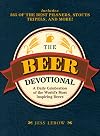
Fantastically enjoyable read. Quotes that made me laugh, recipes that sound delish, beer facts that were new to me, and beer drinking games that sound hilarious. The only drawback was almost all the beer reviews were for US beers, with a few Belgian beers thrown in, not a single Canadian beer.
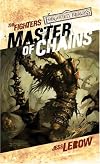
From a reader's point of view, Master of Chains is both interesting and problematic.
On the one hand, it has a plot that's simply bigger than should've been stuffed into a single book. And it has a plot that offers several competing interests that must inevitably collide; just the thing to stir up interesting conflicts. That's what good stories are made of, right?
On the other hand, almost all the conflicts and build-ups receive fleeting attention. For example, the book's protagonist, Ryder, show more finds himself in a position where he has a relationship with chains (trying not to spoil anything here), but the scenarios is so brief that one is left to wonder how he suddenly has become this incredible "Master of Chains." It all sort of wags along, unbelievably.
Unfortunately, many instances in the book seem glossed over or given a light treatment, and I found myself shaking my head in disbelief--immersion breaking stuff, I'm talking about.
Atop that, the book's editor should be fired. At times, the writing reads more like a second or third draft rather than a Forgotten Realms published novel. Sometimes the text is even confusing, perhaps approaching nonsense, particularly when the author flung around pronouns too much.
And then there's the ending. This bugger felt slapped on and deflated the final, confrontational build-up central to the book. Strangely and painfully abrupt, too.
Okay, now that I've beat this thing like a pinata, let me say that the plot still, somehow, propped up the novel despite its frequent and glaring flaws. Had it been given more time to stew, the story could have smartly fit into two or three novels instead.
I still sort of like the book, even though it's not quite good. You know the type? Something you're glad you've read but you can't recommend to anyone else? Yup. Right here, folks. show less
On the one hand, it has a plot that's simply bigger than should've been stuffed into a single book. And it has a plot that offers several competing interests that must inevitably collide; just the thing to stir up interesting conflicts. That's what good stories are made of, right?
On the other hand, almost all the conflicts and build-ups receive fleeting attention. For example, the book's protagonist, Ryder, show more finds himself in a position where he has a relationship with chains (trying not to spoil anything here), but the scenarios is so brief that one is left to wonder how he suddenly has become this incredible "Master of Chains." It all sort of wags along, unbelievably.
Unfortunately, many instances in the book seem glossed over or given a light treatment, and I found myself shaking my head in disbelief--immersion breaking stuff, I'm talking about.
Atop that, the book's editor should be fired. At times, the writing reads more like a second or third draft rather than a Forgotten Realms published novel. Sometimes the text is even confusing, perhaps approaching nonsense, particularly when the author flung around pronouns too much.
And then there's the ending. This bugger felt slapped on and deflated the final, confrontational build-up central to the book. Strangely and painfully abrupt, too.
Okay, now that I've beat this thing like a pinata, let me say that the plot still, somehow, propped up the novel despite its frequent and glaring flaws. Had it been given more time to stew, the story could have smartly fit into two or three novels instead.
I still sort of like the book, even though it's not quite good. You know the type? Something you're glad you've read but you can't recommend to anyone else? Yup. Right here, folks. show less
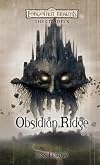
In a writing style throwback to the adventure stories of Robert Howard and others of his generation of sword and sorcery writers – light on dialogue, big on action - Jess Lebow has brought some of the adventure back to the Forgotten Realms campaign setting in his latest novel, Obsidian Ridge. Foregoing character introspections (except to a limited extent) Lebow allows the action to drive his narrative. It is much like the early Ed Greenwood, when he first began writing media tie in novels show more for his Forgotten Realms campaign setting.
Obsidian Ridge tells the story of three primary heroes. The Claw is the king’s assassin, whose bladed gauntlets remind me of nothing less than Wolverine. And the Claw uses them to equal effect. Mariko is the king’s daughter, but she is also a budding spellcaster and damsel in distress. Korox, King of Erlkazar - a newly formed nation that broke off from Tethyr - is forced to make a decision about whether or not to give up his daughter to the arch magus Xeries, master of a floating mountain in the sky called the Obsidian Ridge. Twisted in body and mind, Xeries threatens to destroy all of Erlkazar if he does not receive Mariko for his payment. But there are other forces at work. The criminal underworld of Lhorbauth – capital of Erlkazar – has captured Mariko and holds her for ransom from a desperate king. The king and the Claw must find Mariko, all the while wondering whether or not to turn over Mariko to the evil Xeries.
As you can see from the synopsis in the previous paragraph, there is a lot of potential for action in the story, and Lebow leverages it to the hilt. The story is light on dialogue, and instead moves from action sequence to battle scene, from battle scene to fight scene, with a dose of mystery thrown into the mix rather than conversation to move the narrative forward. The identity of the Claw, and the king of the underworld both remain a significant mystery for a large part of the story, although the astute reader will guess their identities quickly.
Although it is action that drives the plot, there is some time given over to introspection. Korox especially wrestles with what it means to be king. But Lebow’s skill is not in getting us to emotionally connect with the characters, rather it is in giving us heroes that we cannot help but cheer for. Reading Obsidian Ridge was like watching a football game in which you know nothing of the players except their names. As you watch, the announcers give you little tidbits of information about the players, and you appreciate them, but that isn’t why you tuned in. You tuned in because you needed something to cheer for, to watch one team beat another. In Obsidian Ridge you want to watch the team of Korox, Mariko, and the Claw beat Xeries and the criminal underworld. What you learn of their characters in the meantime is interesting, but is not why you choose to read the book.
The novel has flaws. It is a simple plot, and Lebow uses deus ex machina a few times. The Claw and Mariko get out of a few scrapes a bit too fortuitously and this can seem a little contrived. When the plot tries to zig or zag, it is usually pretty obvious where the author is going, and when a surprise does occur, it is because the reader had little foreshadowing and so had no reason to expect it.
If you enjoy dialogue as part of the story, Lebow uses only what he must. The story is mostly told through a description of events as they unfold. Characterization is simplified and the motivations of the characters are not in any way complex – except for Korox. He alone really struggles with himself.
I don’t think that this novel makes a good entry point for new Realms readers. It explains little of the Realms mythos, and in fact only has a very few mentions of the standard races and denizens of the realms. Even those are usually part human, part something else. A little prior knowledge of the Realms would stand the reader in good stead for understanding the Realms story Lebow has written. The book could have been placed in another setting other than the Realms and still have been essentially the same story. I do recommend it for all Realms readers to add to their collection. It is not a stand out novel, but neither is it mediocre, and so it fits snuggle into that area of fiction that is best classified as an enjoyable read.
In Obsidian Ridge Jess Lebow took a difficult topic - it is part of the Forgotten Realms The Citadels series, where the writers try to write a story about fortresses and castles - and made an interesting story of it. It has inescapable dungeons, a love story, truly evil villains, battle and fight scenes, and a hero who uses gauntlets as weapons. What more could you ask for from a sword and sorcery novel?
copied in full from my blog, Grasping for the Wind show less
Obsidian Ridge tells the story of three primary heroes. The Claw is the king’s assassin, whose bladed gauntlets remind me of nothing less than Wolverine. And the Claw uses them to equal effect. Mariko is the king’s daughter, but she is also a budding spellcaster and damsel in distress. Korox, King of Erlkazar - a newly formed nation that broke off from Tethyr - is forced to make a decision about whether or not to give up his daughter to the arch magus Xeries, master of a floating mountain in the sky called the Obsidian Ridge. Twisted in body and mind, Xeries threatens to destroy all of Erlkazar if he does not receive Mariko for his payment. But there are other forces at work. The criminal underworld of Lhorbauth – capital of Erlkazar – has captured Mariko and holds her for ransom from a desperate king. The king and the Claw must find Mariko, all the while wondering whether or not to turn over Mariko to the evil Xeries.
As you can see from the synopsis in the previous paragraph, there is a lot of potential for action in the story, and Lebow leverages it to the hilt. The story is light on dialogue, and instead moves from action sequence to battle scene, from battle scene to fight scene, with a dose of mystery thrown into the mix rather than conversation to move the narrative forward. The identity of the Claw, and the king of the underworld both remain a significant mystery for a large part of the story, although the astute reader will guess their identities quickly.
Although it is action that drives the plot, there is some time given over to introspection. Korox especially wrestles with what it means to be king. But Lebow’s skill is not in getting us to emotionally connect with the characters, rather it is in giving us heroes that we cannot help but cheer for. Reading Obsidian Ridge was like watching a football game in which you know nothing of the players except their names. As you watch, the announcers give you little tidbits of information about the players, and you appreciate them, but that isn’t why you tuned in. You tuned in because you needed something to cheer for, to watch one team beat another. In Obsidian Ridge you want to watch the team of Korox, Mariko, and the Claw beat Xeries and the criminal underworld. What you learn of their characters in the meantime is interesting, but is not why you choose to read the book.
The novel has flaws. It is a simple plot, and Lebow uses deus ex machina a few times. The Claw and Mariko get out of a few scrapes a bit too fortuitously and this can seem a little contrived. When the plot tries to zig or zag, it is usually pretty obvious where the author is going, and when a surprise does occur, it is because the reader had little foreshadowing and so had no reason to expect it.
If you enjoy dialogue as part of the story, Lebow uses only what he must. The story is mostly told through a description of events as they unfold. Characterization is simplified and the motivations of the characters are not in any way complex – except for Korox. He alone really struggles with himself.
I don’t think that this novel makes a good entry point for new Realms readers. It explains little of the Realms mythos, and in fact only has a very few mentions of the standard races and denizens of the realms. Even those are usually part human, part something else. A little prior knowledge of the Realms would stand the reader in good stead for understanding the Realms story Lebow has written. The book could have been placed in another setting other than the Realms and still have been essentially the same story. I do recommend it for all Realms readers to add to their collection. It is not a stand out novel, but neither is it mediocre, and so it fits snuggle into that area of fiction that is best classified as an enjoyable read.
In Obsidian Ridge Jess Lebow took a difficult topic - it is part of the Forgotten Realms The Citadels series, where the writers try to write a story about fortresses and castles - and made an interesting story of it. It has inescapable dungeons, a love story, truly evil villains, battle and fight scenes, and a hero who uses gauntlets as weapons. What more could you ask for from a sword and sorcery novel?
copied in full from my blog, Grasping for the Wind show less
A decent read. It gets better as it goes along.
Lists
You May Also Like


Associated Authors
Statistics
- Works
- 10
- Also by
- 4
- Members
- 723
- Popularity
- #35,107
- Rating
- 3.3
- Reviews
- 11
- ISBNs
- 20
- Languages
- 2
- Favorited
- 1