
Robert L. D. Cooper
Author of The Masonic Magician: The Life and Death of Count Cagliostro and His Egyptian Rite
About the Author
Works by Robert L. D. Cooper
The Masonic Magician: The Life and Death of Count Cagliostro and His Egyptian Rite (2008) 156 copies, 3 reviews
Freemasons, Templars & Gardeners 3 copies
The Red triangle: 1 copy
Tagged
Common Knowledge
- Canonical name
- Cooper, Robert L. D.
- Birthdate
- 20th Century
- Gender
- male
- Occupations
- Curator of the Grand Lodge of Scotland Museum and Library, Edinburgh, Scotland
historian - Organizations
- Grand Lodge of Antient Free and Accepted Masons of Scotland
- Nationality
- Scotland (birth)
UK (birth) - Places of residence
- Edinburgh, Scotland, UK
- Map Location
- Scotland, UK
Members
Reviews
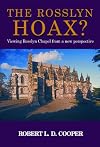
Believe all that stuff about the Knights Templar running off to hide in Scotland? Convinced that there are a bunch of things buried under Rosslyn or that there are all sorts of secret signs carved into the pillars? If so, you should order overnight delivery on this book and read it from cover to cover. When you're done, you'll have either done a 180 degree turn-around OR you'll have to admit to yourself that you're simply intransigent to reality. Robert L. D. Cooper is the curator of the show more Grand Lodge of Scotland's library and museum where much original material written about by other authors is held. What you'll find astonishing is that those many authors who opine so persuasively on items such as the above have never once gone to look at the source material and study it in detail. Cooper, wearing velvet gloves, demolishes books by Lomas, Knight, Wallace-Murphy and many, many more with undisputable facts, buttressed by ancient documents which he can hold each day.
Further, Cooper is a biographer of the Sinclair family and knows his topic from top to bottom. He's not swayed by fanciful theories or the pseudo-history of the past two decades. Rather, he cites specific documents held by the Grand Lodge of Scotland - again and again and again. He footnotes how contrary claims have been made by specific 'Templar fantasy' authors again and again and again. It is to laugh.
If you want to live in a fantasy world, do avoid this book but if you want find out facts, you'll love it. It's not easy reading: dealing with the many claims that have gained so much sway is not an easy task and the footnotes are copious. You'll be rewarded, though, with a factual understanding which will enable you to laugh when friends, neighbors, and fellow Masons decide to 'educate you' on the Apprentice Pillar or the Battle of Bannockburn's appearance of the Knights Templar. You might even deign to educate them as well.
I cannot recommend this book highly enough. show less
Further, Cooper is a biographer of the Sinclair family and knows his topic from top to bottom. He's not swayed by fanciful theories or the pseudo-history of the past two decades. Rather, he cites specific documents held by the Grand Lodge of Scotland - again and again and again. He footnotes how contrary claims have been made by specific 'Templar fantasy' authors again and again and again. It is to laugh.
If you want to live in a fantasy world, do avoid this book but if you want find out facts, you'll love it. It's not easy reading: dealing with the many claims that have gained so much sway is not an easy task and the footnotes are copious. You'll be rewarded, though, with a factual understanding which will enable you to laugh when friends, neighbors, and fellow Masons decide to 'educate you' on the Apprentice Pillar or the Battle of Bannockburn's appearance of the Knights Templar. You might even deign to educate them as well.
I cannot recommend this book highly enough. show less
The Masonic Magician: The Life and Death of Count Cagliostro and His Egyptian Rite by Philippa Faulks
A credulous treatment of Count Alessandro di Cagliostro, alias Giuseppe Balsalmo. Balsalmo was (apparently) born in Sicily in 1743; somewhere along the line he reinvented himself as the Count di Cagliostro, and claimed to be the illegitimate child of a captive Ottoman Princess and the Grandmaster of the Knights of Malta. He developed a talent for forgery, confidence games, and alchemy; at various time he claimed to be immortal, to have met Helen of Troy, to be able to change base metals to show more gold or silver, and to have miscellaneous other occult accomplishments. One of his projects was the development of Egyptian Rite Freemasonry; the rules for this came to him in a trance.
The book has three parts: a biography of Cagliostro; a history of Freemasonry; and the Ritual for Egyptian Freemasonry. The biography recounts Cagliostro’s own history of his life (which is suitably adventurous), his various contacts with famous occultists, and his run-ins with the authorities. The authors never commit themselves fully, but seem to tacitly acknowledge that Cagliostro’s magic was real. The history of Freemasonry is interesting enough; Masonry bounced back and forth between being a beneficial fraternal organization and a dangerous conspiracy. The final section, on the Egyptian Rite, has various rituals by which the Adept can become morally and physically perfect. The later requires 40 days of an exhausting diet, during which the subject’s teeth, hair, and skin come off. (They grow back on Day 36).
Interesting enough. It’s enlightening to reflect that people could be credulous and scientific at the same time. Kepler worked out the laws of planetary motion and cast horoscopes; Isaac Newton worked on gravity, calculus, and the Philosopher’s Stone; Christopher Wren was an accomplisher architect, astronomer, and tried to cure disease by hanging bags of live woodlice around the patient’s neck. Cagliostro appears in many novels, so it’s nice to have a reference work.
Color plates illustrating aspects of Cagliostro’s life and various occult topics. Glossary, bibliography, and endnotes. For a vaguely similar work, see Three Books of Occult Philosophy. show less
The book has three parts: a biography of Cagliostro; a history of Freemasonry; and the Ritual for Egyptian Freemasonry. The biography recounts Cagliostro’s own history of his life (which is suitably adventurous), his various contacts with famous occultists, and his run-ins with the authorities. The authors never commit themselves fully, but seem to tacitly acknowledge that Cagliostro’s magic was real. The history of Freemasonry is interesting enough; Masonry bounced back and forth between being a beneficial fraternal organization and a dangerous conspiracy. The final section, on the Egyptian Rite, has various rituals by which the Adept can become morally and physically perfect. The later requires 40 days of an exhausting diet, during which the subject’s teeth, hair, and skin come off. (They grow back on Day 36).
Interesting enough. It’s enlightening to reflect that people could be credulous and scientific at the same time. Kepler worked out the laws of planetary motion and cast horoscopes; Isaac Newton worked on gravity, calculus, and the Philosopher’s Stone; Christopher Wren was an accomplisher architect, astronomer, and tried to cure disease by hanging bags of live woodlice around the patient’s neck. Cagliostro appears in many novels, so it’s nice to have a reference work.
Color plates illustrating aspects of Cagliostro’s life and various occult topics. Glossary, bibliography, and endnotes. For a vaguely similar work, see Three Books of Occult Philosophy. show less
The Masonic Magician: The Life and Death of Count Cagliostro and His Egyptian Rite by Philippa Faulks
After completing 'The Masonic Magician', I must say I am a bit disappointed. Perhaps I had expected it to be more biographical in nature, instead, it contained documentation of some important moments in the counts' life, much detail of the Egyptian rite, and the history of Freemasonry in general. I found it to be well-researched, but perhaps a bit dry and scholarly - not exactly a 'fun' or 'hard to put down' read. It's a book that requires the reader to have an extreme interest in the show more subject matter, otherwise, it will be shelved in two chapters. If Cagliostro's Egyptian Rite is of interest to you, then definitely check out this book. If you are searching for an enthralling biography of the man, I'd recommend looking elsewhere. show less

Miracle-worker or man of straw? Count Alessandro Cagliostro was a cult figure of European society in the tumultuous years leading to the French Revolution. An alchemist, healer and Freemason, he inspired both wild devotion and savage ridicule – and novels by Alexander Dumas, a drama by Goethe and Mozart’s opera The Magic Flute.
Cagliostro’s sincere belief in the magical powers, including immortality, conferred by his Egyptian Rite of Freemasonry won him fame, but made him dangerous show more enemies, too. His celebrated travels through the Middle East and the capitals of Europe ended abruptly in Rome in 1789, where he was arrested by the Inquisition and condemned to death for heresy.
The Masonic Magician tells Cagliostro’s extraordinary story, complete with the first English translation of the Egyptian Rite ever published. The authors examine the case made against him, that he was an impostor as well as a heretic, and finds that the Roman Church, and history itself, have done him a terrible injustice.
This engaging account, drawing on remarkable new documentary evidence, shows that the man condemned was a genuine visionary and true champion of Freemasonry. His teachings have much to reveal to us today not just of the mysteries of Freemasonry, but of the mysterious hostility the movement continues to attract. show less
Cagliostro’s sincere belief in the magical powers, including immortality, conferred by his Egyptian Rite of Freemasonry won him fame, but made him dangerous show more enemies, too. His celebrated travels through the Middle East and the capitals of Europe ended abruptly in Rome in 1789, where he was arrested by the Inquisition and condemned to death for heresy.
The Masonic Magician tells Cagliostro’s extraordinary story, complete with the first English translation of the Egyptian Rite ever published. The authors examine the case made against him, that he was an impostor as well as a heretic, and finds that the Roman Church, and history itself, have done him a terrible injustice.
This engaging account, drawing on remarkable new documentary evidence, shows that the man condemned was a genuine visionary and true champion of Freemasonry. His teachings have much to reveal to us today not just of the mysteries of Freemasonry, but of the mysterious hostility the movement continues to attract. show less
You May Also Like


Statistics
- Works
- 14
- Members
- 367
- Popularity
- #65,578
- Rating
- 4.3
- Reviews
- 10
- ISBNs
- 17
- Languages
- 3