
John J. Robinson (1925–1993)
Author of Dungeon, Fire and Sword: The Knights Templar in the Crusades
About the Author
Image credit: http://www.msana.com/jrobinson.asp
Works by John J. Robinson
Associated Works
Tagged
Common Knowledge
- Legal name
- Robinson, John Jamieson
- Birthdate
- 1925-10-03
- Date of death
- 1993-09-06
- Gender
- male
- Occupations
- farmer
business executive
Marine Corps
historian
researcher
author (show all 7)
master mason - Organizations
- United States Marine Corps
Masonic Information Center
Masonic Service Association of North America
Medieval Academy of America
Organization of American Historians
Royal Over-Seas League of London - Awards and honors
- Fellow of the Maine Lodge of Research (1993)
Fellow of The Philalethes Society
Distinguished Service Medal, The Philalethes Society - Relationships
- Robinson, Hilda Bernice "Bernie" (spouse) (nee Jones)
- Short biography
- The founding visionary of the Masonic Information Center, John was a former Marine, a farmer, a business executive, and an author with a special interest in the history of Medieval Britain and the Crusades.
During his lifetime he was a member of the Medieval Academy of America, The Organization of American Historians, and the Royal Over-Seas League of London. He also headed a family trust dedicated to historical research and publication.
Robinson first began studying Freemasonry in the early 1980s and came to the attention of Masons with his book "Born in Blood: The Lost Secrets of Freemasonry" presenting a believable explanation for a connection between the Knights Templars and modern-day Masons. A second book, "Dungeon, Fire and Sword: The Knights Templar in the Crusades" soon followed. He soon found himself regularly speaking to Masonic and non-Masonic groups: the former having a profound interest in his findings while the latter often concerned about perceived secrecy and imagined wrong-doings.
In 1993, Robinson published "A Pilgrim's Path: One Man's Road to the Masonic Temple" in which he described his experiences with Masons and those against them. Masonic authors praised the work as comprehensive and profound. As a result of his interactions with Masons, he ultimately petitioned a lodge and became Brother Robinson - as explained in his book. Regretfully, not long afterwards, he became ill and passed to the celestial lodge above.
The Masonic Information Center is a lasting tribute to his interest in and acceptance of Freemasonry as a way of life. - Nationality
- USA
- Birthplace
- Neffs, Belmont County, Ohio, USA
- Places of residence
- Cincinnati, Ohio, USA
Twin Brook Farm, Ghent, Carroll County, Kentucky, USA
Mt. Adams, Ohio, USA - Place of death
- Cincinnati, Ohio, USA
- Burial location
- Arlington Memorial Gardens, Mount Healthy, Hamilton County, Ohio, USA
- Associated Place (for map)
- Ohio, USA
Members
Reviews

This is a very interesting book. Instead of the hyped-up conspiracy-theory potboiler I'd expected, Robinson presents a series of historical, religious, and linguistic data which strongly support the hypothesis that Freemasons emerged not from the Stone Masons guilds of the Middle Ages, but as a secret mutual protection society in the aftermath of the bloody destruction of the Knights Templar.
Robinson tells us that he didn't start out to investigate the roots of Freemasonry, but that various show more unanswered questions in the historical record, specifically those around the unexplained disappearances of some Templars, and the never-explained "Great Society" involved in the Peasants Revolt in England in 1381. The more he searched for answers, the more Freemasonry seemed the best explanation for the gaps in the historical records. Further, once he did start investigating Masonry, he found that puzzling terms and aspects of rituals were better explained when related to known information about Templar practices and language then they were by supposed links to a craft guild.
Throughout the book, Robinson is careful to never claim that he has found absolute proof of a connection. Ultimately there is no explicit evidence, only a pattern of data which can be reasonably interpreted certain ways. The Templar root of Freemasonry is presented as the most likely of a variety of hypotheses which could explain both the historical questions and some of the riddles within Masonry.
The only reason I gave this book four stars instead of five is that I thought he went into far too much detail regarding medieval history. The national and religious politics of the times are relevant to his case, but I think his own passion for that material (this project started out as more general historical research) prompted him to include a lot of information that wasn't actually relevant to the Templar-Freemason connection. Fortunately, he is an excellent writer, and even though there was a lot of unnecessary detail, it was (for the most part) interesting, and I feel like I learned a lot about the times.
I started this book feeling entirely comfortable with the idea of Freemasonry developing out of a medieval craft guild. I wasn't looking for any other "origin story." After reading this book, I'm far more inclined to consider the Templars the more likely founders. Ultimately, I don't think it matters. Hundreds of years of practice and evolution have resulted in Masonic Orders quite different from their original forms. The value of Freemasonry lies in its ability to transform lives in the present, not because of any particular quality of virtue of its source. But if someone is interested in that question, this is an excellent book to read. show less
Robinson tells us that he didn't start out to investigate the roots of Freemasonry, but that various show more unanswered questions in the historical record, specifically those around the unexplained disappearances of some Templars, and the never-explained "Great Society" involved in the Peasants Revolt in England in 1381. The more he searched for answers, the more Freemasonry seemed the best explanation for the gaps in the historical records. Further, once he did start investigating Masonry, he found that puzzling terms and aspects of rituals were better explained when related to known information about Templar practices and language then they were by supposed links to a craft guild.
Throughout the book, Robinson is careful to never claim that he has found absolute proof of a connection. Ultimately there is no explicit evidence, only a pattern of data which can be reasonably interpreted certain ways. The Templar root of Freemasonry is presented as the most likely of a variety of hypotheses which could explain both the historical questions and some of the riddles within Masonry.
The only reason I gave this book four stars instead of five is that I thought he went into far too much detail regarding medieval history. The national and religious politics of the times are relevant to his case, but I think his own passion for that material (this project started out as more general historical research) prompted him to include a lot of information that wasn't actually relevant to the Templar-Freemason connection. Fortunately, he is an excellent writer, and even though there was a lot of unnecessary detail, it was (for the most part) interesting, and I feel like I learned a lot about the times.
I started this book feeling entirely comfortable with the idea of Freemasonry developing out of a medieval craft guild. I wasn't looking for any other "origin story." After reading this book, I'm far more inclined to consider the Templars the more likely founders. Ultimately, I don't think it matters. Hundreds of years of practice and evolution have resulted in Masonic Orders quite different from their original forms. The value of Freemasonry lies in its ability to transform lives in the present, not because of any particular quality of virtue of its source. But if someone is interested in that question, this is an excellent book to read. show less

Robinson has crafted a highly entertaining and readable account of the rise and fall of the religious order known as the Knights Templar. The Templar were engaged for over three centuries in the hopelessly doomed Crusades that sought to return the dominion of the Holy Land to Christian control. The beauty of this book is that the author creates a gripping drama in the midst of the mundane accidents of history. Violence, chivalry, treachery, and stupidity are outstanding qualities of show more humanity, and they were put on parade at the beginning of the second millennium. The Crusades occupied the talents and energies of the dominant personalities of the church and world, and, consequently, the story of the Templar intersects their stories. In the end, greed, deceit, and old fashioned evil by the King and Pope brought down the order which is ironic in light of the Templar's own familiarity with these same vices. Modern references to the Crusades and the Templar are often used indiscriminately by the ignorant to prove a political point. This book presents a more balanced view of a volatile era. show less
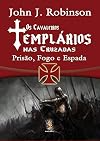
Este livro procura recontar a saga dos Cavaleiros Templários, os monges guerreiros que ocuparam o monte sagrado logo após a Primeira Cruzada. Os Templários acumularam grande fortuna, que empregaram para financiar seus 200 anos de guerra contra os muçulmanos no deserto, nas montanhas e ao longo da vasta extensão do vale do Nilo. Por esses dois séculos de martírio militar, sua recompensa constitui em ser presos pelo papa e pelo rei, além de serem torturados pela Inquisição e, por show more fim, extintos por decreto. No entanto, sua lenda e seu legado não morreriam assim tão simplesmente. Ao contar a inacreditável história dos Cavaleiros Templários, a clara explicação que o autor faz das diferenças culturais e religiosas entre os adversários e aliados dos Templários no Oriente Médio proporciona uma compreensão vívida do povo que habita essa região turbulenta, que figura de maneira tão proeminente nas manchetes atuais. A semelhança de seus antagonismos, de hoje e de 800 anos atrás, é tão impressionante quanto perturbadora. Os Cavaleiros Templários nas Cruzadas - Prisão, Fogo e Espada é uma brilhante obra de história narrativa que pode ser lida como uma simples aventura, uma obra de moral ou uma lição de política de guerra. show less

Robinson uses simple, clear language to provide a view of both American Masonry and contemporary anti-Masonry. A Pilgrim's Progress grew out of his experiences with the popular responses to his earlier book on Masonic origins, Born in Blood. Robinson is convinced that religious freedom and toleration are at the core of the Masonic ethic, and that today's anti-Masons--whatever their superficial arguments--are principally motivated by hostility to religious freedom. In addition, he provides a show more discussion of ways that Masonry might adapt to confront the challenges posed by its foes.
A Pilgrim's Progress is not a profound work of scholarship, though. For example, Robinson provides a summary and criticism of the Jack Chick comic tract Curse of the Baphomet, in which he provides the description of the "winged creature with the body of a man, the breasts of a woman, and the head of a horned goat." If you just read Robinson, you would tend to think that this "devil-figure" was the sole invention of Jack Chick, rather than a traditional occult image first published in the works of Eliphas Levi.
Besides the Chick tract, Robinson summarizes and rebuts the work of the Southern Baptist anti-Masonic organizer James Holly and televangelical media magnate Pat Robertson. He includes a discussion of the Leo Taxil hoax, and points out the forged "Albert Pike" Luciferian quote as a staple of more than a century of anti-Masonic discourse. Inevitably, he cites the Bible against the "Christian" foes of Masonry. In assessing the motives of anti-Masons, Robinson emphasizes religious power and controlling followers through fear. As a primer on the role of Masonry in American society, and a counter to common paranoid tropes on the topic, the book holds up pretty well. show less
A Pilgrim's Progress is not a profound work of scholarship, though. For example, Robinson provides a summary and criticism of the Jack Chick comic tract Curse of the Baphomet, in which he provides the description of the "winged creature with the body of a man, the breasts of a woman, and the head of a horned goat." If you just read Robinson, you would tend to think that this "devil-figure" was the sole invention of Jack Chick, rather than a traditional occult image first published in the works of Eliphas Levi.
Besides the Chick tract, Robinson summarizes and rebuts the work of the Southern Baptist anti-Masonic organizer James Holly and televangelical media magnate Pat Robertson. He includes a discussion of the Leo Taxil hoax, and points out the forged "Albert Pike" Luciferian quote as a staple of more than a century of anti-Masonic discourse. Inevitably, he cites the Bible against the "Christian" foes of Masonry. In assessing the motives of anti-Masons, Robinson emphasizes religious power and controlling followers through fear. As a primer on the role of Masonry in American society, and a counter to common paranoid tropes on the topic, the book holds up pretty well. show less
Lists
You May Also Like


Associated Authors
Statistics
- Works
- 4
- Also by
- 1
- Members
- 1,551
- Popularity
- #16,609
- Rating
- 3.8
- Reviews
- 11
- ISBNs
- 26
- Languages
- 6
- Favorited
- 1