
Carrie Young
Author of Nothing to Do But Stay
About the Author
A native of North Dakota and a graduate of the University of Minnesota, Carrie Young has lived for many years on a farm in Ohio
Works by Carrie Young
Tagged
Common Knowledge
- Legal name
- Young, Ahdele Carrine
- Birthdate
- 1922
- Gender
- female
- Places of residence
- Appam, North Dakota, USA
Ohio, USA - Associated Place (for map)
- USA
Members
Reviews
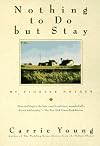
Carrie Young reminisces about her family life growing up in northwestern North Dakota. One chapter captures the importance of education to the whole family and the lengths they went to to see that all 6 children got an education. Another humorously relates her mother's years as a turkey producer. All intertwine stories of neighbors and relatives and often the foods associated with special events. I was hoping for more on the motivation and early life of Carrie's mother, but this was more of show more a summary telling of events rather than any real in depth feelings. Maybe her mother was reticent about talking to her daughter about this period, so this was what she could tell. I also read a collection of stories by this author and very much like her style. show less
This is a wonderful book and collection of memories of the author's mother and childhood homesteading on the North Dakota prairie. Carrine Gafkjen set off to homestead by herself in 1904, living in a claim shack, and turning the soil alone until she eventually turns a profit. She married at 34 and proceeded to have 6 children, of which the author is the youngest. These stories are heartwarming, backbreaking, and fascinating, and though most of the events took place less than 100 years ago, show more it is just astonishing how much life has changed in so short a time. I think of how my school limped along when we lost internet for two days, and compare the experience of three of the sisters in this book (one a teacher and the others students) who LIVED in their one-room schoolhouse because it was too difficult to get to school and back during the raging blizzards. This is a lovely tribute to the Norwegian families who settled our northern prairies. show less

The subtitle is “My Pioneer Mother,” and much of this memoir features Young’s mother Carrine Gafkjen Berg. But this is really the story of a family’s experiences in the early 20th century in North Dakota.
At age twenty-five, already considered a spinster, Carrine left Minneapolis to claim her own homestead on the western North Dakota prairie. Through her own hard work and perseverance, she managed to amass a key parcel of fertile land, living alone first in her claim shack and then show more in a modest farm house. A decade later she met and married Sever Berg, and they had six children.
Rather than a strictly chronological order, the book is divided into chapters by subject. Some of the chapters cover years of the family’s life (The Education of a Family and The Seedling Years, for example), while others focus on specific events (The Last Turkey or A Fourth of July in North Dakota). All are full of wonderful, loving descriptions of life on a settler’s farm, some funny, some touchingly poignant.
I particularly loved the first story about Young’s mother’s insistence on education for her children. She had to leave school after only three years to work on her own parents’ farm, and then was sent to Minneapolis to work at a boarding house, cooking and cleaning. She and her husband went to extraordinary lengths to ensure their children got the educations that they were unable to achieve. Despite the great depression, they managed to send all six of their children to college. show less
At age twenty-five, already considered a spinster, Carrine left Minneapolis to claim her own homestead on the western North Dakota prairie. Through her own hard work and perseverance, she managed to amass a key parcel of fertile land, living alone first in her claim shack and then show more in a modest farm house. A decade later she met and married Sever Berg, and they had six children.
Rather than a strictly chronological order, the book is divided into chapters by subject. Some of the chapters cover years of the family’s life (The Education of a Family and The Seedling Years, for example), while others focus on specific events (The Last Turkey or A Fourth of July in North Dakota). All are full of wonderful, loving descriptions of life on a settler’s farm, some funny, some touchingly poignant.
I particularly loved the first story about Young’s mother’s insistence on education for her children. She had to leave school after only three years to work on her own parents’ farm, and then was sent to Minneapolis to work at a boarding house, cooking and cleaning. She and her husband went to extraordinary lengths to ensure their children got the educations that they were unable to achieve. Despite the great depression, they managed to send all six of their children to college. show less
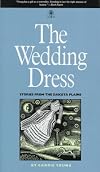
This is a collection of short stories set primarily during the early part of the 20th century to shortly after World War II. Young explores the lives of the people of Little Butte, North Dakota, who are mostly Norwegian immigrants (or descended from them).
In the title story, she follows the story of a particularly beautiful and detailed wedding dress, as it is made, then stored in a trunk and finally worn by bride after bride. Young describes the joys and dreams, the sorrows and show more disappointments of the owner of the dress.
Two of the stories involved a sort of love triangle. In one, two brothers love the same woman. In another, a man remains a bachelor after his fiancé marries another, but cannot avoid the married couple since they live in the next farm over.
All of the stories feature characters that fairly leap off the page, they are so real. I can easily picture the reluctant midwife, or the jubilant hired hand who has just won $250 at the movies. The landscape is cold and bleak, especially during the Dust Bowl years, but the kitchens are warm and inviting. This is the first work by Young that I’ve read; it will not be the last. show less
In the title story, she follows the story of a particularly beautiful and detailed wedding dress, as it is made, then stored in a trunk and finally worn by bride after bride. Young describes the joys and dreams, the sorrows and show more disappointments of the owner of the dress.
Two of the stories involved a sort of love triangle. In one, two brothers love the same woman. In another, a man remains a bachelor after his fiancé marries another, but cannot avoid the married couple since they live in the next farm over.
All of the stories feature characters that fairly leap off the page, they are so real. I can easily picture the reluctant midwife, or the jubilant hired hand who has just won $250 at the movies. The landscape is cold and bleak, especially during the Dust Bowl years, but the kitchens are warm and inviting. This is the first work by Young that I’ve read; it will not be the last. show less
You May Also Like


Statistics
- Works
- 4
- Members
- 408
- Popularity
- #59,621
- Rating
- 4.0
- Reviews
- 13
- ISBNs
- 18