
Rick Poynor
Author of Looking closer 3 : classic writings on graphic design
About the Author
Rick Poynor is founding editor of Eye, & writes frequently on design. He is the author of seven previous books, including Design Without Boundaries (1998). He lives in London. (Bowker Author Biography)
Series
Works by Rick Poynor
Nigel Coates: the City in Motion 3 copies
Associated Works
Tagged
Common Knowledge
- Gender
- male
- Occupations
- writer (design | graphic design | typography | visual culture)
editor - Organizations
- Blueprint (magazine | journalist)
Eye (magazine | founding editor | 1990-1997 | columnist)
Print (magazine | contributing editor and columnist)
Royal College of Art, London (visiting professor | 1994-1999 | research fellow | 2006)
Design Observer (weblog | co-founder and writer | 2003-2005)
Jan van Eyck Academy, Maastricht (project tutor) - Short biography
- (fl. 1986-2018).
Members
Reviews
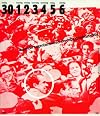
Series: Graphic design in the Netherlands (3)
Jan van Toorn is one of the most significant and influential Dutch graphic designers to have emerged since the early 1960s. While graphic design often does little more than give unthinking visual form to the status quo, Van Toorn focused on meaning rather than smooth stylistic expression and developed critical alternatives to the usual design world conventions.
His designs persistently call attention to their status as visual contrivances, obliging show more the viewer to make an effort to process their complexities. Van Toorn wants the public to measure the motives of both the client and the designer who mediates the client's message against their own experiences of the world. He hoped in this way to stimulate a more active and skeptical view of art, communication, media ownership and society. Projects such as Van Toorn's posters and catalogues for the Van Abbemuseum in Eindhoven and his long-running series of calendars for the printing firm Mart.Spruijt are powerful demonstrations of graphic design used as a means of commentary and as a tool of critique. Later, as director of the Jan van Eyck Academy, Van Toorn drew together all the strands of his critical practice into a multi-levelled educational initiative that urged designers to think harder about design's role in shaping contemporary reality. show less
Jan van Toorn is one of the most significant and influential Dutch graphic designers to have emerged since the early 1960s. While graphic design often does little more than give unthinking visual form to the status quo, Van Toorn focused on meaning rather than smooth stylistic expression and developed critical alternatives to the usual design world conventions.
His designs persistently call attention to their status as visual contrivances, obliging show more the viewer to make an effort to process their complexities. Van Toorn wants the public to measure the motives of both the client and the designer who mediates the client's message against their own experiences of the world. He hoped in this way to stimulate a more active and skeptical view of art, communication, media ownership and society. Projects such as Van Toorn's posters and catalogues for the Van Abbemuseum in Eindhoven and his long-running series of calendars for the printing firm Mart.Spruijt are powerful demonstrations of graphic design used as a means of commentary and as a tool of critique. Later, as director of the Jan van Eyck Academy, Van Toorn drew together all the strands of his critical practice into a multi-levelled educational initiative that urged designers to think harder about design's role in shaping contemporary reality. show less

The aesthetics and spirit of popular culture have been increasingly relevant to British graphic designers over the past several decades. Communicate offers a fascinating selection of this innovative work, examining closely the influence of youth culture, pop music, and new wave aesthetics on graphic design during the 1960s and ever since.
Illustrated in full color, Communicate features 350 images that range from classic designs of the sixties to the work of today’s emerging design teams, show more including record album covers for groups including The Beatles, Led Zeppelin, and Roxy Music; political protest posters; psychedelic concert posters; typeface projects and signage; and designs for books, magazines, and film.
Focusing on work from small, independent studios where creativity, rather than the bottom line, is paramount, the book includes projects by some 60 outstanding designers including Derek Birdsall, Richard Hollis, Neville Brody, Why Not Associates, and Scott King. Contributors to the volume trace how and why British graphic design has developed as it has, and interviews with ten key designers—Julian House, Ian Anderson, and Margaret Calvert among them—provide unique insider views of the design world. show less
Illustrated in full color, Communicate features 350 images that range from classic designs of the sixties to the work of today’s emerging design teams, show more including record album covers for groups including The Beatles, Led Zeppelin, and Roxy Music; political protest posters; psychedelic concert posters; typeface projects and signage; and designs for books, magazines, and film.
Focusing on work from small, independent studios where creativity, rather than the bottom line, is paramount, the book includes projects by some 60 outstanding designers including Derek Birdsall, Richard Hollis, Neville Brody, Why Not Associates, and Scott King. Contributors to the volume trace how and why British graphic design has developed as it has, and interviews with ten key designers—Julian House, Ian Anderson, and Margaret Calvert among them—provide unique insider views of the design world. show less

Russell Mills, now well known for his CD and album cover art and his own music, did the art for this based on lyrics from Brian Eno's songs. If I recall correctly it was done as a thesis project in art school before this printing as a coffee table art book. The work is beautiful even if you aren't a fan of Eno's music, and the trivia added helps explain some details about the songs despite Eno's generally oblique lyrical style. Now fairly rare, this typically sells for $70 or more used and show more most people who have a copy aren't likely to part with it. show less
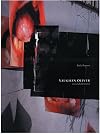
a must have for any fan of the 4AD record label. a history of the philosophy behind the design of the sleeves, the look of the label and the difficulty of working with the bands. quite a few images from the archives. the written history is interesting, but the real star of the book is the illustrations. makes me want to pull out my old 4AD records and give them a listen again.
You May Also Like


Associated Authors
Statistics
- Works
- 48
- Also by
- 3
- Members
- 658
- Popularity
- #38,342
- Rating
- 4.0
- Reviews
- 8
- ISBNs
- 44
- Languages
- 5