
Andrew Wyeth (1917–2009)
Author of Andrew Wyeth: Autobiography
About the Author
Image credit: Andrew Wyeth receives the National Medal of the Arts, 2007. White House photo by Eric Draper.
Works by Andrew Wyeth
Andrew Wyeth: A Spoken Self-Portrait: Selected and Arranged by Richard Meryman from Recorded Conversations with the Artist, 1964-2007 (2013) 27 copies
Andrew Wyeth: Southeastern Collections : Jacksonville Art Museum, January 19, 1992-April 19, 1992 (1992) 10 copies
Working at Olsons: Watercolors and Drawings By Andrew Wyeth from the Holly and Arthur Magill Collection (1981) 5 copies
Paintings by Andrew Wyeth 2 copies
Andrew wyeth [by] richard meryman 2 copies
New New England 1 copy
Memory & Magic 1 copy
The Scarecrow 1 copy
Works by Andrew 1 copy
Emotion and Creation 1 copy
Works by Andrew Wyeth 1 copy
Andrew Wyeth Helga On Paper 1 copy
Associated Works
Let Me Tell You: New Stories, Essays, and Other Writings (2015) — Cover artist, some editions — 743 copies, 19 reviews
Andrew Wyeth: An Exhibition Organized by Pennsylvania Academy of the Fine Arts: Temperas, Watercolors, Dry Brush Drawings, 1938 to 1966 (1970) 109 copies, 2 reviews
George a. Weymouth: a Retrospective [Brandywine River Museum Exhibition Catalog, 1991, Inscribed] (1991) — Introduction — 1 copy
Andrew Wyeth: In Perspective 1 copy
Tagged
Common Knowledge
- Legal name
- Wyeth, Andrew Newell
- Birthdate
- 1917-07-12
- Date of death
- 2009-01-16
- Gender
- male
- Education
- homeschooled
- Occupations
- painter
illustrator
artist - Organizations
- American Academy of Arts and Letters (Art, 1950)
- Awards and honors
- Presidential Medal of Freedom (1963)
Congressional Gold Medal (1988)
National Medal of Arts (2007)
First living American artist to be elected to Britain's Royal Academy (1980)
First American artist since John Singer Sargent to be elected to the French Académie des Beaux-Arts (1977)
First painter to receive the Presidential Medal of Freedom (1963) (show all 8)
Gold Medal for Painting, National Institute of Arts and Letters (1965)
D.F.A., Bates College (1987) - Relationships
- Wyeth, N. C. (father)
Wyeth, Jamie (son)
Wyeth, Henriette (sister)
Hurd, Peter (brother-in-law)
Wyeth, Carolyn (sister)
Bartlett, Bo (friend) - Nationality
- USA
- Birthplace
- Chadds Ford, Pennsylvania, USA
- Places of residence
- Chadds Ford, Pennsylvania, USA
Cushing, Maine, USA - Place of death
- Chadds Ford, Pennsylvania, USA
- Burial location
- Hathorn Cemetery, Cushing, Maine, USA
- Associated Place (for map)
- USA
Members
Reviews

Book Extracts: The two worlds of Andrew Wyeth
This is a book written by Thomas Hoving who was a Former Director of The Metropolitan Museum of Art and his meditation, in the introduction, on his relationship with Andrew Wyeth was quite illuminating:-----"Andrew Wyeth the man and his creations have had a compelling fascination for me throughout the two decades I have been an art historian. When I was just starting, in the early 1950s, I had become captured by the spiritual realism of show more Christina's World. I would make frequent pilgrimages to the Museum of Modern Art to look at it, only it. Subsequently, in graduate school, where I was being fully trained in art history, I gained sophistication and rejected Wyeth. At that time I embraced the more fashionable painters of Abstract Expressionism. Yet, despite my intellectual blinders, I could never entirely dismiss Wyeth's penetrating, sometimes annoying images from my mind. Was he valid? Could he be more than a mere illustrator?.....[I, the reviewer, still find that fascinating. The rejection of “mere Illustrators” whom I really like]. ......Hoving continues “Few contemporary painters have been more neatly packaged than Wyeth. In one camp he is an "anachronistic nineteenth-century realist"; in another, a "humble painter revealing the true American bucolic scene"; in another, "an avant-garde abstract-realist"; in yet an-other, "anti-academic." The very name Andrew Wyeth conjures up wildly varying responses and spirited controversy”.
During a visit to Maine, some months after we had started planning, [for the exhibition] Andrew, his wife, Betsy, and I all at once, together, got the idea. The exhibition would deal with two subjects alone, the two fundamentally important environments of his life-Kuerners Farm at Chadds Ford and Olsons Farm in Cushing, Maine. It would show for the first time a large body of preparatory material. [And, I agree, that really seems to work and I’ve been really taken in by the way that Wyeth has responded and the insights he gives into his work....just with these two environments as the foundation].
Andrew Wyeth is acutely sensitive, virtually superstitious about the fact that his ideas for paintings come to him "by chance," or "through the back door.' He relishes the flashing concept of the split-second, the unexposed revelation that will, over weeks, develop into a tempera, a dry-brush, a watercolor. And oddly enough, the book for the exhibition came into being in the same way. The curator at the Metropolitan who had requested the job suddenly withdrew. The task abruptly fell upon my shoulders. I knew at once what I wanted to do-engage Wyeth in conversations. He agreed.
I decided to approach Andrew Wyeth from the point of view of an art historian, not a social commentator. | hoped to reveal the depth of the artist; I desired to get into his eyes, his mind, even his fingers, to unravel his creative process. Deliberately, I avoided reading anything about him. Freshness counted. But I immersed myself in all the Kuerners and Olsons material. Saturation with the works of art would be vital. I selected the paintings I would ask him about and memorized them in random order-a Kuerners, two Olsons, two Kuerners-so that the artist would not respond to them as pieces of a chronology but as individual entities.
I’ve extracted some more of the text, as follows, that had special meaning for me or that showed Wyeth in an interesting light.
"When I was eighteen or nineteen, he (WC Wyeth. Andrew’s father) showed some of my watercolors, primarily of Maine, to William Macbeth who had the only gallery in New York that exclusively handled American paintings. And Macbeth put on an exhibition and the show was a big success......Sold out. That was unusual, for it was at the end of the Depression and not too many artists were that fortunate....I achieved a sort of renown for watercolor, gained considerable confidence, and even made a little money - cleared about five hundred dollars after the freight bills.
[I found it fascinating that Wyeth really admired some works of Albrecht Durer because I’ve long loved exactly the same watercolour paintings....the Hare and the pieces of turf.] ......“But above all, I admired the graphic work of the northern Renaissance genius Albrecht Dürer. When I was thirteen my father gave me a splendid facsimile publication of certain of Dürer's watercolors, drybrush paintings, and prints, reproduced by the Viennese printing house of Anton Schroll in such a manner that the work still stands today as matchless. I lived with that marvelous book all my life. See, the thing is practically worn out on the edges, I've turned these leaves so often and seen so many things with fresh surprise!
My father gave it to me because he saw me poring over it. I was much more interested in it than he was, and he loved Dürer very much, but he realized my intensity.
"I have said to myself many, many times that I think Dürer must have been the originator of the drybrush method of watercolor. People have thought that perhaps I was, but I certainly am not. I think his technique in the Hare is unbelievable in the way he did the texture of the pelt, in such a way that each hair seems to be a different hair of the brush. Oh, how I can feel his wonderful fingers wringing out the moisture of that brush, drying it out, wringing it out to get that half-dry, half-lingering dampness to build up, to weave the surface of that little creature's coat. In fact, one of the Electors of Nuremberg was so interested in how it was done, it is said that he came to watch how Dürer did it.
He was certainly the greatest master of that. To me, it is his greatest work next to The Large Piece of Turf.
"I was also influenced to some extent by Howard Pyle, my father's teacher.
"I work in drybrush when my emotion gets deep enough into a subject. So I paint with a smaller brush, dip it into color, splay out the brush and bristles, squeeze out a good deal of the moisture and color with my fingers so that there is only a very small amount of paint left. Then when I stroke the paper with the dried brush, it will make various distinct strokes at once, and I start to develop the forms of whatever object it is until they start to have real body. But, if you want to have it come to life underneath, you must have an exciting undertone of wash. Otherwise, if you just work drybrush over a white surface, it will look too much like drybrush. A good drybrush to me is done over a very wet technique of washes.
"Technically speaking, tempera is just a dry pigment mixed with distilled water and yoke of egg. You mix half pigment and half egg. You use your own judgment.
You can tell by putting it on the palette: if it skims off as a skin, you know that you've emulsified it right, but if it patters off, you know that you haven't got the right mixture. I think the real reason tempera fascinated me was that I loved the quality of the colors: the earth colors, the terra verde, the ochers, the reds, the Indian reds, and the blue-reds are superb. I get colors from all over the country, even the world. They aren't filled with dyes. There's nothing artificial. I really only like things that are natural.
....The pure method of the dry pigment and egg yolk is terrifically sticky. Try to rub egg of a plate when it's dry. It's tough. It takes tempera about six months or more to dry and then you can actually take a scrubbing brush to it and you won't be able to rub off that final hardness.
"I tried many methods in the beginning. I even tried applying it with a palette knife. I tried painting it as I did my watercolors, freely. I tried many things until I found out what the quality of that medium really means to me. Watercolor, as I have said, gives me something free. Pencil has that other quality of freedom because you're able to dart in and hit the precise small thing that you want. Drybrush has another quality- it's an intermediate state. But tempera is something that I can truly build. My temperas are very broadly painted in the very beginning. Then I tighten down on them.
"I'd like to discuss a number of specific paintings of the Kuerners' farm that you've done over the years. One that particularly intrigues me is Brown Swiss, painted in 1957, because in a way it's a portrait - a portrait of the farm, the house, the property, the Kuerners themselves, you in a very curious sense, light, sky, the color of a late fall afternoon."
"Ah! Brown Swiss is indeed a real portrait to me. It was like doing a person's face - so complex! It was like a double portrait, because of the reflection of the house in the pond. I am looking at it in one way, but then I'm looking at it in another. If you look closely at Brown Swiss, you'll see many, many very fine details:
[And, speaking about the painting “Brown Swiss” which is really not about the cattle but about the Kuerner’s farm house"].....Well, the very first thing was a pencil study of one of the Brown Swiss cattle - that's where the painting got its name. But then that was kind of forgotten and the real conception, that quick flash, is a drawing done very free in black Higgins ink. I came in from walking over the hill late in the afternoon one November and something I'd seen out of the very corner of my eye, got me.
"For a portrait of Karl, the one you call Karl is exceedingly powerful."......"I think it's the best portrait I ever did.
"One of the simplest and yet incredibly complex and universal pictures not only of the entire Kuerners series, but possibly of anything you've ever done, is the tempera Snow Flurries of 1953. Tell me about it."
"This was a very difficult picture to paint. It really was, because there is not much in it. It's just a hill where I walked a great deal. I used to tell Dr. Margaret Handy that many times, while I was painting this picture, I felt like throwing it through the window. In it, there's very little to grasp and yet everything to grasp actually.
Margaret, as I said earlier, has often mentioned that she'd like it better without the fence posts in the fore-ground, but the fence posts keep it tied down from going too far.
"Christina's World is more than just her portrait. It really was her whole life and that is what she liked in it......She loved the feeling of being out in the field, where she couldn't go finally at the end of her life. I saw her in the field, not exactly in that location, but a lot of it came out of what she told me. She was out getting some vegetables and she was pulling herself slowly back toward the house. It was late afternoon, and I happened to look out of the third-floor window, where I was finishing the picture called Seed Corn.
........ "In my portraits of Christina, I go from Christina Olson, which is a formal one, a classic pose in the door-way, all the way through Christina's World, which is a magical environment, that is, it's a portrait but with a much broader symbolism...... "It's very interesting that Christina's World has such a wide appeal. People seem to put themselves into it.
I get literally hundreds of letters a year from people saying that it's a portrait of themselves. And then they describe their own life. And they rarely mention the crippled quality. They don't see that. It doesn't seem to enter into it.
[And it was Christina’s world that first got me hooked on Andrew Wyeth. I first saw it in a Saturday Evening Post Magazine....maybe in the early 1960’s and was fascinated by the realism yet, not quite realism. And have no particularly strong feelings about whether he is an illustrator (like his father) or whether he is a “great artist” like Picasso. In fact, I find the debate over “what is art” to be rather strange. Individuals or influencers, decide on what is and what is not art. And this is especially apparent with Wyeth because his work is very popular with the public...but eschewed (in general] by the art critics)
"One of the most poetic images of Olsons to me is your tempera called Wind from the Sea."
"Of all my work at Olsons this seems to me to be the one that expresses a great deal without too much in it. I walked up into the dry, attic room one day. It was a hot summer day in August, so hot that I went over to that window, pushed it up about six inches and as I stood there, looking out, all of a sudden this curtain that had been lying there stale for years, God knows how long, began slowly to rise, and the birds crocheted on it began to move. My hair about stood on end. So I drew it very quickly and incisively.
[With “The Virgin”....I knew I was looking at something that was untouched, unaffected. Here's a girl who only had outside privies, who had slept all her life in a room on a mattress where the snow could drift in across it. She was healthy, vital, and an intelligent girl, too.
"I worked for about four weeks just on the proportions of her standing figure. You will notice there's no real location again. You're looking down at the feet and up to the head at the same time. You couldn't get that angle with a photograph. She moved in different positions to get the right pose. I wasn't particularly located in any spot. There is a floor there in the painting, but it isn't there, in a sense. I started working on the body and began to paint it in. The sun came out one day, in the morning, and she stepped back, you notice the windows across a barn door. The sun came through them, and her head just hit the sun, which fell against her face and upper body for a short time. I painted like mad. She stepped up the steps a little just to catch that, and it made the picture. It has a marvelous bit of gold with the rest of the room in the shadow. That's what happened, simple as that........ "The Virgin started off as a much bigger panel. For a while there were baskets of corn hanging above which you use for seed corn in the spring and some stalls with hay. All that was in it for a time, but in the end I cut the panel way down to make it a much better composition. I realized that the emphasis was just right at that cut-down size.
There are a lot of farms more effective than the Kuerners' but that isn't the point at all. Here, as always, I try to go beyond the subject. That's the summation of my art.
Emotion is my bulwark. I think that's the only thing that endures, finally. If you are emotionally involved, you're not going to be easily changed. But if it's purely a technical experience that's going to be very short-lived.
Both technical and emotional have got to be on even terms to be good.
"Brahms' music affects me a little. I used to love it.
But it's soft now, when I listen to it. I really don't care for it. It hasn't got the edge of Beethoven or Bach. It's round-shouldered. There's too much mumbling to suit me. And this is the way I feel about painting. People often have said to me, 'What's made you keep on against the tide? Supposedly, you're so way behind that you're ahead!' Not really. The answer is pure emotion. I was interested in Christina, I was interested in that house.
I was fascinated by the Kuerners and the farm. I wasn't at either place to paint a nice group of pictures or bucolic memories or Maine images. I was emotionally involved in the thing and I just had to get it out of my system....That's all.
"Art, to me, is seeing. I think you have got to use your eyes as well as your emotion, and one without the other just doesn't work. That's my art."
Hoving finishes on that note. I still don’t know what is ultimate verdict is on Andrew Wyeth. Is he merely an Illustrator or is there a lot more there. My impression is that Hoving does regard Wyeth as a significant Artist but he just let’s Wyeth speak for himself and leaves it to the reader to make up their own mind.
What’s my overall take on the book. I really liked it. Learned a lot more about Wyeth....and got some new insights. Still really like his work. And if Albrech Durer is a great Artist...then I think Andrew Wyeth is also a great Artist. Five stars from me. show less
This is a book written by Thomas Hoving who was a Former Director of The Metropolitan Museum of Art and his meditation, in the introduction, on his relationship with Andrew Wyeth was quite illuminating:-----"Andrew Wyeth the man and his creations have had a compelling fascination for me throughout the two decades I have been an art historian. When I was just starting, in the early 1950s, I had become captured by the spiritual realism of show more Christina's World. I would make frequent pilgrimages to the Museum of Modern Art to look at it, only it. Subsequently, in graduate school, where I was being fully trained in art history, I gained sophistication and rejected Wyeth. At that time I embraced the more fashionable painters of Abstract Expressionism. Yet, despite my intellectual blinders, I could never entirely dismiss Wyeth's penetrating, sometimes annoying images from my mind. Was he valid? Could he be more than a mere illustrator?.....[I, the reviewer, still find that fascinating. The rejection of “mere Illustrators” whom I really like]. ......Hoving continues “Few contemporary painters have been more neatly packaged than Wyeth. In one camp he is an "anachronistic nineteenth-century realist"; in another, a "humble painter revealing the true American bucolic scene"; in another, "an avant-garde abstract-realist"; in yet an-other, "anti-academic." The very name Andrew Wyeth conjures up wildly varying responses and spirited controversy”.
During a visit to Maine, some months after we had started planning, [for the exhibition] Andrew, his wife, Betsy, and I all at once, together, got the idea. The exhibition would deal with two subjects alone, the two fundamentally important environments of his life-Kuerners Farm at Chadds Ford and Olsons Farm in Cushing, Maine. It would show for the first time a large body of preparatory material. [And, I agree, that really seems to work and I’ve been really taken in by the way that Wyeth has responded and the insights he gives into his work....just with these two environments as the foundation].
Andrew Wyeth is acutely sensitive, virtually superstitious about the fact that his ideas for paintings come to him "by chance," or "through the back door.' He relishes the flashing concept of the split-second, the unexposed revelation that will, over weeks, develop into a tempera, a dry-brush, a watercolor. And oddly enough, the book for the exhibition came into being in the same way. The curator at the Metropolitan who had requested the job suddenly withdrew. The task abruptly fell upon my shoulders. I knew at once what I wanted to do-engage Wyeth in conversations. He agreed.
I decided to approach Andrew Wyeth from the point of view of an art historian, not a social commentator. | hoped to reveal the depth of the artist; I desired to get into his eyes, his mind, even his fingers, to unravel his creative process. Deliberately, I avoided reading anything about him. Freshness counted. But I immersed myself in all the Kuerners and Olsons material. Saturation with the works of art would be vital. I selected the paintings I would ask him about and memorized them in random order-a Kuerners, two Olsons, two Kuerners-so that the artist would not respond to them as pieces of a chronology but as individual entities.
I’ve extracted some more of the text, as follows, that had special meaning for me or that showed Wyeth in an interesting light.
"When I was eighteen or nineteen, he (WC Wyeth. Andrew’s father) showed some of my watercolors, primarily of Maine, to William Macbeth who had the only gallery in New York that exclusively handled American paintings. And Macbeth put on an exhibition and the show was a big success......Sold out. That was unusual, for it was at the end of the Depression and not too many artists were that fortunate....I achieved a sort of renown for watercolor, gained considerable confidence, and even made a little money - cleared about five hundred dollars after the freight bills.
[I found it fascinating that Wyeth really admired some works of Albrecht Durer because I’ve long loved exactly the same watercolour paintings....the Hare and the pieces of turf.] ......“But above all, I admired the graphic work of the northern Renaissance genius Albrecht Dürer. When I was thirteen my father gave me a splendid facsimile publication of certain of Dürer's watercolors, drybrush paintings, and prints, reproduced by the Viennese printing house of Anton Schroll in such a manner that the work still stands today as matchless. I lived with that marvelous book all my life. See, the thing is practically worn out on the edges, I've turned these leaves so often and seen so many things with fresh surprise!
My father gave it to me because he saw me poring over it. I was much more interested in it than he was, and he loved Dürer very much, but he realized my intensity.
"I have said to myself many, many times that I think Dürer must have been the originator of the drybrush method of watercolor. People have thought that perhaps I was, but I certainly am not. I think his technique in the Hare is unbelievable in the way he did the texture of the pelt, in such a way that each hair seems to be a different hair of the brush. Oh, how I can feel his wonderful fingers wringing out the moisture of that brush, drying it out, wringing it out to get that half-dry, half-lingering dampness to build up, to weave the surface of that little creature's coat. In fact, one of the Electors of Nuremberg was so interested in how it was done, it is said that he came to watch how Dürer did it.
He was certainly the greatest master of that. To me, it is his greatest work next to The Large Piece of Turf.
"I was also influenced to some extent by Howard Pyle, my father's teacher.
"I work in drybrush when my emotion gets deep enough into a subject. So I paint with a smaller brush, dip it into color, splay out the brush and bristles, squeeze out a good deal of the moisture and color with my fingers so that there is only a very small amount of paint left. Then when I stroke the paper with the dried brush, it will make various distinct strokes at once, and I start to develop the forms of whatever object it is until they start to have real body. But, if you want to have it come to life underneath, you must have an exciting undertone of wash. Otherwise, if you just work drybrush over a white surface, it will look too much like drybrush. A good drybrush to me is done over a very wet technique of washes.
"Technically speaking, tempera is just a dry pigment mixed with distilled water and yoke of egg. You mix half pigment and half egg. You use your own judgment.
You can tell by putting it on the palette: if it skims off as a skin, you know that you've emulsified it right, but if it patters off, you know that you haven't got the right mixture. I think the real reason tempera fascinated me was that I loved the quality of the colors: the earth colors, the terra verde, the ochers, the reds, the Indian reds, and the blue-reds are superb. I get colors from all over the country, even the world. They aren't filled with dyes. There's nothing artificial. I really only like things that are natural.
....The pure method of the dry pigment and egg yolk is terrifically sticky. Try to rub egg of a plate when it's dry. It's tough. It takes tempera about six months or more to dry and then you can actually take a scrubbing brush to it and you won't be able to rub off that final hardness.
"I tried many methods in the beginning. I even tried applying it with a palette knife. I tried painting it as I did my watercolors, freely. I tried many things until I found out what the quality of that medium really means to me. Watercolor, as I have said, gives me something free. Pencil has that other quality of freedom because you're able to dart in and hit the precise small thing that you want. Drybrush has another quality- it's an intermediate state. But tempera is something that I can truly build. My temperas are very broadly painted in the very beginning. Then I tighten down on them.
"I'd like to discuss a number of specific paintings of the Kuerners' farm that you've done over the years. One that particularly intrigues me is Brown Swiss, painted in 1957, because in a way it's a portrait - a portrait of the farm, the house, the property, the Kuerners themselves, you in a very curious sense, light, sky, the color of a late fall afternoon."
"Ah! Brown Swiss is indeed a real portrait to me. It was like doing a person's face - so complex! It was like a double portrait, because of the reflection of the house in the pond. I am looking at it in one way, but then I'm looking at it in another. If you look closely at Brown Swiss, you'll see many, many very fine details:
[And, speaking about the painting “Brown Swiss” which is really not about the cattle but about the Kuerner’s farm house"].....Well, the very first thing was a pencil study of one of the Brown Swiss cattle - that's where the painting got its name. But then that was kind of forgotten and the real conception, that quick flash, is a drawing done very free in black Higgins ink. I came in from walking over the hill late in the afternoon one November and something I'd seen out of the very corner of my eye, got me.
"For a portrait of Karl, the one you call Karl is exceedingly powerful."......"I think it's the best portrait I ever did.
"One of the simplest and yet incredibly complex and universal pictures not only of the entire Kuerners series, but possibly of anything you've ever done, is the tempera Snow Flurries of 1953. Tell me about it."
"This was a very difficult picture to paint. It really was, because there is not much in it. It's just a hill where I walked a great deal. I used to tell Dr. Margaret Handy that many times, while I was painting this picture, I felt like throwing it through the window. In it, there's very little to grasp and yet everything to grasp actually.
Margaret, as I said earlier, has often mentioned that she'd like it better without the fence posts in the fore-ground, but the fence posts keep it tied down from going too far.
"Christina's World is more than just her portrait. It really was her whole life and that is what she liked in it......She loved the feeling of being out in the field, where she couldn't go finally at the end of her life. I saw her in the field, not exactly in that location, but a lot of it came out of what she told me. She was out getting some vegetables and she was pulling herself slowly back toward the house. It was late afternoon, and I happened to look out of the third-floor window, where I was finishing the picture called Seed Corn.
........ "In my portraits of Christina, I go from Christina Olson, which is a formal one, a classic pose in the door-way, all the way through Christina's World, which is a magical environment, that is, it's a portrait but with a much broader symbolism...... "It's very interesting that Christina's World has such a wide appeal. People seem to put themselves into it.
I get literally hundreds of letters a year from people saying that it's a portrait of themselves. And then they describe their own life. And they rarely mention the crippled quality. They don't see that. It doesn't seem to enter into it.
[And it was Christina’s world that first got me hooked on Andrew Wyeth. I first saw it in a Saturday Evening Post Magazine....maybe in the early 1960’s and was fascinated by the realism yet, not quite realism. And have no particularly strong feelings about whether he is an illustrator (like his father) or whether he is a “great artist” like Picasso. In fact, I find the debate over “what is art” to be rather strange. Individuals or influencers, decide on what is and what is not art. And this is especially apparent with Wyeth because his work is very popular with the public...but eschewed (in general] by the art critics)
"One of the most poetic images of Olsons to me is your tempera called Wind from the Sea."
"Of all my work at Olsons this seems to me to be the one that expresses a great deal without too much in it. I walked up into the dry, attic room one day. It was a hot summer day in August, so hot that I went over to that window, pushed it up about six inches and as I stood there, looking out, all of a sudden this curtain that had been lying there stale for years, God knows how long, began slowly to rise, and the birds crocheted on it began to move. My hair about stood on end. So I drew it very quickly and incisively.
[With “The Virgin”....I knew I was looking at something that was untouched, unaffected. Here's a girl who only had outside privies, who had slept all her life in a room on a mattress where the snow could drift in across it. She was healthy, vital, and an intelligent girl, too.
"I worked for about four weeks just on the proportions of her standing figure. You will notice there's no real location again. You're looking down at the feet and up to the head at the same time. You couldn't get that angle with a photograph. She moved in different positions to get the right pose. I wasn't particularly located in any spot. There is a floor there in the painting, but it isn't there, in a sense. I started working on the body and began to paint it in. The sun came out one day, in the morning, and she stepped back, you notice the windows across a barn door. The sun came through them, and her head just hit the sun, which fell against her face and upper body for a short time. I painted like mad. She stepped up the steps a little just to catch that, and it made the picture. It has a marvelous bit of gold with the rest of the room in the shadow. That's what happened, simple as that........ "The Virgin started off as a much bigger panel. For a while there were baskets of corn hanging above which you use for seed corn in the spring and some stalls with hay. All that was in it for a time, but in the end I cut the panel way down to make it a much better composition. I realized that the emphasis was just right at that cut-down size.
There are a lot of farms more effective than the Kuerners' but that isn't the point at all. Here, as always, I try to go beyond the subject. That's the summation of my art.
Emotion is my bulwark. I think that's the only thing that endures, finally. If you are emotionally involved, you're not going to be easily changed. But if it's purely a technical experience that's going to be very short-lived.
Both technical and emotional have got to be on even terms to be good.
"Brahms' music affects me a little. I used to love it.
But it's soft now, when I listen to it. I really don't care for it. It hasn't got the edge of Beethoven or Bach. It's round-shouldered. There's too much mumbling to suit me. And this is the way I feel about painting. People often have said to me, 'What's made you keep on against the tide? Supposedly, you're so way behind that you're ahead!' Not really. The answer is pure emotion. I was interested in Christina, I was interested in that house.
I was fascinated by the Kuerners and the farm. I wasn't at either place to paint a nice group of pictures or bucolic memories or Maine images. I was emotionally involved in the thing and I just had to get it out of my system....That's all.
"Art, to me, is seeing. I think you have got to use your eyes as well as your emotion, and one without the other just doesn't work. That's my art."
Hoving finishes on that note. I still don’t know what is ultimate verdict is on Andrew Wyeth. Is he merely an Illustrator or is there a lot more there. My impression is that Hoving does regard Wyeth as a significant Artist but he just let’s Wyeth speak for himself and leaves it to the reader to make up their own mind.
What’s my overall take on the book. I really liked it. Learned a lot more about Wyeth....and got some new insights. Still really like his work. And if Albrech Durer is a great Artist...then I think Andrew Wyeth is also a great Artist. Five stars from me. show less

Magnificence. Instead of getting a wordy autobiography, Wyeth gives us his paintings and provides the reasoning and associated memories with each work of art. Now, that's a true biography. Thus we see the artist as the artist, not as a biographer wants to be seen.
Wyeth was a Regional Realist and very East Coast American, which also comes across in his descriptions. The reader can look at The Cider Barrel, for instance, and discover that good cider needs to be kept filled to the brim. If that show more information wasn't there, the picture would still stand, but now you view it in a completely different way.
He also brings out his technique, such as not being as neat as his father, N.C. Wyeth, was with his illustrations. His father's death deeply affected Andrew, as seen in Weatherside. The Olson house is falling apart, but instead of cleaning the artwork, Wyeth remains real, because his father's tragic death reminded him that all things pass and nothing holds still forever. Same with Marsh Hawk, a tempura showing old wagon trains that were later destroyed in a flood. Nothing lasts.
Wyeth can also be humorous, and this is where his descriptions are so apt. Storm At Sea was painted with most of the lighthouse purposely cut off, which irritated a passing tourist who remarked, "You can see he's an amateur by how he's cut off the top of the lighthouse." Everyone is a critic!
"You're in the lap of the gods-almost like painting with your eyes half-closed. Sometimes I don't want to see too clearly."
This entire book is a treasure, not just for the incredible art but for the honesty and the intimacy that Wyeth provides us. I now want to travel to Maine and Chadds Ford, PA to see the countryside and the people of Andrew Wyeth's world.
Book Season = Winter (snow, dry, colorless) show less
Wyeth was a Regional Realist and very East Coast American, which also comes across in his descriptions. The reader can look at The Cider Barrel, for instance, and discover that good cider needs to be kept filled to the brim. If that show more information wasn't there, the picture would still stand, but now you view it in a completely different way.
He also brings out his technique, such as not being as neat as his father, N.C. Wyeth, was with his illustrations. His father's death deeply affected Andrew, as seen in Weatherside. The Olson house is falling apart, but instead of cleaning the artwork, Wyeth remains real, because his father's tragic death reminded him that all things pass and nothing holds still forever. Same with Marsh Hawk, a tempura showing old wagon trains that were later destroyed in a flood. Nothing lasts.
Wyeth can also be humorous, and this is where his descriptions are so apt. Storm At Sea was painted with most of the lighthouse purposely cut off, which irritated a passing tourist who remarked, "You can see he's an amateur by how he's cut off the top of the lighthouse." Everyone is a critic!
"You're in the lap of the gods-almost like painting with your eyes half-closed. Sometimes I don't want to see too clearly."
This entire book is a treasure, not just for the incredible art but for the honesty and the intimacy that Wyeth provides us. I now want to travel to Maine and Chadds Ford, PA to see the countryside and the people of Andrew Wyeth's world.
Book Season = Winter (snow, dry, colorless) show less
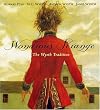
This beautifully illustrated book, published for a 1998 exhibition by the same name, focuses on the evocative, sometimes mysterious and occasionally spooky works of four Pennsylvania artists: Howard Pyle, NC Wyeth, Andrew Wyeth and Jamie Wyeth. These artists form a continuum in the Brandywine Valley, beginning with the teacher, noted illustrator Pyle, and continuing with his student, illustrator NC Wyeth, Wyeth's son Andrew, and Andrew's son Jamie. While spotlighting each artist's more show more fanciful pieces, it also provides visual testimony to the transcendent quality of the work of Andrew Wyeth, which many critics erroneously judge to be simple landscapes of a bygone era, when they are in fact far more than simply representational. The book includes beautiful full-color illustrations of many works not generally seen, especially among those by Jamie Wyeth, and includes an introduction that outlines the Brandywine River tradition and the way each artist relates to it and to each other. Other essays by various authors (including Betsy James Wyeth) focus on each artist. Although it emphasizes images over text, it is an outstanding book for those who admire these artists' work, or those who would like to learn more about them. show less
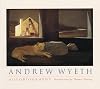
I particularly love his study of Helga. While I find her rather...uh...manish, you can see through his art how beautiful she was in his eyes.
Lists
You May Also Like


Associated Authors
Statistics
- Works
- 43
- Also by
- 17
- Members
- 1,189
- Popularity
- #21,620
- Rating
- 4.3
- Reviews
- 11
- ISBNs
- 28
- Languages
- 2
- Favorited
- 1