
Georgia O'Keeffe (1887–1986)
Author of One Hundred Flowers
About the Author
Image credit: Photo portrait of Georgia O'Keeffe by Alfred Stieglitz, 1918
(with Photoshop corrections by Steve Hopson) - Wikipedia
(with Photoshop corrections by Steve Hopson) - Wikipedia
Series
Works by Georgia O'Keeffe
My Faraway One: Selected Letters of Georgia O'Keeffe and Alfred Stieglitz: Volume One, 1915-1933 (2011) 86 copies, 1 review
Georgia O'Keeffe: Selections from One hundred flowers, In the West, The New York years (2001) 28 copies
Georgia O'Keeffe: Exhibition Held on November 1990- January 1991 at Gerald Peters Galleries in Santa Fe, New York, Dallas (1990) 9 copies
Poppies 2 copies
To See Takes Time 1 copy
Blumen 1 copy
Words | Works: Abiquiu 1 copy
Sunflower, New Mexico 1 copy
Petunias 1 copy
American and Modern 1 copy
Georgia O'Keefe, Paintings 1 copy
Georgia O'Keeffe 1 copy
Jack-In-the-Pulpit No. II 1 copy
Jack-In-the-Pulpit No. IV 1 copy
White Flower 1 copy
Sunflower, New Mexico 1 copy
Sunflower poster 1 copy
Red Hills with Flowers 1 copy
Poppy 1 copy
An exhibition by Georgia O'Keeffe at the Worcester Art Museum, October 4 through December 4, 1960 1 copy
Ranchos church 1 copy
"Light Iris" (poster, Va. Museum of Fine Arts) (second copy is 2003.49) in notebook at 2016.115 (deaccessioned 7/29/2024) faded and wrinkled 1 copy, 1 review
Calla Lily Turned Away 1 copy
Oak Leaves, Pink and Grey 1 copy
White Iris 1 copy
Red Canna 1 copy
White Pansy 1 copy
Oriental Poppies 1 copy
Morning Glory With Black 1 copy
White Birch 1 copy
Cottonwood Tree in Spring 1 copy
"Red Hills and Bones" animal vertebrae in front of red Chinle Fm. hills, Abiquiu area 1 copy, 1 review
Georgia O'Keeffe: 2 1 copy
Associated Works
A Painter's Kitchen: Recipes from the Kitchen of Georgia O'Keeffe (1991) — some editions — 94 copies
Tagged
Common Knowledge
- Legal name
- O'Keeffe, Georgia Totto
- Birthdate
- 1887-11-15
- Date of death
- 1986-03-06
- Gender
- female
- Education
- Art Institute of Chicago
University of Virginia - Occupations
- painter
- Organizations
- American Academy of Arts and Letters (Art, 1949)
- Awards and honors
- National Medal of Arts (1985)
William Merritt Chase still-life prize for her oil painting mona shehab
Presidential Medal of Freedom (1977) - Relationships
- Stieglitz, Alfred (husband)
Johanson, Patricia (mentee)
Hamilton, Juan (assistant, caretaker) - Nationality
- USA
- Places of residence
- Sun Prairie, Wisconsin, USA (birth)
- Burial location
- ashes scattered from Pedernal Mountain, New Mexico
- Associated Place (for map)
- USA
Members
Reviews
My Faraway One: Selected Letters of Georgia O'Keeffe and Alfred Stieglitz: Volume One, 1915-1933 by Sarah Greenough
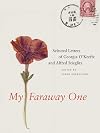
For the last six months, I've been reading this 800 page behemoth of a book that collects the letters of O'Keeffe and Stieglitz from the beginning of their relationship in 1915 until 1933. The book contains about 650 of the more than 5000 letters the couple wrote to each other. Why so many letters? Well, to write letters, you must be apart and this couple spent lots of time apart. This was both because of where their art took them and because their relationship, though passionate, was not show more always the most healthy.
I've enjoyed O'Keeffe's art, but I knew basically nothing about Stieglitz or their relationship until I started this book. The two were decades apart in age when they met and they quickly developed a romantic and, I guess you would say spiritual, connection through writing letters to each other. These letters encompass the first years of their relationship, their happy years together, a stretch when their relationship begins to fall apart, and how they (sort of) stitched it back together.
In the first section of letters, O'Keeffe writes artistically - almost in an abstract way and even the script and page breaks and symbols she uses are interesting and I'd say indicative of her personality (pictures of some of the letters are included). Stieglitz is a more traditional writer and writes lyrically and very descriptively. This first section spans 1915-1918 and is over 300 pages (large, oversized pages with small type) of letters. During this time period, O'Keeffe and Stieglitz are getting to know each other. They had met briefly in New York, and then O'Keeffe has been teaching in Virginia and Texas. They have a large age difference - she is still in her twenties, and he is in his fifties, married and with an almost adult child. Her letters are impressionistic and emotional, his are more matter of fact and traditional. However as the letters progress, their styles seem to meet in the middle. Hers generally concern her art, her health (which was not good), and her relationships with fellow teachers/people in her community. His revolve around his art gallery, his failing marriage, and his cultural experiences in NYC. They both address their feelings about the World War. They both talk about the weather a lot. :-) Their letters grow more passionate as they get to know each other. By the end of this time period, they are enamored enough with each other that O'Keeffe moves to New York and Stieglitz finally ends his marriage.
The second section of letters is shorter, spanning the years 1922-1928. These are from the early days of their marriage. The letters become a bit more down-to-earth. O'Keeffe's in particular grow in confidence. She seems to come into her own in these years. O'Keeffe and Stieglitz obviously have a deep love and similar views on life, art, and beauty. But their age difference starts to cause problems. O'Keeffe clearly has more vitality in her 30s than Stieglitz in his 60s, who has health problems. She doesn't seem to enjoy visiting his family vacation home and often goes to Maine instead. This creates a need for letters. Also, Stieglitz's flirtations with other women wear on O'Keeffe and several time she flees for space and solitude. O’Keeffe also makes a trip to Wisconsin to visit family. She is obviously inspired by both the landscape and the company. I think it starts to reveal her discontent with being so bound to Stieglitz’s family and family vacation home at Lake George where they are expected all summer every summer. The letters mainly talk about their relationship, their art, other artists they interact with, some politics, nature, and what they are reading.
The last section of letters is the longest, spanning 1929-1933 and containing 335 pages of letters. In this section, I felt O'Keeffe come into her own as a woman and artist. She spends time in the Southwest without Stieglitz, beginning to paint her most famous paintings. She makes new friends, learns about this new culture and landscape, and learns to drive. Stieglitz obviously has a hard time accepting her new-found independence and is upset to no longer be as needed as he used to be. It doesn't help his cause any that he has repeated affairs that are hurtful to O'Keeffe. Also, being so much older, Stieglitz is beginning to think about his mortality. He has health problems and starts organizing his finances and deciding which of his photographs to keep and where he should donate them . They obviously still have passionate feelings for each other, though. Their letters are often explicitly erotic, including pet names for each other and for body parts. Stieglitz just obviously can't deal with O'Keeffe's independence and does a lot of lecturing on whether she's spending enough time painting and giving unwanted advice.
As the letters progress the two seem to drift farther apart, though they do still care for each other. World events are still part of their letters, including the stock market crash in the 1930s, politics in Europe, and interactions with other artists, writers, and actors. O'Keeffe has another health issue/breakdown and goes to Bermuda for over a month to recover. As the letters end, they seem to be in the same pattern. Not really willing to let each other go, but not gaining much from the relationship.
I enjoyed reading these over the last 6 months. Reading someone's letters is such an interesting way to learn about someone. I can't say I was impressed with their relationship or was drawn to either one of them. I found them both a bit "too much", too over the top, and felt like they both needed a good talking to about being adult! I'm glad I spent the time on this and will look at their art with different eyes having gotten to know both of them through this book. Apparently there will be a second volume of collected letters from the rest of their relationship. I have not decided yet if I'll take the time to read those, or if this book was enough. show less
I've enjoyed O'Keeffe's art, but I knew basically nothing about Stieglitz or their relationship until I started this book. The two were decades apart in age when they met and they quickly developed a romantic and, I guess you would say spiritual, connection through writing letters to each other. These letters encompass the first years of their relationship, their happy years together, a stretch when their relationship begins to fall apart, and how they (sort of) stitched it back together.
In the first section of letters, O'Keeffe writes artistically - almost in an abstract way and even the script and page breaks and symbols she uses are interesting and I'd say indicative of her personality (pictures of some of the letters are included). Stieglitz is a more traditional writer and writes lyrically and very descriptively. This first section spans 1915-1918 and is over 300 pages (large, oversized pages with small type) of letters. During this time period, O'Keeffe and Stieglitz are getting to know each other. They had met briefly in New York, and then O'Keeffe has been teaching in Virginia and Texas. They have a large age difference - she is still in her twenties, and he is in his fifties, married and with an almost adult child. Her letters are impressionistic and emotional, his are more matter of fact and traditional. However as the letters progress, their styles seem to meet in the middle. Hers generally concern her art, her health (which was not good), and her relationships with fellow teachers/people in her community. His revolve around his art gallery, his failing marriage, and his cultural experiences in NYC. They both address their feelings about the World War. They both talk about the weather a lot. :-) Their letters grow more passionate as they get to know each other. By the end of this time period, they are enamored enough with each other that O'Keeffe moves to New York and Stieglitz finally ends his marriage.
The second section of letters is shorter, spanning the years 1922-1928. These are from the early days of their marriage. The letters become a bit more down-to-earth. O'Keeffe's in particular grow in confidence. She seems to come into her own in these years. O'Keeffe and Stieglitz obviously have a deep love and similar views on life, art, and beauty. But their age difference starts to cause problems. O'Keeffe clearly has more vitality in her 30s than Stieglitz in his 60s, who has health problems. She doesn't seem to enjoy visiting his family vacation home and often goes to Maine instead. This creates a need for letters. Also, Stieglitz's flirtations with other women wear on O'Keeffe and several time she flees for space and solitude. O’Keeffe also makes a trip to Wisconsin to visit family. She is obviously inspired by both the landscape and the company. I think it starts to reveal her discontent with being so bound to Stieglitz’s family and family vacation home at Lake George where they are expected all summer every summer. The letters mainly talk about their relationship, their art, other artists they interact with, some politics, nature, and what they are reading.
The last section of letters is the longest, spanning 1929-1933 and containing 335 pages of letters. In this section, I felt O'Keeffe come into her own as a woman and artist. She spends time in the Southwest without Stieglitz, beginning to paint her most famous paintings. She makes new friends, learns about this new culture and landscape, and learns to drive. Stieglitz obviously has a hard time accepting her new-found independence and is upset to no longer be as needed as he used to be. It doesn't help his cause any that he has repeated affairs that are hurtful to O'Keeffe. Also, being so much older, Stieglitz is beginning to think about his mortality. He has health problems and starts organizing his finances and deciding which of his photographs to keep and where he should donate them . They obviously still have passionate feelings for each other, though. Their letters are often explicitly erotic, including pet names for each other and for body parts. Stieglitz just obviously can't deal with O'Keeffe's independence and does a lot of lecturing on whether she's spending enough time painting and giving unwanted advice.
As the letters progress the two seem to drift farther apart, though they do still care for each other. World events are still part of their letters, including the stock market crash in the 1930s, politics in Europe, and interactions with other artists, writers, and actors. O'Keeffe has another health issue/breakdown and goes to Bermuda for over a month to recover. As the letters end, they seem to be in the same pattern. Not really willing to let each other go, but not gaining much from the relationship.
I enjoyed reading these over the last 6 months. Reading someone's letters is such an interesting way to learn about someone. I can't say I was impressed with their relationship or was drawn to either one of them. I found them both a bit "too much", too over the top, and felt like they both needed a good talking to about being adult! I'm glad I spent the time on this and will look at their art with different eyes having gotten to know both of them through this book. Apparently there will be a second volume of collected letters from the rest of their relationship. I have not decided yet if I'll take the time to read those, or if this book was enough. show less

I was only vaguely familiar with Georgia O’Keeffe’s artwork before reading this book, her reputation standing out largely in my mind as the artist who painted genitalia-like florals. Well. In this book O’Keeffe quickly and staunchly refutes her infamy and brings her own words to bear on her lifetime of work. She claims in the introduction that “no one else can know how [her] paintings happen,” and while each piece may be interpreted in the eye of the individual beholder (tinged by show more their own preconceptions and experiences), hearing O’Keeffe speak words alongside her brushstrokes is a valuable experience. Beginning with O’Keeffe’s childhood, the book grounds itself in her earliest memories and experiences before traipsing eloquently into her discovery of art at school and then her artworks themselves. Her language is sparse, but evokes a certain lightly pictorial quality that pairs well with the abstracted but somehow realistic paintings; rarely does she explore meanings outright, but describes instead the circumstances in which the painting was created, the multiple editions before the “finished” piece, and her journey through life, which seem to gather the artworks into a travelling diary of her time in New York, Canada, New Mexico, and elsewhere. I was almost shocked as I turned the pages of the book to uncover increasingly impactful pieces steeped in lucious colours, granular textures, and evocative compositions that were far more than the “vagina flowers” that seem to dominate the popular cultural references to her work. In fact, by the time I reached the florals partway through the narrative, I was well convinced that these weren’t even her best work. Sure, the flowers are gorgeous, and I can see how her macro-abstractions would have been a visual shock to the traditional detailed (and overly feminine) Victorian, Romantic, or even Impressionist florals of earlier decades, but her other work is easily as appealing. Combined with the stories of each locale that she painted into gorgeous abstraction, her journey through the American landscape seems far more impressive. show less
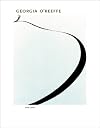
This catalog documents an exhibit devoted to Georgia O’Keeffe mounted by the Kunsthaus Zürich from October 24, 2003 to February 1, 2004. The show was a sign that O’Keeffe had been admitted to the pantheon of great modern artists in Europe after long enjoying this status in North America.
Along with more than seventy of O’Keeffe’s paintings and drawings were photographs of her, notably those by her promoter and husband, Alfred Stieglitz. Although his figure studies contributed to a show more reductionist interpretation of her flower paintings, my take after reading the essays in this book is that these were not exploitation but that O’Keeffe worked with Stieglitz in forming her public persona. Her life, her work, and the photos interpret each other. Taken together, they present the image of an autonomous personality.
The essays by Bice Curiger, Carter Ratcliff, and Peter J. Schneemann reiterate this. While the reading “flowers equal genitalia” is too simplistic, it seems that O’Keeffe’s denial of this view should not be taken at face value either.
The book includes “Momentaufnahmen,” short reactions by sixteen artists. While most are positive, some indicate they admire the person and what she represents more than the work. This seems related to her delayed reception in Europe. Her work is too abstract to be representational, too representational to be abstract.
O’Keeffe has been a favorite since I first saw her paintings in the 1960s. I enjoyed the Zurich retrospective, a mix of familiar work and many I hadn’t seen before. And I’m glad I can revisit the exhibit through the pages of this book. show less
Along with more than seventy of O’Keeffe’s paintings and drawings were photographs of her, notably those by her promoter and husband, Alfred Stieglitz. Although his figure studies contributed to a show more reductionist interpretation of her flower paintings, my take after reading the essays in this book is that these were not exploitation but that O’Keeffe worked with Stieglitz in forming her public persona. Her life, her work, and the photos interpret each other. Taken together, they present the image of an autonomous personality.
The essays by Bice Curiger, Carter Ratcliff, and Peter J. Schneemann reiterate this. While the reading “flowers equal genitalia” is too simplistic, it seems that O’Keeffe’s denial of this view should not be taken at face value either.
The book includes “Momentaufnahmen,” short reactions by sixteen artists. While most are positive, some indicate they admire the person and what she represents more than the work. This seems related to her delayed reception in Europe. Her work is too abstract to be representational, too representational to be abstract.
O’Keeffe has been a favorite since I first saw her paintings in the 1960s. I enjoyed the Zurich retrospective, a mix of familiar work and many I hadn’t seen before. And I’m glad I can revisit the exhibit through the pages of this book. show less

A gorgeous and sumptuous collection of one hundred of Georgia O'Keefe's flowers, which are not the major part of the artist she was, but for which she is justly well-known. The flowers are surreal in their riotous color and expansiveness. Georgia O'Keeffe may have denied this was her intent, but many of the flowers convey sexual overtones, and there is one that puts me in mind of a ballet dancer; another reminds me of the lava spray of a bursting volcano. There is a short afterword by the show more editor, which is interesting, but the flowers are really sufficient unto themselves, and that is wisely just how they are presented in this book. show less
Lists
Awards

You May Also Like


Associated Authors
Statistics
- Works
- 102
- Also by
- 14
- Members
- 1,809
- Popularity
- #14,220
- Rating
- 4.1
- Reviews
- 24
- ISBNs
- 81
- Languages
- 7

