
Wanda M. Corn
Author of The Art of Andrew Wyeth
About the Author
Wanda M. Corn is Professor of Art History at Stanford University.
Works by Wanda M. Corn
Associated Works
Tagged
Common Knowledge
- Legal name
- Corn, Wanda Marie
- Birthdate
- 1940-11-30
- Gender
- female
- Education
- New York University (BA | 1963)
New York University (MA | 1965)
New York University (PhD | 1974) - Occupations
- art and cultural historian
university professor
curator - Organizations
- Stanford University
Mills College - Relationships
- Corn, Joseph J. (spouse)
- Nationality
- USA
- Birthplace
- New Haven, Connecticut, USA
- Places of residence
- Palo Alto, California, USA
- Associated Place (for map)
- USA
Members
Reviews
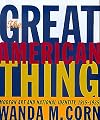
Wanda M. Corn's long-awaited new book proposes a remarkable revisioning of the history of American modern art between the two world wars. Moving away from issues of style and abstraction, she bases her work on a broad examination of culture and on discourses of national identity. Corn argues that the key questions for interwar modernists in New York and Paris were whether or not it was possible to create an art that was both American and modern, and if it was, what such an art would look show more like. Both European and American artists debated these questions and made art that responded to them.
Corn organizes each chapter around a careful reading of a work of art, probing first its peculiar poetry and style and then its connection to its artist and the cultural influences surrounding it. The result is an unfolding of the work's contingent relationships with history, literature, art criticism, music, and popular culture. The works she examines—from those made by the Stieglitz circle to those by European Dadaists—were part of the quest for "the Great American Thing," a quest that was international in scope and that inspired a decade of vibrant cultural exchange between the art capitals of Europe and New York.
Passionate and eminently readable, with more than 300 illustrations—drawings, paintings, sculptures, advertisements, cartoons, and documentary photographs—The Great American Thing indelibly alters the way we think about the first decades of American modernism and the legacy it created. show less
Corn organizes each chapter around a careful reading of a work of art, probing first its peculiar poetry and style and then its connection to its artist and the cultural influences surrounding it. The result is an unfolding of the work's contingent relationships with history, literature, art criticism, music, and popular culture. The works she examines—from those made by the Stieglitz circle to those by European Dadaists—were part of the quest for "the Great American Thing," a quest that was international in scope and that inspired a decade of vibrant cultural exchange between the art capitals of Europe and New York.
Passionate and eminently readable, with more than 300 illustrations—drawings, paintings, sculptures, advertisements, cartoons, and documentary photographs—The Great American Thing indelibly alters the way we think about the first decades of American modernism and the legacy it created. show less

I was racking my brains and trying to remember where I first came across the art of Andrew Wyeth. I think it was in a Life Magazine ...maybe in early 60's and it certainly featured Christina's World. Since then, I've been very much aware of his work and have observed it in books and catalogues. I guess I have seen some of his originals in the great American Museums but I'm not sure. Initially, I had that sense of deja vu that I already had a copy of this book somewhere on my shelves. But show more that is not the case. Though I do have a book of his watercolours ...and I'm much less enamoured with these than the paintings in the current book. (These mainly seem to be done in tempera). The pictures are accompanied by some really interesting text...especially about Andrew himself but also about his father NC Wyeth. And I really like the work of the latter. (And have just finished a book about him and his art).
After reading the essays and extended extracts of Andrew's words about his art I've started questioning myself. Had I just taken a liking to his work because it was "realistic"; (like all the blades of grass showing in Christina's world) or was it the unusual angles and use of blank space? I'm certain that I had not read all the meaning into the works that Andrew tried to impart. But it's made me look for greater depth in his work and to look for things like the white shell representing death on a casket...or open doors inviting exploration. etc. There is not much there about technique. But I discovered that Andrew hated being watched while he painted and was rather secretive and solitary in his habits. (I recall that a rathe risque series of nudes emerged after he had died......and there was some speculation that his wife had not been aware of these). So, anyway, not much on technique except that he'd come upon tempera via his brother in law in the 1930's and seemed to have adopted it with relish. In this book and somewhere before I remember him saying that he's spent months working on the background for Christina's world and when he came to putting in a pink shade on Christina's shoulder, it nearly blew him across the room. I found that fascinating.
Where the book is good is the way it reveals Andrew as being out of step with the successful American artists of his time with their abstract expressionism. Yet he stuck to his guns and did his own thing and still managed to be successful. An interesting person, a great artist and a nice book about him. I give it four stars. (Now a little dated and the colour of the pictures seems a little drab.....then maybe that's the way they are!!). show less
After reading the essays and extended extracts of Andrew's words about his art I've started questioning myself. Had I just taken a liking to his work because it was "realistic"; (like all the blades of grass showing in Christina's world) or was it the unusual angles and use of blank space? I'm certain that I had not read all the meaning into the works that Andrew tried to impart. But it's made me look for greater depth in his work and to look for things like the white shell representing death on a casket...or open doors inviting exploration. etc. There is not much there about technique. But I discovered that Andrew hated being watched while he painted and was rather secretive and solitary in his habits. (I recall that a rathe risque series of nudes emerged after he had died......and there was some speculation that his wife had not been aware of these). So, anyway, not much on technique except that he'd come upon tempera via his brother in law in the 1930's and seemed to have adopted it with relish. In this book and somewhere before I remember him saying that he's spent months working on the background for Christina's world and when he came to putting in a pink shade on Christina's shoulder, it nearly blew him across the room. I found that fascinating.
Where the book is good is the way it reveals Andrew as being out of step with the successful American artists of his time with their abstract expressionism. Yet he stuck to his guns and did his own thing and still managed to be successful. An interesting person, a great artist and a nice book about him. I give it four stars. (Now a little dated and the colour of the pictures seems a little drab.....then maybe that's the way they are!!). show less
This is my favorite book on or about Andrew Wyeth. It is old, the pages and pictures are not in high gloss and are perhaps not as brilliant as they could be, but this does not vitiate the content.
The text of the book is broken into four main sections, each one written by a different author and covering very different aspects. Brian O'Doherty writes "A Visit to Wyeth Country" and examines the landscape and it's atmosphere that is so prominent in much of Wyeth's work. Richard Meryman show more contributes in "Andrew Wyeth: An Interview". This is by far the best section of the book and the primary reason why I like it as much as I do. There are some powerful insights to Wyeth direct from the source. The last two sections "Andrew Wyeth's Painting Techniques" by E.P. Richardson and "The Art of Andrew Wyeth" by Wanda M. Corn were, for me, dry and uninspiring.
Take as a whole the last two sections water down the first. But, any time the text becomes dismissible all you need do is take some extra time with the art work to make it a satisfying read. show less
The text of the book is broken into four main sections, each one written by a different author and covering very different aspects. Brian O'Doherty writes "A Visit to Wyeth Country" and examines the landscape and it's atmosphere that is so prominent in much of Wyeth's work. Richard Meryman show more contributes in "Andrew Wyeth: An Interview". This is by far the best section of the book and the primary reason why I like it as much as I do. There are some powerful insights to Wyeth direct from the source. The last two sections "Andrew Wyeth's Painting Techniques" by E.P. Richardson and "The Art of Andrew Wyeth" by Wanda M. Corn were, for me, dry and uninspiring.
Take as a whole the last two sections water down the first. But, any time the text becomes dismissible all you need do is take some extra time with the art work to make it a satisfying read. show less
The first book of art I bought. I certainly picked a good one. Always find a peace when I pick this up. I feel like the dog in "Master Bedroom".
Awards


You May Also Like


Associated Authors
Statistics
- Works
- 10
- Also by
- 1
- Members
- 795
- Popularity
- #32,057
- Rating
- 4.4
- Reviews
- 9
- ISBNs
- 17