
Nicola Di Cosmo
Author of Ancient China and its Enemies: The Rise of Nomadic Power in East Asian History
About the Author
Nicola Di Cosmo is Luce Foundation Professor of East Asian Studies, Institute for Advanced Study.
Works by Nicola Di Cosmo
Ancient China and its Enemies: The Rise of Nomadic Power in East Asian History (2002) 107 copies, 2 reviews
Empires and Exchanges in Eurasian Late Antiquity: Rome, China, Iran, and the Steppe, ca. 250–750 (2018) — Editor — 13 copies
The Diary of a Manchu Soldier in Seventeenth-Century China: "My Service in the Army", by Dzengseo (Routledge Studies in the Early History of Asia) (2006) 12 copies
Manchu-Mongol Relations on the Eve of the Qing Conquest: A Documentary History (Brill's Inner Asian Library) (2003) 2 copies
Venezia e i Mongoli : commercio e diplomazia sulle vie della seta nel Medioevo (secoli XIII-XV) (2022) — Author — 1 copy
La Cina 1 copy
Associated Works
Reiternomaden in Europa — Author — 1 copy
Tagged
Common Knowledge
Members
Reviews

I got this under the impression it was an account of the Xiongnu Empire and its wars with Han China. It is, in part, that, but Di Cosmo casts his net rather wider, covering also the archaeology of China's early northern fringes, the history of the Rong and Di peoples who preceeded the Xiongnu as China's northern neighbours, and Sima Qian's methods and aims in writing of the Xiongnu in the Shiji.
I found it extremely interesting, especially the sections on the rise of horseback nomadism in show more eastern Asia and on the Rong and Di (who were not horseback nomads but agriculturalists and footslogger pastoralists). show less
I found it extremely interesting, especially the sections on the rise of horseback nomadism in show more eastern Asia and on the Rong and Di (who were not horseback nomads but agriculturalists and footslogger pastoralists). show less

This volume of the Cambridge History of Inner Asia covers the Mongol Empire and its successor states from the rise of Genghis Khan ca 1200 until the completion of the Russian conquest of Central Asia in the late nineteenth century.
Well, there are some gaps; most notably, the Yuan dynasty is only treated peripherally, presumably because it got the better part of a volume to itself in the Cambridge History of China*. For less obvious reasons, there's no chapter or section focusing on the show more Jungar**, whose created what was arguably the last great steppe empire in the seventeenth and eighteenth centuries before coming up second best against the Qing. They play major roles in several chapters, but always as enemies of the group or state in focus.
The early chapters about the rise of the Mongol Empire and the early stages of its disintegration didn't interest me too much; while competent, they tell stories I've read in more detailed versions elsewhere. More interesting were the middle and later chapters detailing the evolutions of steppe polities in the late middle and early modern ages, as well as their gradual incorporation in the Russian and Qing empires.
* In another form of overlap, di Cosmo's chapter here on the Qing conquests in the steppes, the Tarim basin, and Tibet is very similar to his chapter on the same in the Cambridge History of China volume on the early Qing dynasty.
** AKA Junghar, Dzungar, Zungar, and other variants. They're sometimes also known as Kalmyks, Qalmaqs, or Qalmïqs. show less
Well, there are some gaps; most notably, the Yuan dynasty is only treated peripherally, presumably because it got the better part of a volume to itself in the Cambridge History of China*. For less obvious reasons, there's no chapter or section focusing on the show more Jungar**, whose created what was arguably the last great steppe empire in the seventeenth and eighteenth centuries before coming up second best against the Qing. They play major roles in several chapters, but always as enemies of the group or state in focus.
The early chapters about the rise of the Mongol Empire and the early stages of its disintegration didn't interest me too much; while competent, they tell stories I've read in more detailed versions elsewhere. More interesting were the middle and later chapters detailing the evolutions of steppe polities in the late middle and early modern ages, as well as their gradual incorporation in the Russian and Qing empires.
* In another form of overlap, di Cosmo's chapter here on the Qing conquests in the steppes, the Tarim basin, and Tibet is very similar to his chapter on the same in the Cambridge History of China volume on the early Qing dynasty.
** AKA Junghar, Dzungar, Zungar, and other variants. They're sometimes also known as Kalmyks, Qalmaqs, or Qalmïqs. show less
A collection of essays of various aspects of the military history of the Eurasian steppes. Some seem to have been written long before the collection was published in 2002 - Perdue's refers to the Sino-Soviet border as something still existing.
As might be guessed from the use of "Inner Asia" rather than "Central Asia" or similar in the title, there is something of an eastern focus: Of the ten consistuent essays, six deals with events east of the Pamirs, one ranges across the entire Mongol show more Empire, and two deals with Mongols in the West. Only one, Golden on the pre-Mongol western steppes, deal with the western steppes in the absence of direct eastern influence.
Subjects dealt with varies from analysis of individual battles (Herat 1270 and Wadi-'l-Khaznadar 1299) to Qing military ceremonial.
As typical in this sort of collections, the interest varies considerably from essay to essay. But anyone interested in steppe warfare is likely to find something of interest here, particularly those interested in the Mongols and/or Manchus, who separately or together figure in seven out of ten essays. show less
As might be guessed from the use of "Inner Asia" rather than "Central Asia" or similar in the title, there is something of an eastern focus: Of the ten consistuent essays, six deals with events east of the Pamirs, one ranges across the entire Mongol show more Empire, and two deals with Mongols in the West. Only one, Golden on the pre-Mongol western steppes, deal with the western steppes in the absence of direct eastern influence.
Subjects dealt with varies from analysis of individual battles (Herat 1270 and Wadi-'l-Khaznadar 1299) to Qing military ceremonial.
As typical in this sort of collections, the interest varies considerably from essay to essay. But anyone interested in steppe warfare is likely to find something of interest here, particularly those interested in the Mongols and/or Manchus, who separately or together figure in seven out of ten essays. show less
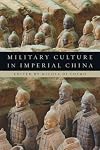
Perhaps a companion to Di Cosmo's edited Warfare in Inner Asian History. This too is aspects and specific instances of the culture of war -- in China this time. Fascinating essays. Law and the Military, on punitive war; Martial Prognostication, on superstitions; Tang (mis)Representations of Battle, written for court consumption; and a brilliant one on psychology of war in the Song Dynasty (known for its civilian ethos) by Don J. Wyatt, with three portraits of real but not-so-famous men, to show more explore attitudes. show less
Lists
You May Also Like


Associated Authors
Statistics
- Works
- 17
- Also by
- 4
- Members
- 259
- Popularity
- #88,670
- Rating
- 4.0
- Reviews
- 7
- ISBNs
- 31
- Languages
- 4