

Alessandro Barbero
Author of The Day of the Barbarians
About the Author
Alessandro Barbero is Professor of Medieval History at the University of Piemonte Orientale, Italy.
Works by Alessandro Barbero
A che ora si mangia? Approssimazioni storico-linguistiche all'orario dei pasti (secoli XVIII-XXI) (2017) 27 copies, 1 review
Inventare i libri. L'avventura di Filippo e Lucantonio Giunti, pionieri dell'editoria moderna (2022) 17 copies
Isteria Bellicista. Come l ‘Europa è arrivata alla Prima Guerra Mondiale [Gratis con l'acquisto di uno o più articoli della Promozione Storia] (2026) 5 copies
Il passaggio di Enea. Per le Scuole superiori. Con e-book. Con espansione online. Con Libro: Atlante ieri e oggi: 1 (2017) 3 copies
Lo spazio umano. Corso integrato di geostoria e educazione civica. Per le Scuole superiori. Dalla Preistoria a Roma repubblicana (Vol. 1) (2022) 3 copies
The war with Hannibal — Author — 2 copies
L'aristocrazia nella società francese del Medioevo: Analisi delle fonti letterarie (secoli X-XIII) (2021) 2 copies
Un santo in famiglia : vocazione religiosa e resistenze sociali nell'agiografia latina medievale (1991) 2 copies
Straniero 1 copy
La Storia. Italia Europa Mediterraneo. Volume 23: Dal Rinascimento alla guerra dei Trent’anni 1 copy
La Storia. Italia Europa Mediterraneo. Volume 24: Sovrani e rivoluzioni. Dal Re Sole a Napoleone 1 copy
La Storia. Italia Europa Mediterraneo. Volume 25: Nuovi modelli di sviluppo dell’Età contemporanea 1 copy
La nostra storia raccontata da Alessandro Barbero e Sandro Carocci. vol. 1 Dalla Preistoria a Roma repubblicana (2012) 1 copy
Isteria bellicista 1 copy
Il Ducato di Savoia 1 copy
La Storia. Italia Europa Mediterraneo. Volume 20: Vita pubblica e vita privata nell’Età moderna 1 copy
La Storia. Italia Europa Mediterraneo. Volume 17: La società medievale tra continuità e cambiamento 1 copy
La storia. Progettare il futuro. Con Atlante di geostoria. Con Cittadinanza e Costituzione. Per la Scuola media. Con e-book: 3 (2019) 1 copy
Storia del Piemonte 1 copy
La nostra storia raccontata da Alessandro Barbero e Sandro Carocci. vol. 2 Dall'Impero Romano all'anno Mille (2012) 1 copy
La Storia. Italia Europa Mediterraneo. Volume 6: Sparta e Atene. L’Impero persiano contro le città 1 copy
La Storia. Italia Europa Mediterraneo. Volume 9: L’espansione di Roma. Dalla Repubblica all’Impero 1 copy
Sacro Monte di Crea 1 copy
Associated Works
Desperta Ferro Moderna. Lepanto — Contributor — 2 copies
Tagged
Common Knowledge
- Birthdate
- 1959-04-30
- Gender
- male
- Education
- University of Turin (Medieval History) (1981)
Scuola Normale Superiore of Pisa - Occupations
- professor of Medieval Studies at the University of Piemonte Orientale
- Organizations
- Management Committee of the Premio Strega
- Awards and honors
- Chevalier de l'Ordre des Arts et des Lettres (2005)
- Nationality
- Italy
- Birthplace
- Turin, Piedmont, Italy
- Associated Place (for map)
- Piedmont, Italy
Members
Reviews
Translated from the Italian by Allan Cameron
“Every person is complicated, only in novels are characters consistent, while in reality we are all a collection of contradictions, without even realizing it, because man was not made to be summarized in a formula.”
Alessandro Barbero’s novel about Russian life delves deep into the world of Moscow and Baku, yet in an extraordinary way. Rather than build on Russian stereotypes, like the underbelly of crime, excessive vodka, and jars of caviar show more mixed in with ruthless criminals and historical savagery, Barbero creates an entirely new type of Russian novel. Sure, those elements are present, but they aren’t the focus. The characters are complicated and new. And the provenance of this “anonymous” novel is new too.
The novel begins with a manuscript that manages to survive two literal burials in the ground. No one claims to have written it, and it’s stored an indeterminate amount of time. From then, it finally gets published. The voice of the unknown author introduces the reader to several characters in a rather short amount of time. But rather than simply describe them, he actually gets into their head, and at times we read of them in the first-person, hearing their stream-of-consciousness thoughts and intentions. Each character defies type, and all bear a bit of charm.
First is Viktor Nikolayevich Obilin, a college professor who lives alone, simply, and who makes acerbic comments about politics in Moscow. He takes ironic note of how the citizens of Moscow are insisting on government ‘transparency’ and he is aware of how dangerous transparency and the search into the past may turn out to be. For one thing, he has a student researcher, Tanya, who is doggedly pursuing her thesis about Stalinist party members in Baku in the 1940s. This is a dangerous period in Russian history, as Viktor observes “these were years you hurried over without going too far into details: you just gallop along until you get to Sputnik and Gagarin into space. Then you can breathe freely again.”
Tanya is well aware of the deception and atrocities that occurred, war crimes that have gone unpunished for many. One typical crime was when an informant rats out a colleague, has them sent to the labor camps, and then assumes their identity. Her research into Soviet party cadres has a personal connection, and nothing is going to stop her, not even the ‘old school’ hardliners that pressure her professor, Obliin, to cancel her research. “I need to know what happened, and to understand history you need to follow it through. You can’t just stop at some random moment. You need to go even beyond…” Her boyfriend Oleg, a journalist, thinks she’s going overboard.
Then there’s Mark, a struggling actor who has a bizarre hobby. Besides drinking heavily, he collects old photographs and archived documents from the SS’s files, and is writing a novel based on the connections he’s imagined between the names and dates. Then we are introduced to my favorite character, a honorable judge named Nazar Kallistratovich Lappa who is trying to restore a law and order into daily life in Moscow. At this point, just when I thought maybe I should be taking notes on all these characters, the author speaks directly to the reader: “What do I hear you saying? Yet another character! You bastard, could you try not to get lost in your own plot, and remember: sooner or later you are going to have to gather up all the various threads and make some sense of it. Listen, my impatient masters, the threads will be gathered all in good time…so trust me.”
Throughout the remainder of the novel he does indeed tie up the threads, making the story serious in the historical aspects yet with a bit of humor and irony thrown in. I can’t say enough about the way each character is built; seeing their inner thoughts as they struggle to do what is right as opposed to what is easy gives them far more depth than just describing what they said or did.
On a larger scale, outside of the plot, Barbero comments on the outsider viewpoint of Russian history, and the way it is often revealed only in an interest in the writings of Pushkin or Gogol, “history has simply become a commentary on literature.” He wants to demonstrate that only the famous writers or despicable leaders are what capture interest, rather than this complicated people who have endured decades of hardship. Look into those people, and their lives, to find the answers to the last century, he implies. show less
“Every person is complicated, only in novels are characters consistent, while in reality we are all a collection of contradictions, without even realizing it, because man was not made to be summarized in a formula.”
Alessandro Barbero’s novel about Russian life delves deep into the world of Moscow and Baku, yet in an extraordinary way. Rather than build on Russian stereotypes, like the underbelly of crime, excessive vodka, and jars of caviar show more mixed in with ruthless criminals and historical savagery, Barbero creates an entirely new type of Russian novel. Sure, those elements are present, but they aren’t the focus. The characters are complicated and new. And the provenance of this “anonymous” novel is new too.
The novel begins with a manuscript that manages to survive two literal burials in the ground. No one claims to have written it, and it’s stored an indeterminate amount of time. From then, it finally gets published. The voice of the unknown author introduces the reader to several characters in a rather short amount of time. But rather than simply describe them, he actually gets into their head, and at times we read of them in the first-person, hearing their stream-of-consciousness thoughts and intentions. Each character defies type, and all bear a bit of charm.
First is Viktor Nikolayevich Obilin, a college professor who lives alone, simply, and who makes acerbic comments about politics in Moscow. He takes ironic note of how the citizens of Moscow are insisting on government ‘transparency’ and he is aware of how dangerous transparency and the search into the past may turn out to be. For one thing, he has a student researcher, Tanya, who is doggedly pursuing her thesis about Stalinist party members in Baku in the 1940s. This is a dangerous period in Russian history, as Viktor observes “these were years you hurried over without going too far into details: you just gallop along until you get to Sputnik and Gagarin into space. Then you can breathe freely again.”
Tanya is well aware of the deception and atrocities that occurred, war crimes that have gone unpunished for many. One typical crime was when an informant rats out a colleague, has them sent to the labor camps, and then assumes their identity. Her research into Soviet party cadres has a personal connection, and nothing is going to stop her, not even the ‘old school’ hardliners that pressure her professor, Obliin, to cancel her research. “I need to know what happened, and to understand history you need to follow it through. You can’t just stop at some random moment. You need to go even beyond…” Her boyfriend Oleg, a journalist, thinks she’s going overboard.
Then there’s Mark, a struggling actor who has a bizarre hobby. Besides drinking heavily, he collects old photographs and archived documents from the SS’s files, and is writing a novel based on the connections he’s imagined between the names and dates. Then we are introduced to my favorite character, a honorable judge named Nazar Kallistratovich Lappa who is trying to restore a law and order into daily life in Moscow. At this point, just when I thought maybe I should be taking notes on all these characters, the author speaks directly to the reader: “What do I hear you saying? Yet another character! You bastard, could you try not to get lost in your own plot, and remember: sooner or later you are going to have to gather up all the various threads and make some sense of it. Listen, my impatient masters, the threads will be gathered all in good time…so trust me.”
Throughout the remainder of the novel he does indeed tie up the threads, making the story serious in the historical aspects yet with a bit of humor and irony thrown in. I can’t say enough about the way each character is built; seeing their inner thoughts as they struggle to do what is right as opposed to what is easy gives them far more depth than just describing what they said or did.
On a larger scale, outside of the plot, Barbero comments on the outsider viewpoint of Russian history, and the way it is often revealed only in an interest in the writings of Pushkin or Gogol, “history has simply become a commentary on literature.” He wants to demonstrate that only the famous writers or despicable leaders are what capture interest, rather than this complicated people who have endured decades of hardship. Look into those people, and their lives, to find the answers to the last century, he implies. show less
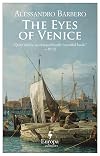
At the heart of this book set in 1500s Venice is a story of a young couple separated by unfortunate circumstances who must endure unspeakable hardships in order to survive and hopefully reunite. Michele is an apprentice stonemason studying under his father Matteo. When Michele is falsely accused of sedition and treason, he must flee Venice, which he does as an oarsman aboard a Venetian galley bound for Crete. In the course of his travels, he is a witness to theft, murder, and piracy, and show more discovered to be banished from the empire. He escapes to a fate even more dangerous, and must grow up in a hurry as he travels from one port to another throughout the entire Mediterranean. Michele’s wife Bianca, meanwhile, must also learn to survive among the desperately poor of Venice, and those who would help or abuse them.
The good:
This book describes many facets of life in Venice in the 1500s in great detail. The reader is led through the secret deliberations and machinations of The Council of Ten; the perpetually indentured oarsmen whose backbreaking labor is the conduit of trade, diplomacy, warfare, and piracy throughout the Mediterranean; the plight of the Venetian poor made desperate by famine; the many islands and ports of the Mediterranean whose hospitality varies greatly depending on who now has control of it (Venetian or Ottoman); and the strange intercourse of Christian, Muslim, and Jew at the crossroads of East and West. The reader sincerely aches for Michele and Bianca, and celebrates the kindness they receive from unexpected quarters amid abject despair.
The not-so-good:
The book is too long, and the reader is often bogged down in Venetian minutiae (the author is a renowned Italian professor of medieval history). Where some sections are too slow, others are too fast, or even rushed, especially toward the end. Other reviewers have mentioned the translation, and while I do not speak Italian, I can say that I did find myself wondering at the choice of words and haste of certain sections. Finally, the number of typographical errors really bothered me: hear for here, god for good, too for to, and the worst: Cypress for Cyprus! Maybe I am a snob, but the number and frequency of the errors really distracted me from the story.
I don’t generally assign stars to my reads – this one I might give 3.5-4. I think this slice of world history is fascinating, and Professore Barbero brings it to life admirably. I think its beautiful cover is my favorite of the year so far. show less
The good:
This book describes many facets of life in Venice in the 1500s in great detail. The reader is led through the secret deliberations and machinations of The Council of Ten; the perpetually indentured oarsmen whose backbreaking labor is the conduit of trade, diplomacy, warfare, and piracy throughout the Mediterranean; the plight of the Venetian poor made desperate by famine; the many islands and ports of the Mediterranean whose hospitality varies greatly depending on who now has control of it (Venetian or Ottoman); and the strange intercourse of Christian, Muslim, and Jew at the crossroads of East and West. The reader sincerely aches for Michele and Bianca, and celebrates the kindness they receive from unexpected quarters amid abject despair.
The not-so-good:
The book is too long, and the reader is often bogged down in Venetian minutiae (the author is a renowned Italian professor of medieval history). Where some sections are too slow, others are too fast, or even rushed, especially toward the end. Other reviewers have mentioned the translation, and while I do not speak Italian, I can say that I did find myself wondering at the choice of words and haste of certain sections. Finally, the number of typographical errors really bothered me: hear for here, god for good, too for to, and the worst: Cypress for Cyprus! Maybe I am a snob, but the number and frequency of the errors really distracted me from the story.
I don’t generally assign stars to my reads – this one I might give 3.5-4. I think this slice of world history is fascinating, and Professore Barbero brings it to life admirably. I think its beautiful cover is my favorite of the year so far. show less
What a disappointment. This book had much to recommend it: Venice in the 1500s with all its intrigue, the Alessandro Manzoni Prize for Fiction, pirates, one of my favourite publishers, and even a lovely cover. Did I mention the promise of pirates?
What it actually delivered was an overwrought tale of a young couple, Bianca and Michele. They were separated when through his own stupidity, Michele was forced to flee Venice. Not pausing to think, he leapt onto a departing merchant galley and show more signed on as a "free" oarsman. This provides a pretext for taking the reader around the Mediterranean in order to meet a stereotyped character from just about every known port of call.
Meanwhile, Bianca was back in Venice, trying to defend her honour against all those evil types this most cosmopolitan of cities could throw at her. Could anything be more obvious than the name Bianca? How was she to make a living? The faithful Bianca was convinced that someday her Michele would come back to her, having first somehow dealt with the impediment of his sentence of banishment and the certain death that would await him if he returned.
Back to Michele, who had witnessed a dastardly crime on an unnamed island; a crime involving murder and lots of gold, a crime he could not reveal to anyone.
At times I felt embarrassed to be reading this book, although there was no one around to comment on such an odd choice. At other times, I told myself it was just a light summer read, so it was okay. Why did I keep reading? I think I just wasn't prepared to ditch the whole endeavour, and there was always that promise of pirates to liven things up. There was also hope. Not hope that Bianca and Michele would be reunited, that seemed a foregone conclusion, especially as the coincidences piled up. No, it was just the simple hope that things would improve, that this 483 page mediocrity disguised as a literary work might actually turn into a literary work.
Sometimes hope and perseverance are not rewarded. show less
What it actually delivered was an overwrought tale of a young couple, Bianca and Michele. They were separated when through his own stupidity, Michele was forced to flee Venice. Not pausing to think, he leapt onto a departing merchant galley and show more signed on as a "free" oarsman. This provides a pretext for taking the reader around the Mediterranean in order to meet a stereotyped character from just about every known port of call.
Meanwhile, Bianca was back in Venice, trying to defend her honour against all those evil types this most cosmopolitan of cities could throw at her. Could anything be more obvious than the name Bianca? How was she to make a living? The faithful Bianca was convinced that someday her Michele would come back to her, having first somehow dealt with the impediment of his sentence of banishment and the certain death that would await him if he returned.
Back to Michele, who had witnessed a dastardly crime on an unnamed island; a crime involving murder and lots of gold, a crime he could not reveal to anyone.
At times I felt embarrassed to be reading this book, although there was no one around to comment on such an odd choice. At other times, I told myself it was just a light summer read, so it was okay. Why did I keep reading? I think I just wasn't prepared to ditch the whole endeavour, and there was always that promise of pirates to liven things up. There was also hope. Not hope that Bianca and Michele would be reunited, that seemed a foregone conclusion, especially as the coincidences piled up. No, it was just the simple hope that things would improve, that this 483 page mediocrity disguised as a literary work might actually turn into a literary work.
Sometimes hope and perseverance are not rewarded. show less
Come ho sentito dire a una delle presentazioni del libro che ho seguito on line, ci sono due modi per affrontare il testo, e li ho usati entrambi, prima uno e poi l'altro. Il primo è quello dello studio meticoloso, che vuol dire fermarsi a leggere le note, l'immensa bibliografia, le discussioni fra dantisti, e non ultimo il parere storico dell'autore, che spesso prende posizione nel dibattito. Libro meritevole se letto in questo modo, ma piuttosto complesso: diciamo che diventa un lavoro e show more come lettura (continuamente inframmezzata da note importanti) diviene un po' spezzata. Il secondo sistema è quello, meno corretto ma più divertente, di leggerlo senza badare alle note, senza sentirsi addetti ai lavori, per puro piacere. In tal caso si riduce sicuramente un po' il valore documentario ma si allarga molto quello estetico o quantomeno la godibilità. Dando per scontato che il prof. Barbero non è nello scritto altrettanto coinvolgente dei suoi racconti dal vivo (e ciò non per demerito dello scritto quanto per il merito di essere un grande affabulatore dal vivo), è un testo completo al punto di vista dello storico sulla vita di Dante, anche se restano tanti dubbi insoluti e su certi periodi mancano proprio le fonti. Il merito di Barbero è quello di fare ricerca storica focalizzandosi sui tratti più "umani" di essa, e rendendola perciò più interessante. Credo che solo un erudito della sua sensibilità vorrebbe (come ha dichiarato) chiedere a Dante come prima cosa se ha conosciuto la madre (dato che non ne parla mai e il padre si è risposato probabilmente è morta di parto o poco dopo). Con lui i protagonisti letteralmente rivivono, a tutto tondo. È un gran merito. show less
Lists
Awards


You May Also Like


Associated Authors
Statistics
- Works
- 95
- Also by
- 4
- Members
- 2,671
- Popularity
- #9,610
- Rating
- 3.6
- Reviews
- 74
- ISBNs
- 202
- Languages
- 12
- Favorited
- 5
