
Jonathan Dixon
Author of Beaten, Seared, and Sauced: On Becoming a Chef at the Culinary Institute of America
Works by Jonathan Dixon
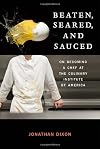
Beaten, Seared, and Sauced: On Becoming a Chef at the Culinary Institute of America (2011) 174 copies, 7 reviews
Associated Works
Lewis Carroll's La Guida Di Bragia; a Ballad Opera for the Marionette Theatre (2007) — Illustrator, some editions — 5 copies
Tagged
Common Knowledge
- Gender
- male
Members
Reviews
Beaten, Seared, and Sauced: On Becoming a Chef at the Culinary Institute of America by Jonathan Dixon
I found this really well-written and engaging, and I don't have the slightest interest in cooking or food. This is not the typical memoir where someone gets a book contract to do something funky for a year and then write about it. It is as much about following your dream relatively late in life (if late 30s can be considered "late") as it is about the specific dream. The author worked his tail off at this school and comes across as very smart and human. He is an awesome storyteller, creating show more real suspense, making the reader root for him and feel for him. He somehow manages to talk about the often-abusive faculty without making them seem like total ogres. Beautiful book, not a single clunky sentence. Highly recommended. show less
Beaten, Seared, and Sauced: On Becoming a Chef at the Culinary Institute of America by Jonathan Dixon
This autobiography successfully depicted the process of Jonathan Dixon's experience at the Culinary Institute of America (CIA) in that I felt his pain during the process. However, it also caused me to question the teaching methods and arrogance of the CIA and Dixon's decision in attending this program.
Perhaps Jonathan Dixon was unwise in choosing to attend the CIA when he was nearing 40 years old, financially insecure, in a fragile relationship, and inexperienced in restaurant work, show more particularly when he didn't intend to have a career as a chef or in the restaurant industry. The two-year CIA program was brutal, physically and psychologically, with very little to be enjoyed.
The abusive teaching methods of the CIA and the miserable externship seemed to detract from the satisfaction Dixon might have gained from the good final grades he achieved in the classes. Overall, the sacrifice required to graduate from the two-year program didn't seem to justify the high cost to Dixon, personally, financially, physically and psychologically.
Entering the CIA program meant that Dixon had to burden his significant other by his inability to uphold his part of the relationship. He was absent from her for the majority of the two-year program due to the huge demands on his time. Dixon was so thin on funds he had to borrow money from relatives in order to buy Christmas presents. His girlfriend managed to pay most of the bills by working during his externship and studies, to the detriment of her own writing career.
Dixon's age set him apart from the majority of students who had just graduated from high school or were, at most, in their twenties. Although 38 isn't really old, it earned Dixon the nickname "Grandpa," and, as he told it, caused him to lack the physical stamina to endure the demands of the program as easily as his classmates. He had little rapport with others and experienced minimal comradery during the classes.
The CIA institution, as well as its instructors are arrogant. All other culinary schools are derided at the CIA - mainly because they aren't the CIA. Instructors, with few exceptions, abuse their power, treating students with disrespect, using ineffective teaching methods. For example, an instructor who found two students' spaetzle unacceptable erupted:
"S**t! S**t! This is s**t! What is this s**t!" Shaking a large handful in the students' faces, he said, "What is this? Were you going to try and serve this? This is useless! Useless! This is the worst spaetzle I have ever seen in my life. In my life! This is just...just...just s**t." He tossed the spaetzle onto the floor and stamped his foot in it, grinding [it] under his shoe. . . . He looked down at the pile and stamped it again, ground it, kicked it. He turned and strode out of the room.
The worst part of this CIA experience was the required 14-week externship which Dixon spent working at the New York restaurant, Tabla (now closed). In short, the restaurant managers were totally abusive and destructive to Dixon, giving him baseless criticism and undermining any benefit gained.
Although, after a difficult learning period, Dixon was able to demonstrate competency to his coworkers and supervisor, made huge progress in speed and was accepted by the kitchen staff, management's response was to ask, "Why are things going so badly for you? Why have you not shown any improvement?" A few weeks later, they told Dixon that "I think it's time for you to consider other career options, because this one is obviously not working out for you." In short, the externship was a generally thankless and disheartening experience, despite the long hours and serious effort Dixon invested in it.
The overall two-year experience felt so negative, that even graduating near the top of his class didn't generate the expected joy and satisfaction. The fact that I felt the dejection suffered by Dixon throughout this painful process evidences his success as a writer in effectively portraying this experience. show less
Perhaps Jonathan Dixon was unwise in choosing to attend the CIA when he was nearing 40 years old, financially insecure, in a fragile relationship, and inexperienced in restaurant work, show more particularly when he didn't intend to have a career as a chef or in the restaurant industry. The two-year CIA program was brutal, physically and psychologically, with very little to be enjoyed.
The abusive teaching methods of the CIA and the miserable externship seemed to detract from the satisfaction Dixon might have gained from the good final grades he achieved in the classes. Overall, the sacrifice required to graduate from the two-year program didn't seem to justify the high cost to Dixon, personally, financially, physically and psychologically.
Entering the CIA program meant that Dixon had to burden his significant other by his inability to uphold his part of the relationship. He was absent from her for the majority of the two-year program due to the huge demands on his time. Dixon was so thin on funds he had to borrow money from relatives in order to buy Christmas presents. His girlfriend managed to pay most of the bills by working during his externship and studies, to the detriment of her own writing career.
Dixon's age set him apart from the majority of students who had just graduated from high school or were, at most, in their twenties. Although 38 isn't really old, it earned Dixon the nickname "Grandpa," and, as he told it, caused him to lack the physical stamina to endure the demands of the program as easily as his classmates. He had little rapport with others and experienced minimal comradery during the classes.
The CIA institution, as well as its instructors are arrogant. All other culinary schools are derided at the CIA - mainly because they aren't the CIA. Instructors, with few exceptions, abuse their power, treating students with disrespect, using ineffective teaching methods. For example, an instructor who found two students' spaetzle unacceptable erupted:
"S**t! S**t! This is s**t! What is this s**t!" Shaking a large handful in the students' faces, he said, "What is this? Were you going to try and serve this? This is useless! Useless! This is the worst spaetzle I have ever seen in my life. In my life! This is just...just...just s**t." He tossed the spaetzle onto the floor and stamped his foot in it, grinding [it] under his shoe. . . . He looked down at the pile and stamped it again, ground it, kicked it. He turned and strode out of the room.
The worst part of this CIA experience was the required 14-week externship which Dixon spent working at the New York restaurant, Tabla (now closed). In short, the restaurant managers were totally abusive and destructive to Dixon, giving him baseless criticism and undermining any benefit gained.
Although, after a difficult learning period, Dixon was able to demonstrate competency to his coworkers and supervisor, made huge progress in speed and was accepted by the kitchen staff, management's response was to ask, "Why are things going so badly for you? Why have you not shown any improvement?" A few weeks later, they told Dixon that "I think it's time for you to consider other career options, because this one is obviously not working out for you." In short, the externship was a generally thankless and disheartening experience, despite the long hours and serious effort Dixon invested in it.
The overall two-year experience felt so negative, that even graduating near the top of his class didn't generate the expected joy and satisfaction. The fact that I felt the dejection suffered by Dixon throughout this painful process evidences his success as a writer in effectively portraying this experience. show less
Beaten, Seared, and Sauced: On Becoming a Chef at the Culinary Institute of America by Jonathan Dixon
Jonathan Dixon drifted. For years. Decades. One day he woke up and realized he was almost forty and had no career. He decided, with the help of his girlfriend, to become a chef. Further, he decided to become a chef by enrolling in the Culinary Institute of America, a rigorous training program.
I was fascinated with this story, Dixon’s account of his struggle to become a chef. I was especially intrigued with Dixon’s difficulties with the program, the same difficulties he had faced in show more earlier attempts to become a newspaper critic and a magazine staff member.
“Nelly once said to me that it wasn’t just failure I was afraid of, but succeeding, too. I didn’t understand it at the time she said it…but after she said it, the sentence lay there newly born, glistening with truth. To do something right carries with it a set of demands that you be able to do it again, that you irreversibly elevate your standards. I had no idea why that should be unnerving.”
As an educator, it was the teaching styles of the chefs at this prestigious school that most interested me. Here’s a sample of a typical diatribe from one teacher of the Extreme Fear teaching style:
‘”What is this? Were you going to try and serve this? This is useless! Useless! This is the worst spaetzle I have ever seen in my life! In my life! This is just…just…just *$#%*.” He tossed the spaetzle onto the floor and stamped his foot in it, grinding under his shoe….He turned and strode out of the room.’
Other teachers at the school seemed to be from the Let’s Just Deal With It school of teaching. With quiet patience, these teachers would approach students who were fumbling and help them correct their mistakes.
After almost two years of classes and preparation, Dixon finally has an epiphany. He is observing two experienced chefs working together to create a masterpiece of a meal. He is stunned by the experience:
“What I’d just seen was a philosophy of life in action. Two guys---two kids---who one day decided they would be excellent; who disciplined themselves, learned everything they could, practiced aggressively, and moved their thinking onto a whole other plane. They might have been musicians; they might have been dancers. In their case, it was about food. And they recognized that at each stage---from the second they set out their equipment through the moment they do their prep to the final assemblage---that there is a best possible way to do everything. Every gesture, no matter how small, was about the individual attempting to be great.
What those guys did---what they do---is attainable. You’ll wind up bleeding to get there, but you can get there. But not me, at least not with the bruises and slights of how I think about myself, with all my hesitations, my timidity, my half-*$#%* methodology of doing what was expected of me but little more.
This is why they yell at you. This is why you’re forced to get up in the morning and go cut fish. This is why they will never give you a compliment. This is why.
And I disagree with so much of how they do it sometimes, the chefs, with their bullying, their brute force. But I understand now the impulse behind it. If you can get rid of all your mental baggage and distractions, all your own doubts and pettiness and *$#%*, you can arrive at the clarity of mind with a diamond focus that lets all of a person’s training and skill bloom. Then a person can be great.”
A great tale of a man who becomes a better person when he undergoes the training to become a chef. show less
I was fascinated with this story, Dixon’s account of his struggle to become a chef. I was especially intrigued with Dixon’s difficulties with the program, the same difficulties he had faced in show more earlier attempts to become a newspaper critic and a magazine staff member.
“Nelly once said to me that it wasn’t just failure I was afraid of, but succeeding, too. I didn’t understand it at the time she said it…but after she said it, the sentence lay there newly born, glistening with truth. To do something right carries with it a set of demands that you be able to do it again, that you irreversibly elevate your standards. I had no idea why that should be unnerving.”
As an educator, it was the teaching styles of the chefs at this prestigious school that most interested me. Here’s a sample of a typical diatribe from one teacher of the Extreme Fear teaching style:
‘”What is this? Were you going to try and serve this? This is useless! Useless! This is the worst spaetzle I have ever seen in my life! In my life! This is just…just…just *$#%*.” He tossed the spaetzle onto the floor and stamped his foot in it, grinding under his shoe….He turned and strode out of the room.’
Other teachers at the school seemed to be from the Let’s Just Deal With It school of teaching. With quiet patience, these teachers would approach students who were fumbling and help them correct their mistakes.
After almost two years of classes and preparation, Dixon finally has an epiphany. He is observing two experienced chefs working together to create a masterpiece of a meal. He is stunned by the experience:
“What I’d just seen was a philosophy of life in action. Two guys---two kids---who one day decided they would be excellent; who disciplined themselves, learned everything they could, practiced aggressively, and moved their thinking onto a whole other plane. They might have been musicians; they might have been dancers. In their case, it was about food. And they recognized that at each stage---from the second they set out their equipment through the moment they do their prep to the final assemblage---that there is a best possible way to do everything. Every gesture, no matter how small, was about the individual attempting to be great.
What those guys did---what they do---is attainable. You’ll wind up bleeding to get there, but you can get there. But not me, at least not with the bruises and slights of how I think about myself, with all my hesitations, my timidity, my half-*$#%* methodology of doing what was expected of me but little more.
This is why they yell at you. This is why you’re forced to get up in the morning and go cut fish. This is why they will never give you a compliment. This is why.
And I disagree with so much of how they do it sometimes, the chefs, with their bullying, their brute force. But I understand now the impulse behind it. If you can get rid of all your mental baggage and distractions, all your own doubts and pettiness and *$#%*, you can arrive at the clarity of mind with a diamond focus that lets all of a person’s training and skill bloom. Then a person can be great.”
A great tale of a man who becomes a better person when he undergoes the training to become a chef. show less
Beaten, Seared, and Sauced: On Becoming a Chef at the Culinary Institute of America by Jonathan Dixon
About a man in his late-30s who decides to change his life and go cooking school, where he is surrounded by young, 20-somethings just starting out. A great look at how brutal the restaurant world can be when you first start out and the hard work and long hours that are required.
You May Also Like


Statistics
- Works
- 4
- Also by
- 1
- Members
- 189
- Popularity
- #115,305
- Rating
- 3.7
- Reviews
- 7
- ISBNs
- 7