
Gabrielle Hamilton
Author of Blood, Bones, and Butter: The Inadvertent Education of a Reluctant Chef
About the Author
Gabrielle Hamilton received an MFA in fiction writing from the University of Michigan. Her work has appeared in The New Yorker, The New York Times, GQ, Bon Appétit, Saveur, House Beautiful, and Food & Wine. She also wrote the 8-week Chef column in The New York Times. She is the chef/owner of Prune show more restaurant in New York's East Village. She won a James Beard Foundation Award for Best Chef NYC. She is the author of Blood, Bones and Butter: The Inadvertent Education of a Reluctant Chef and Prune. (Bowker Author Biography) show less
Image credit: via starchefs.com
Works by Gabrielle Hamilton
Blood, Bones, and Butter: The Inadvertent Education of a Reluctant Chef (2011) 1,933 copies, 126 reviews
Associated Works
Secret Ingredients: The New Yorker Book of Food and Drink (2007) — Contributor — 592 copies, 10 reviews
Don't Try This At Home: Culinary Catastrophes from the World's Greatest Cooks and Chefs (2005) — Contributor — 434 copies, 10 reviews
My Last Supper: 50 Great Chefs and Their Final Meals / Portraits, Interviews, and Recipes (2007) — Contributor — 207 copies, 4 reviews
How I Learned To Cook: Culinary Educations from the World's Greatest Chefs (2006) — Contributor; Contributor — 191 copies, 3 reviews
Eat, Memory: Great Writers at the Table: A Collection of Essays from the New York Times (2008) — Contributor — 180 copies, 6 reviews
The New York Times Seafood Cookbook: 250 Recipes for More than 70 Kinds of Fish and Shellfish (2003) — Contributor — 35 copies
Tagged
Common Knowledge
- Birthdate
- 1966
- Gender
- female
- Education
- University of Michigan
Hampshire College - Occupations
- chef
food writer
restaurateur - Nationality
- USA
- Places of residence
- New York, New York, USA
New Hope, Pennsylvania, USA - Associated Place (for map)
- USA
Members
Reviews
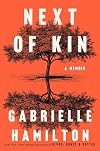
I was a huge fan of Hamilton's restaurant, Prune, I ate there for years when I was in town, and when I moved back to the city in 2018, I went often until it closed in 2020. I also like Hamilton's engrossing, somehow elegiac food writing very much. In every medium, Hamilton is an extraordinary writer.
I have now read both of her memoirs, and in addition to the exceptional craft, I have been impressed with her willingness to lay herself as bare as is possible, to be as honest with the reader as show more she is with herself (often that is not very honest.) Since her last book, Blood, Bones and Butter, Hamilton has clearly been well therapized. She sees herself far more clearly than she did nearly 25 years ago. She makes some eye-opening observations that are not just interesting, but which made me see my reality differently. She has plenty of blind spots, but they do not damage the value of anything recounted.
I come from a family very unlike Hamilton's artsy off-the-grid clan, but also very like her family in the sense that we hide all of our truths, covering them with humor. This mode of making it through the world has its moments, but it is not a recipe for enriching relationships or a generally satisfying life. It is hard to bond when you spend all your time spackling over discomfort and steering people away from awkwardness. I have worked hard to be part of dynamics rather than insisting on being the center of all things, to lean toward the honest rather than the charming, to feel emotional pain more fully. I have met with limited success, but I think I can boast of slightly more success than Hamilton. Even as she works through her family relationships, she moves to unhealthy points of view, looking at every connection as if people have paid into some invisible ante, and someone wins and others lose. She sees how deleterious her conversations with her mother are, and simply stops talking to her for 30 years. There is no fracturing event (as there is with her sister), just a cognizance that her mother is not the person she wants her to be. She never thinks about whether having the relationship has worth to weigh against the unpleasantness, or whether there are things that might lead to some repair. She never thinks that leaving a woman alone in the world, a woman who has failed, but tried, to care for her 5 children, might be morally or ethically wrong. She focuses on the bad parts of relationships and excises them like tumors, taking out extra to get clear margins. She ends up estranged from both parents and all of her siblings, other than one who died quite young (before she could disown him, perhaps) and with whom she spoke rarely and at a surface level. When one sibling (whom she is not in touch with) dies by suicide, she carries out an investigation to find out who is at fault, and clears others of blame (almost against her will -- she clearly wanted her mother to be at fault), but never investigates whether her severance from that mentally ill sibling might have intensified his feeling of being without resources. (Which is not to say she is to blame. Suicide is the choice of the actor, period. Still, if we are paying into a family ante, cutting off all contact with family has to go into the pot.) But all this is part of the story, the exceptionally thoughtful, well-told, confronting tale. We are not here to judge Hamilton the human, whose frailties we know about because she was brave enough to commit them to the page, but Hamilton the historian and writer. This is what a memoir should look like.
I listened to this read by the author, and it was great. show less
I have now read both of her memoirs, and in addition to the exceptional craft, I have been impressed with her willingness to lay herself as bare as is possible, to be as honest with the reader as show more she is with herself (often that is not very honest.) Since her last book, Blood, Bones and Butter, Hamilton has clearly been well therapized. She sees herself far more clearly than she did nearly 25 years ago. She makes some eye-opening observations that are not just interesting, but which made me see my reality differently. She has plenty of blind spots, but they do not damage the value of anything recounted.
I come from a family very unlike Hamilton's artsy off-the-grid clan, but also very like her family in the sense that we hide all of our truths, covering them with humor. This mode of making it through the world has its moments, but it is not a recipe for enriching relationships or a generally satisfying life. It is hard to bond when you spend all your time spackling over discomfort and steering people away from awkwardness. I have worked hard to be part of dynamics rather than insisting on being the center of all things, to lean toward the honest rather than the charming, to feel emotional pain more fully. I have met with limited success, but I think I can boast of slightly more success than Hamilton. Even as she works through her family relationships, she moves to unhealthy points of view, looking at every connection as if people have paid into some invisible ante, and someone wins and others lose. She sees how deleterious her conversations with her mother are, and simply stops talking to her for 30 years. There is no fracturing event (as there is with her sister), just a cognizance that her mother is not the person she wants her to be. She never thinks about whether having the relationship has worth to weigh against the unpleasantness, or whether there are things that might lead to some repair. She never thinks that leaving a woman alone in the world, a woman who has failed, but tried, to care for her 5 children, might be morally or ethically wrong. She focuses on the bad parts of relationships and excises them like tumors, taking out extra to get clear margins. She ends up estranged from both parents and all of her siblings, other than one who died quite young (before she could disown him, perhaps) and with whom she spoke rarely and at a surface level. When one sibling (whom she is not in touch with) dies by suicide, she carries out an investigation to find out who is at fault, and clears others of blame (almost against her will -- she clearly wanted her mother to be at fault), but never investigates whether her severance from that mentally ill sibling might have intensified his feeling of being without resources. (Which is not to say she is to blame. Suicide is the choice of the actor, period. Still, if we are paying into a family ante, cutting off all contact with family has to go into the pot.) But all this is part of the story, the exceptionally thoughtful, well-told, confronting tale. We are not here to judge Hamilton the human, whose frailties we know about because she was brave enough to commit them to the page, but Hamilton the historian and writer. This is what a memoir should look like.
I listened to this read by the author, and it was great. show less
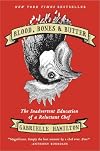
Sigh, I loved this book. Not to be snotty but I feel like if you are an industry person you will appreciate her life so much more. Some say she is crass but, that's how chefs are! That's how they need to be, especially in New York. She didn't sugar coat her life or her upbringing, and I have so much respect for that. She worked really hard and put in the hours to become who she is, and success found her. I've often wondered if I would meet my Michele, and have those summers that she did, I show more sort of hope I do. Bravo Gabrielle for an honest and detailed history of your life and for such a delicious story that had me nodding and smiling often. show less
I was disappointed since I wanted to like this as much as I liked BBB. I was disappointed in her and felt this book was somewhat self-indulgent and possibly used as therapy for her. It was interesting to see how harshly she judged her family and for how long those judgments remained. Forgiving and empathetic are not words I would use to describe her. She pursues what she wants with little regard for where that may lead.

The subtitle of Blood, Bone & Butter is "The Inadvertent Education of a Reluctant Chef." It should have been "The Incidental Education of an Insufferable Chef." I get it: cooks are crazy. Everyone knows this. And Gabrielle Hamilton, the author of this book, is no exception. She had a neglectful upbringing, found out that she could work in kitchens even if it wasn't what she really wanted to do, and spent time in NY getting in all kinds of trouble, like many restaurant workers do. Then she show more took a left turn and decided she wanted to do something more "important" and went and got an MFA in creative writing, and then ended up back in the restaurant business. This sounds kind of interesting, but this lady -- oh, this lady. She is a piece of work. I don't mind, or even prefer, a memoir that isn't strictly about the work. What else goes on in our lives often has a lot to do with how we end up where we are, so I am perfectly fine with personal life mixed in liberally. But when I finish the book and I'm not even sure what her successful New York restaurant is like, aside from small and that it serves brunch, I don't think it's a really successful book about a restaurateur.
Instead, here's what I know about Gabrielle Hamilton: she hates women who shop at farmer's markets. She had lesbian relationships until she married an Italian guy. She is terrible at relationships - she had an affair with said Italian guy while dating a woman, who she broke up with by informing her she was getting married. She married the Italian so he could get a green card. (Although ultimately who is in that marriage for more than that, and who is most disappointed by the whole thing, and who is more at fault and why are we still talking about it is all up for debate.) She thinks people who let their kids cry it out are miserable excuses for human beings, but she will yell "things I'm not proud of" at her fussy toddlers in the car when she's hungry. She is a chef, but cannot correctly pronounce "turmeric" or "pho." She also has a habit of pronouncing "a" like "ay," including at the beginning of the word "another," so that I felt like she was reading to a particularly slow 4-year-old. I mean really - who says "ay" person and then "ay"nother?!
I suppose the bottom line is, I did not like this woman, and I felt like the book focused on all the wrong things in all the wrong ways. I wish she had stuck to cooking and skipped the MFA. show less
Instead, here's what I know about Gabrielle Hamilton: she hates women who shop at farmer's markets. She had lesbian relationships until she married an Italian guy. She is terrible at relationships - she had an affair with said Italian guy while dating a woman, who she broke up with by informing her she was getting married. She married the Italian so he could get a green card. (Although ultimately who is in that marriage for more than that, and who is most disappointed by the whole thing, and who is more at fault and why are we still talking about it is all up for debate.) She thinks people who let their kids cry it out are miserable excuses for human beings, but she will yell "things I'm not proud of" at her fussy toddlers in the car when she's hungry. She is a chef, but cannot correctly pronounce "turmeric" or "pho." She also has a habit of pronouncing "a" like "ay," including at the beginning of the word "another," so that I felt like she was reading to a particularly slow 4-year-old. I mean really - who says "ay" person and then "ay"nother?!
I suppose the bottom line is, I did not like this woman, and I felt like the book focused on all the wrong things in all the wrong ways. I wish she had stuck to cooking and skipped the MFA. show less
Lists
Awards


You May Also Like


Associated Authors
Statistics
- Works
- 6
- Also by
- 12
- Members
- 2,240
- Popularity
- #11,448
- Rating
- 3.7
- Reviews
- 130
- ISBNs
- 23
- Languages
- 3
