
Steven Holl
Author of Parallax
About the Author
Works by Steven Holl
Steven Holl : twofold meaning — Author — 3 copies
Bridges 2 copies
Bridge of houses 2 copies
Steven Holl, 1996-1999 : --in search of a poetry of specifics = --hacia una poética de la concreta 1 copy
GA HOUSES 200 1 copy
Urban Environment Design 1 copy
Elastic Horizons 1 copy
Context 3 05: Steven Holl 1 copy
Steven Holl 1 copy
Associated Works
Tagged
Common Knowledge
- Canonical name
- Holl, Steven
- Birthdate
- 1947-12-09
- Gender
- male
- Education
- Architectural Association School of Architecture
University of Washington (B.Arch|1971) - Occupations
- architect
professor
watercolorist - Organizations
- Pamphlet Architecture
Steven Holl Architects
Columbia University
American Institute of Architects - Awards and honors
- American Academy of Arts and Letters (2000)
Praemium Imperiale (2014)
AIA Gold Medal (2012)
Jencks Award (2010)
Royal Institute of British Architects (Honorary Fellow, 2003)
National Design Award in Architecture (2002) (show all 9)
Grande Médaille d'Or (2001)
Alvar Aalto Medal (1998)
AIA Medal of Honor (1997) - Nationality
- USA
- Birthplace
- Bremerton, Washington, USA
- Places of residence
- New York, New York, USA
- Associated Place (for map)
- USA
Members
Reviews

When I was just out of architecture school and was working in Chicago for an architecture firm with an office near Navy Pier, I visited Prairie Avenue Bookshop every chance I could get. Job site visit nearby? Head to PA. Softball game in Grant Park? Head to PA. A lecture in the Loop? Head to PA. More often that not, I saw a book but couldn't afford it or justify the expense, what with students loans, rent and all the other stuff that ate up a young architect's salary. Nevertheless, every now show more and then I would talk myself into buying a pricey special issue of A+U, such as a Herzog & de Meuron monograph, Henry Plummer's Light in Japanese Architecture, or this great title with contributions focused the role of experience and perception in architecture. The $48 price tag (it's still penciled in the upper-right of the first page, where it was put since the cost of A+U at PA varied, based on the exchange rate and shipping costs) doesn't seem too bad all these years later, still less than the new edition put out by William Stout Books in 2006. This new edition illustrates the lasting significance of the title, which has a fairly academic essay by Pérez-Gómez, head of the History and Theory program at McGill; a more readable piece by Pallasmaa, "The Architecture of the Seven Senses," which preceded his classic The Eyes of the Skin by two years; and a collection of Holl's projects that included honest accounts of both their designs and the influence of travel on his thinking. The trio's philosophical takes on architecture and history are aided by a beautiful design that incorporates vellum inside and out, other special papers, and numerous illustrations throughout. show less
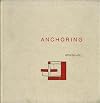
So many monographs are simply the name of the architect/firm, followed by "Complete Works" or "Buildings and Projects" or some other descriptor. This form follows the template laid down by Le Corbusier decades ago, but in recent times monographs use a title phrase that attempts to sum up or point to something special in an architect's designs. Most likely the roots go back farther, but I like to trace this tendency to Anchoring, which as a title is nearly perfect – Holl explains the show more meaning of the concept clearly in the introduction, but it is elusive enough of a title that it piques the interest of those unfamiliar with his work (it could have been called Site-Specific, but that is much less poetic and enigmatic than Anchoring, which implies action as well as a conceptual position). Of course, Holl's work was not as well known in 1989 as it is today, though subsequent books (Intertwining, Black Swan Theory) have continued his penchant for idiosyncratic meaning. Yet even though Holl's work has ballooned in size and geographical reach since the early 1990s, this book remains popular, now enjoying a third edition. For me it was a go-to book in architecture school, but I think it's lasting appeal is thanks to the simple layout, lovely linen cover and the architect's carefully chosen words and images that express the title's theme. show less

Aside from a few titles that both my wife and I have, this is the only title in our library that I have bought two copies of, one in college, one recently. The only difference between the two is that one is glue/paper binding and one is staple binding. I don't know why the two types of binding exist for this title, or if other Pamphlet Architecture books do the same, but I know that when I came across the staple-bound one many years later I figured I was getting something more "legit," like show more a limited printing.
Whatever the case, it is one of those Pamphlets that has stayed with me (not just in the physical sense, here multiplying by two), due to having it while in architecture school and it influencing my projects and thinking on design. All these years later, when Holl designs multi-building complexes, it's interesting to see the gestation of his ideas about building big. At the time of its publication he had built very little – a couple houses mainly, but also the Hinged Space/Void Space project in Japan. That project and the explorations in this book show that building larger commissions is not simply a matter of increasing scale over time (a residential interior followed by a house followed by a commercial building, etc.), but it is a working out of those scales simultaneously with smaller projects. show less
Whatever the case, it is one of those Pamphlets that has stayed with me (not just in the physical sense, here multiplying by two), due to having it while in architecture school and it influencing my projects and thinking on design. All these years later, when Holl designs multi-building complexes, it's interesting to see the gestation of his ideas about building big. At the time of its publication he had built very little – a couple houses mainly, but also the Hinged Space/Void Space project in Japan. That project and the explorations in this book show that building larger commissions is not simply a matter of increasing scale over time (a residential interior followed by a house followed by a commercial building, etc.), but it is a working out of those scales simultaneously with smaller projects. show less
"Is it wrong that I'm turned on?"
Fuck no. Because I am!
Yeah buddy! Pining!Derek and Seemslikehe'sClueless!Stiles...adore. I adore you so much I'll sing Miley Cyrus to these two!
Damn.
Derek's a bored alpha. His pack (which includes Stiles) is away for college. His uncle suggests Derek gets a job modeling.
Oh and this is part of the Neckz n' Throats universe. If you've never visited this alternate universe, it's a sensual place where werewolves are models for the masses.
The story is told from show more Derek's POV, it's a little angsty, yummy UST that gets resolved alright.
*quivers**quelts*
" show less
Fuck no. Because I am!
Yeah buddy! Pining!Derek and Seemslikehe'sClueless!Stiles...adore. I adore you so much I'll sing Miley Cyrus to these two!
Damn.
Derek's a bored alpha. His pack (which includes Stiles) is away for college. His uncle suggests Derek gets a job modeling.
Oh and this is part of the Neckz n' Throats universe. If you've never visited this alternate universe, it's a sensual place where werewolves are models for the masses.
The story is told from show more Derek's POV, it's a little angsty, yummy UST that gets resolved alright.
*quivers**quelts*
" show less
You May Also Like


Associated Authors
Statistics
- Works
- 55
- Also by
- 4
- Members
- 897
- Popularity
- #28,560
- Rating
- 4.0
- Reviews
- 19
- ISBNs
- 52
- Languages
- 4