
Kenneth Frampton
Author of Modern Architecture: A Critical History
About the Author
Kenneth Frampton is the Ware Professor of Architecture at the Graduate School of Architecture, Planning and Preservation at Columbia University.
Works by Kenneth Frampton
Studies in Tectonic Culture: The Poetics of Construction in Nineteenth and Twentieth Century Architecture (1995) 197 copies
On and by Frank Lloyd Wright: A Primer of Architectural Principles (1996) — Contributor — 78 copies, 1 review
A Genealogy of Modern Architecture: Comparative Critical Analysis of Built Form (2015) 31 copies, 1 review
Modern Architecture and the Critical Present (Architectural design profile) (1982) 17 copies, 2 reviews
Philip Johnson Processes: The Glass House, 1949, and the AT&T Corporate Headquarters, 1978 (1980) 15 copies, 1 review
Professione Poetica / Poetic Profession (Quaderni Di Lotus, 6) (English and Italian Edition) (1986) 10 copies, 1 review
A New wave of Austrian architecture 4 copies
Nueva York. Capital del siglo XX: Una guía histórica de la arquitectura de Manhattan (Lecturas de arquitectura) (Spanish Edition) (2005) 4 copies
Oxymoron & pleonasm : conversations on American critical and projective theory of architecture (2014) 3 copies
Mario Botta : architetture e progetti negli anni '70 = Architecture and projects in the '70 2 copies
Álvaro Siza Vieira - Piscinas en el Mar Álvaro Siza en conversación con Kenneth Frampton (2016) 2 copies
Modeling History 1 copy
José Antonio Aldrete-Haas : Lo invisible en arquitectura = The invisible in architecture (2006) 1 copy
Glenn Murcutt, Architect 1 copy
JAE JOVENES ARQUITECTOS DE ESPANA YOUNG ARCHITECTS OF SPAIN (CON TEXTOS DE WITH TEXTS BY) (2009) 1 copy
Tettonica e architettura 1 copy
Associated Works
Concepts of Modern Art: From Fauvism to Postmodernism (1974) — Contributor, some editions — 474 copies, 1 review
Architects in Competition: International Architectural Competitions of the Last 200 Years (1988) — Contributor — 19 copies
Tagged
Common Knowledge
- Canonical name
- Frampton, Kenneth
- Legal name
- Frampton, Kenneth Brian
- Birthdate
- 1930-11-20
- Gender
- male
- Education
- Guildford School of Art
Architectural Association School of Architecture (B.Arch|1956) - Occupations
- architectural historian
professor
critic
architect - Organizations
- Columbia University
Princeton University
Royal Institute of British Architects (1957)
British Army - Awards and honors
- Institute for Architecture and Urban Studies (Fellow, 1972)
Order of the British Empire (Commander, 2021)
Schelling Architecture Theory Prize (2012)
President's Medal, Architectural League of New York (2005)
Thomas Jefferson Foundation Medal in Architecture (2022)
Topaz Medallion for Architectural Education (1990) (show all 8)
Médaille d'Or, Parisian Académie d'Architecture (1987)
American Academy of Arts and Sciences (Fellow, 1993) - Short biography
- Kenneth Frampton est un architecte, critique et historien britannique.
Il étudia l'architecture à l'école d'art Guildford et à l'école d'architecture londonienne Architectural Association.
Par la suite il travailla en Israël, avec le conseil du Middlesex et chez Douglas Stephen and Partners (1961-1966).
Il a été directeur d'étude invité au Royal College of Art (1961-1964), directeur d'étude à l'Architectural Association (1961-1963) et éditeur technique de la revue Architectural Design (AD) (1962-1965).
Frampton enseigna aussi à l'Université de Princeton (1966-1971) et à la Bartlett School of Architecture de Londres (1980). Il est membre de la faculté de l'Université Columbia depuis 1972.
Frampton est connu pour ses écrits sur l'architecture du XXe siècle. Il a notamment publié "Modern Architecture: A Critical History" (1980) et "Studies in Tectonic Culture" (1997).
En 2002, une collection des écrits de Frampton couvrant une période de trente-cinq ans a été assemblée et publiée sous le titre "Labour, Work and Architecture". - Nationality
- UK
- Birthplace
- Woking, Surrey, England, UK
- Places of residence
- New York, New York, USA
- Map Location
- USA
UK
Members
Reviews

When I was writing a book last year that includes Alvaro Siza's famous seaside pool in Leça de Palmeira, Portugal, I was reminded of the omission of a Siza monograph in my library. Thankfully, a search on the Strand website revealed this issue of Lotus devoted to the Portuguese architect. Although its 1986 publication is more than twenty years after the pool's completion, this date meant the project would be dealt with in more depth than more recent monographs. The essay by Kenneth show more Frampton, "Poesis and Transformation," delves into the pool as well as an earlier inland pool that is nearby. The predecessor is overlooked in later accounts, so I was pleased to learn about it here, especially since the two projects share a number of similarities, such that the inland pool provided lessons for the seaside masterpiece. Of course, this Lotus Documents #6 is much more than these and other early projects; it focuses on housing and other projects Siza was working on in the 1980s. The documentation of those projects is exemplary, though I've yet to delve into them as deeply as the pools. show less
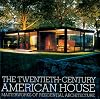
Throughout the twentieth century the United States has provided remarkably fertile ground for innovative residential architecture, from the Shingle Style pioneered on the East Coast in the late nineteenth century to the deconstructivist experiments in California today. Over the decades, American and international architects alike responded to this country's rising standard of living, rapidly expanding suburbs, and receptive often liberal clients - factors that encouraged the creative use of show more both unorthodox building materials and mass-produced components. One chapter is devoted to each of 34 houses by such luminaries as Richard Neutra, Eliel Saarinen, Frank Lloyd Wright, Walter Gropius, Philip Johnson, Charles Moore, Louis Kahn, and Frank Gehry. Selections of the architects' plans and finest freehand drawings complement the photographs in this history of exceptional American house design. The text by Kenneth Frampton explores each house in depth, discussing its context in the progression of American architecture, its role in the architect's oeuvre, and its broader relationship to the history of twentieth-century American cultural and artistic movements. show less
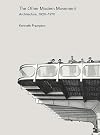
Written with the intention of demonstrating that what one might call classic "International" modern architecture remains a viable mode of expression, you'll get the most out of this book if you already have some familiarly with such pillars of the field as Frank Lloyd Wright, Le Corbusier, and Walter Gropius. Essentially, this book is a series of capsule examination of about twenty less celebrated architects (with the possible exceptions of Erich Mendelsohn & Richard Neutra), providing an show more overview of their careers and then the detailed examination of one of each of these individuals' signature buildings. show less
American Masterworks: The Twentieth-Century House (Universe Architecture Series) by Kenneth Frampton
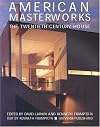
Great photography but the writing assumes the reader already has some familiarity with 20th century American architecture because it name-drops like crazy, both houses and architects. Not sure what discussing multiple projects that were never built offers to a lay audience. The houses and architects mentioned often don't match the actual photo essays.
Awards

You May Also Like


Associated Authors
Statistics
- Works
- 100
- Also by
- 8
- Members
- 2,380
- Popularity
- #10,786
- Rating
- 3.8
- Reviews
- 20
- ISBNs
- 160
- Languages
- 12
- Favorited
- 2