
Daniel Libeskind
Author of Breaking Ground
About the Author
Born in Poland to Holocaust survivors, Daniel Libeskind immigrated with his family to Israel in 1957, and settled in New York City in 1959. A virtuoso musician before he studied architecture, Libeskind has designed buildings around the world, including the Jewish Museum Berlin and the Imperial War show more Museum North in Manchester, England show less
Works by Daniel Libeskind
Symbol and interpretation 3 copies
Et anelsens observatorium = An observatory of premonition : book of Copenhagen/Modeln of Copenhagen (1992) 2 copies
Lineage 1 copy
Counterdesign 1 copy
Associated Works
Memoria Romana: Memory in Rome and Rome in Memory (Supplements To The Memoirs Of The American Academy In Rome) (2014) — Contributor — 5 copies
Tagged
Common Knowledge
- Birthdate
- 1946-05-12
- Gender
- male
- Education
- Cooper Union (School of Architecture)
University of Essex - Occupations
- architect
artist
set designer - Awards and honors
- American Academy of Arts and Letters Academy Award (Architecture, 1997)
- Nationality
- USA (naturalized)
Poland (birth) - Birthplace
- Łódź, Poland
- Places of residence
- New York, New York, USA
Toronto, Ontario, Canada
Milan, Italy
Germany
Los Angeles, California, USA
Tel Aviv, Israel (show all 7)
Poland
Members
Reviews
Daniel Libeskind: City Without Plan. Architecture Descends into the Hexagonal Garden by Daniel Libeskind

In the mid-1990s, many of the big names making the rounds in the architecture lecture circuit went on to become today's "starchitects," such as Thom Mayne, Bernard Tschumi, Zaha Hadid, and Daniel Libeskind. In Kansas, with two accredited schools of architecture, these and other architects would visit only one school to speak, and in the case of Daniel Libeskind ca. 1996, I had to drive with a friend to Lawrence and KU. Libeskind spoke to a packed house and when it was over I decided to ask show more him to sign this book on a project for Berlin that was never built. As he did so, I asked him what happened to the canted walls of the Jewish Museum in Berlin (they were built as vertical); he replied something about the angles "being too much" or "not necessary to the idea," denying my thought that budget got in the way. This book, loaded with model photos, drawings, and Libeskind's dense prose, will forever mark that brief exchange and a time in my life when Libeskind's work held some meaning. show less

Following up from Libeskind's previous monograph, radix matrix, "The Space of Encounter" read brilliantly into the life of this master architect. However whilst the former read as an extrusion into his work, "Space" intelligently delves into the writing that aided in the creation of such experience like the Jewish Museum in Berlin. With additional writing by the likes of Kipnis and Vidler it makes this book a must read for anyone interested in the theory and manifestation of architectural of show more ideas. Though the pictures are few, the articulation of the writing weaves fantastical imagery lending to the very technique used by Libeskind in his drawings. The book is convenient, as well - fitting nicely in the hand or satchel, making it the ideal companion both in size and in content. Libekind's "Space of Encounter" is easily the "S, M, L, XL" of the new era. show less
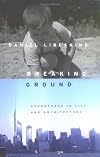
Page 32. Interesting and engaging slice of architectural and American-Jewish history.

Monograph Library - shelved at: B11:LIB
You May Also Like


Associated Authors
Statistics
- Works
- 35
- Also by
- 2
- Members
- 439
- Popularity
- #55,771
- Rating
- 3.6
- Reviews
- 10
- ISBNs
- 45
- Languages
- 7