
Heidi E. Y. Stemple
Author of Roanoke: The Lost Colony--An Unsolved Mystery from History
About the Author
Works by Heidi E. Y. Stemple
Bad Girls: Sirens, Jezebels, Murderesses, Thieves and Other Female Villains (2013) — Author — 202 copies, 16 reviews
Mirror, Mirror: Forty Folk Tales for Mothers and Daughters to Share (2000) — Editor — 140 copies, 3 reviews
Fairy Tale Feasts: A Literary Cookbook for Young Readers and Eaters (2006) — Recipes — 106 copies, 7 reviews
Bad Girls 1 copy
Associated Works
Tagged
Common Knowledge
- Legal name
- Stemple, Heidi Elisabet Yolen
- Other names
- Stemple, H. E. Y.
Stemple, Heidi E. Y. - Birthdate
- 20th century
- Gender
- female
- Occupations
- author
probation officer - Relationships
- Yolen, Jane (parent)
Stemple, David (parent)
Yolen, Will H. (grandparent)
Stemple, Adam (sibling)
Stemple, Jason (sibling) - Nationality
- USA
- Places of residence
- Massachusetts, USA
- Associated Place (for map)
- Massachusetts, USA
Members
Reviews

Co-authors Jane Yolen and Heidi E.Y. Stemple, who are also mother and daughter, tell the stories of seven classic ballets in this lovely anthology from Barefoot Books. Beginning with a very basic history of ballet as a dance form, they go on to tell both the history and story of Coppélia (Delibes), Swan Lake (Tchaikovsky), Cinderella (Prokofiev), The Nutcracker (Tchaikovsky), Shim Chung (Pickard), The Sleeping Beauty (Tchaikovsky) and Daphnis and Chloe (Ravel). The narratives are show more accompanied by the artwork of illustrator Rebecca Guay, and a bibliography and list of websites is included at the rear...
Although I have long been an admirer of the prolific Jane Yolen, whose books I have been reading for many years, I initially tracked down The Barefoot Book of Ballet Stories because I was looking for more of artist Rebecca Guay's illustrations, after enjoying her work in Muti's Necklace: The Oldest Story in the World and Goddesses: A World of Myth and Magic. I was not disappointed on that score, finding the visuals here breathtakingly beautiful, and I only wish Guay had illustrated more books in this vein. The text was also appealing, and I found the stories very well written, and quite engaging. I appreciated the little histories of each ballet - how and when they were composed and first performed - that were included before the stories themselves. I was familiar with six of the seven ballets already, and was pleased to learn about Shim Chung, based upon a Korean fairy-tale, and blending western and eastern artistic traditions. I'm not sure why it is, but the reprint done of this book in 2009 did not include this story/ballet, so I'd recommend seeking out the original 2004 edition. Recommended to young ballet lovers, to anyone seeking an anthology containing the stories of famous ballets, and to fans of Rebecca Guay. show less
Although I have long been an admirer of the prolific Jane Yolen, whose books I have been reading for many years, I initially tracked down The Barefoot Book of Ballet Stories because I was looking for more of artist Rebecca Guay's illustrations, after enjoying her work in Muti's Necklace: The Oldest Story in the World and Goddesses: A World of Myth and Magic. I was not disappointed on that score, finding the visuals here breathtakingly beautiful, and I only wish Guay had illustrated more books in this vein. The text was also appealing, and I found the stories very well written, and quite engaging. I appreciated the little histories of each ballet - how and when they were composed and first performed - that were included before the stories themselves. I was familiar with six of the seven ballets already, and was pleased to learn about Shim Chung, based upon a Korean fairy-tale, and blending western and eastern artistic traditions. I'm not sure why it is, but the reprint done of this book in 2009 did not include this story/ballet, so I'd recommend seeking out the original 2004 edition. Recommended to young ballet lovers, to anyone seeking an anthology containing the stories of famous ballets, and to fans of Rebecca Guay. show less
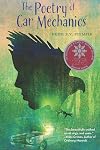
I devoured this in one sitting, in a couple hours. Dylan is a young man in hard times, but is a gentle and likable soul. His grandfather, Pops, is quite opposite in temperment and views, but he is always there for Dylan, as his Mom is not. Birds and poems are always there for Dylan, too, and one of my favorite poems in the book is this feeling when Dylan (and me, with books in place of poetry) is "The Most Alone" (see in Common Knowledge Quotations). Heidi does an excellent job of bringing show more Dylan to life and being sensitive to his mother's illness. Her :Postscript: A note on mental health and bipolar disorder" is well-said and provides help resources. The cover art by Michael Woloschinow showing a silhouette of Dylan's head to the left and the hawk to the right is stunning, and the title page sketch of the heron is beautiful, too. This is one I will read again and recommend. show less
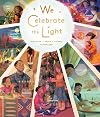
Yolen and Stemple honor the ways many cultures spread light, literally and figuratively, during the darkest days of the year.
Lyrical verse reflects on the commonalities shared by many traditions, while the illustrations highlight a diverse array of winter holidays. The juxtaposition of the universal and the specific embodies the book’s profound message: The ways we are different can unify us, and both our differences and our similarities are worth celebrating. Various groupings of family show more and friends observe Diwali, Winter Solstice, Christmas, Hanukkah, Kwanzaa, Bodhi Day, and Lunar New Year; amid the glow of rangolis, kinaras, lighted trees, menorahs, lanterns, and moonlight, they spend time with loved ones, decorate, sing, eat, and remember deceased ancestors. Unobtrusive footnotes provide a brief definition of each holiday, with longer descriptions in the backmatter explaining a few of the symbols and rituals. Rife with details for observant readers, the artwork sets a cozy tone, whether portraying families crowded round the kitchen table or outside by a roaring fire. The celebrants include people of many different ethnicities, abilities, and ages, and they gather in groups of various sizes and compositions. With its emphasis on inclusivity, this is an excellent choice for classrooms or libraries looking to discuss winter holidays.
Luminous. (Informational picture book. 4-8)
-Kirkus Review show less
Lyrical verse reflects on the commonalities shared by many traditions, while the illustrations highlight a diverse array of winter holidays. The juxtaposition of the universal and the specific embodies the book’s profound message: The ways we are different can unify us, and both our differences and our similarities are worth celebrating. Various groupings of family show more and friends observe Diwali, Winter Solstice, Christmas, Hanukkah, Kwanzaa, Bodhi Day, and Lunar New Year; amid the glow of rangolis, kinaras, lighted trees, menorahs, lanterns, and moonlight, they spend time with loved ones, decorate, sing, eat, and remember deceased ancestors. Unobtrusive footnotes provide a brief definition of each holiday, with longer descriptions in the backmatter explaining a few of the symbols and rituals. Rife with details for observant readers, the artwork sets a cozy tone, whether portraying families crowded round the kitchen table or outside by a roaring fire. The celebrants include people of many different ethnicities, abilities, and ages, and they gather in groups of various sizes and compositions. With its emphasis on inclusivity, this is an excellent choice for classrooms or libraries looking to discuss winter holidays.
Luminous. (Informational picture book. 4-8)
-Kirkus Review show less
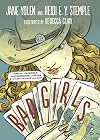
The mother-daughter duo of Jane Yolen and Heidi E. Y. Stemple has released a fun compendium of "bad" women in history. From Delilah, the stealthy hairstylist of the Bible (circa 110BC), to gangsters' gal, Virginia Hill (1916-1966), Yolen and Stemple highlight history's most rebellious, racy, raucous, reprehensible, and sometimes resourceful women.
The choice of subjects, twenty-six in all, isn't the only thing that makes Bad Girls: Sirens, Jezebels, Murderesses, Thieves, and other Female show more Villains a unique addition to the collection of books on women in history. Illustrations are provided by Rebecca Guay. In addition to a comic portrait of each notorious woman,
included after each chapter is a graphic novel-style panel featuring Jane Yolen and Heidi Stemple. Each panel is set in a new location (these ladies took their "research" to the ends of the earth - shopping, eating and sightseeing, in Egypt, London, Massachusetts, wherever this gallery of rogues led them!), where Yolen and Stemple debate history's treatment of each woman. Clever and humorous, these panels remind readers that societal and personal circumstances often dictate behaviors. With the exception of the truly bad, Elizabeth Báthory, Yolen makes a case for each woman. No, they may not have all been innocent, but given their particular circumstances, some of these women may have been given a bad historical rap. Stemple provides the counterpoint - bad is bad, regardless of circumstance. Readers will be left to decide for themselves, but regardless of conclusion, they will understand that the role of women throughout history has not been an easy one.
Despite the subject matter, Yolen and Stemple maintain a light-hearted tone in Bad Girls, as evidenced by the chapter titles: "Lizzie Borden (1860-1927): One Whacky Woman," "Anne Boleyn (1500-1536): She Lost Her Head for Love."
Resources are included, offering interested older readers a jump start on where to find further information. There is more than just fun to be had with Bad Girls; resources for download are available on the publisher's site.
images, links and more @ http://shelf-employed.blogspot.com/2013/03/bad-girls-good-review.html show less
The choice of subjects, twenty-six in all, isn't the only thing that makes Bad Girls: Sirens, Jezebels, Murderesses, Thieves, and other Female show more Villains a unique addition to the collection of books on women in history. Illustrations are provided by Rebecca Guay. In addition to a comic portrait of each notorious woman,
included after each chapter is a graphic novel-style panel featuring Jane Yolen and Heidi Stemple. Each panel is set in a new location (these ladies took their "research" to the ends of the earth - shopping, eating and sightseeing, in Egypt, London, Massachusetts, wherever this gallery of rogues led them!), where Yolen and Stemple debate history's treatment of each woman. Clever and humorous, these panels remind readers that societal and personal circumstances often dictate behaviors. With the exception of the truly bad, Elizabeth Báthory, Yolen makes a case for each woman. No, they may not have all been innocent, but given their particular circumstances, some of these women may have been given a bad historical rap. Stemple provides the counterpoint - bad is bad, regardless of circumstance. Readers will be left to decide for themselves, but regardless of conclusion, they will understand that the role of women throughout history has not been an easy one.
Despite the subject matter, Yolen and Stemple maintain a light-hearted tone in Bad Girls, as evidenced by the chapter titles: "Lizzie Borden (1860-1927): One Whacky Woman," "Anne Boleyn (1500-1536): She Lost Her Head for Love."
Resources are included, offering interested older readers a jump start on where to find further information. There is more than just fun to be had with Bad Girls; resources for download are available on the publisher's site.
images, links and more @ http://shelf-employed.blogspot.com/2013/03/bad-girls-good-review.html show less
Lists
Awards


You May Also Like


Associated Authors
Statistics
- Works
- 42
- Also by
- 6
- Members
- 3,698
- Popularity
- #6,851
- Rating
- 3.9
- Reviews
- 158
- ISBNs
- 130
- Languages
- 4
- Favorited
- 1