
Kristen Fulton
Author of Flight for Freedom: The Wetzel Family’s Daring Escape from East Germany
Works by Kristen Fulton
Flight for Freedom: The Wetzel Family’s Daring Escape from East Germany (2020) 159 copies, 4 reviews
Long May She Wave: The True Story of Caroline Pickersgill and Her Star-Spangled Creation (2017) 44 copies, 2 reviews
When Sparks Fly: The True Story of Robert Goddard, the Father of US Rocketry (2018) 30 copies, 1 review
Tagged
Common Knowledge
There is no Common Knowledge data for this author yet. You can help.
Members
Reviews

American author Kristen Fulton and German illustrator Torben Kuhlmann join forces in this immensely engaging and informative picture-book about the 1979 escape of the Wetzel and Strelzyk families from communist East Germany to democratic West Germany. Trapped behind the Berlin Wall - according to the afterword, the 1448-kilometer Inner German border wall separating East and West Germany was referred to this way, despite not being in Berlin - these two families longed for the freedom show more available in the West. After two failed attempts, they made the crossing in a homemade air balloon, on the night of September 16th, 1979, landing in Bavaria, some ten kilometers from the border...
I discovered the existence of Flight for Freedom: The Wetzel Family’s Daring Escape from East Germany because of my love for Torben Kuhlmann's own books, which feature the daring adventures of various mouse characters, and which have been translated into English. In searching for more of his work, I discovered this title, and am very happy to have done so. The story is inspiring, highlighting the bravery of the fleeing families, and the terror of that nighttime flight. The story is narrated by the elder Wetzel son, Peter, who was five years old at the time, and is simply told. More information is given in the detailed afterword, where the reader can learn that there were two failed attempts at creating a working air balloon, before the successful 1979 flight. Some of the more disturbing aspects of the story - the fact that some of the extended Strelzyk family were arrested and jailed back in East Germany after the escape, which was a common tactic of the Stasi, or secret police - are omitted, but one still gets a sense of the threats that surrounded these two families, and how very risky their actions were. Given what little I know of the informant culture of East Germany at the time, I am amazed that the Wetzels and Strelzyks succeeded in escaping! The emotional intensity of this story is greatly heightened by Kuhlmann's accomplished illustrations, which are lovely, and quite expressive, using color and light in gorgeous ways.
This is a book that I would highly recommend to all picture-book readers, not just because it tells an inspirational true story of people who longed for freedom, and who were willing to risk everything to find that freedom, but because I think we are currently suffering from some cultural amnesia here in the west, when it comes to the truly repressive nature of communism. I hear and read many reports these days, of progressive activists praising communism, or declaring themselves Marxists, and I worry for the future. While the atrocities of 20th-century fascism are rightly studied and remembered, I find that the equal if not greater atrocities of communism are often forgotten, except in the countries where they occurred. I have confidence that most American schoolchildren learn about Nazi concentration camps, but have they ever heard of the Soviet Union's gulags? Do they know about China's Cultural Revolution? I was fortunate enough to be raised by progressives who cared about freedom, and who decried the oppressive nature of both fascism and communism - Solzhenitsyn's many-volume The Gulag Archipelago sat on my father's shelves when I was a girl, and I read it as an adolescent - but I wonder about the younger generation, and what they are learning. While this is but one story, it could be used to open up conversations with children about the nature of totalitarian systems, including communism, and the immense human suffering that they cause. For my own part, I intend to track down the movies made from this story - the American The Night Crossing, and the German Ballon - as well as some of author Kristen Fulton's other books. Highly, highly recommended! show less
I discovered the existence of Flight for Freedom: The Wetzel Family’s Daring Escape from East Germany because of my love for Torben Kuhlmann's own books, which feature the daring adventures of various mouse characters, and which have been translated into English. In searching for more of his work, I discovered this title, and am very happy to have done so. The story is inspiring, highlighting the bravery of the fleeing families, and the terror of that nighttime flight. The story is narrated by the elder Wetzel son, Peter, who was five years old at the time, and is simply told. More information is given in the detailed afterword, where the reader can learn that there were two failed attempts at creating a working air balloon, before the successful 1979 flight. Some of the more disturbing aspects of the story - the fact that some of the extended Strelzyk family were arrested and jailed back in East Germany after the escape, which was a common tactic of the Stasi, or secret police - are omitted, but one still gets a sense of the threats that surrounded these two families, and how very risky their actions were. Given what little I know of the informant culture of East Germany at the time, I am amazed that the Wetzels and Strelzyks succeeded in escaping! The emotional intensity of this story is greatly heightened by Kuhlmann's accomplished illustrations, which are lovely, and quite expressive, using color and light in gorgeous ways.
This is a book that I would highly recommend to all picture-book readers, not just because it tells an inspirational true story of people who longed for freedom, and who were willing to risk everything to find that freedom, but because I think we are currently suffering from some cultural amnesia here in the west, when it comes to the truly repressive nature of communism. I hear and read many reports these days, of progressive activists praising communism, or declaring themselves Marxists, and I worry for the future. While the atrocities of 20th-century fascism are rightly studied and remembered, I find that the equal if not greater atrocities of communism are often forgotten, except in the countries where they occurred. I have confidence that most American schoolchildren learn about Nazi concentration camps, but have they ever heard of the Soviet Union's gulags? Do they know about China's Cultural Revolution? I was fortunate enough to be raised by progressives who cared about freedom, and who decried the oppressive nature of both fascism and communism - Solzhenitsyn's many-volume The Gulag Archipelago sat on my father's shelves when I was a girl, and I read it as an adolescent - but I wonder about the younger generation, and what they are learning. While this is but one story, it could be used to open up conversations with children about the nature of totalitarian systems, including communism, and the immense human suffering that they cause. For my own part, I intend to track down the movies made from this story - the American The Night Crossing, and the German Ballon - as well as some of author Kristen Fulton's other books. Highly, highly recommended! show less
Long May She Wave: The True Story of Caroline Pickersgill and Her Star-Spangled Creation by Kristen Fulton

Picture-book biographer Kristen Fulton and woodblock printmaker Holly Berry join forces in this look at a young girl who helped to create one of the most historically significant flags in American history. The granddaughter of Rebecca Flower, who created George Washington's first flag, during the American Revolution; and the daughter of Mary Pickersgill, the widowed proprietress of one of Baltimore's best known flag-making businesses, Caroline Pickersgill was just thirteen when she helped to show more make the Star Spangled Banner Flag, which flew over Fort McHenry during the War of 1812. It was this flag that led American lawyer and British captive Francis Scott Key to compose a poem entitled Defense of Fort M'Henry - a poem that would become the national anthem of the United States of America. The narrative here follows young Caroline as she helps to make the flag, and then watches it fly over Fort McHenry, during the British naval assault in September, 1814. The text incorporates phrases from the national anthem into its storytelling, while the full text of that poem/song is reproduced at the rear, in an afterword that gives more information about Caroline and her family...
I sought out Long May She Wave: The True Story of Caroline Pickersgill and Her Star-Spangled Creation after reading and enjoying Flight for Freedom: The Wetzel Family’s Daring Escape from East Germany and A Royal Ride: Catherine the Great's Great Invention - two of Kristen Fulton's other picture-book biographies. Although the title is a bit of a stretch - the flag was more her mother's creation than Caroline's, although she helped to make it a reality - it nevertheless tells an engaging story of a young person who was involved in crafting something that became a treasured and deeply influential symbol for her country. I appreciated the use of bits of the anthem, in Fulton's text here, and I enjoyed the woodblock artwork from Berry. I was interested to learn, while reading the afterword, that one of the six women and girls who assisted Mary Pickersgill in the creation of the flag was a young African-American named Grace Wisher, who was an indentured servant. Apparently Pickersgill was well-known enough that Grace's mother, one Jenny Wisher, asked her to take her daughter on as an apprentice, and Mary Pickersgill agreed. Reading this, I became curious about Mary Pickersgill, and discovered during a cursory google search that she was deeply involved in humanitarian work in the Baltimore area, helping impoverished women and girls. Although I understand why Fulton chose to tell Caroline Pickersgill's story here, as it provides young readers with the perspective of a fellow child, I think her mother's story is far more interesting, and can't help but wish that it has been made into a picture-book instead.
Leaving that aside, this was still an engaging and informative book, one that highlights the creation of an important early version of our flag. I would recommend it to picture-book readers interested in the history of that flag, or in the story of how our national anthem came to be written. It could pair very nicely with Peter Spier's The Star-Spangled Banner, which provides the other side of this story. show less
I sought out Long May She Wave: The True Story of Caroline Pickersgill and Her Star-Spangled Creation after reading and enjoying Flight for Freedom: The Wetzel Family’s Daring Escape from East Germany and A Royal Ride: Catherine the Great's Great Invention - two of Kristen Fulton's other picture-book biographies. Although the title is a bit of a stretch - the flag was more her mother's creation than Caroline's, although she helped to make it a reality - it nevertheless tells an engaging story of a young person who was involved in crafting something that became a treasured and deeply influential symbol for her country. I appreciated the use of bits of the anthem, in Fulton's text here, and I enjoyed the woodblock artwork from Berry. I was interested to learn, while reading the afterword, that one of the six women and girls who assisted Mary Pickersgill in the creation of the flag was a young African-American named Grace Wisher, who was an indentured servant. Apparently Pickersgill was well-known enough that Grace's mother, one Jenny Wisher, asked her to take her daughter on as an apprentice, and Mary Pickersgill agreed. Reading this, I became curious about Mary Pickersgill, and discovered during a cursory google search that she was deeply involved in humanitarian work in the Baltimore area, helping impoverished women and girls. Although I understand why Fulton chose to tell Caroline Pickersgill's story here, as it provides young readers with the perspective of a fellow child, I think her mother's story is far more interesting, and can't help but wish that it has been made into a picture-book instead.
Leaving that aside, this was still an engaging and informative book, one that highlights the creation of an important early version of our flag. I would recommend it to picture-book readers interested in the history of that flag, or in the story of how our national anthem came to be written. It could pair very nicely with Peter Spier's The Star-Spangled Banner, which provides the other side of this story. show less

Catherine the Great, Empress of Russia, was a woman with a lot of energy, and plenty of ideas. She founded the Hermitage Museum (in 1764), as well as the first girls schools in Russia (the Smolny Institute for noble girls, and the Novodevichii Institute for common girls), and was a sponsor of Moscow University. She also invented the very first roller coaster, and that is what this brief work of picture-book history explores. Having always loved the winter ice slides, Catherine commanded her show more builders to construct a summer slide to her specifications, one that would give her the same pleasure of rushing downhill, with the wind in her face. Eventually, in 1784, they did just that, creating a great wooden slide, with a wheeled coaster rolling down its steep slope, an idea that would be adapted elsewhere, leading eventually to the modern rollercoaster. This origin story is honored in at least twelve European languages, in which the word for this type of ride can be translated as "Russian mountains..."**
I had no idea, until picking up A Royal Ride: Catherine the Great's Great Invention, that Catherine the Great had a hand in creating this amusement park ride, and I found the story here both informative and engaging. Having greatly enjoyed Kristen Fulton's Flight for Freedom: The Wetzel Family’s Daring Escape from East Germany, I have sought out other books from the author, and this was the first to come through at my library. Unfortunately, while I found the story here fascinating, the accompanying artwork from English illustrator Lucy Fleming was not the equal of that done by Torben Kuhlmann for Flight for Freedom. Created digitally, in Adobe Photoshop, Fleming's illustrations have a cute, cartoon-like style, and a fairy-tale feeling that obscures the historical setting, making the reader feel as if she were in a generic "princess story." It's not that there's anything wrong with the artwork - as I said, it's cute - but I would have preferred something done in a more realistic style, one that captured the historic setting better. Leaving that aside, this was still an interesting and engaging book, one I would recommend to picture-book readers interested in stories of inventors and/or historic royalty.
** It's a fascinating side note that, while so many languages describe a rollercoaster as "Russian Mountains," in Russian itself, this ride is described as "American Mountains" (американские горки / amerikanskiye gorki). How on earth did that happen?!? show less
I had no idea, until picking up A Royal Ride: Catherine the Great's Great Invention, that Catherine the Great had a hand in creating this amusement park ride, and I found the story here both informative and engaging. Having greatly enjoyed Kristen Fulton's Flight for Freedom: The Wetzel Family’s Daring Escape from East Germany, I have sought out other books from the author, and this was the first to come through at my library. Unfortunately, while I found the story here fascinating, the accompanying artwork from English illustrator Lucy Fleming was not the equal of that done by Torben Kuhlmann for Flight for Freedom. Created digitally, in Adobe Photoshop, Fleming's illustrations have a cute, cartoon-like style, and a fairy-tale feeling that obscures the historical setting, making the reader feel as if she were in a generic "princess story." It's not that there's anything wrong with the artwork - as I said, it's cute - but I would have preferred something done in a more realistic style, one that captured the historic setting better. Leaving that aside, this was still an interesting and engaging book, one I would recommend to picture-book readers interested in stories of inventors and/or historic royalty.
** It's a fascinating side note that, while so many languages describe a rollercoaster as "Russian Mountains," in Russian itself, this ride is described as "American Mountains" (американские горки / amerikanskiye gorki). How on earth did that happen?!? show less
Flight for Freedom: The Wetzel Familys Daring Escape from East Germany (Berlin Wall History for Kids book; Nonfiction Picture Books) by Kristen Fulton
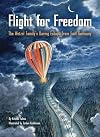
This is a well done telling of bravery and determination during a difficult point in German history, which is sure to leave an imprint with young readers.
The wall separated Germany into two very different states: one had freedom, the other stood under tyrannic control. A little boy on the eastern side discovers a picture under his parents' mattress of a hot air balloon. Possession of this picture means arrest. So, he keeps quite as his parents slowly gather materials and plan their escape show more over the wall and to the freedom of the other side of Germany beyond.
Having lived over twenty years in Germany and raising a family there, I was already well aware of this story, the circumstances and the history surrounding it. This book does a very good job at bringing life in East Germany across in a quick way young readers will understand and makes the stakes clear while staying in a child appropriate realm. The danger is clear as well as the daring of this family. The text is also age appropriate and brings across what this type of escape meant nicely.
The illustrations hold well to the German style and present it with a historical atmosphere, which still lures children in. The fearful moments are brought across very well as well as the surroundings, allowing the details and scenes to come across with fairly nice historical accuracy.
As to the book in total, I see this more appropriate for the upper end of the intended age group, and then, only interesting with surrounding context. The author does add several pages of more detailed information and background at the end, which is very interesting and fills in whatever holes might exist. However, this section is only for older readers and won't fit well with the younger age group in this style. This book works better when slid in with the theme of WWII and German segregation. I hate to admit it, but there are very few children of this age group who will know what WWII was about...let alone the Berlin Wall or divided Germany (here, in the United States, of course). So, when using this book, there will need to be discussions with the listeners beforehand and afterwards. Otherwise, they won't know the context. But taking this into consideration, this book definitely does a great job at it's theme...and I can only recommend it and am sure young listeners will be left with food for thought.
I received a complimentary copy and found this so wonderfully done that I'm leaving my honest thoughts. show less
The wall separated Germany into two very different states: one had freedom, the other stood under tyrannic control. A little boy on the eastern side discovers a picture under his parents' mattress of a hot air balloon. Possession of this picture means arrest. So, he keeps quite as his parents slowly gather materials and plan their escape show more over the wall and to the freedom of the other side of Germany beyond.
Having lived over twenty years in Germany and raising a family there, I was already well aware of this story, the circumstances and the history surrounding it. This book does a very good job at bringing life in East Germany across in a quick way young readers will understand and makes the stakes clear while staying in a child appropriate realm. The danger is clear as well as the daring of this family. The text is also age appropriate and brings across what this type of escape meant nicely.
The illustrations hold well to the German style and present it with a historical atmosphere, which still lures children in. The fearful moments are brought across very well as well as the surroundings, allowing the details and scenes to come across with fairly nice historical accuracy.
As to the book in total, I see this more appropriate for the upper end of the intended age group, and then, only interesting with surrounding context. The author does add several pages of more detailed information and background at the end, which is very interesting and fills in whatever holes might exist. However, this section is only for older readers and won't fit well with the younger age group in this style. This book works better when slid in with the theme of WWII and German segregation. I hate to admit it, but there are very few children of this age group who will know what WWII was about...let alone the Berlin Wall or divided Germany (here, in the United States, of course). So, when using this book, there will need to be discussions with the listeners beforehand and afterwards. Otherwise, they won't know the context. But taking this into consideration, this book definitely does a great job at it's theme...and I can only recommend it and am sure young listeners will be left with food for thought.
I received a complimentary copy and found this so wonderfully done that I'm leaving my honest thoughts. show less
Lists
Awards


You May Also Like


Associated Authors
Statistics
- Works
- 4
- Members
- 261
- Popularity
- #88,098
- Rating
- 4.1
- Reviews
- 9
- ISBNs
- 15