

Hiroaki Sato
Author of Legends of the Samurai
About the Author
Image credit: Full Tilt
Works by Hiroaki Sato
The Sword & the Mind: The Classic Japanese Treatise on Swordsmanship and Tactics (2004) 183 copies, 2 reviews
From the Country of Eight Islands: An Anthology of Japanese Poetry (1981) — Editor; Translator — 116 copies, 1 review
Associated Works
Persona: A Biography of Yukio Mishima (1995) — Preface, some editions; Translator, some editions — 44 copies, 2 reviews
Rain and Snow the Umbrella in Japanese Art.: The Umbrella in Japanese Art (1993) — Translator — 5 copies
Tagged
Common Knowledge
- Canonical name
- Sato, Hiroaki
- Birthdate
- 1942
- Gender
- male
- Education
- Doshisha University (Kyoto)
- Organizations
- Haiku Society of America
Honorary Curator of the American Haiku Archives - Awards and honors
- PEN Translation Prize (1982)
- Nationality
- Japan
- Places of residence
- Taiwan (birth)
New York, New York, USA - Associated Place (for map)
- New York, New York, USA
Members
Reviews
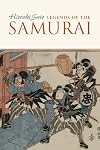
This isn't a Japanese history text, but it could be a great supplement to one. It's a collection of Japanese legends and histories which feature samurai, presented chronologically but also divided into three parts: tales of individual heroics and other famed acts; tales of war that do verge on relating Japanese history; and a more philosophically themed section that mostly covers events of the Tokugawa period, featuring Musashi's Book of Five Elements and the revenge story of the Forty-Seven show more Samurai.
The introduction is fantastic at briefly providing an overview of the different eras of Japan's history, and at establishing basic knowledge about samurai culture. I liked the presentation of the content that followed, which alternates between translations from the sources and the author's explanatory passages that establish setting and context. There are also substantial footnotes provided as aids. A straightforward translation of the sources without any of this support would have left me in the dark and much less appreciative. Hiroaki Sato uses sources that were recorded closest to the actual occurrence of events, to minimize the exaggeration in their retelling over the centuries. Even so, the earliest tales read like Greek mythology, but there is a clear progression in the objectivity with which these histories were recorded. The author/translator notes a bias whenever he feels one occurs, sometimes citing sources with opposing versions for contrast.
Thanks to this work I'm now much more familiar with the 'greats' of samurai lore. I can't seem to readily retain most of these Japanese names, but I'll be keeping this book as reference and making connections as I read other works on the subject in hopes of making the names 'stick' eventually. I was surprised how frequently deception is lauded as a tactic in these tales (particularly the faking one's death, an oft-used ploy); I would have thought that ran contrary to the samurai honour code, so it goes to show how much I've yet to understand. I was also intrigued by the strong emphasis on art forms that balances or even overshadows the rigorous martial arts training a samurai required. Poetry is closely linked to the warrior way, as explained in the introduction, and it is featured in many of the tales. The author does a great job of explaining quoted poetic nuances through his asides or in the footnotes.
The content here consists only of highlights from the selected sources, some of them very brief. You would have to look elsewhere to find the full source translations, but this is a great collection of select readings that provides a solid framework and goes a long way to introducing the legends of the samurai. show less
The introduction is fantastic at briefly providing an overview of the different eras of Japan's history, and at establishing basic knowledge about samurai culture. I liked the presentation of the content that followed, which alternates between translations from the sources and the author's explanatory passages that establish setting and context. There are also substantial footnotes provided as aids. A straightforward translation of the sources without any of this support would have left me in the dark and much less appreciative. Hiroaki Sato uses sources that were recorded closest to the actual occurrence of events, to minimize the exaggeration in their retelling over the centuries. Even so, the earliest tales read like Greek mythology, but there is a clear progression in the objectivity with which these histories were recorded. The author/translator notes a bias whenever he feels one occurs, sometimes citing sources with opposing versions for contrast.
Thanks to this work I'm now much more familiar with the 'greats' of samurai lore. I can't seem to readily retain most of these Japanese names, but I'll be keeping this book as reference and making connections as I read other works on the subject in hopes of making the names 'stick' eventually. I was surprised how frequently deception is lauded as a tactic in these tales (particularly the faking one's death, an oft-used ploy); I would have thought that ran contrary to the samurai honour code, so it goes to show how much I've yet to understand. I was also intrigued by the strong emphasis on art forms that balances or even overshadows the rigorous martial arts training a samurai required. Poetry is closely linked to the warrior way, as explained in the introduction, and it is featured in many of the tales. The author does a great job of explaining quoted poetic nuances through his asides or in the footnotes.
The content here consists only of highlights from the selected sources, some of them very brief. You would have to look elsewhere to find the full source translations, but this is a great collection of select readings that provides a solid framework and goes a long way to introducing the legends of the samurai. show less
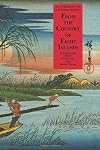
I don't know that I have the energy to write a review like this book *deserves* -- but I'm stunned no one has reviewed it! Just gobsmacked. This is a ~600 page survey of Japanese poetry from (I think) the oldest things there are to the work of poets born well into the 20th century. It feels pretty comprehensive, and it runs from things that are so ... I don't know, elemental ... they're hard to connect with, through loads of haiku, hokku, renga, tanka and so on, loads of which are show more wonderfully evocative of the natural world, to ... well, very modern stuff. You *won't* love everything presented here, but you *will* come away enriched, thrilled anew with poetry's possibilities, and curious about a culture where poetry seems ... ah, I dunno, *important*? I ordered my copy used, and to my irritation I got a copy with a broken spine, that has chunks of pages falling out. Normally I'd unload a book like that, but this one is so good I'm going to keep it (and probably replace it with a better copy). Get it! show less

The start of this book is quite funny: it's like listening to a drunk who attempts to explain quantum theory but goes into how, actually, Niels Bohr's pants were of green colour and not beige as was written in Science, and...
I'll let you see what I mean:
In spite of this way of writing, the book does provide some interesting insight into feudal Japan where the samurai were an important aspect.
It's interesting to hear of how much powers some rulers had and how they wielded it:
I dig the use of honorifics in there:
All of the tidbits above point to two facts:
1. This book contains a lot more than its title lets one initially believe and is more than sprawling, in mainly a bad way.
2. The Japanese original may make more sense in a cultural way than this English translation does.
It's interesting to read an analysis of how a person could have its head cut off by sword or allow death to enter by cutting one's own stomach by sword:
I was happy to see that this book included tidbits of how homosexual love turned out back in the day:
Loads of blood, people being gibbeted, suicides, sex, calligraphy, and oodles of names later, and what do we have? A book that is interesting at best and a wayward mess at worst. show less
I'll let you see what I mean:
Women themselves couldn’t help thinking their life depended on their face and figure, let alone their getup, “in a world where men spent half a year to learn to scrutinize their own clothes, hair styles, and swords, but also the way theyshow more
walked, just to go to pleasure quarters,” or so observed the historian Kodama Kōta in The Genroku Age (Genroku jidai). For that matter, what is given as “young boy” above is wakashu, a catamite, the object of male love; a great deal of care and money was spent on such young men to make them prettier, more enchanting. There were, in addition, kabukimono, date-otoko, yakko, yarō, etc.—many among them rowdy, tough men who galivanted while outlandishly decked out, often provoking quarrels and fights. Some of these figures later became the subjects of kabuki plays and one-man storytelling (kōdan). Among them, for example, was Banzui-in Chōbē, said to have beat up Mizuno Jūrōzaemon, a hatamoto with a stipend of 3,000 koku, who, in retaliation, entrapped Chōbē and killed him. The point of the story is that Chōbē, knowing what was up, went to Jūrōzaemon’s house as invited.
In spite of this way of writing, the book does provide some interesting insight into feudal Japan where the samurai were an important aspect.
It's interesting to hear of how much powers some rulers had and how they wielded it:
What won Tsunayoshi notoriety was a series of prohibitions that he started introducing not long after he became shogun, the “Pitying the Sentient Edicts” (Shōrui awaremi no rei). Dazai Shundai, who famously asserted that shogun were Japan’s “kings” (ō), wrote in An Unofficial Record on Three Kings (San’nō gaiki): After the King [Tsunayoshi] lost his Crown Prince, his harem did not produce any other child, so he tried many other ways seeking an heir, to no avail.
Then the monk Ryūkō stepped forward and said, Sire, you have few heirs as a retribution for having killed living things in your previous life. If you want an heir, the best thing to do would be to love creatures and not to kill them. If Your Majesty truly wants an heir, I think you must forbid the killing of living things. At the same time, because you were born in the year of hi-no-e inu, and inu belongs to dogs, you had best love dogs. The King agreed to this, and the Queen Dowager also heard Ryūkō. The King approved of this and forbad the killing of living things.
I dig the use of honorifics in there:
One thing that may startle, and amuse, the modern reader is the certificate of receipt given at the Nakano kennel ground. Used in each reference to each dog—mother and puppies—is the honorific prefix o, in addition to the sex and the color of each: e.g., “white-black-mottled boy, the honored dog” (shirokuro-shibori-danshi-o-inu).
All of the tidbits above point to two facts:
1. This book contains a lot more than its title lets one initially believe and is more than sprawling, in mainly a bad way.
2. The Japanese original may make more sense in a cultural way than this English translation does.
It's interesting to read an analysis of how a person could have its head cut off by sword or allow death to enter by cutting one's own stomach by sword:
As the accounts cited above, especially Asakichi’s Report, may suggest, Asano Naganori did not really “cut his stomach,” the literal meaning of seppuku. In fact, years before the Genroku era seppuku had become ritualized. Instead of a man ripping his own belly with a short sword, then stabbing his own neck to hasten death, the condemned would be provided with a kaishaku, “second,” ready to strike with his sword drawn, who, the moment he picked up the short sword on the ceremonial sanbō placed before him, would behead him and show the head to the kenshi, witness, marshal, or censor.
As A. B. Mitford put it: “The assistant second brings a dirk upon a tray, and, having placed it in front of the principal, withdraws to one side: when the principal leans his head forward, his chief second strikes off his head, which is immediately shown to the censor, who identifies it, and tells the master of the palace that he is satisfied, and thanks him for all his trouble.”
I was happy to see that this book included tidbits of how homosexual love turned out back in the day:
Homosexual love, called shudō, “the way of young men,” nanshoku, “male amour,” to give a few terms for the similar propensity, was prevalent. “The shogun and daimyo loved maegami no koshō, ‘pages with forelocks,’ hatamoto kept ko-zōritori, ‘little slipper carriers’; in the inner gardens of the Buddhist law were chigo koshō, ‘young acolytes,’ there were yarō in Miyakawa-chō of Kyoto, Negi-chō of Edo, and Dōtonbori of Osaka,” wrote the historian Kodama. And, of course, open homosexual love did not start or end in the Genroku era. Jesuits who went to Japan and stayed there to observe the country in the sixteenth and seventeenth centuries marveled at it; so did Shin Yu-han, a Korean who accompanied his country’s large-scale embassy to Japan in 1719.
Loads of blood, people being gibbeted, suicides, sex, calligraphy, and oodles of names later, and what do we have? A book that is interesting at best and a wayward mess at worst. show less
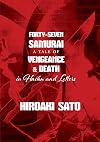
I have this as an ebook. Big mistake for me. This needs the physical copy to be able to dip into, refer back to and refer to endnotes.
It's a very detailed look over the evidence regarding the two incidents, as well as lots of detail giving the social, cultural and political context. Which is great - but hard work. Something to return to, reading a few pages at a time, and then mulling it over.
A great reference book to have on your (physical) bookshelf, for sure.
It's a very detailed look over the evidence regarding the two incidents, as well as lots of detail giving the social, cultural and political context. Which is great - but hard work. Something to return to, reading a few pages at a time, and then mulling it over.
A great reference book to have on your (physical) bookshelf, for sure.
Lists
Awards


You May Also Like


Associated Authors
Statistics
- Works
- 23
- Also by
- 8
- Members
- 894
- Popularity
- #28,652
- Rating
- 4.0
- Reviews
- 13
- ISBNs
- 38
- Languages
- 2