
Paul Duncan (2)
Author of The Star Wars Archives: Episodes IV-VI, 1977–1983
For other authors named Paul Duncan, see the disambiguation page.
Series
Works by Paul Duncan
Associated Works
Film Noir: Plus TASCHEN's top 50 Noir Classics (2004) — Editor, some editions — 260 copies, 2 reviews
Tagged
Common Knowledge
- Gender
- male
- Nationality
- USA
- Map Location
- Etats-Unis
- Associated Place (for map)
- USA
Members
Reviews
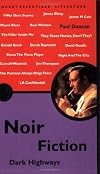
A very short (90 pages) but surprisingly full review of 'noir fiction'. 'Noir' is not to be confused with the 'hard boiled' stories that made up the bulk of film noir as most of us have experienced it. Do not expect to see Chandler or Hammett in the canon: Duncan is good at explaining why.
This is about darker stuff - mid-twentieth century advertising copywriters, scriptwriters, journalists and even bums with pretty roughed up lives telling a few home truths about our species and our society show more whilst trying, unsuccessfully for the most part, to exorcise their own demons.
It starts with Dostoyevsky and Conrad and pretty well goes downhill in terms of cynicism, violence and misery from that point on taking in some writers we will probably all know (Camus, Cain, Thompson, Ellroy) with others that we should (Bardin, Gresham, Karp, Stevens, Raymond).
Seventeen American, British and French writers (plus the aforementioned Russian and Anglo-Pole) are covered through access to a key work, a brief biography and an account of their larger literary corpus. The French get Camus and Vian.
Duncan links the writers to a loose chronological scheme in which emotions, such as depression for the 1930s, fear for the 1940s, paranoia for the 1950s, apathy for the 1960s and 1970s and amorality for the author's present (to 2000) help to make each writer a creature of their time.
The common denominator is a sense of profound alienation from the rest of the human species and distrust of its moral claims. This is the writing (other than true crime) that most deals with the potential horror implicit in none of us knowing other minds.
Much of it is a variation on a basic theme about which Duncan writes with feeling (the book seems quite personal at times). This is the 'immobilised man' who, on this side of the millennium, sounds uncannily like the popular uncaring description of the 'incel' today.
The book is best read than described. We can see how the black novel might be developed for our time based on the emotion of terror (for society and women in particular) but we suspect our lily-livered liberal publishers dare not publish further. There certainly seems a gap in the market.
The 'immobilised man' today seems to have learned how to mobilise himself into individual acts of mayhem. What was the lurching stomach of what might happen seems to have become a matter of things actually happening and perhaps a social 'terror' of encouraging it by recognising it.
The 'immobilised man' - once stuck within four walls feeding on his own despair, a despair that leads to death or suicide, imagined or real - was in Dostoyevsky's 'Notes from the Underground' in the 1860s. He will still be here in the 2060s as, no doubt silent, he was in the 1760s.
All our attempts to consign him into nothingness by self-censoring our reading just because some men could imagine him into a place on the page as facets of themselves will not eliminate him or those of his drives or anti-drives present in many men (and women) and in society as a whole.
This is a tale largely of men (linked to mobility, economic depression and war) but I am not convinced that there are not women who are equally 'immobilised', only that publishers never sought or found the market. Perhaps Highsmith comes closest in sensibility.
The genre creates the question for us of whether it is better to know or not know of the existence of the dark. Was Plato right about art? Are these writers a danger to society or do they provide 'catharsis'? Would their social elimination by liberal totalitarian thinking be the greater danger?
I keep an open mind but tend to the view that to recognise the darkness is to start to find ways of dealing with it but also that the truly dark novel goes beyond the crime, true crime or even horror novel in one respect that can be potentially dangerous to the sanity of writer and reader alike.
The crime, true crime and horror novel are expressions of the 'other', something we fear but is 'over there'. Someone else is dealing with it (maybe just the writer) to ensure that it can only come to us as either fantasy or a tale of the lives of others. We can empathise and go home cathartised.
The truly dark novel may be a story (a fiction) but it is not 'over there' and it is not 'other'. It is looking inward not at the crimes of others but at the emotions we have and then taking them towards violence and crime, suicide and murder, loneliness and self-destruction.
The consequently created fear and loathing within 'noir fiction' (if it is doing its job) arises not from the acts of others but from the acts of someone who could be us in certain circumstances - that person inveigled by history into becoming a guard at an extermination camp perhaps.
The loathing is turned onto others because the others are the ones creating the conditions that make a man (mostly the writer) loathsome to himself - much as an 'incel' might blame society as much as God for an erotic pecking order that excludes him from pleasure and love.
Of course, in reality, we mostly become loathsome because we choose loathsomeness or are lazy in allowing ourselves to be sucked into the condition that makes us loathsome. Some of us are just natural psychopaths but there is a measure of truth in the implicit 'noir' social analysis.
If we are the product of our actions (which is the view of some existentialists) and if our actions are dictated by our social condition and if our general condition is truly awful, then there is a certain logic in our actions being dictated by our condition caused by others.
Whoever we are becomes lost somehow in the sheer weight of circumstance. The 'noir' novel is thus not about redemption or heroic transcendence but one of acceptance of our trapped state and a refusal to internalise social ideology. It floats constantly in and out of psychopathy.
The ambiguity here is that we have moved beyond ethics and morality to simple descriptions of animal survival (and often failure) in an equally animal world where the social analysis can sometimes be horrible, factually correct. It is, literally, a world beyond good and evil.
On balance, 'noir' fiction is almost necessary in a free society. Its absence is a sign of a totalitarian culture being present or (as today by stealth) re-emerging or it means that there has been a resolution of the conditions that create the 'immobilised man'. Yeah, right!
The 'noir' novel reminds us that, for all the propagandistic crud produced by a liberal society, the resolution of the conditions that create personal misery and despair have not been resolved. The relative lack of such novels today is merely a sign of a wilful denial of this truth.
Personally I am glad to be reminded of reality much as I might be very pleased that Claude Lanzmann pushed my nose into the cesspits of Auschwitz in his documentary 'Shoah' but my survival depends on remaining largely settled in the fantasies that we have all built up together.
A society that understands the abattoir that provides its meat, the cost of war and the crimes committed by all sides and the ever-presence at the margins of the serial killer is ironically more likely to resolve conditions than one in denial. 'Noir' could thus be said to serve a social purpose. show less
This is about darker stuff - mid-twentieth century advertising copywriters, scriptwriters, journalists and even bums with pretty roughed up lives telling a few home truths about our species and our society show more whilst trying, unsuccessfully for the most part, to exorcise their own demons.
It starts with Dostoyevsky and Conrad and pretty well goes downhill in terms of cynicism, violence and misery from that point on taking in some writers we will probably all know (Camus, Cain, Thompson, Ellroy) with others that we should (Bardin, Gresham, Karp, Stevens, Raymond).
Seventeen American, British and French writers (plus the aforementioned Russian and Anglo-Pole) are covered through access to a key work, a brief biography and an account of their larger literary corpus. The French get Camus and Vian.
Duncan links the writers to a loose chronological scheme in which emotions, such as depression for the 1930s, fear for the 1940s, paranoia for the 1950s, apathy for the 1960s and 1970s and amorality for the author's present (to 2000) help to make each writer a creature of their time.
The common denominator is a sense of profound alienation from the rest of the human species and distrust of its moral claims. This is the writing (other than true crime) that most deals with the potential horror implicit in none of us knowing other minds.
Much of it is a variation on a basic theme about which Duncan writes with feeling (the book seems quite personal at times). This is the 'immobilised man' who, on this side of the millennium, sounds uncannily like the popular uncaring description of the 'incel' today.
The book is best read than described. We can see how the black novel might be developed for our time based on the emotion of terror (for society and women in particular) but we suspect our lily-livered liberal publishers dare not publish further. There certainly seems a gap in the market.
The 'immobilised man' today seems to have learned how to mobilise himself into individual acts of mayhem. What was the lurching stomach of what might happen seems to have become a matter of things actually happening and perhaps a social 'terror' of encouraging it by recognising it.
The 'immobilised man' - once stuck within four walls feeding on his own despair, a despair that leads to death or suicide, imagined or real - was in Dostoyevsky's 'Notes from the Underground' in the 1860s. He will still be here in the 2060s as, no doubt silent, he was in the 1760s.
All our attempts to consign him into nothingness by self-censoring our reading just because some men could imagine him into a place on the page as facets of themselves will not eliminate him or those of his drives or anti-drives present in many men (and women) and in society as a whole.
This is a tale largely of men (linked to mobility, economic depression and war) but I am not convinced that there are not women who are equally 'immobilised', only that publishers never sought or found the market. Perhaps Highsmith comes closest in sensibility.
The genre creates the question for us of whether it is better to know or not know of the existence of the dark. Was Plato right about art? Are these writers a danger to society or do they provide 'catharsis'? Would their social elimination by liberal totalitarian thinking be the greater danger?
I keep an open mind but tend to the view that to recognise the darkness is to start to find ways of dealing with it but also that the truly dark novel goes beyond the crime, true crime or even horror novel in one respect that can be potentially dangerous to the sanity of writer and reader alike.
The crime, true crime and horror novel are expressions of the 'other', something we fear but is 'over there'. Someone else is dealing with it (maybe just the writer) to ensure that it can only come to us as either fantasy or a tale of the lives of others. We can empathise and go home cathartised.
The truly dark novel may be a story (a fiction) but it is not 'over there' and it is not 'other'. It is looking inward not at the crimes of others but at the emotions we have and then taking them towards violence and crime, suicide and murder, loneliness and self-destruction.
The consequently created fear and loathing within 'noir fiction' (if it is doing its job) arises not from the acts of others but from the acts of someone who could be us in certain circumstances - that person inveigled by history into becoming a guard at an extermination camp perhaps.
The loathing is turned onto others because the others are the ones creating the conditions that make a man (mostly the writer) loathsome to himself - much as an 'incel' might blame society as much as God for an erotic pecking order that excludes him from pleasure and love.
Of course, in reality, we mostly become loathsome because we choose loathsomeness or are lazy in allowing ourselves to be sucked into the condition that makes us loathsome. Some of us are just natural psychopaths but there is a measure of truth in the implicit 'noir' social analysis.
If we are the product of our actions (which is the view of some existentialists) and if our actions are dictated by our social condition and if our general condition is truly awful, then there is a certain logic in our actions being dictated by our condition caused by others.
Whoever we are becomes lost somehow in the sheer weight of circumstance. The 'noir' novel is thus not about redemption or heroic transcendence but one of acceptance of our trapped state and a refusal to internalise social ideology. It floats constantly in and out of psychopathy.
The ambiguity here is that we have moved beyond ethics and morality to simple descriptions of animal survival (and often failure) in an equally animal world where the social analysis can sometimes be horrible, factually correct. It is, literally, a world beyond good and evil.
On balance, 'noir' fiction is almost necessary in a free society. Its absence is a sign of a totalitarian culture being present or (as today by stealth) re-emerging or it means that there has been a resolution of the conditions that create the 'immobilised man'. Yeah, right!
The 'noir' novel reminds us that, for all the propagandistic crud produced by a liberal society, the resolution of the conditions that create personal misery and despair have not been resolved. The relative lack of such novels today is merely a sign of a wilful denial of this truth.
Personally I am glad to be reminded of reality much as I might be very pleased that Claude Lanzmann pushed my nose into the cesspits of Auschwitz in his documentary 'Shoah' but my survival depends on remaining largely settled in the fantasies that we have all built up together.
A society that understands the abattoir that provides its meat, the cost of war and the crimes committed by all sides and the ever-presence at the margins of the serial killer is ironically more likely to resolve conditions than one in denial. 'Noir' could thus be said to serve a social purpose. show less
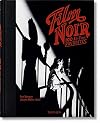
Taschen is a publisher of high quality art books, and several of their titles deal with cinema, including several in their "archives" series on selected directors (I have their edition on Stanley Kubrick, and it is superlative in all respects).
Being a fan of film noirs, be they American or French, classical period or neo-noir, I had to get this from my local library. It's an extremely heavy, oversized tome printed on thick, glossy paper. I don't think it was a good idea to go with black show more pages with white text, however. The black page shows any hint of oil from one's fingers, marring the looks.
There are three well-written essays to start things off, one by the filmmaker Paul Schrader. He points out that noir is not a genre, but a style. I get that, but to me there are certain thematic elements that also make up noir. Then the book does anywhere from 4 to 8 pages on each of the 100 selected films. The text is written by several different writers who provide insight into the elements that make that film special. But the main attraction here are the well-selected stills taken from the films themselves.
Perhaps my opinion is rather parochial, but some of these films I don't consider noir, or even noirish. For instance, Psycho. It's a great film, but it's not noir; it's a horror film, and one of the best. I would have picked some different neo-noir films, such as Night Moves. But all in all, this is a fantastic book; one of the best graphical coffee table books imaginable on the subject. show less
Being a fan of film noirs, be they American or French, classical period or neo-noir, I had to get this from my local library. It's an extremely heavy, oversized tome printed on thick, glossy paper. I don't think it was a good idea to go with black show more pages with white text, however. The black page shows any hint of oil from one's fingers, marring the looks.
There are three well-written essays to start things off, one by the filmmaker Paul Schrader. He points out that noir is not a genre, but a style. I get that, but to me there are certain thematic elements that also make up noir. Then the book does anywhere from 4 to 8 pages on each of the 100 selected films. The text is written by several different writers who provide insight into the elements that make that film special. But the main attraction here are the well-selected stills taken from the films themselves.
Perhaps my opinion is rather parochial, but some of these films I don't consider noir, or even noirish. For instance, Psycho. It's a great film, but it's not noir; it's a horror film, and one of the best. I would have picked some different neo-noir films, such as Night Moves. But all in all, this is a fantastic book; one of the best graphical coffee table books imaginable on the subject. show less
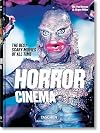
Something of a coffee table book, something of a guide to the horror genre. Comprehensive enough as a introduction, explaining a bunch of conventions and subgenres before listing some notable classics. Nothing too shocking in the picks of Best Movies nor the description of why said movies are the best, but enjoyable. I wish the book was physically larger, like a proper coffee table book, so I could appreciate the images more. The font size would probably be easier on the eyes as well.

Beautifully designed overview of Kubrick's career as one of the world's most iconoclastic and capable directors. It's not deep in its assessments, and it's got a few typos and other goofs. But it's a fine basic text and the photos included are generally first rate.
Awards

You May Also Like
Associated Authors
Statistics
- Works
- 34
- Also by
- 1
- Members
- 1,925
- Popularity
- #13,370
- Rating
- 3.9
- Reviews
- 21
- ISBNs
- 201
- Languages
- 13

