
Larry Bond
Author of Red Storm Rising
About the Author
Larry Bond is a writer and game designer. He graduated from St. Thomas College in 1973 with a degree in quantitative methods. Bond worked as a computer programmer before entering The U.S. Navy Officers Candidate School in Newport, Rhode Island. He graduated in 1976 and served in the Navy for six show more years. Bond spent two years with the Navy Reserve Intelligence Program and then worked as a naval analyst for consulting firms in Washington, D.C. Bond also designs games. His Harpoon gaming system was published in 1980 and has won the H.G. Wells Award as the best miniature game of the year in 1981, 1987, and 1997. A computer version of the game was created in 1990 and won the Wargame of the Year award from Computer Gaming World. Bond began his writing career by collaborating with Tom Clancy on the bestseller Red Storm Rising. His own novels include Red Phoenix, The Enemy Within, and Day of Wrath. (Bowker Author Biography) show less
Image credit: By slowking4 - Own work, GFDL 1.2, https://commons.wikimedia.org/w/index.php?curid=40255805
Series
Works by Larry Bond
Harpoon 4 Player's Handbook 3 copies
Fatal Choices: Wargames, Decisions and Destiny in the 1914 Battles of Coronel and Falklands (2014) — Foreword — 3 copies, 1 review
Arctic Fleets - The Navies of Finland, the Netherlands, Norway, and the Soviet Union in WW II 2 copies
Mediterranean Fleets 2 copies
Larry Bond and Jim DeFelice Red Dragon Rising Series: Books 1-2: Shadows of War & Edge of War (2017) 2 copies
Harpoon Classic Operations Manual Also Includes Battleset Notes and Scenario Editor (1994) — Editor — 2 copies
Emperor's Fleet 2 copies
Larry Bond and Jim DeFelice Red Dragon Rising Series: Books 3-4: Shock of War & Blood of War (2017) 2 copies
The Red Dragon Rising Series: Shadows of War, Edge of War, Shock of War, Blood of War (2018) 2 copies
Command At Sea (Player's Handbook) 2 copies
Dangerous Grounds 1 copy
ヨーロッパ最終戦争1998〈上〉 (文春文庫) 1 copy
The Edge of War 1 copy
The Rising Sun 1 copy
The Best of the Naval SITREP 1 copy
American Fleets 1 copy
Red Phoenix, Part 2 of 2 1 copy
Harpoon 4 1 copy
La Guerre Navale 1 copy
Home Fleet 1 copy
Gruppe Nord 1 copy
No title 1 copy
Associated Works
Tagged
Common Knowledge
- Birthdate
- 1951-06-11
- Gender
- male
- Education
- St. Thomas College ( |Quantitative Methods)
Officer Candidate School in Newport, Rhode Island - Occupations
- computer programmer
naval analyst - Organizations
- United States Navy
- Nationality
- USA
- Associated Place (for map)
- USA
Members
Reviews
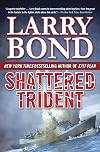
Larry Bond tries to avert World War III in this fourth installment of his series centered on Jerry Mitchell, naval aviator turned submariner. The Mitchell series in general is hit and miss for me, especially compared to Bond’s magnificent war thrillers of the ‘80s and ‘90s; and this is more miss than hit.
His strengths are still strong. Bond is excellent at siting tactical military maneuvers in realistic geopolitical contexts. In this case, he brings to life the challenge of China’s show more assertive claims to the South China Sea in a way that media articles just can’t do.
Bond is also helpful as a Cliff’s Notes to transnational frictions, partly due to lifelong connections in the U.S. military complex. For example, his ear is so firmly to the ground that his novel anticipates by a full year Japanese Prime Minister Abe’s reinterpretation of Article 9 in favor of Japanese rearmament.
I’m also intrigued by his favorable opinion of Vietnam, both in this novel and in his previous “Red Dragon Rising” series. I’ve heard arguments that in any conflict with China, Vietnam will be a critical partner for the United States despite the deep historical divide between our two nations. Bond clearly believes the same thing, and writes accordingly and convincingly.
I was pleased as well by a subplot dramatizing the power of the Internet and globally crowd-sourced data to alter the fortunes of war. This seems obvious today in the context of Russia’s war in Ukraine, which is being fought on Twitter as much as it is on the ground. The fact that Bond called this out a decade in advance deserves a hat-tip.
Less impressive to me is the plot and its resolution. I can buy a secret alliance of Western Pacific nations preemptively taking the fight to China because they’ve lost confidence in U.S. security guarantees, but I think the premise was too sprawling for a single volume of this length.
Either a book the size of “Red Storm Rising” or a series like “Red Dragon Rising” might’ve lent itself to a better treatment. As it is, the space constraints of an average-size book force Bond to rush toward an “America ex machina” that is too tidy and just-so for my taste.
This pairs unfavorably with Bond’s limitations in writing realistic dialogue and characters. His depiction of military culture seems spot on (as near as I can tell, anyway); but it’s always hard for me to connect with his characters or their conversations.
I like Bond for his skill at dramatizing tactical maneuvers, and here he hits near enough those marks that I didn’t hate the read. But I also found myself skimming and drifting, which is not what you want in a military thriller. It doesn’t bother me that I invested time in this book, but I’m also not sorry it’s done. show less
His strengths are still strong. Bond is excellent at siting tactical military maneuvers in realistic geopolitical contexts. In this case, he brings to life the challenge of China’s show more assertive claims to the South China Sea in a way that media articles just can’t do.
Bond is also helpful as a Cliff’s Notes to transnational frictions, partly due to lifelong connections in the U.S. military complex. For example, his ear is so firmly to the ground that his novel anticipates by a full year Japanese Prime Minister Abe’s reinterpretation of Article 9 in favor of Japanese rearmament.
I’m also intrigued by his favorable opinion of Vietnam, both in this novel and in his previous “Red Dragon Rising” series. I’ve heard arguments that in any conflict with China, Vietnam will be a critical partner for the United States despite the deep historical divide between our two nations. Bond clearly believes the same thing, and writes accordingly and convincingly.
I was pleased as well by a subplot dramatizing the power of the Internet and globally crowd-sourced data to alter the fortunes of war. This seems obvious today in the context of Russia’s war in Ukraine, which is being fought on Twitter as much as it is on the ground. The fact that Bond called this out a decade in advance deserves a hat-tip.
Less impressive to me is the plot and its resolution. I can buy a secret alliance of Western Pacific nations preemptively taking the fight to China because they’ve lost confidence in U.S. security guarantees, but I think the premise was too sprawling for a single volume of this length.
Either a book the size of “Red Storm Rising” or a series like “Red Dragon Rising” might’ve lent itself to a better treatment. As it is, the space constraints of an average-size book force Bond to rush toward an “America ex machina” that is too tidy and just-so for my taste.
This pairs unfavorably with Bond’s limitations in writing realistic dialogue and characters. His depiction of military culture seems spot on (as near as I can tell, anyway); but it’s always hard for me to connect with his characters or their conversations.
I like Bond for his skill at dramatizing tactical maneuvers, and here he hits near enough those marks that I didn’t hate the read. But I also found myself skimming and drifting, which is not what you want in a military thriller. It doesn’t bother me that I invested time in this book, but I’m also not sorry it’s done. show less
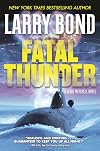
Spoiler alert: thirteen pages into Tom Clancy’s “The Hunt for Red October,” Captain First Rank Marko Ramius breaks a political officer’s neck before taking his Soviet submarine deep as the first act of his defection to the United States.
Clancy followed the venerable tradition of opening a story in the heart of the action, and a rip-roaring good yarn unrolled from that bone-cracking start. Imagine, now, if Clancy had spent the first two-thirds of the book on everything that happened show more leading up to Ramius’s treason.
That, unfortunately, is what Larry Bond has done in “Fatal Thunder.” He attempts to start with action by detonating a nuclear bomb in Kashmir. After that radioactive launch, he takes us on a nail-biting ride through meetings, phone chats, walk-and-talks, and videoconferences.
While this might be realistic enough for what would happen if the world woke up to a surprise mushroom cloud, it isn’t interesting to read about. By the time the U.S. Navy is racing to interdict a rogue sub with a nuclear payload, there’s not enough book left to care what happens next.
This is a shame, because Bond’s greatest strength as an author is his ability to write tactical military maneuvers, especially on the open seas. He is fully capable of writing a thrilling naval hunt with global war and peace in the balance.
What we have instead is a pedestrian geopolitical thriller where Captain Jerry Mitchell, the titular hero of the series, isn’t even on the page for most of the book. I appreciated the clever callbacks to previous novels, but those aren’t enough to make up for the fact that Bond is writing outside his strengths.
As an aside, though, I had to smile when a former submarine officer grumbles that new tech in central post makes everything feel too much like a video game. Another officer reminds him this is the future of all navies, and that most new recruits grew up on video games anyway.
Since Bond spent the ‘80s and ‘90s building the “Harpoon” naval combat computer game franchise (which I loved as a teenager), I’ll bet this reflects “kids these days” conversations he himself had with grumpy old officers. Despite my disappointment with the novel, I enjoyed that flash of nostalgia. show less
Clancy followed the venerable tradition of opening a story in the heart of the action, and a rip-roaring good yarn unrolled from that bone-cracking start. Imagine, now, if Clancy had spent the first two-thirds of the book on everything that happened show more leading up to Ramius’s treason.
That, unfortunately, is what Larry Bond has done in “Fatal Thunder.” He attempts to start with action by detonating a nuclear bomb in Kashmir. After that radioactive launch, he takes us on a nail-biting ride through meetings, phone chats, walk-and-talks, and videoconferences.
While this might be realistic enough for what would happen if the world woke up to a surprise mushroom cloud, it isn’t interesting to read about. By the time the U.S. Navy is racing to interdict a rogue sub with a nuclear payload, there’s not enough book left to care what happens next.
This is a shame, because Bond’s greatest strength as an author is his ability to write tactical military maneuvers, especially on the open seas. He is fully capable of writing a thrilling naval hunt with global war and peace in the balance.
What we have instead is a pedestrian geopolitical thriller where Captain Jerry Mitchell, the titular hero of the series, isn’t even on the page for most of the book. I appreciated the clever callbacks to previous novels, but those aren’t enough to make up for the fact that Bond is writing outside his strengths.
As an aside, though, I had to smile when a former submarine officer grumbles that new tech in central post makes everything feel too much like a video game. Another officer reminds him this is the future of all navies, and that most new recruits grew up on video games anyway.
Since Bond spent the ‘80s and ‘90s building the “Harpoon” naval combat computer game franchise (which I loved as a teenager), I’ll bet this reflects “kids these days” conversations he himself had with grumpy old officers. Despite my disappointment with the novel, I enjoyed that flash of nostalgia. show less
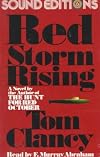
Apparently, I read this book back in 1990 or something, but I swear, I don't remember the last 2/3rds, so this was like reading it for the first time. Good book. Clancy did a nice job of picking 4 or 5 main characters, both American and Soviet, and was able to make me root for all of them. No easy task, especially in such a big, wide-ranging story.
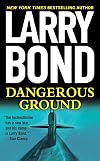
Military fiction at its finest. People in uniform are good, politicians bad, the US is awesome, everyone else sucks. Well, sarcasm aside, it's actually a rather good book in the genre. Just remember that it's fiction.
Jerry Mitchell suffers a bad airplane crash during training to become a naval aviator, and using his political connections get himself transferred to sub duty. This is not going over well with all his new colleagues and we get a fair dose of inter-personal strain as in any work show more place, but seasoned with some fires, radioactive waste and corruption. show less
Jerry Mitchell suffers a bad airplane crash during training to become a naval aviator, and using his political connections get himself transferred to sub duty. This is not going over well with all his new colleagues and we get a fair dose of inter-personal strain as in any work show more place, but seasoned with some fires, radioactive waste and corruption. show less
Lists
Awards


You May Also Like


Associated Authors
Statistics
- Works
- 73
- Also by
- 6
- Members
- 11,982
- Popularity
- #1,956
- Rating
- 3.8
- Reviews
- 125
- ISBNs
- 358
- Languages
- 15
- Favorited
- 7
