
Dale Brown (1) (1956–)
Author of Flight of the Old Dog
For other authors named Dale Brown, see the disambiguation page.
About the Author
Dale Brown was born on November 2, 1956 in Buffalo, New York. He graduated from Penn State University with a degree in Western European history, where he wrote a column for the University's newspaper, The Daily Collegian. He went on to freelance for computer magazines, such as Run and Compute's show more Gazette for Commodore. He received an Air Force Commission in 1978 and while there, he received the Air Force Commendation Medal, the Combat Crew Medal and a Marksmanship Ribbon. He also wrote for several military base newspapers while he was still enlisted. He left the Air Force as a Captain and remains a multi-engine and instrument rated private pilot. He is a director and volunteer pilot for AirLifeLine, a nonprofit national medical transport for needy people who cannot afford to travel for medical attention. He is the author of several series including Dale Brown's Dreamland and, Patrick McLanahan. Dreamland. His title Tiger's Claw made The New York Times Best Seller List for 2012. (Bowker Author Biography) show less
Series
Works by Dale Brown
Conversations With American Writers: The Doubt, the Faith, the In-Between (2008) — Author — 21 copies, 1 review
Leadership Material 4 copies
Jason Richter 1 copy
Associated Works
Tagged
Common Knowledge
- Birthdate
- 1956-11-02
- Gender
- male
- Education
- Pennsylvania State University (BA, Western European History)
- Occupations
- aviator
- Organizations
- United States Air Force
Air Force Association
U.S. Naval Institute
Air Force ROTC - Awards and honors
- Air Force Commendation Medal
Combat Crew Badge
Marksmanship Ribbon - Agent
- Robert Gottlieb
- Short biography
- [from Barnes & Noble website]
Dale was born in Buffalo, New York on November 2, 1956. He graduated from Penn State University and received an Air Force commission in 1978. He was a navigator-bombardier in the B-52G Stratofortress heavy bomber and the FB-111A supersonic medium bomber, and is the recipient of several military decorations and awards including the Air Force Commendation Medal with oak leaf cluster, the Combat Crew Award, and the Marksmanship ribbon. He flew over 2500 hours in various military tactical and training aircraft from 1978 to 1986 and was also a graduate of the U.S. Army Airborne School.
Dale is a volunteer pilot for AirLifeLine, a non-profit national charitable medical transportation organization who fly needy persons free of charge to receive treatment. He also supports a number of organizations to support and promote law enforcement and reading. He is a member of the Airplane Owners and Pilots Association, The Writers Guild, and a Life Member of the Air Force Association and U.S. Naval Institute. He is a multi-engine and instrument-rated private pilot and can often be found in the skies all across the United States, piloting his Piper Aerostar 602P. On the ground, Dale enjoys tennis, scuba diving, and hockey. He lives in Incline Village, Nevada. - Nationality
- USA
- Birthplace
- Buffalo, New York, USA
- Places of residence
- Buffalo, New York, USA (birth)
Lake Tahoe, Nevada, USA
Folsom, California, USA - Associated Place (for map)
- USA
Members
Reviews
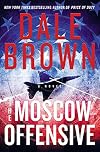
Another excellent book in the McLanahan series. Here we see the continuing friction between Russia/Poland/America play out with Operation Checkmate by Russia which utilises the combat robot technology captured in the prior novel.
I find Stacy Anne Barbeau to be a rather irritating character, perhaps because the character so accurately portrays the blind vision some politicians have, regardless the story arc involving her comes to a climax in this novel where she faces what is fast becoming a show more national emergency. Her response is limited by her own prejudices and as such brings an political aspect into an otherwise action filled novel.
Overall, it was an excellent action packed thrill ride with a satisfying end that advanced several of the plot lines within the series. show less
I find Stacy Anne Barbeau to be a rather irritating character, perhaps because the character so accurately portrays the blind vision some politicians have, regardless the story arc involving her comes to a climax in this novel where she faces what is fast becoming a show more national emergency. Her response is limited by her own prejudices and as such brings an political aspect into an otherwise action filled novel.
Overall, it was an excellent action packed thrill ride with a satisfying end that advanced several of the plot lines within the series. show less
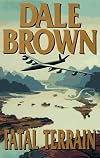
This is a book where someone that disobeys orders and ends up killing a thousand civilians for no purpose is celebrated as a hero. It's a book where opponents of the main character are painted as cartoonish villains. Where anyone connected to the US Air Force is perfect and almost everyone connected to one of the other American military branches are stupid. Where everything that happens in Washington D.C. is insane while the pilots in an airplane are the only ones that can make the correct show more decisions.
All in all, it's a silly book that has to be read as if it was a kid's cartoon. As a kid's cartoon it's easy to digest as long as you don't take anything in it seriously.
The background to Fatal Terrain is that Patrick McLanahan, after saving the world over and over again in all the previous books, is persona non grata because of "politics". At the same time Taiwan is trying to break with their history and go forward as an independent and recognized country (something most everyone in the real world thinks would be a good thing as long as China doesn't get too upset). In the book China gets upset and starts lobbying nukes all over the place.
The book completely disregards the classical American blood thirst. If an American is harmed by a foreigner, the default American attitude is to kill everyone. Not so in this book. Suddenly the American people is incredibly restrained. I can only assume that Dale Brown is even more blood thirsty than the average American and uses this book as a way to insult everyone else. show less
All in all, it's a silly book that has to be read as if it was a kid's cartoon. As a kid's cartoon it's easy to digest as long as you don't take anything in it seriously.
The background to Fatal Terrain is that Patrick McLanahan, after saving the world over and over again in all the previous books, is persona non grata because of "politics". At the same time Taiwan is trying to break with their history and go forward as an independent and recognized country (something most everyone in the real world thinks would be a good thing as long as China doesn't get too upset). In the book China gets upset and starts lobbying nukes all over the place.
The book completely disregards the classical American blood thirst. If an American is harmed by a foreigner, the default American attitude is to kill everyone. Not so in this book. Suddenly the American people is incredibly restrained. I can only assume that Dale Brown is even more blood thirsty than the average American and uses this book as a way to insult everyone else. show less
It's a trope that SF writers have been inspired by cutting-edge sciences as much as they have inspired back scientists and engineers when it comes to develop new technologies. What about Star Trek, then? Are some of the imaginary sciences used in this otherwise amazing and highly intelligent show ever possible to start with? Lawrence M. Krauss offers here his own thoughts, based on his expertise as a physicist.
Now, I have to say, his is quite pessimistic.
Would we ever be able to travel at show more near-light speed as required by the warp-drive technology? His answer: probably not because, quite simply, near light speed slows down clocks and so a star ship travelling at such speed away from the Earth would ultimately have its crew ending as being seriously out of synch with time as unfolding on Earth!
What about interacting with intelligently advanced alien civilizations, then? Well, same sad perspective. First, because to boldly go seeking them out is not an option (again: because of the issue of journeying through the galaxy, taking into consideration both the mindbogglingly high distances and the speed of light that would be required to travel them). Then, because getting them to discover us may not be an option either, as their technologies could be far too advanced for detecting our crude, probably outdated (to their own standards!) radio technology.
Ha! But what about holograms such as the Doctor in the Voyager series, then?! Pffft. Forget it too. It's not that holograms dispensing medical advices are an impossibility (on the contrary!) but that, being reflected-light, there is no way that an hologram could perform the physical, handling tasks required in practicing medicine. Oh dear...
Is it all that bad, then?
Surprisingly, where Lawrence M. Krauss shows himself optimistic is when tackling the issue of the transporter. Would it be possible to dematerialise a whole human being; hold it in a "transporter buffer"; then re-materialise it somewhere else as is often done in Star Trek, especially when characters are regularly "beamed out" onto/ from planets' surfaces? Well... Are we talking about transporting atoms? Or are we talking about bits that is, the information (e.g. DNA/ genetic code) making up a person? The nuance may seem extremely geeky, but highly relevant to decide if it could be done or not. And, according to the author, it could be done if we're talking about bits (the Heisenberg Uncertainty Principle prevents it if we're talking about atoms...).
All in all, then, I really enjoyed reading this. I am not scientifically-minded, and so it took me a lot of efforts to get the basics of quantum mechanics, the implications of curved-space, and the problems raised by space-time as described by Einstein. Even so, I am pretty sure that a lot of it still went completely over my head -and so I had no choice but to take at face-value what the author stated despite him admitting to his own limited understanding at times (e.g. as he makes it clear when discussing transporters: he is not a computer scientist, and so his optimism may be misplaced...)! This, thought, reflects only my own, personal intellectual shortcoming. The Physics of Star Trek, for all its geekiness and hassle to get through if you're not one to gets physics easily, remains a must-read for anyone interested in what is possible or not when it comes to some of the most compelling technologies put forth in Star Trek. "Make it so!"? Meh. That's another issue! show less
Now, I have to say, his is quite pessimistic.
Would we ever be able to travel at show more near-light speed as required by the warp-drive technology? His answer: probably not because, quite simply, near light speed slows down clocks and so a star ship travelling at such speed away from the Earth would ultimately have its crew ending as being seriously out of synch with time as unfolding on Earth!
What about interacting with intelligently advanced alien civilizations, then? Well, same sad perspective. First, because to boldly go seeking them out is not an option (again: because of the issue of journeying through the galaxy, taking into consideration both the mindbogglingly high distances and the speed of light that would be required to travel them). Then, because getting them to discover us may not be an option either, as their technologies could be far too advanced for detecting our crude, probably outdated (to their own standards!) radio technology.
Ha! But what about holograms such as the Doctor in the Voyager series, then?! Pffft. Forget it too. It's not that holograms dispensing medical advices are an impossibility (on the contrary!) but that, being reflected-light, there is no way that an hologram could perform the physical, handling tasks required in practicing medicine. Oh dear...
Is it all that bad, then?
Surprisingly, where Lawrence M. Krauss shows himself optimistic is when tackling the issue of the transporter. Would it be possible to dematerialise a whole human being; hold it in a "transporter buffer"; then re-materialise it somewhere else as is often done in Star Trek, especially when characters are regularly "beamed out" onto/ from planets' surfaces? Well... Are we talking about transporting atoms? Or are we talking about bits that is, the information (e.g. DNA/ genetic code) making up a person? The nuance may seem extremely geeky, but highly relevant to decide if it could be done or not. And, according to the author, it could be done if we're talking about bits (the Heisenberg Uncertainty Principle prevents it if we're talking about atoms...).
All in all, then, I really enjoyed reading this. I am not scientifically-minded, and so it took me a lot of efforts to get the basics of quantum mechanics, the implications of curved-space, and the problems raised by space-time as described by Einstein. Even so, I am pretty sure that a lot of it still went completely over my head -and so I had no choice but to take at face-value what the author stated despite him admitting to his own limited understanding at times (e.g. as he makes it clear when discussing transporters: he is not a computer scientist, and so his optimism may be misplaced...)! This, thought, reflects only my own, personal intellectual shortcoming. The Physics of Star Trek, for all its geekiness and hassle to get through if you're not one to gets physics easily, remains a must-read for anyone interested in what is possible or not when it comes to some of the most compelling technologies put forth in Star Trek. "Make it so!"? Meh. That's another issue! show less
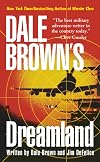
My beloved father, who introduced me to Hitchhiker's Guide to the Galaxy and A Canticle for Leibowitz, gave this book to me. Unfortunately, I did not finish it. In fact,I got 50 pages in and realized this book was what happens when Top Gun and the Hammacher-Schlemmer catalogue have a baby together.
Awards

You May Also Like


Associated Authors
Statistics
- Works
- 66
- Also by
- 3
- Members
- 18,150
- Popularity
- #1,213
- Rating
- 3.4
- Reviews
- 169
- ISBNs
- 893
- Languages
- 9
- Favorited
- 17


