
Maxwell King
Author of The Good Neighbor: The Life and Work of Fred Rogers
About the Author
Maxwell King is an American journalist and editor, born in Alliance, Ohio. He is the former editor of the Philadelphia Inquirer. After leaving the Philadelphia Inquirer, he became the president of The Heintz Endowments. Currently, he is the CEO and President of The Pittsburgh Foundation. He is the show more author of The Good Neighbor: The Life and Work of Fred Rodgers. (Bowker Author Biography) show less
Image credit: Maxwell King
Works by Maxwell King
Tagged
Common Knowledge
- Birthdate
- 20th Century
- Gender
- male
- Occupations
- journalist
editor - Organizations
- The Pittsburgh Foundation
Heinz Endowments
Philadelphia Enquirer
Fred Rogers Center - Nationality
- USA
- Associated Place (for map)
- USA
Members
Reviews
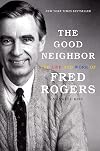
Using copious interviews with friends and family of Fred Rogers, Maxwell King fleshes out a detailed biography of the man who became a "neighbor" to generations of children.
From growing up the only child (until his sister was adopted 11 years later) of a wealthy couple in Latrobe, Pennsylvania, to having a vision for what the medium of television could bring to early childhood education and finally to having one of the best-loved children's programs of all time, Fred Rogers was an incredibly show more driven and gifted man with an extraordinary capacity to love and hear others. King paints a picture of a sensitive child growing into a pretty amazing individual, drawing significantly on personal interviews with Rogers' family members - his wife, his sister, his kids - and friends and co-workers. I grew up with Mister Rogers' Neighborhood and loved the land of Make Believe and the operas, so that portion of the book was the most interesting to me, reading about the great care Mister Rogers took in crafting each show and making sure that nothing he said, not a word, would cause a child alarm. I had songs in my head that I'd almost forgotten all week because I was reading about them, from "It's Such a Good Feeling" to "It's You I Like." There were a lot of details I did not know, and a few anecdotes that made me laugh out loud. Because King covering so much material in a loosely chronological way but also inserting themes, such as music or Rogers' values, it does get repetitive. King didn't seem to want to leave anything out, so while the read was long, it's a lovely tribute to a man I highly respect. show less
From growing up the only child (until his sister was adopted 11 years later) of a wealthy couple in Latrobe, Pennsylvania, to having a vision for what the medium of television could bring to early childhood education and finally to having one of the best-loved children's programs of all time, Fred Rogers was an incredibly show more driven and gifted man with an extraordinary capacity to love and hear others. King paints a picture of a sensitive child growing into a pretty amazing individual, drawing significantly on personal interviews with Rogers' family members - his wife, his sister, his kids - and friends and co-workers. I grew up with Mister Rogers' Neighborhood and loved the land of Make Believe and the operas, so that portion of the book was the most interesting to me, reading about the great care Mister Rogers took in crafting each show and making sure that nothing he said, not a word, would cause a child alarm. I had songs in my head that I'd almost forgotten all week because I was reading about them, from "It's Such a Good Feeling" to "It's You I Like." There were a lot of details I did not know, and a few anecdotes that made me laugh out loud. Because King covering so much material in a loosely chronological way but also inserting themes, such as music or Rogers' values, it does get repetitive. King didn't seem to want to leave anything out, so while the read was long, it's a lovely tribute to a man I highly respect. show less
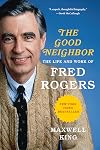
In college, I took a class on religion and death. As part of that class, we watched a very interesting 4-part series on the birth of Christianity and the early Christians, which originally aired on PBS. I liked it so much that I bought a copy of it for myself. One of the things that has always stuck with me from that series is the characterization of Paul, the apostle, as basically Jesus's greatest fanboy ever, who did anything and everything in his power to make sure that an actual religion show more popped up in the wake of Jesus's death, with JC himself as their beautified saint. Paul did a lot beyond merely following Jesus's teachings, and he is the father of Christianity, moreso than Jesus himself.
I had a similiar feeling reading this book as I did when I watched that series on the history of early Christianity. Fred Rogers was, no doubt, a national treasure. We need him now, more than ever, in this decisive and devisive world. But to read this book, you'd think Fred Rogers was the secondcoming of Christ himself, or at least the most rarified, deified saint in Christendom. Apparently Mr. Rogers never made a mistake. He had endless patience and courage and compassion. He was never upset very deeply, or for very long (although quite a bit of space is devoted to "What do you do with the mad that you feel," which contradicts King's fawning portrayal). To read this book is to think that Mr. Rogers was a living personification of God, and that anyone who disagreed with him or clashed with him was somehow evil incarnate.
The fawning and praise was just too much - that's what I'm getting at. Mr. Rogers was an actual human being, with all of the foibles that humans have. He was an extraordinarily nice man, one of the few who actually practiced what he preached (so to speak). But the shades of less than absolute luminous gold are either glossed over or not even mentioned in this biography, which is a real shame. I think Mr. Rogers' power is derived from that fact that he was an actual, nice, caring human being. To take away any "darkness" from his character is to render him powerless, IMO.
There is also some weirdly hostile defensive discussion of Sesame Street. Personally, I watched both shows as a child and I love them both to this day. I don't think Sesame Street was competition for Mr. Rogers, but a complementary show. They took diametrically opposite tacks (Sesame Street emulating the fast-paced commercial jingle world that Mr. Rogers abhorred; whereas Mr. Rogers slowed down the world and gave us room to grow, especially emotionally). I've collected the Mr. Rogers Neighborhood DVD collections, and I never got the sense from the man himself that he hated Sesame Street nearly as much as is attributed to him here. They had crossover between their two shows, even. We went to Sesame Street to learn our ABCs and 123s. We went to the Neighborhood to explore the boundaries of our world in a safe, calm manner.
All in all, I think the documentary Won't You Be My Neighbor? captures a fuller, more resonant version of Mr. Rogers than this book does. If given the choice of only consuming one or the other, I'd pick the documentary over this book. show less
I had a similiar feeling reading this book as I did when I watched that series on the history of early Christianity. Fred Rogers was, no doubt, a national treasure. We need him now, more than ever, in this decisive and devisive world. But to read this book, you'd think Fred Rogers was the secondcoming of Christ himself, or at least the most rarified, deified saint in Christendom. Apparently Mr. Rogers never made a mistake. He had endless patience and courage and compassion. He was never upset very deeply, or for very long (although quite a bit of space is devoted to "What do you do with the mad that you feel," which contradicts King's fawning portrayal). To read this book is to think that Mr. Rogers was a living personification of God, and that anyone who disagreed with him or clashed with him was somehow evil incarnate.
The fawning and praise was just too much - that's what I'm getting at. Mr. Rogers was an actual human being, with all of the foibles that humans have. He was an extraordinarily nice man, one of the few who actually practiced what he preached (so to speak). But the shades of less than absolute luminous gold are either glossed over or not even mentioned in this biography, which is a real shame. I think Mr. Rogers' power is derived from that fact that he was an actual, nice, caring human being. To take away any "darkness" from his character is to render him powerless, IMO.
There is also some weirdly hostile defensive discussion of Sesame Street. Personally, I watched both shows as a child and I love them both to this day. I don't think Sesame Street was competition for Mr. Rogers, but a complementary show. They took diametrically opposite tacks (Sesame Street emulating the fast-paced commercial jingle world that Mr. Rogers abhorred; whereas Mr. Rogers slowed down the world and gave us room to grow, especially emotionally). I've collected the Mr. Rogers Neighborhood DVD collections, and I never got the sense from the man himself that he hated Sesame Street nearly as much as is attributed to him here. They had crossover between their two shows, even. We went to Sesame Street to learn our ABCs and 123s. We went to the Neighborhood to explore the boundaries of our world in a safe, calm manner.
All in all, I think the documentary Won't You Be My Neighbor? captures a fuller, more resonant version of Mr. Rogers than this book does. If given the choice of only consuming one or the other, I'd pick the documentary over this book. show less
Thanks to Netgalley, Abrams Press, and Maxwell King for providing an ARC in exchange for an honest review. My opinions are 100% my own and independent of receiving an advanced copy.
Fred Rogers is beloved by millions of people - children, now adults, who remember Mr. Rogers with fondness. His program was the most successful children’s program on public television due to his vision, commitment and singular ability to talk to children on their level. His message of loving you “just the way show more you are”, and broaching heavy topics of divorce and death made him a unique voice. He wasn’t afraid to put his feet in a tub of water with a black man, or introduce Jeff, a disabled child, along with many other guests to break down walls of prejudice, racism and other serious subjects. But those who watched will probably best remember his songs, his puppets and of course his cardigan and sneakers, along with the trolley that took us to the land of Make Believe.
But who was Fred Rogers? Maxwell King shows us that he was exactly as he presented himself to be. This is a detailed, well researched recap of his life from childhood to death. Mr. Rogers’ childhood had a huge impact on the man he was to become. His sensitivity and ability to listen was developed when he was young, often sick and lonely. His attic is where he created his puppet characters putting on show after show. His mother’s love of religion and strong tenets of being kind and helping those in need was felt so deeply that Fred considered becoming a minister and studied towards it for many years. But his creative and artistic side needed to be expressed. He worked in television for many years honing his skills, always knowing where he was heading. He could have been very rich if he had stayed at NBC, who wanted his show, but he was adamant that there was never to be any advertising to children. He studied child development and worked closely with Dr. Margaret McFarland, an expert in the field, often running scripts by her to make sure the wording was perfect and the meaning would be understood by children. He was an accomplished musician, composing hundreds of songs for the show. He worked very hard, demanded excellence and never compromised who he was for material gain. Who knew this soft spoke, nasally voiced guy would have such a connection with kids.
I learned so much about the man behind the cardigan. I really enjoyed learning what made him tick. I had no idea how complex of a man he was. I didn’t realize he had that much control over his show and reading how the show developed into what we saw was really interesting. I never realized what a pioneer he was in television, public television and in children’s programming. The book is thorough and well thought out. It is slow paced and unassuming, like the man himself. There are no false dramatics to make it more exciting. But it didn’t bother me. I rather enjoyed it. It takes you way back and made me long to hear him sing “Won’t you be my neighbor” one more time. show less
Fred Rogers is beloved by millions of people - children, now adults, who remember Mr. Rogers with fondness. His program was the most successful children’s program on public television due to his vision, commitment and singular ability to talk to children on their level. His message of loving you “just the way show more you are”, and broaching heavy topics of divorce and death made him a unique voice. He wasn’t afraid to put his feet in a tub of water with a black man, or introduce Jeff, a disabled child, along with many other guests to break down walls of prejudice, racism and other serious subjects. But those who watched will probably best remember his songs, his puppets and of course his cardigan and sneakers, along with the trolley that took us to the land of Make Believe.
But who was Fred Rogers? Maxwell King shows us that he was exactly as he presented himself to be. This is a detailed, well researched recap of his life from childhood to death. Mr. Rogers’ childhood had a huge impact on the man he was to become. His sensitivity and ability to listen was developed when he was young, often sick and lonely. His attic is where he created his puppet characters putting on show after show. His mother’s love of religion and strong tenets of being kind and helping those in need was felt so deeply that Fred considered becoming a minister and studied towards it for many years. But his creative and artistic side needed to be expressed. He worked in television for many years honing his skills, always knowing where he was heading. He could have been very rich if he had stayed at NBC, who wanted his show, but he was adamant that there was never to be any advertising to children. He studied child development and worked closely with Dr. Margaret McFarland, an expert in the field, often running scripts by her to make sure the wording was perfect and the meaning would be understood by children. He was an accomplished musician, composing hundreds of songs for the show. He worked very hard, demanded excellence and never compromised who he was for material gain. Who knew this soft spoke, nasally voiced guy would have such a connection with kids.
I learned so much about the man behind the cardigan. I really enjoyed learning what made him tick. I had no idea how complex of a man he was. I didn’t realize he had that much control over his show and reading how the show developed into what we saw was really interesting. I never realized what a pioneer he was in television, public television and in children’s programming. The book is thorough and well thought out. It is slow paced and unassuming, like the man himself. There are no false dramatics to make it more exciting. But it didn’t bother me. I rather enjoyed it. It takes you way back and made me long to hear him sing “Won’t you be my neighbor” one more time. show less
Summary: The biography of this pioneer in children's television, the good neighbor in life as well as on screen.
I grew up before Mr. Rogers. My son grew up with him, and I remember coming in when Mister Rogers' Neighborhood was on and I could feel the tensions of the day drain away, and my racing thoughts slow down as I listened to him talk calmly and slowly, feeding his fish, and telling me that "I like you just the way you are." The only thing I found myself wondering sometimes was "is show more this guy for real."
Maxwell King, who knew Rogers for many years through his leadership in several philanthropic organizations in Pittsburgh, makes the point that the Rogers we saw on screen was the Rogers everyone who worked with him or met him encountered. In this first full-length biography on Roger's life, King traces the course of his life from his privileged childhood in Latrobe, Pennsylvania, to the generous way he ended his life, dying of stomach cancer.
We meet a boy who was overly protected by loving parents until grandparents helped him to begin to spread his wings. His love of music is encouraged, and when he is allowed to choose a piano, he selects a Steinway concert grand that his grandmother purchases, and that followed him through life. The gift of a puppet leads to setting up a puppet theater in the attic of his home. He doesn't fit in with the athletic culture of his school, but his kindness to the star athlete, who he helps with studies while the athlete was hospitalized, won the attention of his classmates. The morally serious student just doesn't fit in at Dartmouth, and transfers to the music school at Rollins in Florida. He meets Joanne, the love of his life.
While Joanne completes her studies, Rogers goes to New York, getting a job as an apprentice on NBC, eventually becoming a floor manager under Pat Weaver, working with some of the landmark productions of the early era of television, including the live broadcast of Amahl and the Night Visitors. Along the way, Fred and Joanne marry and buy "The Crooked House" on Nantucket.
What looked like an east coast life was interrupted by an invitation to return to Pittsburgh to work with an educational television station being launched, WQED, to work on a children's television program. Teaming up with vivacious Josie Carey, The Children's Corner launches in 1954. King describes the growing distance between spontaneous Carey, the entertainer, and Rogers, already thinking about the development of children and the care needed with every word. They part, the show ends, and Rogers life takes another startling turn.
Fred Rogers enrolls as a student at Pittsburgh Theological Seminary, and as a candidate for Presbyterian ministry. His vision just didn't fit the mold. He wanted to be a minister to children, on television. Dr. Bill Orr, who claimed that his most important theological word was forgiveness, was Roger's most significant mentor. It was at this time that he also met child development psychologist, Margaret McFarland, a consultant to Rogers who shaped much of the philosophy of Mister Rogers' Neighborhood.
After working for a time with the CBC in Toronto, creating Misterogers, where The Neighbor of Make Believe was created, he returned to Pittsburgh in 1968, to launch a half hour version that got Rogers in front of the camera for the first time, and not simply doing puppet segments. The remainder of the book traces the show's development, it's path-breaking work dealing with issues like divorce. There is the memorable episode on racial differences with Francois Clemons, where the two of them, a black man and a white man, cool their feet on a hot summer afternoon, with Rogers drying Clemons feet at the end. Clemons was not only black but also gay, and the two of them reprised this episode in 1993. Clemons describes Rogers standard closing: "You make every day a special day just by being you, and I like you just the way you are." As he says this he looks at Francois Clemons, who asks, "Fred were you talking to me?" Rogers replied, "Yes, I have been talking to you for years. But you heard me today."
There were moments like this throughout the book that caught me up, encountering the power of Rogers' kindness and care for those he encountered. While he did not talk about his faith on the show, his daily practices of reading scripture and other religious books and praying were a wellspring of his life--along with his daily swims. These reflected the disciplined life he led, maintaining his weight at 143 pounds. King helps us see the perfectionist side of Rogers, who was always so concerned to get it just right for the children. It seems he was blessed with people who accepted that and rose to it, talented musicians, singers like Clemons, and so many more.
Yet we also see how the show centered around Rogers, who wrote nearly all the scripts and all the songs, as well as composing thirteen operas for children. King contrasts the approach of Rogers measured speech with the pace and cognitive focus of Sesame Street, begun about the same time. Rogers clearly differed, but never criticized them publicly.
This is not all hagiography. Rogers struggled with his own sons, particular the younger John, who rebelled, and estranged himself for a time from the family. As the show took off, Rogers found it difficult to be always present with them. Yet both sons also spoke of the fun they had as a family, of a father who was just a normal guy, who perhaps could have been tougher on them. Jim, the elder son concludes, "I think all Dad really ever wanted for John or me was to be happy and pleased with who we are."
One of the gifts of this book is that King interviewed most of the people still living, who interacted with Rogers. Perhaps one of the most striking was Tom Junod's account of meeting Rogers. Junod, a hard-hitting writer for Esquire wanted to write a piece on Rogers and contacted him. It turns out, Rogers was in Manhattan, and without vetting, invites Junod to his apartment, meeting him in a flimsy old bathrobe. Rogers was wealthy, through his family, but utterly unpretentious.
Most of all we see how children loved him. He totally sidetracked an Oprah show talking to children. A letter from one wheelchair-bound Wisconsin boy from Madison, Jeff Erlanger, whose "make a wish" was to meet Rogers, led to a breakfast in Milwaukee, continuing correspondence and an eventual appearance on the show. But not only children loved him.
"One of Fred Rogers's most loyal fans was Koko, a famously communicative gorilla who appeared on the Neighborhood in 1998. Since Koko had been a faithful viewer of Rogers's program for years, Fred visited her at the Gorilla Foundation in Redwood City, California, in his sweater and sneakers. When she saw him, Koko immediately folded him in her long, black arms, as though he were a child, and took off his shoes. Then they conversed in American Sign Language, shared a hug, and took pictures of each other."
King's book, and this story in particular, suggests to me that Rogers was a modern St. Francis. He came from wealth, and yet lived simply. He pursued a calling, a ministry with a singleness of vision that seemed strange to some at times, and yet had its own peculiar power to form the character and self-worth of children. He sang and spoke through puppets, fed fish, and met us on screen in homely cardigans. To read about him is to be elevated, and to ask oneself, "am I a good neighbor?" show less
I grew up before Mr. Rogers. My son grew up with him, and I remember coming in when Mister Rogers' Neighborhood was on and I could feel the tensions of the day drain away, and my racing thoughts slow down as I listened to him talk calmly and slowly, feeding his fish, and telling me that "I like you just the way you are." The only thing I found myself wondering sometimes was "is show more this guy for real."
Maxwell King, who knew Rogers for many years through his leadership in several philanthropic organizations in Pittsburgh, makes the point that the Rogers we saw on screen was the Rogers everyone who worked with him or met him encountered. In this first full-length biography on Roger's life, King traces the course of his life from his privileged childhood in Latrobe, Pennsylvania, to the generous way he ended his life, dying of stomach cancer.
We meet a boy who was overly protected by loving parents until grandparents helped him to begin to spread his wings. His love of music is encouraged, and when he is allowed to choose a piano, he selects a Steinway concert grand that his grandmother purchases, and that followed him through life. The gift of a puppet leads to setting up a puppet theater in the attic of his home. He doesn't fit in with the athletic culture of his school, but his kindness to the star athlete, who he helps with studies while the athlete was hospitalized, won the attention of his classmates. The morally serious student just doesn't fit in at Dartmouth, and transfers to the music school at Rollins in Florida. He meets Joanne, the love of his life.
While Joanne completes her studies, Rogers goes to New York, getting a job as an apprentice on NBC, eventually becoming a floor manager under Pat Weaver, working with some of the landmark productions of the early era of television, including the live broadcast of Amahl and the Night Visitors. Along the way, Fred and Joanne marry and buy "The Crooked House" on Nantucket.
What looked like an east coast life was interrupted by an invitation to return to Pittsburgh to work with an educational television station being launched, WQED, to work on a children's television program. Teaming up with vivacious Josie Carey, The Children's Corner launches in 1954. King describes the growing distance between spontaneous Carey, the entertainer, and Rogers, already thinking about the development of children and the care needed with every word. They part, the show ends, and Rogers life takes another startling turn.
Fred Rogers enrolls as a student at Pittsburgh Theological Seminary, and as a candidate for Presbyterian ministry. His vision just didn't fit the mold. He wanted to be a minister to children, on television. Dr. Bill Orr, who claimed that his most important theological word was forgiveness, was Roger's most significant mentor. It was at this time that he also met child development psychologist, Margaret McFarland, a consultant to Rogers who shaped much of the philosophy of Mister Rogers' Neighborhood.
After working for a time with the CBC in Toronto, creating Misterogers, where The Neighbor of Make Believe was created, he returned to Pittsburgh in 1968, to launch a half hour version that got Rogers in front of the camera for the first time, and not simply doing puppet segments. The remainder of the book traces the show's development, it's path-breaking work dealing with issues like divorce. There is the memorable episode on racial differences with Francois Clemons, where the two of them, a black man and a white man, cool their feet on a hot summer afternoon, with Rogers drying Clemons feet at the end. Clemons was not only black but also gay, and the two of them reprised this episode in 1993. Clemons describes Rogers standard closing: "You make every day a special day just by being you, and I like you just the way you are." As he says this he looks at Francois Clemons, who asks, "Fred were you talking to me?" Rogers replied, "Yes, I have been talking to you for years. But you heard me today."
There were moments like this throughout the book that caught me up, encountering the power of Rogers' kindness and care for those he encountered. While he did not talk about his faith on the show, his daily practices of reading scripture and other religious books and praying were a wellspring of his life--along with his daily swims. These reflected the disciplined life he led, maintaining his weight at 143 pounds. King helps us see the perfectionist side of Rogers, who was always so concerned to get it just right for the children. It seems he was blessed with people who accepted that and rose to it, talented musicians, singers like Clemons, and so many more.
Yet we also see how the show centered around Rogers, who wrote nearly all the scripts and all the songs, as well as composing thirteen operas for children. King contrasts the approach of Rogers measured speech with the pace and cognitive focus of Sesame Street, begun about the same time. Rogers clearly differed, but never criticized them publicly.
This is not all hagiography. Rogers struggled with his own sons, particular the younger John, who rebelled, and estranged himself for a time from the family. As the show took off, Rogers found it difficult to be always present with them. Yet both sons also spoke of the fun they had as a family, of a father who was just a normal guy, who perhaps could have been tougher on them. Jim, the elder son concludes, "I think all Dad really ever wanted for John or me was to be happy and pleased with who we are."
One of the gifts of this book is that King interviewed most of the people still living, who interacted with Rogers. Perhaps one of the most striking was Tom Junod's account of meeting Rogers. Junod, a hard-hitting writer for Esquire wanted to write a piece on Rogers and contacted him. It turns out, Rogers was in Manhattan, and without vetting, invites Junod to his apartment, meeting him in a flimsy old bathrobe. Rogers was wealthy, through his family, but utterly unpretentious.
Most of all we see how children loved him. He totally sidetracked an Oprah show talking to children. A letter from one wheelchair-bound Wisconsin boy from Madison, Jeff Erlanger, whose "make a wish" was to meet Rogers, led to a breakfast in Milwaukee, continuing correspondence and an eventual appearance on the show. But not only children loved him.
"One of Fred Rogers's most loyal fans was Koko, a famously communicative gorilla who appeared on the Neighborhood in 1998. Since Koko had been a faithful viewer of Rogers's program for years, Fred visited her at the Gorilla Foundation in Redwood City, California, in his sweater and sneakers. When she saw him, Koko immediately folded him in her long, black arms, as though he were a child, and took off his shoes. Then they conversed in American Sign Language, shared a hug, and took pictures of each other."
King's book, and this story in particular, suggests to me that Rogers was a modern St. Francis. He came from wealth, and yet lived simply. He pursued a calling, a ministry with a singleness of vision that seemed strange to some at times, and yet had its own peculiar power to form the character and self-worth of children. He sang and spoke through puppets, fed fish, and met us on screen in homely cardigans. To read about him is to be elevated, and to ask oneself, "am I a good neighbor?" show less
Lists
Awards


You May Also Like


Associated Authors
Statistics
- Works
- 2
- Members
- 1,386
- Popularity
- #18,546
- Rating
- 4.1
- Reviews
- 50
- ISBNs
- 13