
Kate Moore (2)
Author of The Radium Girls: The Dark Story of America's Shining Women
For other authors named Kate Moore, see the disambiguation page.
About the Author
Kate Moore is a New York Times bestselling author who writes across many genres, including biography, memoir, and history. She was also the director of the acclaimed play about the Radium Girls called 'These Shining Lives'. (Bowker Author Biography)
Series
Works by Kate Moore
The Woman They Could Not Silence: One Woman, Her Incredible Fight for Freedom, and the Men Who Tried to Make Her Disappear (2021) 1,112 copies, 49 reviews
The Radium Girls: Young Readers Edition: The Scary but True Story of the Poison That Made People Glow in the Dark (2020) 185 copies, 7 reviews
Associated Works
Tortured: Abused and Neglected by Britain's Most Sadistic Mum: This Is My Story of Survival (2015) 28 copies, 1 review
You Can't Run: The Terrifying True Story of a Young Woman Trapped in a Violent Relationship (2015) 9 copies
Tagged
Common Knowledge
- Birthdate
- 20th Century
- Gender
- female
- Education
- University of Warwick
- Occupations
- editor
author
ghostwriter - Organizations
- Osprey Publishing
- Agent
- Simon Lipskar (Writers House)
- Short biography
- Kate Moore is a New York Times bestselling author who writes across many genres, including biography, memoir, and history. She was also the director of the acclaimed play about the Radium Girls called 'These Shining Lives'.
- Nationality
- UK
- Birthplace
- Northampton, Northamptonshire, England, UK
- Places of residence
- London, Middlesex, England, UK
Peterborough, Cambridgeshire, England, UK - Map Location
- UK
Members
Reviews
The Woman They Could Not Silence: One Woman, Her Incredible Fight for Freedom, and the Men Who Tried to Make Her Disappear (Women's History Month, True Story about an Inspirational Woman) by Kate Moore
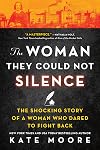
In this slightly breathless but harrowing narrative, Elizabeth Packard’s pastor husband has her committed to an insane asylum because she is not a submissive wife and does not agree with his Calvinist beliefs. In the United States in the 1860s, this was a perfectly legal and acceptable move, since a married woman had no legal existence apart from her husband. Elizabeth, however, refused to go quietly. Appalled by the horrific conditions at the asylum, she uses the power of her (forbidden) show more pen to take secret notes. When she finally regains her freedom, she becomes a fierce advocate for the rights of both women and people with mental illness. But, unfortunately, while she was in the asylum, she had made the mistake of trusting the asylum superintendent’s motives for seemingly befriending her. Her naïveté comes back to bite her in the end.
Author Kate Moore is a masterful storyteller. The narrative is filled with lots of sudden twists, turns, and reversals of fortune. This book offers very compelling reading despite its length. show less
Author Kate Moore is a masterful storyteller. The narrative is filled with lots of sudden twists, turns, and reversals of fortune. This book offers very compelling reading despite its length. show less
The Radium Girls:The Dark Story of America’s Shining Women (Harrowing Historical Nonfiction Bestseller About a Courageous Fight for Justice) by Kate Moore
I listened to this on audiobook, and was often aware that people watching me might think it odd that I was walking my dog and and crying. This book is *heartrending*. It's full of the small heroic acts that normal people are heir to when they are forced into horrible situations.
The worst part, besides of course the tragic circumstances that these women endured, is the pulling back of the curtain. The real life villains. The casual disregard for life.
I recommend this for any human being show more with a pulse. If you struggle with empathy, think of this book as a prescription. show less
The worst part, besides of course the tragic circumstances that these women endured, is the pulling back of the curtain. The real life villains. The casual disregard for life.
I recommend this for any human being show more with a pulse. If you struggle with empathy, think of this book as a prescription. show less
The Radium Girls: The Dark Story of America's Shining Women (Harrowing Historical Nonfiction Bestseller About a Courageous Fight for Justice) by Kate Moore
This is a true horror story. Do not read before bedtime unless you want nightmares about jawbones literally falling apart and coming loose in a woman's mouth. While I think the book could have been a little shorter, it is a fascinating, sad and ultimately somewhat uplifting true story about the businesss world's willingness to lie, cover up and sacrifice women's lives for the sake of profit. While in the end the Radium Girls got some justice and set the stage for organizations like OSHA, the show more postscript and our own knowledge demonstrate that, in a lot of ways, not much has changed.
Next time I feel a little sick and don't feel like going to work, I'll remember Catherine Donohue, weighing less than 100 pounds and in constant pain, testifying at her bedside against the Radium Dial Company - and hopefully I'll buck up and stop whining. show less
Next time I feel a little sick and don't feel like going to work, I'll remember Catherine Donohue, weighing less than 100 pounds and in constant pain, testifying at her bedside against the Radium Dial Company - and hopefully I'll buck up and stop whining. show less
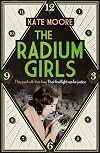
The Radium Girls: The Dark Story of America’s Shining Women is not only a cautionary tale or a documentary on what the girls went through after their employment. It is a history lesson properly done, complete with detailed, well-documented research and personages that become more than just names on a page. Ms. Moore tackles the girls’ stories as well as adding historical, socioeconomic, legal, and cultural details that provides context to their stories. In so doing, she brings the girls show more back to life to tell their story one last time.
Reading The Radium Girls in our post-Cold War era is an exercise in separating one’s current knowledge and experiences from one’s reading experience to avoid letting them taint one’s feelings or reactions to the girls’ actions. After all, just as laudanum and cocaine were popular medicines in their day, we cannot fault the girls for getting excited about working with radium all day or the rest of the country for the popularity of radium-filled beauty products. The casualness with which everyone, including scientists, handled radium is cringe-inducing to the modern reader but perfectly acceptable during the time of the events. We cannot condemn them nor find fault with them for their actions. It is a surreal reading experience though to read their story and how they would paint their nails and eyelids with radium powder and eat their lunches next to their work stations, etc., and not shudder at their innocence. This then makes you wonder what we are currently doing or using or eating that future generations will view in a similar light. It is a sobering thought.
Where the story takes off though is in the legal battles the girls fight in order to obtain a modicum of financial relief. Again, the modern reader is at a disadvantage because the idea of workers’ compensation or of a company liable for the long-term health and welfare of its employees is an ingrained right in our minds. We have plenty of modern-day context in which companies are held responsible for the ill effects of chemicals or processes used in everyday work environments. To not hold a company responsible is inconceivable to our modern mind. Yet, most of the Radium Girls did feel this way for a long time. Whether their lack of litigious nature (at least initially) is a sign of their innocence or a commentary on the suspicious nature of modern society, that is yet to be determined.
The story is not all innocence though, for the businesses for which the girls worked went to great lengths to prove their own innocence in the lawsuits and protect themselves from culpability. Their actions are simultaneously disturbing and yet not surprising, as a company’s sole purpose is to make money and the radium dial business was big money. Seen from their perspective, they were just trying to maintain their profitability. However, the callousness of capitalism is still disturbing to watch unfold, especially when a company’s employees’ lives are on the line.
Throughout the book, Ms. Moore showcases the girls’ resilience in the face of unspeakable pain and disfigurement. She packs no punches in her descriptions either, assaulting the reader with sparse, take-no-pity descriptions of their illnesses. Even readers with cast-iron stomachs will find themselves nauseous at times, not just because of the descriptions but also because this is not a horror story but real life. Still, feeling sick to one’s stomach is only mildly inconvenient when compared to everything the radium girls faced and suffered at the hands of the court as well as with their health. In The Radium Girls, Ms. Moore makes sure that the legacy of the Radium Girls lives on not just in OSHA-mandated policies and procedures but in the knowledge of their dreams and battles that all readers take away of the girls who once thought their future was a bright and shiny as the powder they painted onto watch dials. show less
Reading The Radium Girls in our post-Cold War era is an exercise in separating one’s current knowledge and experiences from one’s reading experience to avoid letting them taint one’s feelings or reactions to the girls’ actions. After all, just as laudanum and cocaine were popular medicines in their day, we cannot fault the girls for getting excited about working with radium all day or the rest of the country for the popularity of radium-filled beauty products. The casualness with which everyone, including scientists, handled radium is cringe-inducing to the modern reader but perfectly acceptable during the time of the events. We cannot condemn them nor find fault with them for their actions. It is a surreal reading experience though to read their story and how they would paint their nails and eyelids with radium powder and eat their lunches next to their work stations, etc., and not shudder at their innocence. This then makes you wonder what we are currently doing or using or eating that future generations will view in a similar light. It is a sobering thought.
Where the story takes off though is in the legal battles the girls fight in order to obtain a modicum of financial relief. Again, the modern reader is at a disadvantage because the idea of workers’ compensation or of a company liable for the long-term health and welfare of its employees is an ingrained right in our minds. We have plenty of modern-day context in which companies are held responsible for the ill effects of chemicals or processes used in everyday work environments. To not hold a company responsible is inconceivable to our modern mind. Yet, most of the Radium Girls did feel this way for a long time. Whether their lack of litigious nature (at least initially) is a sign of their innocence or a commentary on the suspicious nature of modern society, that is yet to be determined.
The story is not all innocence though, for the businesses for which the girls worked went to great lengths to prove their own innocence in the lawsuits and protect themselves from culpability. Their actions are simultaneously disturbing and yet not surprising, as a company’s sole purpose is to make money and the radium dial business was big money. Seen from their perspective, they were just trying to maintain their profitability. However, the callousness of capitalism is still disturbing to watch unfold, especially when a company’s employees’ lives are on the line.
Throughout the book, Ms. Moore showcases the girls’ resilience in the face of unspeakable pain and disfigurement. She packs no punches in her descriptions either, assaulting the reader with sparse, take-no-pity descriptions of their illnesses. Even readers with cast-iron stomachs will find themselves nauseous at times, not just because of the descriptions but also because this is not a horror story but real life. Still, feeling sick to one’s stomach is only mildly inconvenient when compared to everything the radium girls faced and suffered at the hands of the court as well as with their health. In The Radium Girls, Ms. Moore makes sure that the legacy of the Radium Girls lives on not just in OSHA-mandated policies and procedures but in the knowledge of their dreams and battles that all readers take away of the girls who once thought their future was a bright and shiny as the powder they painted onto watch dials. show less
Lists
Awards


You May Also Like


Associated Authors
Statistics
- Works
- 6
- Also by
- 6
- Members
- 5,661
- Popularity
- #4,371
- Rating
- 4.2
- Reviews
- 292
- ISBNs
- 128
- Languages
- 5
- Favorited
- 2
