
Kevin Cunningham
Author of The Inuit (True Books: Native Americans)
About the Author
Kevin Cunningham is the author of more than thirty books, including biographies of Joseph Stalin and J. Edgar Hoover and a four-part series on diseases in history.
Series
Works by Kevin Cunningham
Computer Graphics: From Concept to Consumer (Calling All Innovators: A Career For You) (2013) 31 copies
Roller Coasters: From Concept to Consumer (Calling All Innovators: A Career For You) (2013) 27 copies
Surviving Tsunamis (Raintree Perspectives: Children's True Stories: Natural Disasters) (2011) 11 copies, 1 review
Surviving Droughts and Famines (Raintree Perspectives: Children's True Stories: Natural Disasters) (2011) 9 copies, 1 review
Condoleezza Rice: U.S. Secretary of State (Journey to Freedom: The African American Library) (2005) 7 copies
Power to the People: How We Elect the President and Other Officials (Spirit of America: Our Government and Citizenship) (2004) 7 copies
How Political Campaigns and Elections Work (Core Library: How the US Government Works) (2015) 4 copies
The New Zealand Novel 3 copies
The U.S. Congress: Who Represents You (Spirit of America: Our Government and Citizenship) (2004) 2 copies
The Role-Playing Game 1 copy
Associated Works
Tagged
Common Knowledge
- Gender
- male
Members
Reviews
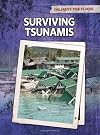
The word tsunami in recent times means horrific things are about to happen. In Japanese the word tsunami means “harbor wave” which happens when there is an earthquake, volcano, or avalanche underwater. Generally in deep water a tsunami is like a small ripple. It grows into a large wave as it gets closer to shore.
In 1929, Kelly's Cover New Founland, five-year-old Pearl Brushett was in bed. Her father was away chopping wood and the rest of her family was downstairs. A tsunami rushed show more through her small town and carried her and the rest of her family out to sea. A second wave carried Pearl's home back to shore. In 1946, Hilo Hawaii, six-year-old Jeanne Branch heard loud horns outside. She and her brother rushed out to see what the commotion was. The road had been washed out by a first wave. Red ants scattered around their feet. After running back inside a second larger wave that flooded the surrounding area. If Jeanne and her brother had not gone inside they would not have survived.
Wonderful photography depicts the survivors and the devastation surrounding them. Broken homes, vehicles and even boats are washed up on high ground. Many die from these horrible waves that leave little time for escape. A United Nations agency led an effort to place machines that could measure earthquake and send alarms. The new Indian Ocean tsunami warning system launched in June 2006.
Cunningham does an excellent job of taking a horrible subject and turn it into an educational and meaningful way for young readers to learn more about tsunamis. Although this is a sensitive subject young readers, teachers and homeschoolers can learn about survival and how it's accomplished during these rough times. First hand stories, maps, photos and a glossary help readers better understand each situation. Readers can also find suggestions for books and websites to learn even more. show less
In 1929, Kelly's Cover New Founland, five-year-old Pearl Brushett was in bed. Her father was away chopping wood and the rest of her family was downstairs. A tsunami rushed show more through her small town and carried her and the rest of her family out to sea. A second wave carried Pearl's home back to shore. In 1946, Hilo Hawaii, six-year-old Jeanne Branch heard loud horns outside. She and her brother rushed out to see what the commotion was. The road had been washed out by a first wave. Red ants scattered around their feet. After running back inside a second larger wave that flooded the surrounding area. If Jeanne and her brother had not gone inside they would not have survived.
Wonderful photography depicts the survivors and the devastation surrounding them. Broken homes, vehicles and even boats are washed up on high ground. Many die from these horrible waves that leave little time for escape. A United Nations agency led an effort to place machines that could measure earthquake and send alarms. The new Indian Ocean tsunami warning system launched in June 2006.
Cunningham does an excellent job of taking a horrible subject and turn it into an educational and meaningful way for young readers to learn more about tsunamis. Although this is a sensitive subject young readers, teachers and homeschoolers can learn about survival and how it's accomplished during these rough times. First hand stories, maps, photos and a glossary help readers better understand each situation. Readers can also find suggestions for books and websites to learn even more. show less
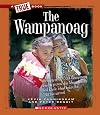
A short and fascinating introduction to the Americans that the English immigrants we know as The Pilgrims met when they first landed on the American continent, how the natives taught the necessary survival skills to the new immigrants, and how in a generation, the mutual trust between the two nationalities degenerated into genocide in King Philip’s War. But the book does not end on this dismal note. It also includes information about the two-thousand living members now residing in southern show more Massachusetts. show less
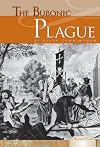
This book was a pleasure for me to read. I know a great deal about the Black Death, and this book taught me more about how the disease has affected both animal and human populations around the globe and throughout history. It was a smooth read, with some complex and many simple sentences that make this book appropriate for middle school students on through to even college students who wish to learn some of the basics of the plague in a quick read. A glossary and a timeline make this book a show more great educational tool.
Despite my enjoyment of reading this work, it had a few blaring problems. The organization of the book was downright puzzling. The author began with talking about Pope Clement VI and the Great Schism that caused the papacy to reside in Avignon before any mention of the plague. This disease was not fully discussed until Chapter 2. The illustrations are delightful, but often lead the reader wanting for more relevant illustrations or more explanation about the illustrations. Here, too, one questions why an old print of Pope Clement the VI appears before an image of the bacterium Y. pestis. The Kaffa outbreak is mentioned in a side panel on page 37, but an explanation of what/where is Kaffa does not appear until page 38. Sometimes, the lagniappe information seemed irrelevant to the topic in such a short book. For example, I found the discussion of the Silk Road too lengthy and somewhat off-topic with its addition of details about the production of silk. show less
Despite my enjoyment of reading this work, it had a few blaring problems. The organization of the book was downright puzzling. The author began with talking about Pope Clement VI and the Great Schism that caused the papacy to reside in Avignon before any mention of the plague. This disease was not fully discussed until Chapter 2. The illustrations are delightful, but often lead the reader wanting for more relevant illustrations or more explanation about the illustrations. Here, too, one questions why an old print of Pope Clement the VI appears before an image of the bacterium Y. pestis. The Kaffa outbreak is mentioned in a side panel on page 37, but an explanation of what/where is Kaffa does not appear until page 38. Sometimes, the lagniappe information seemed irrelevant to the topic in such a short book. For example, I found the discussion of the Silk Road too lengthy and somewhat off-topic with its addition of details about the production of silk. show less
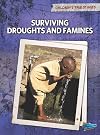
Living without water is something none of us on the planet can survive without. Droughts are often caused when there is no rain or moisture. And if there is no rain then plant life along with human life is lost. When there is no water then plant life can't grow. Food becomes scarce and survival becomes difficult. This is called famine.
Droughts and famine have happened throughout history. Famines can be a result of plant disease, bad weather such as floods or hail. In Western Ireland around show more 1845 the crops of potatoes turned black. The disease that spread was called Blight. In 1933, Guymon Oklahoma suffered the drought known as “black blizzard.” Between 1981 and 1984, drought killed crops across northern Ethiopia, in Africa.
Trying times with no water or food cause families to become desperate. They will do most anything to survive. Farmers in Forbes, Australia lost jobs and a lack of money affected the whole town. People in areas of Australia suffering from drought put out containers to collect all the rainwater they could. There is hope for the future. Rain and smarter farming practices can keep food growing and replenish the lands.
Cunningham does an excellent job of taking a horrible subject and turn it into an educational and meaningful way for young readers to learn more about droughts and famine. Although this is a sensitive subject young readers, teachers and homeschoolers can learn about survival and how it's accomplished during these rough times. First hand stories, maps, photos and a glossary help readers better understand each situation. Readers can also find suggestions for books and websites to learn even more. show less
Droughts and famine have happened throughout history. Famines can be a result of plant disease, bad weather such as floods or hail. In Western Ireland around show more 1845 the crops of potatoes turned black. The disease that spread was called Blight. In 1933, Guymon Oklahoma suffered the drought known as “black blizzard.” Between 1981 and 1984, drought killed crops across northern Ethiopia, in Africa.
Trying times with no water or food cause families to become desperate. They will do most anything to survive. Farmers in Forbes, Australia lost jobs and a lack of money affected the whole town. People in areas of Australia suffering from drought put out containers to collect all the rainwater they could. There is hope for the future. Rain and smarter farming practices can keep food growing and replenish the lands.
Cunningham does an excellent job of taking a horrible subject and turn it into an educational and meaningful way for young readers to learn more about droughts and famine. Although this is a sensitive subject young readers, teachers and homeschoolers can learn about survival and how it's accomplished during these rough times. First hand stories, maps, photos and a glossary help readers better understand each situation. Readers can also find suggestions for books and websites to learn even more. show less
Lists
Sonlight Books (1)
Awards

You May Also Like


Associated Authors
Statistics
- Works
- 85
- Also by
- 6
- Members
- 1,514
- Popularity
- #16,986
- Rating
- 3.7
- Reviews
- 10
- ISBNs
- 271
- Favorited
- 1