

Antonine Maillet (1929–2025)
Author of Pélagie: The Return to Acadie
About the Author
Works by Antonine Maillet
Associated Works
Tagged
Common Knowledge
- Birthdate
- 1929-05-10
- Date of death
- 2025-02-17
- Gender
- female
- Education
- Collège Notre-Dame d'Acadie (BA)
Université de Moncton (MA)
Université Laval (PhD) - Occupations
- university lecturer
fiction writer
radio host
playwright
television host
university executive - Organizations
- Université Laval, Québec, Canada
Université de Montréal
Radio-Canada
CBC, Moncton, NB
Université de Moncton (chancellor) - Awards and honors
- National Order of Québec (Officer)
Lorne Pierce Medal (1980)
Order of Canada - Companion
Prix Goncourt (1979) - Nationality
- Canada
- Birthplace
- Bouctouche, New Brunswick, Canada
- Places of residence
- Bouctouche, New Brunswick, Canada
Montréal, Québec, Canada - Place of death
- Montréal, Québec, Canada
- Associated Place (for map)
- Canada
Members
Reviews

Britain occupied the French colony of Acadia (roughly corresponding to the modern Maritime provinces and eastern Maine) during the North American wars of the mid-18th century. We learnt a lot about Wolfe and the Heights of Abraham in our school history, but not so much about the way most of the French settlers in Acadia were forcibly deported around 1755. An estimated 11,500 people — most of them families who had been farming and fishing there for over a century — were displaced to the show more southern colonies or the Caribbean, and up to half of them are thought to have died by accident, disease or starvation. Many of the survivors ultimately settled in Louisiana, where their descendants turned "Acadian" into "Cajun".
Others found their way back to Canada "by the back door", and it's this return from exile, the foundation of the present-day French-speaking communities in places like New Brunswick, that Maillet documents in her famous novel, which won her the Prix Goncourt in 1979.
The Acadian widow Pélagie has worked for fifteen years in Georgia to earn the money she needs to buy a cart and a team of oxen to take her family back to the North. They face endless difficulties during what turns into a ten-year journey, picking up numerous other exiled Acadians as they go, and Pélagie becomes a kind of Moses leading her people to the promised land.
Maillet gives the story a deliberately epic quality, rooted in an oral tradition, by reporting it to us as told around the hearth by people three generations after Pélagie and her companions, traditional storytellers who are Maillet's own direct ancestors. Pélagie's companions are straight out of the quest-story tradition: the wise old storyteller, the traditional healer/midwife, the intrepid young hero, the fey young girl, the (ghostly?) sea captain who turns up in moments of crisis, the giant (Rabelais is constantly hovering around in the background, not surprising given that many of the Acadians came from Poitou in the early 17th century), etc. But they are never just stock types: in their truculent arguments and witty dialogue, they come over as fresh and very individual, as does Pélagie with her mix of spiritual leader, Mother Courage and all-too-human middle-aged woman.
All the dialogue is in Acadian dialect, with the third-person narration in slightly more standard French, but still making extensive use of local words. It's intelligible with some lateral thinking, particularly if you've read Rabelais, but it's a bit of a shock at first. It took me a while to work out that Acadians use "je" for the first person plural pronoun as well as for the singular, for instance. And the dialect is clearly a large part of the book's character and one of the reasons for its obvious classic status in Canada. Quite a tour-de-force, anyway! show less
Others found their way back to Canada "by the back door", and it's this return from exile, the foundation of the present-day French-speaking communities in places like New Brunswick, that Maillet documents in her famous novel, which won her the Prix Goncourt in 1979.
The Acadian widow Pélagie has worked for fifteen years in Georgia to earn the money she needs to buy a cart and a team of oxen to take her family back to the North. They face endless difficulties during what turns into a ten-year journey, picking up numerous other exiled Acadians as they go, and Pélagie becomes a kind of Moses leading her people to the promised land.
Maillet gives the story a deliberately epic quality, rooted in an oral tradition, by reporting it to us as told around the hearth by people three generations after Pélagie and her companions, traditional storytellers who are Maillet's own direct ancestors. Pélagie's companions are straight out of the quest-story tradition: the wise old storyteller, the traditional healer/midwife, the intrepid young hero, the fey young girl, the (ghostly?) sea captain who turns up in moments of crisis, the giant (Rabelais is constantly hovering around in the background, not surprising given that many of the Acadians came from Poitou in the early 17th century), etc. But they are never just stock types: in their truculent arguments and witty dialogue, they come over as fresh and very individual, as does Pélagie with her mix of spiritual leader, Mother Courage and all-too-human middle-aged woman.
All the dialogue is in Acadian dialect, with the third-person narration in slightly more standard French, but still making extensive use of local words. It's intelligible with some lateral thinking, particularly if you've read Rabelais, but it's a bit of a shock at first. It took me a while to work out that Acadians use "je" for the first person plural pronoun as well as for the singular, for instance. And the dialect is clearly a large part of the book's character and one of the reasons for its obvious classic status in Canada. Quite a tour-de-force, anyway! show less
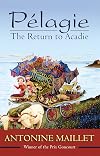
The infamous deportation of the Acadians in 1755 might have been the end of a people. Dispossessed and dispersed to lands far away, to Louisiana, the Carolinas, islands of the Caribbean, and further afield, the Acadians might have disappeared altogether. But something held them together and at least part of that something must have been the tales of their forebears passed down from one generation to the next round the hearth. After fifteen years of exile, Pélagie, known as show more Pélagie-of-the-cart, decides that enough is enough. She will make her way back across what was to become America and up its eastern seaboard, back to Acadie. But her solid cart and six strong oxen would not make the journey alone. Gathering as many as would join her and collecting further Acadian refugees along the way, Pélagie sets out a journey that would take almost ten years. Through hardship and joy, birth and death, and adventures by the score, Pélagie keeps her spirit and the spirit of a emerging ‘people’ alive. Their shared stories and language hold them together as nothing else could. So it is fitting that this tale is told with all the joie de vivre that is evident in someone as iconic as Pélagie.
Antonine Maillet’s award-winning tale is as fresh and immediate as any that might be told to those gathered at the hearth. Your eyes will widen in amazement and trepidation at what might come next, even as Maillet allays all anxiety about the ultimate outcome through a narrative framing that sets the tale in the mouths of the descendants of those who made the journey. And virtually everyone is here, at least through name association. There are the Cormiers, the LeBlancs, the Landrys and Poiriers and more. And also, naturally, the Maillets. High adventure, of a sort, ensues. And almost always it is the women who drive events, whether it is Pélagie who leads them onward, or club-footed Célina who cures them of their ills and midwifes the next generation into being, or the wild orphan Catoune who inspires the devotion of more than one suitor.
Maillet has created a delightful tale of devotion and courage, and plenty of good humour, out of what was a shameful episode in history. Well worth reading even in this English translation. Recommended. show less
Antonine Maillet’s award-winning tale is as fresh and immediate as any that might be told to those gathered at the hearth. Your eyes will widen in amazement and trepidation at what might come next, even as Maillet allays all anxiety about the ultimate outcome through a narrative framing that sets the tale in the mouths of the descendants of those who made the journey. And virtually everyone is here, at least through name association. There are the Cormiers, the LeBlancs, the Landrys and Poiriers and more. And also, naturally, the Maillets. High adventure, of a sort, ensues. And almost always it is the women who drive events, whether it is Pélagie who leads them onward, or club-footed Célina who cures them of their ills and midwifes the next generation into being, or the wild orphan Catoune who inspires the devotion of more than one suitor.
Maillet has created a delightful tale of devotion and courage, and plenty of good humour, out of what was a shameful episode in history. Well worth reading even in this English translation. Recommended. show less
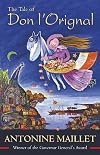
“Godalmightyhellfire,” says Don l’Orignal, patriarch of the tiny hay-covered Flea Island. He says it often. And his chief counsellors — La Sagouine, La Sainte, the heroic Noume, and Citrouille — are equally colourful. Quick to anger, quick to fall in love, quick to celebrate victories and quick to despair. They flit about in the manner of their namesakes (and possible ancestors). And they definitely pester, irritate, and enrage their mainland compares — the Banker, the Milliner, show more the Teacher, the Merchant, the Lighthouse Keeper, and the Lady Mayor. From its first unexpected appearance off the coast, Flea Island is an affront, a challenge that must be answered. No matter what.
Antonine Maillet’s fable is delightful and unpredictable while at once feeling timeless and certain. The love between Citrouille and Adeline, archetypal star-crossed lovers, will not be denied. Nor will the ‘homeric’ battle between mainland and island. Maillet invokes many of the tropes of an epic war-torn saga even as she explodes them with bathos. In one great battle the Flea Islanders capture the ultimate prize — a keg of molasses. At some points nearly all of the Islanders are on the mainland and all of the people from the mainland are on the island. It’s topsy turvy and you can’t guess how it might all turn out.
I read the English translation and heartily recommend it. But if you are able, do make an effort to read the award-winning French original version. I’m sure you’ll find it Godalmightyhellfire. show less
Antonine Maillet’s fable is delightful and unpredictable while at once feeling timeless and certain. The love between Citrouille and Adeline, archetypal star-crossed lovers, will not be denied. Nor will the ‘homeric’ battle between mainland and island. Maillet invokes many of the tropes of an epic war-torn saga even as she explodes them with bathos. In one great battle the Flea Islanders capture the ultimate prize — a keg of molasses. At some points nearly all of the Islanders are on the mainland and all of the people from the mainland are on the island. It’s topsy turvy and you can’t guess how it might all turn out.
I read the English translation and heartily recommend it. But if you are able, do make an effort to read the award-winning French original version. I’m sure you’ll find it Godalmightyhellfire. show less
Quite a romp, while at the same time, a poignant story of Grand Return. After 15 years in exile in Georgia, the widow Pélagie-la-Charrette leads a group of Acadians, French-speaking inhabitants of the Canadian Maritime Provinces who were deported from their homes in 1755 by the British during the Grand Derangement and scattered throughout the eastern and southern American colonies, on a 10-year journey northward to regain their homeland. She starts out with her four children, the lame and show more wooden-legged herbalist/ midwife Célina and the almost centenarian Bélonie (affectionately nicknamed "le radoteux" meaning "driveling fool") the people's oral historian and fabulist. Soon, the group is joined by other exiles encountered along the way, such as an orphaned and semi-wild girl called Catoune, and whole families, like the Bourgeois with their mysterious "treasure chest" that they will not part with under any circumstances and the Basque Bastaraches with their violin. Along the way, the pilgrims encounter the quasi-mythical schooner la Grande Goule and its almost as mythical captain Beausoleil. He could be the perfect partner for Pélagie, but first, she must see her people reinstalled in Acadia. One adventure or adversity follows another, too numerous to remember, much less account for here. In brief, for 10 years it's a race between Pélagie's cart of life and return and Bélonie's (always looking behind him)cart of death. Life wins some rounds. Death wins others. Or, one could say, both always win. This novel, although quite different in its intent, reminds me of Diderot's Jacques le fataliste et son maitre, another favorite read. Pélagie's digressions are not so much conversations, like those of Jacques, as they are events. That said, there are frequent pauses for storytelling, both by old Bélonie and, during interludes, by descendents of "la charrette," such as Pélagie-la-Gribouille. gathered around a hearth in 1880, a century later. (Maillet's retelling of the story in 1979 after another century has passed is only one in a long line of telling and retelling.) For a non-native French-Canadian reader like myself, the novel's language is quite a challenge. Much of the dialog is written in phonetic Acadian patois, which means that many words can't be found in a typical French-English dictionary. Nevertheless, surprisingly, one gets the gist, perhaps losing some precision of meaning while imbibing the "color" of the language. show less
Lists
Awards


You May Also Like


Associated Authors
Statistics
- Works
- 49
- Also by
- 3
- Members
- 517
- Popularity
- #48,025
- Rating
- 3.6
- Reviews
- 13
- ISBNs
- 125
- Languages
- 2
- Favorited
- 1
