
Dorothy C. Bass
Author of Practicing Our Faith: A Way of Life for a Searching People
About the Author
Dorothy C.Bass is a writer, noted church historian, and director of the Valparaiso Project on the Education and Formation of People in Faith.
Image credit: The Valparaiso Project on the Education and Formation of People in Faith
Works by Dorothy C. Bass
Receiving the Day: Christian Practices for Opening the Gift of Time (The Practices of Faith Series) (1999) 312 copies, 3 reviews
Practicing Theology: Beliefs and Practices in Christian Life (2002) — Editor — 301 copies, 3 reviews
Leading Lives That Matter: What We Should Do and Who We Should Be (2006) — Editor — 178 copies, 1 review
For Life Abundant: Practical Theology, Theological Education, and Christian Ministry (2008) — Editor — 69 copies
Women in American religious history : an annotated bibliography and guide to sources (1986) 4 copies
American Women in Church and Society 2 copies
Practicing Our Faith 1 copy
Way to Live Leaders Guide 1 copy
Associated Works
Beyond the Offering Plate: A Holistic Approach to Stewardship (2017) — Foreword, some editions — 34 copies
Singing the Lord's Song in a New Land: Korean American Practices of Faith (2005) — Foreword — 21 copies
By the Vision of Another World: Worship in American History (The Calvin Institute of Christian Worship Liturgical Studies) (2012) — Contributor — 8 copies
Journal of the American Academy of Religion, Summer 1989, Vol. LVII, No. 2 (1989) — Contributor — 3 copies
Tagged
Common Knowledge
Members
Reviews

What does theology have to do with the so-called real life? Are theologians doing anything other than splitting hairs? Volf and Bass, along with all the contributors to this volume argue that theology is intimately connected with life. This connection is discerned through the concept of practice.
"In general use, a practice is a dense cluster of ideas and activities that are related to a specific goal and shared by a social group over time. . . . Christian practices are patterns of show more cooperative human activity in and through which life together takes shape over time in response to and in the light of God known in Jesus Christ" (3).
By engaging in theological reflection on Christian practice, the contributors to this volume—all academic theologians—demonstrate how important theology is for living faithfully in a changing world.
The various essays in this volume reflect on a diverse range of practice including healing, hospitality, theological education, and worship. Tammy Williams is particularly insightful in her essay, “Is There a Doctor in the House? Reflections on the Practice of Healing in African American Churches.” By examining the practice of African American churches, she uncovers three models of healing: care, cure, and holism.
Volf closes the book by arguing that while “Christian beliefs normatively shape Christian practices, and engaging in practices can lead to acceptance and deeper understanding of these beliefs,” beliefs take logical priority.
"Since we identify who God is through beliefs—primarily through the canonical witness to divine self-revelation—adequate beliefs about God cannot be ultimately grounded in a way of life; a way of life must be grounded in adequate beliefs about God" (260).
Practicing Theology functions on two levels. On the ground level, each article has something insightful to say about Christian practice. On a higher level, the book shows that theology is not a withdrawal from the world but a way to engage the life and practices of the Christian community more deeply. show less
"In general use, a practice is a dense cluster of ideas and activities that are related to a specific goal and shared by a social group over time. . . . Christian practices are patterns of show more cooperative human activity in and through which life together takes shape over time in response to and in the light of God known in Jesus Christ" (3).
By engaging in theological reflection on Christian practice, the contributors to this volume—all academic theologians—demonstrate how important theology is for living faithfully in a changing world.
The various essays in this volume reflect on a diverse range of practice including healing, hospitality, theological education, and worship. Tammy Williams is particularly insightful in her essay, “Is There a Doctor in the House? Reflections on the Practice of Healing in African American Churches.” By examining the practice of African American churches, she uncovers three models of healing: care, cure, and holism.
Volf closes the book by arguing that while “Christian beliefs normatively shape Christian practices, and engaging in practices can lead to acceptance and deeper understanding of these beliefs,” beliefs take logical priority.
"Since we identify who God is through beliefs—primarily through the canonical witness to divine self-revelation—adequate beliefs about God cannot be ultimately grounded in a way of life; a way of life must be grounded in adequate beliefs about God" (260).
Practicing Theology functions on two levels. On the ground level, each article has something insightful to say about Christian practice. On a higher level, the book shows that theology is not a withdrawal from the world but a way to engage the life and practices of the Christian community more deeply. show less
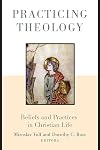
Summary: Essays answering the question of what theology has to do with real life, how our beliefs translate into practice.
“But what does that have to do with real life?”
Miroslav Volf confesses that this is a question he is asked by students in his theology classes. I’d suggest that its also a question people out in “real life” wonder about. For example, consider those listening to sermons on Sunday and wondering what this has to do with Monday through Saturday.
The authors of the show more essays in this book are theologians who believe that the doctrine they teach do translate into “practices.” They define this as “patterns of cooperative human activity in and through which life together takes shape over time in response to and in the light of God as known in Jesus Christ” (p. 3). They unpack this in four sections.
First, in “Practicing Theology, Embracing a Way of Life”, the first two essays lay the groundwork for what follows. Craig Dyksta and Dorothy C. Bass articulate a theological basis for the idea of “Christian practices.” Their focus is to elaborate “how a way of life that is deeply responsive to God’s grace takes actual shape among human beings.” Then Amy Plantinga Pauw gives attention to the gap between beliefs and practices using the story of Jonah as a case study.
Second, “Practicing Theology, Engaging in Ministry” elaborates these ideas in specific practices. What is notable here are the diverse voices. Serene Jones describes translating theology into renewed vision for a United Church of Christ congregation. Sarah Coakley explores mystical and ascetic practices in the contemporary church context. Meanwhile, Tammy R. Williams surveys differences in healing practices within idifferent African-American church groups. Christine D. Pohl, who wrote extensively on hospitality, offers a reflection on the hospitality of the Open Door Community. Gilbert I. Bond studies the intersection of liturgical practice and ministry practice in Anabaptist and Afro-baptist churches. Finally, Nancy E. Bedford studies the practice of discernment in a Latin American congregation in Argentina.
But prior to ministry practice is the training of these pastor-theologians. Part Three focuses on this in three essays, the most significant of which is “Beliefs, Desires, Practices, and the Ends of Theological Education” by L. Gregory Jones. Specifically, Jones notes the disconnect between church and seminary. Often seminarians come from churches where they learned Christian practices but were fuzzy on belief. Jones argues for rigorous baptismal catechesis to address this. Then Reinhard Hutter connects God’s hospitality revealed in worship and doctrine to our practice of hospitality. Kathryn Tanner also explores issues of theology and the practice of hospitality in the concluding essay of the section.
Finally, Part Four consists of just one essay by Miroslav Volf on theology as a way of life. The essay draws heavily on a story of how his parents translated hospitality at the Lord’s table to hospitality at their own table.
I appreciated the diversity of voices, less common twenty-five years ago. I also was struck by how often the writers came back to the practice of hospitality and the profound gospel truth behind it of God’s hospitality. At the same time, for a book on practices, the reading at times was still somewhat abstract and theoretical–theologians writing for others in the theological academy. That said, the examples of translating theology into practice, and even the notion of practices which anticipates James K.A. Smith’s cultural liturgies is important work. Lastly, L. Gregory Jones challenge for us to grow in passing the baton from church to seminary to church in the formation of ministers is one still desperately needed. show less
“But what does that have to do with real life?”
Miroslav Volf confesses that this is a question he is asked by students in his theology classes. I’d suggest that its also a question people out in “real life” wonder about. For example, consider those listening to sermons on Sunday and wondering what this has to do with Monday through Saturday.
The authors of the show more essays in this book are theologians who believe that the doctrine they teach do translate into “practices.” They define this as “patterns of cooperative human activity in and through which life together takes shape over time in response to and in the light of God as known in Jesus Christ” (p. 3). They unpack this in four sections.
First, in “Practicing Theology, Embracing a Way of Life”, the first two essays lay the groundwork for what follows. Craig Dyksta and Dorothy C. Bass articulate a theological basis for the idea of “Christian practices.” Their focus is to elaborate “how a way of life that is deeply responsive to God’s grace takes actual shape among human beings.” Then Amy Plantinga Pauw gives attention to the gap between beliefs and practices using the story of Jonah as a case study.
Second, “Practicing Theology, Engaging in Ministry” elaborates these ideas in specific practices. What is notable here are the diverse voices. Serene Jones describes translating theology into renewed vision for a United Church of Christ congregation. Sarah Coakley explores mystical and ascetic practices in the contemporary church context. Meanwhile, Tammy R. Williams surveys differences in healing practices within idifferent African-American church groups. Christine D. Pohl, who wrote extensively on hospitality, offers a reflection on the hospitality of the Open Door Community. Gilbert I. Bond studies the intersection of liturgical practice and ministry practice in Anabaptist and Afro-baptist churches. Finally, Nancy E. Bedford studies the practice of discernment in a Latin American congregation in Argentina.
But prior to ministry practice is the training of these pastor-theologians. Part Three focuses on this in three essays, the most significant of which is “Beliefs, Desires, Practices, and the Ends of Theological Education” by L. Gregory Jones. Specifically, Jones notes the disconnect between church and seminary. Often seminarians come from churches where they learned Christian practices but were fuzzy on belief. Jones argues for rigorous baptismal catechesis to address this. Then Reinhard Hutter connects God’s hospitality revealed in worship and doctrine to our practice of hospitality. Kathryn Tanner also explores issues of theology and the practice of hospitality in the concluding essay of the section.
Finally, Part Four consists of just one essay by Miroslav Volf on theology as a way of life. The essay draws heavily on a story of how his parents translated hospitality at the Lord’s table to hospitality at their own table.
I appreciated the diversity of voices, less common twenty-five years ago. I also was struck by how often the writers came back to the practice of hospitality and the profound gospel truth behind it of God’s hospitality. At the same time, for a book on practices, the reading at times was still somewhat abstract and theoretical–theologians writing for others in the theological academy. That said, the examples of translating theology into practice, and even the notion of practices which anticipates James K.A. Smith’s cultural liturgies is important work. Lastly, L. Gregory Jones challenge for us to grow in passing the baton from church to seminary to church in the formation of ministers is one still desperately needed. show less

In this spirituality of time, Dorothy Bass invites readers into a way of living in time that is alert to both contemporary pressures and rooted ancient wisdom. The celebrated editor of Practicing Our Faith asks hard questions about how our injurious attitude toward time has distorted our relationships with our innermost selves, with other people, with the natural world, and with God.
As an alternative to the rhetoric of management and mastery, Receiving the Day offers a language of attention, show more poetry, and celebration. Bass encourages us to reevaluate our understanding of the temporal and thereby to participate fully in the Christian practice of knowing time as God's gift. Embraced in this way, time need not be wrestled with each day. Instead, time becomes the habitation of blessing. show less
As an alternative to the rhetoric of management and mastery, Receiving the Day offers a language of attention, show more poetry, and celebration. Bass encourages us to reevaluate our understanding of the temporal and thereby to participate fully in the Christian practice of knowing time as God's gift. Embraced in this way, time need not be wrestled with each day. Instead, time becomes the habitation of blessing. show less
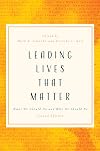
Summary: An anthology on what the well-lived life looks like exploring four important vocabularies and six vital questions through a range of religious and secular readings.
How might we live lives that matter? To whom or what will I listen as I discern my vocation. With and for whom will I live? What obligation do I have to human or other life? How shall I tell the story of my life. All of these are important questions for anyone who wants their lives to matter. This collection of nearly show more ninety readings, forty-seven new to this edition help to explore through a variety of genres these questions. Both religious and secular resources are included. The book is organized around four “vocabularies” used about the well-led life, and six important questions. Here are the vocabularies and questions along with a reading that particularly stood out (although the overall selection is outstanding).
Vocabularies
Authenticity: Charles Taylor’s “The Ethics of Authenticity”. Taylor argues that authenticity is not just a matter of doing one’s thing, but an identity formed by wrestling with deep questions of truth.
Virtue: “On Love” by Josef Pieper is one of the best and most concise essays on the different types of love, what we mean by the love of God and love for God.
Exemplarism: To understand the importance of exemplars, what they are and how we might observe them, I could not do better than Linda Zagzebski’s reading “Why Exemplarism.”
Vocation: The readings here were some of the strongest with contributions from Lee Hardy, C.S. Lewis, Denise Levertov, and Dietrich Bonhoeffer. I choose the one by Charles D. Badcock on “Choosing” who argues that vocation is not finding the one “right” job, but living for the will of God and doing what we please.
Questions:
Must My Job Be the Primary Source of My Identity? The essay by Dorothy L. Sayers, “Why Work?” is marked by her clear thinking and the idea of serving the work, serving God in our work.
To Whom and to What Should I Listen as I Decide What to Do for a Living? The selection from Lois Lowry’s The Giver in which each young member of the community is assigned their work by the elders explores the role of others in our choices of work and captures why this book is so well-loved. Among other good selections are those by Albert Schweitzer and James Baldwin.
With Whom and For Whom Shall I Live? Toni Morrison’s “Recitatif” explores the encounter of two orphans, one black and one white, later in life and the choice of whether childhood friendship or race would determine their relations. The essay by Martin Luther King, Jr., “The World House” is also powerful.
Is a Balanced Life Possible and Preferable to a Life Focused Primarily on Work? Perhaps the most thought-provoking is the article by Karen S. Sibert that answers that for some professional jobs, the answer is “no.” The reading is titled “Don’t Quit This Day Job.” Perhaps offsetting this is the concluding reading of the section, a selection from The Sabbath by Abraham Joshua Heschel
What Are My Obligations to Future Human and Other Life? Larry Rasmussen writes a fictional letter to his grandson, “A Love Letter from the Holocene to the Anthropocene” on the failure of his generation to conserve the environment for that grandchild in terms of options, quality, and access. He raises profound questions about our failures to future generations. The section also features portions of Pope Francis’ Laudato Si.
How Shall I Tell The Story of My Life? The section begins with the marvelous poem “The Road Not Taken” by Robert Frost and ends with Michael T. Kaufman’s “Robert McG Thomas, 60, Chronicler of Unsung Lives.” This last is the obituary of the New York Times noted obituary writer whose obituaries were stories that captured and honored the essence of generally unknown people. It makes you think about what stories will people tell of our lives.
I suspect the primary audience of a work like this is a capstone-type class still offered by many undergraduate colleges, reflecting on vocation and life’s big questions. But it is worthwhile for anyone examining their lives and sense of calling, not only for the vocabulary and the questions but for the excellence of the readings that hold up a mirror to our lives.
________________________________
Disclosure of Material Connection: I received a complimentary review copy of this book from the publisher. The opinions I have expressed are my own. show less
How might we live lives that matter? To whom or what will I listen as I discern my vocation. With and for whom will I live? What obligation do I have to human or other life? How shall I tell the story of my life. All of these are important questions for anyone who wants their lives to matter. This collection of nearly show more ninety readings, forty-seven new to this edition help to explore through a variety of genres these questions. Both religious and secular resources are included. The book is organized around four “vocabularies” used about the well-led life, and six important questions. Here are the vocabularies and questions along with a reading that particularly stood out (although the overall selection is outstanding).
Vocabularies
Authenticity: Charles Taylor’s “The Ethics of Authenticity”. Taylor argues that authenticity is not just a matter of doing one’s thing, but an identity formed by wrestling with deep questions of truth.
Virtue: “On Love” by Josef Pieper is one of the best and most concise essays on the different types of love, what we mean by the love of God and love for God.
Exemplarism: To understand the importance of exemplars, what they are and how we might observe them, I could not do better than Linda Zagzebski’s reading “Why Exemplarism.”
Vocation: The readings here were some of the strongest with contributions from Lee Hardy, C.S. Lewis, Denise Levertov, and Dietrich Bonhoeffer. I choose the one by Charles D. Badcock on “Choosing” who argues that vocation is not finding the one “right” job, but living for the will of God and doing what we please.
Questions:
Must My Job Be the Primary Source of My Identity? The essay by Dorothy L. Sayers, “Why Work?” is marked by her clear thinking and the idea of serving the work, serving God in our work.
To Whom and to What Should I Listen as I Decide What to Do for a Living? The selection from Lois Lowry’s The Giver in which each young member of the community is assigned their work by the elders explores the role of others in our choices of work and captures why this book is so well-loved. Among other good selections are those by Albert Schweitzer and James Baldwin.
With Whom and For Whom Shall I Live? Toni Morrison’s “Recitatif” explores the encounter of two orphans, one black and one white, later in life and the choice of whether childhood friendship or race would determine their relations. The essay by Martin Luther King, Jr., “The World House” is also powerful.
Is a Balanced Life Possible and Preferable to a Life Focused Primarily on Work? Perhaps the most thought-provoking is the article by Karen S. Sibert that answers that for some professional jobs, the answer is “no.” The reading is titled “Don’t Quit This Day Job.” Perhaps offsetting this is the concluding reading of the section, a selection from The Sabbath by Abraham Joshua Heschel
What Are My Obligations to Future Human and Other Life? Larry Rasmussen writes a fictional letter to his grandson, “A Love Letter from the Holocene to the Anthropocene” on the failure of his generation to conserve the environment for that grandchild in terms of options, quality, and access. He raises profound questions about our failures to future generations. The section also features portions of Pope Francis’ Laudato Si.
How Shall I Tell The Story of My Life? The section begins with the marvelous poem “The Road Not Taken” by Robert Frost and ends with Michael T. Kaufman’s “Robert McG Thomas, 60, Chronicler of Unsung Lives.” This last is the obituary of the New York Times noted obituary writer whose obituaries were stories that captured and honored the essence of generally unknown people. It makes you think about what stories will people tell of our lives.
I suspect the primary audience of a work like this is a capstone-type class still offered by many undergraduate colleges, reflecting on vocation and life’s big questions. But it is worthwhile for anyone examining their lives and sense of calling, not only for the vocabulary and the questions but for the excellence of the readings that hold up a mirror to our lives.
________________________________
Disclosure of Material Connection: I received a complimentary review copy of this book from the publisher. The opinions I have expressed are my own. show less
You May Also Like


Associated Authors
Statistics
- Works
- 16
- Also by
- 5
- Members
- 1,984
- Popularity
- #12,959
- Rating
- 3.8
- Reviews
- 10
- ISBNs
- 40
- Favorited
- 1