
Holly Goddard Jones
Author of The Next Time You See Me
About the Author
Holly Goddard Jones is the writer of The Salt Line, The Next Time You See Me and Girl Trouble (stories) and the winner of The Fellowship of Southern Writers' Hillsdale Prize for Excellence in Fiction and the Rona Jaffe Foundation Writers' Award. (Bowker Author Biography)
Image credit: Photo by Morgan Marie Photography, from author's website
Works by Holly Goddard Jones
Associated Works
Tagged
Common Knowledge
- Canonical name
- Jones, Holly Goddard
- Birthdate
- 1979-12-18
- Gender
- female
- Education
- Ohio State University
- Awards and honors
- Peter Taylor Scholarship (2006)
Rona Jaffe Foundation Writers’ Award (2007)
Hillsdale Award for Fiction (2013) - Nationality
- USA
- Birthplace
- Russellville, Kentucky, USA
- Places of residence
- Greensboro, North Carolina, USA
- Associated Place (for map)
- USA
Members
Reviews
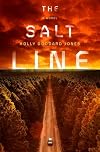
The Salt Line had all the ingredients of a compelling dystopian thriller—an isolated future society, deadly parasites, and a world scarred by fear and containment. Unfortunately, while the premise is promising, the execution doesn’t quite live up to the potential.
Set in a future where humanity is confined within quarantine zones to avoid parasitic “salt line” ticks, the story follows a group of individuals who venture outside the safe zone and into the danger-ridden wild. What begins show more as an exciting survival concept quickly gets weighed down by a bloated cast of characters and a lack of cohesive narrative focus.
The constant shifting of points of view makes it hard to connect deeply with any one character. While each storyline has moments of intrigue, they often feel like snapshots from different novels—each running parallel without building true synergy. Instead of a gripping central plot, it feels like we’re watching a loosely connected documentary on several people's bad week. The result is a story that meanders rather than builds tension or emotional investment.
What should’ve been a gritty tale of survival and political commentary on government control ends up diluted by too many subplots and not enough clarity. The threat of the deadly ticks is definitely unsettling and original, but even that isn’t enough to carry the story when so much else feels underdeveloped or unnecessarily complicated.
There’s a sense that The Salt Line was trying to say something important about fear, safety, and the illusion of control—but without deeper world-building or a stronger narrative spine, the message gets lost in the noise. It’s not a terrible book, but it’s certainly a forgettable one. The exciting concept simply deserved more plot momentum and character depth to match its ambitious setup.
The Salt Line is a novel with a bold idea that sadly falls short in execution. While it may appeal to die-hard dystopian fans looking for something different, readers looking for tight storytelling and character-driven arcs may find themselves drifting away long before the last page. show less
Set in a future where humanity is confined within quarantine zones to avoid parasitic “salt line” ticks, the story follows a group of individuals who venture outside the safe zone and into the danger-ridden wild. What begins show more as an exciting survival concept quickly gets weighed down by a bloated cast of characters and a lack of cohesive narrative focus.
The constant shifting of points of view makes it hard to connect deeply with any one character. While each storyline has moments of intrigue, they often feel like snapshots from different novels—each running parallel without building true synergy. Instead of a gripping central plot, it feels like we’re watching a loosely connected documentary on several people's bad week. The result is a story that meanders rather than builds tension or emotional investment.
What should’ve been a gritty tale of survival and political commentary on government control ends up diluted by too many subplots and not enough clarity. The threat of the deadly ticks is definitely unsettling and original, but even that isn’t enough to carry the story when so much else feels underdeveloped or unnecessarily complicated.
There’s a sense that The Salt Line was trying to say something important about fear, safety, and the illusion of control—but without deeper world-building or a stronger narrative spine, the message gets lost in the noise. It’s not a terrible book, but it’s certainly a forgettable one. The exciting concept simply deserved more plot momentum and character depth to match its ambitious setup.
The Salt Line is a novel with a bold idea that sadly falls short in execution. While it may appeal to die-hard dystopian fans looking for something different, readers looking for tight storytelling and character-driven arcs may find themselves drifting away long before the last page. show less
The Salt Line by Holly Goddard Jones is a very highly recommended dystopian with killer ticks, salted and walled area perimeters, drug farming, and political intrigue.
The novel follows a group of wealthy people who have paid enormous fees to Outer Limits Excursions for the opportunity to go beyond the salt line and experience nature. Andy is their tour guide, the man who will also show them how to survive in the wilderness behind the salt line during their three week boot camp. Included in show more the tour group are: Jesse, a pop star and his girlfriend Edie, a bartender; Wes, the tech-wizard who developed Pocketz, a web-bank for credit storage and use; Marta, a woman in her fifties sent on this adventure by her crime-boss husband; along with several other minor characters.
Lucky citizens in the U.S. are living within the walled salt line zones. The salt lines are borders around zones where controlled chemical burnings had taken place, scorching the earth, or salting as it has been called historically. Then the Wall was erected for further protection and the TerraVibra added, emanating a pulse fifty kilometers eastward, out from the wall. The chemical and physical barriers are needed to protect people from the deadly miner ticks.
The male tick isn't the real problem. It is the female miner tick that can potentially kill you. The female numbs your skin, burrows in, and will lay eggs that enter your bloodstream. These eggs will mature and erupt out of your skin. But the even worse problem is Shreve’s disease, which about half of the female miner ticks carry. That disease is deadly and fast. In order to travel behind the salt line you need to have and carry a stamp with you at all times. Once you feel the unmistakable tell-tale itch of the female miner tick on you, you have to prepare for the worst pain in your life and immediately use the stamp.
"The Stamp thrusts a barbed hook through your skin, skewering the female miner tick, and then retracts it, capturing the tick in a chemical solution. Then a burner brands the wound, cauterizing it and killing any of the eggs in the perimeter, as well as disinfecting the blood-borne contagions the bitch might have left behind. The Stamp has a ninety-nine-point-eight percent success rate if used within sixty seconds of initial burrowing."
The Salt Line begins with the group in boot camp with Andy and gives us the backstory and history for several of the characters. This continues as the group, rather than going on an adventure, become hostages of Ruby City, a community of outer-zone survivors and drug farmers who have their own political agenda to advance.
The quality of the writing is incredible. This is sophisticated protean world building at its best - and exactly what people want when they ask for better world building and a more sophisticated plot. The main characters are all extremely well-developed and complicated. Their thoughts and interactions are very realistic. I will concede that reviews which say the novel you have at the beginning isn't the novel you have at the end are partially right, but in this case I appreciated the shake-up and felt it created a stronger, more realistic plot. Sure, killer ticks are a draw, but add in the other elements and this becomes a multifaceted novel with depth and intrigue rather than a one-dimensional thriller. (Not that I wouldn't have kept reading if The Salt Line was a thriller only about the killer ticks, which had me feeling itchy during the entire novel.)
Disclosure: My review copy was courtesy of the Penguin Publishing Group.
http://www.shetreadssoftly.com/2017/09/the-salt-line.html show less
The novel follows a group of wealthy people who have paid enormous fees to Outer Limits Excursions for the opportunity to go beyond the salt line and experience nature. Andy is their tour guide, the man who will also show them how to survive in the wilderness behind the salt line during their three week boot camp. Included in show more the tour group are: Jesse, a pop star and his girlfriend Edie, a bartender; Wes, the tech-wizard who developed Pocketz, a web-bank for credit storage and use; Marta, a woman in her fifties sent on this adventure by her crime-boss husband; along with several other minor characters.
Lucky citizens in the U.S. are living within the walled salt line zones. The salt lines are borders around zones where controlled chemical burnings had taken place, scorching the earth, or salting as it has been called historically. Then the Wall was erected for further protection and the TerraVibra added, emanating a pulse fifty kilometers eastward, out from the wall. The chemical and physical barriers are needed to protect people from the deadly miner ticks.
The male tick isn't the real problem. It is the female miner tick that can potentially kill you. The female numbs your skin, burrows in, and will lay eggs that enter your bloodstream. These eggs will mature and erupt out of your skin. But the even worse problem is Shreve’s disease, which about half of the female miner ticks carry. That disease is deadly and fast. In order to travel behind the salt line you need to have and carry a stamp with you at all times. Once you feel the unmistakable tell-tale itch of the female miner tick on you, you have to prepare for the worst pain in your life and immediately use the stamp.
"The Stamp thrusts a barbed hook through your skin, skewering the female miner tick, and then retracts it, capturing the tick in a chemical solution. Then a burner brands the wound, cauterizing it and killing any of the eggs in the perimeter, as well as disinfecting the blood-borne contagions the bitch might have left behind. The Stamp has a ninety-nine-point-eight percent success rate if used within sixty seconds of initial burrowing."
The Salt Line begins with the group in boot camp with Andy and gives us the backstory and history for several of the characters. This continues as the group, rather than going on an adventure, become hostages of Ruby City, a community of outer-zone survivors and drug farmers who have their own political agenda to advance.
The quality of the writing is incredible. This is sophisticated protean world building at its best - and exactly what people want when they ask for better world building and a more sophisticated plot. The main characters are all extremely well-developed and complicated. Their thoughts and interactions are very realistic. I will concede that reviews which say the novel you have at the beginning isn't the novel you have at the end are partially right, but in this case I appreciated the shake-up and felt it created a stronger, more realistic plot. Sure, killer ticks are a draw, but add in the other elements and this becomes a multifaceted novel with depth and intrigue rather than a one-dimensional thriller. (Not that I wouldn't have kept reading if The Salt Line was a thriller only about the killer ticks, which had me feeling itchy during the entire novel.)
Disclosure: My review copy was courtesy of the Penguin Publishing Group.
http://www.shetreadssoftly.com/2017/09/the-salt-line.html show less
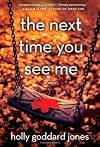
The first adjective that comes to mind regarding The Next Time You See Me is thoughtful: Holly Goddard Jones has put so much thought into the characters that populate her small Kentucky town. I want to say that they defy steretypes, but that's not exactly it. They seem, on the surface, very stereotypical: the unfulfilled teacher in her unhappy marriage; her black-sheep sister, who drinks, sleeps around, and goes missing, setting the plot in motion; the black athlete turned detective; the show more golden new boy in town, dating the queen bee; the socially awkward teen pariah; the overweight nurse with a heart of gold. All of these are characters we know -- or think we do.
But Jones makes all of them so human, so nuanced, and leads them to intersect in such unpredictable ways, that we want to know them as individuals, not cliches. We follow their slow, deliberate dance, waiting for the next fresh pairing, because we care where they end up. In this way Jones revives the rather tired missing-person plot, prompting us to see it anew. What happens when the body is found by the teen pariah -- and she doesn't run screaming to her parents? What happens when the killer turns out to be someone with whom we truly sympathize?
Jones reminds us how complex people really are. Over and over, she asks us not to judge a book by its cover, but to see the world through others' eyes. The Next Time You See Me combines murder mystery with the dramatic, character-driven complexity of Julia Glass's The Whole World Over. It's a thoughtful thriller. show less
But Jones makes all of them so human, so nuanced, and leads them to intersect in such unpredictable ways, that we want to know them as individuals, not cliches. We follow their slow, deliberate dance, waiting for the next fresh pairing, because we care where they end up. In this way Jones revives the rather tired missing-person plot, prompting us to see it anew. What happens when the body is found by the teen pariah -- and she doesn't run screaming to her parents? What happens when the killer turns out to be someone with whom we truly sympathize?
Jones reminds us how complex people really are. Over and over, she asks us not to judge a book by its cover, but to see the world through others' eyes. The Next Time You See Me combines murder mystery with the dramatic, character-driven complexity of Julia Glass's The Whole World Over. It's a thoughtful thriller. show less
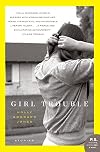
Girl Trouble‘s central focus on sexual suffering in a limited environment frees it from many of the dilemmas of contemporary short fiction collections. The women-centered stories share a frustration with all-permeating male sexuality which recalls similar pieces by Lorrie Moore and Miranda July, but with neither author’s penchant for wordplay and humor. The pieces do not drag with existential angst or vagueness. Although many types of suffering are present, they are alike in their show more precision. Characters are haunted by a definite thing, a definite moment (or collection of moments) that went horribly wrong. Regret is for many of these characters almost tangible, a person or place or time that should have been destroyed.
Simultaneously, however, the collection manifestly avoids sentimentalizing or moralizing treatments. Girl Trouble focuses on the suffering and reality of the experiences of its characters. These stories play out as direct excerpts from people’s lives, with the characters, their thoughts and immediate experiences presented as it is experienced, and no more. Such a presentation relies almost entirely on empathetic characters to carry the weight of immersing the reader, and indeed Jones excels at this. Characters are at once completely ordinary and distinctly memorable. They are people you almost know, might even be friends with, but with their lives and thoughts laid bare in a way that no one could ever see from outside. You are precisely *in* these characters, but not at all *with* them.
http://doomedtoretweetit.wordpress.com/2011/03/26/13/ show less
Simultaneously, however, the collection manifestly avoids sentimentalizing or moralizing treatments. Girl Trouble focuses on the suffering and reality of the experiences of its characters. These stories play out as direct excerpts from people’s lives, with the characters, their thoughts and immediate experiences presented as it is experienced, and no more. Such a presentation relies almost entirely on empathetic characters to carry the weight of immersing the reader, and indeed Jones excels at this. Characters are at once completely ordinary and distinctly memorable. They are people you almost know, might even be friends with, but with their lives and thoughts laid bare in a way that no one could ever see from outside. You are precisely *in* these characters, but not at all *with* them.
http://doomedtoretweetit.wordpress.com/2011/03/26/13/ show less
Lists
Awards


You May Also Like


Associated Authors
Statistics
- Works
- 8
- Also by
- 4
- Members
- 775
- Popularity
- #32,828
- Rating
- 3.6
- Reviews
- 66
- ISBNs
- 36
- Languages
- 3