
Christopher Cokinos
Author of Hope Is the Thing with Feathers: A Personal Chronicle of Vanished Birds
About the Author
Christopher Cokinos is an award-winning writer and poet, and a professor of English at Utah State University. He has received the Whiting Writers' Award, the Glasgow Prize for an emerging writer in nonfiction, and the Sigurd Olson Nature Writing Award.
Works by Christopher Cokinos
Hope Is the Thing with Feathers: A Personal Chronicle of Vanished Birds (2000) 271 copies, 7 reviews
Tagged
Common Knowledge
- Birthdate
- 1963
- Gender
- male
- Awards and honors
- Whiting Writers' Award (2003)
- Nationality
- USA
- Birthplace
- Indianapolis, Indiana, USA
- Associated Place (for map)
- Indiana, USA
Members
Reviews
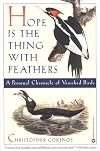
This work compiles the stories of the extinction of six North American bird species. The demises seems to cluster between the last half of the Nineteenth Century and the fist half of the Twentieth. There is an uncomfortable sameness to the final years: too little too late organized action and almost frenzied destruction triggered by the nearness of extinction. Much of the writing is poetic and evocative as this is obviously a heartfelt subject to the author. Some of the stories are really show more cruel tragedies: one of the last Ivory-Billed Woodpeckers imprisoned and dying in a hotel room to serve as a model and Martha, perhaps the last Passenger Pigeon, shuffling alone and scruffy in a Cleveland zoo. Other subjects are the colorful Carolina Parakeets, there social clustering good defense against hawks but poor for shotguns. Watching the last of the Heath Hens waste away on Martha's Vineyard could be a stand-in for the shape of all the species' demises, including the Labrador Duck and preyed upon Great Auk. show less
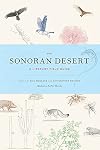
I lovely collection of poetry, musings and field guide notes on some of the flora and fauna of the Sonoran Desert. As is typical (or so I've found) of nature writing in Arizona (and specifically the Sonoran Desert), the focus is on Tucson as if nature simply doesn't exist outside of that little Southeastern Arizona bubble. Is it because University of Arizona has a more ecological focus than Arizona State University, a more literary lean? A more artistic scene? (I'm really asking, I don't show more have an answer just lots of questions.)
One thing I learned: I've been seeing two types of rabbits/hares on our evening walks. I thought rabbit-with-giant-ears was a male desert cottontail; but now I know those are black-tailed jackrabbits! While I'm not sure the lizard species in my yard were included, I did learn that they're doing push-ups as a form of communication! The more you know....
Given that there are many critters that make their home in the Sonoran Desert, it must have been challenging to limit to a select few; however, I was surprised that the Gila Woodpecker didn't make the cut. Perhaps it wasn't included because they already had a desert woodpecker: the Gilded Flicker. Abert's Towhee also wasn't included which is a species that birders travel to Arizona to see! Of course, most of the Sonoran Desert is in Mexico, look at me showing my Arizona bias.
Which brings me to one feature that would make this gem even better: maps for each selection. Perhaps a second edition in a couple of years will add color, maps, and the Gila Woodpecker. (A girl can dream.)
At the beginning of the book, an incredible map shows the region but some of the included beings are all across the country and I think it would be helpful to include that information. Mainly because I think it shows how adaptable nature is, some plants and animals can thrive anywhere -- like humans! Some cannot -- like the saguaro, which is endemic to the Sonoran Desert. show less
One thing I learned: I've been seeing two types of rabbits/hares on our evening walks. I thought rabbit-with-giant-ears was a male desert cottontail; but now I know those are black-tailed jackrabbits! While I'm not sure the lizard species in my yard were included, I did learn that they're doing push-ups as a form of communication! The more you know....
Given that there are many critters that make their home in the Sonoran Desert, it must have been challenging to limit to a select few; however, I was surprised that the Gila Woodpecker didn't make the cut. Perhaps it wasn't included because they already had a desert woodpecker: the Gilded Flicker. Abert's Towhee also wasn't included which is a species that birders travel to Arizona to see! Of course, most of the Sonoran Desert is in Mexico, look at me showing my Arizona bias.
Which brings me to one feature that would make this gem even better: maps for each selection. Perhaps a second edition in a couple of years will add color, maps, and the Gila Woodpecker. (A girl can dream.)
At the beginning of the book, an incredible map shows the region but some of the included beings are all across the country and I think it would be helpful to include that information. Mainly because I think it shows how adaptable nature is, some plants and animals can thrive anywhere -- like humans! Some cannot -- like the saguaro, which is endemic to the Sonoran Desert. show less
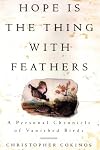
Cokinos spent ten years researching the life and subsequent extinction of six birds: Passenger Pigeon, Carolina Parakeet, Labrador Duck, Ivory-Billed Woodpecker, Heath Hen, and the Great Auk.
I find it terribly sad that no one knows the exact date of the demise of the Carolina Parakeet, but then again that's probably true of many extinct species. Right? How do we really know when we have seen the very last whatever? Here are details from Hope is the Thing with Feathers that will stick with me show more for a very long time: the Heath Hen has been compared to the Greater Prairie Chicken for their myriad of similarities. Their mating sounds are practical identical. Is that why no one took the extinction of the Heath Hen seriously? Were they so abundant they fell victim to overhunting; were they that easy to massacre? Is that what happened to the Passenger Pigeon? The cruelty inflicted on these birds was difficult to read. Cokinos gets into the question of cloning. Can you clone a species which has gone completely extinct? Can we have a Jurassic Park moment on a less dangerous scale?
Besides hunting, another factor wreaking havoc on bird populations was deforestation. Singer Sewing Machine purchased the nesting grounds of Lord God birds. Then they sold the rights to logging companies who cleared the land, destroying everything in its path. This happened over and over again. show less
I find it terribly sad that no one knows the exact date of the demise of the Carolina Parakeet, but then again that's probably true of many extinct species. Right? How do we really know when we have seen the very last whatever? Here are details from Hope is the Thing with Feathers that will stick with me show more for a very long time: the Heath Hen has been compared to the Greater Prairie Chicken for their myriad of similarities. Their mating sounds are practical identical. Is that why no one took the extinction of the Heath Hen seriously? Were they so abundant they fell victim to overhunting; were they that easy to massacre? Is that what happened to the Passenger Pigeon? The cruelty inflicted on these birds was difficult to read. Cokinos gets into the question of cloning. Can you clone a species which has gone completely extinct? Can we have a Jurassic Park moment on a less dangerous scale?
Besides hunting, another factor wreaking havoc on bird populations was deforestation. Singer Sewing Machine purchased the nesting grounds of Lord God birds. Then they sold the rights to logging companies who cleared the land, destroying everything in its path. This happened over and over again. show less
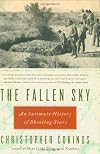
So, phew. It took me a while to get through this one. I found it very messy, especially at the beginning. It was as if Cokinos couldn't decide what kind of book he wanted to write. Would it be a scientifically-minded work? Would it be a memoir? Would it be historical? It turns out it's kind of the worst of all of those things, put together in a rather slapdash fashion.
That makes little sense to me, since he has apparently been gathering material for at least a decade. To give him his due, show more he did point out in his introduction that the book wasn't going to be your standard, run-of-the-mill work on meteorites. He just thought the book was more cohesive than it actually is. show less
That makes little sense to me, since he has apparently been gathering material for at least a decade. To give him his due, show more he did point out in his introduction that the book wasn't going to be your standard, run-of-the-mill work on meteorites. He just thought the book was more cohesive than it actually is. show less
Lists
Awards


You May Also Like


Associated Authors
Statistics
- Works
- 7
- Members
- 464
- Popularity
- #53,000
- Rating
- 3.7
- Reviews
- 10
- ISBNs
- 16
- Favorited
- 2