
Christopher R. Hill (1)
Author of Outpost: Life on the Frontlines of American Diplomacy: A Memoir
For other authors named Christopher R. Hill, see the disambiguation page.
Works by Christopher R. Hill
Tagged
Common Knowledge
There is no Common Knowledge data for this author yet. You can help.
Members
Reviews
https://fromtheheartofeurope.eu/outpost-life-on-the-frontlines-of-american-diplo...
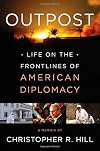
The autobiography of American diplomat Christopher Hill, published in 2014, so before his most recent post as ambassador to Serbia, but covering all of the other points of his career. I don’t know him personally, though we have shaken hands a couple of times. I did enjoy highlighting the names of people who I do know as I read through my electronic copy – a good dozen or so from the Kosova and (North) show more Macedonia chapters, and a fair number from elsewhere.
Hill’s key posts were, in order, briefly Ambassador to Albania in 1991; assisting Richard Holbrooke in negotiating the Dayton Accords in 1995; Ambassador to what is now North Macedonia, 1996-99; overlapping with special envoy to Kosovo, 1998-99; Ambassador to Poland, 2000-04; Ambassador to South Korea, 2004-05 and then Assistant Secretary of State for East Asian and Pacific Affairs, 2005-2009; and Ambassador to Iraq, 2009-10.
I was particularly interested in the Balkan chapters, but to be honest I did not learn much new from these sections, except that Hill’s views of the situation are pretty similar to mine. He moved on from the Balkans in 2000 (eventually returning as ambassador to Serbia in 2022, after this book was published) so the rest of the book is about his more recent career in areas I know much less well, and here I found a lot of fresh material.
His four-year term as Ambassador to Poland occupies only nine pages of the 350 of the main text, but the Korea and Iraq sections are much more substantial. On Korea, he claims credit for rebooting the USA’s image in South Korea and for making glacial but real progress in the denuclearisation talks with North Korea, in both cases by simply applying the classic skills of diplomacy – empathy and tact, with a firm grasp of your own vital interests and of shared goals. At the same time, he was being cut off at the knees by the neocons in Washington, led by Vice-President Cheney, who believed that the negotiations with North Korea were futile and tantamount to surrender, and briefed against him and the process incessantly.
The Iraq chapters are particularly sad. Hill is eloquently silent about the justification for the war in the first place, and does his best to get the USA to accept that the Iraqis should be allowed to get on with determining their own future. Unfortunately the political situation was distorted by factionalised politics in Washington, obsessed with picking favourites and winners, not to mention the unhealthy relationship between the US military and civilian missions on the ground in Baghdad. He preserves particular bile for an unnamed aide to General Ray Odierno; it did not take me long to work out who it was (nobody I knew).
As a whole, the book is defensive of diplomacy as an activity, but not especially of American diplomacy as it has been practiced; there’s a clear line to be drawn between the hard work of doing a job on the ground, and the craziness of the policy formation process in Washington, and Hill clearly has more patience for serious-minded foreigners than for his own country’s crazy politicians. As a serious-minded foreigner myself, I appreciated that. show less
The autobiography of American diplomat Christopher Hill, published in 2014, so before his most recent post as ambassador to Serbia, but covering all of the other points of his career. I don’t know him personally, though we have shaken hands a couple of times. I did enjoy highlighting the names of people who I do know as I read through my electronic copy – a good dozen or so from the Kosova and (North) show more Macedonia chapters, and a fair number from elsewhere.
Hill’s key posts were, in order, briefly Ambassador to Albania in 1991; assisting Richard Holbrooke in negotiating the Dayton Accords in 1995; Ambassador to what is now North Macedonia, 1996-99; overlapping with special envoy to Kosovo, 1998-99; Ambassador to Poland, 2000-04; Ambassador to South Korea, 2004-05 and then Assistant Secretary of State for East Asian and Pacific Affairs, 2005-2009; and Ambassador to Iraq, 2009-10.
I was particularly interested in the Balkan chapters, but to be honest I did not learn much new from these sections, except that Hill’s views of the situation are pretty similar to mine. He moved on from the Balkans in 2000 (eventually returning as ambassador to Serbia in 2022, after this book was published) so the rest of the book is about his more recent career in areas I know much less well, and here I found a lot of fresh material.
His four-year term as Ambassador to Poland occupies only nine pages of the 350 of the main text, but the Korea and Iraq sections are much more substantial. On Korea, he claims credit for rebooting the USA’s image in South Korea and for making glacial but real progress in the denuclearisation talks with North Korea, in both cases by simply applying the classic skills of diplomacy – empathy and tact, with a firm grasp of your own vital interests and of shared goals. At the same time, he was being cut off at the knees by the neocons in Washington, led by Vice-President Cheney, who believed that the negotiations with North Korea were futile and tantamount to surrender, and briefed against him and the process incessantly.
The Iraq chapters are particularly sad. Hill is eloquently silent about the justification for the war in the first place, and does his best to get the USA to accept that the Iraqis should be allowed to get on with determining their own future. Unfortunately the political situation was distorted by factionalised politics in Washington, obsessed with picking favourites and winners, not to mention the unhealthy relationship between the US military and civilian missions on the ground in Baghdad. He preserves particular bile for an unnamed aide to General Ray Odierno; it did not take me long to work out who it was (nobody I knew).
As a whole, the book is defensive of diplomacy as an activity, but not especially of American diplomacy as it has been practiced; there’s a clear line to be drawn between the hard work of doing a job on the ground, and the craziness of the policy formation process in Washington, and Hill clearly has more patience for serious-minded foreigners than for his own country’s crazy politicians. As a serious-minded foreigner myself, I appreciated that. show less
I received a copy of this book via a GoodReads Giveaway.
Ambassador Hill's autobiography is a refreshing foray into some of the most difficult diplomatic quagmires America experienced in the past 30 years. Hill could have bombarded the reader with a litany of names, dates, and accomplishments...but instead takes considerable effort to simplify and humanize even the most alien of situations. Reading of his encounters with historical figures ranging from Kim Jung Il and Slobodan Milosevic to show more Mother Theresa is enlightening in a different way than generally experienced, where Hill discusses the individual style, relationships, wants, and habits that he personally experienced with each of these individuals. Hill also has a wonderful method of describing the geography and environments of which he experiences - for a reader that has never been to Mongolia or North Korea, this may have been the most fascinating element of 'Outpost.'
As far as diplomatic works go, Outpost is particularly easy to read, and engaging to the point that it is difficult to put down. While ending on something of a slightly pessimistic note (although perhaps deservedly so), 'Outpost' is a work that anyone interested in a career at the State Department should read. You won't find this branch of diplomatic history told in a more compelling or human capacity elsewhere.
5/5 show less
Ambassador Hill's autobiography is a refreshing foray into some of the most difficult diplomatic quagmires America experienced in the past 30 years. Hill could have bombarded the reader with a litany of names, dates, and accomplishments...but instead takes considerable effort to simplify and humanize even the most alien of situations. Reading of his encounters with historical figures ranging from Kim Jung Il and Slobodan Milosevic to show more Mother Theresa is enlightening in a different way than generally experienced, where Hill discusses the individual style, relationships, wants, and habits that he personally experienced with each of these individuals. Hill also has a wonderful method of describing the geography and environments of which he experiences - for a reader that has never been to Mongolia or North Korea, this may have been the most fascinating element of 'Outpost.'
As far as diplomatic works go, Outpost is particularly easy to read, and engaging to the point that it is difficult to put down. While ending on something of a slightly pessimistic note (although perhaps deservedly so), 'Outpost' is a work that anyone interested in a career at the State Department should read. You won't find this branch of diplomatic history told in a more compelling or human capacity elsewhere.
5/5 show less

This is just an amazing look at different parts of the world from someone on the front lines of American diplomacy. Ambassador Hill provides a plain talking and warm narrative of the countries, people, and situations he encountered. He worked with different presidents and different regimes and is supportive and honestly critical if the situation calls for it. This is a must read for those looking in to foreign service.
Free review copy.
Free review copy.
Statistics
- Works
- 2
- Members
- 62
- Popularity
- #271,093
- Rating
- 4.5
- Reviews
- 3
- ISBNs
- 10