
Lenny Hort
Author of The Seals on the Bus
About the Author
Image credit: via author's website
Works by Lenny Hort
Treasure Hunts! Treasure Hunts!: Treasure and Scavenger Hunts to Play with Friends and Family (2000) 19 copies, 1 review
How Many Stars in the Sky? 6 copies
How Many Stars in the Sky? 1 copy
The Boy Who Held Back the Se 1 copy
Associated Works
Tagged
Common Knowledge
- Gender
- male
- Occupations
- Children's book editor
high school English teacher - Nationality
- USA
- Places of residence
- New Jersey, USA
- Associated Place (for map)
- New Jersey, USA
Members
Reviews

As a biblical scholar and Jewish teacher, this is an excellent Tanakh for children. As the introduction states, even though Christians include the "new testament" in what they call the bible, Jews read only what scholars call the Hebrew Bible, and that is all this book contains. There is no reading later Christian ideas back into our sacred text, and there are no stories about a first century Jew whose followers started a sect which eventually broke with Judaism. Reviewers who complain that show more this bible only contains the "old testament" should read the description more closely. A Jewish bible shouldn't contain the sacred texts of another religion in addition to our own.
Although it is not a complete Tanakh, this Hebrew Bible contains information that would be new to many adult Jews who have no background in biblical studies. In addition to illustrations of scenes from the stories, the book also contains explanations and images in the margins. For example, treasures recovered from the ancient city of Ur (Avram's original home), a cedar in Lebanon, maps of the geographical areas being described, and a throne recovered from Egypt. These pieces of archaeological data enhance one's understanding of the biblical texts and introduce Jewish children to the importance of scholarship in our tradition. There is also an index of people and places at the end of the book.
The book is the author's own retelling of the biblical texts. If you want something that follows the Hebrew text more closely, consider the JPS Children's Bible. The storytelling here is superb, and the writing is appropriate to young audiences. There are some 'big words' in the narrative, but my first grade students can sound them out. While children do need things to be simplified for their growing minds, they don't need things to be dumbed down; this book does the former but not the latter. Educational research also shows that discussing texts with children helps them to improve their reading skills; teach children to ask when they don't know the meaning of a word.
My only complaint regarding the Children's Illustrated Jewish Bible is its length; I would have preferred it to be longer and contain more of the Tanakh. Just under 200 pages may seem long for a children's book, but I had thicker books of Disney stories as a child. Furthermore, there is no expectation that one read through the entire Tanakh at once, so a longer text would pose no problems. A longer text would have also allowed for the inclusion of characteristic selections from the book of Leviticus, which is entirely absent, and from Numbers and Deuteronomy, which have two stories total. The Torah is so central to Jewish life that 3/5 of it should not have been largely ignored. Especially since it is common for children not to begin reading the Tanakh until they are familiar with the entire Torah.
The table of contents is organized by topics rather than by biblical book. The topics are Tabernacles and Temples (i.e. prehistory), Patriarchs (Genesis), Life in Egypt (Exodus), Life in Canaan (mostly Samuel and Kings), and Conquering Nations (prophets and writings). Each topic is introduced with a 2 page overview. At the top of each story, there is a biblical citation. The breakdown by book is as follows.
Pages 17-29, and 32-65 are stories from Genesis; 68-85 are Exodus; 86 & 87 are Numbers; 90 & 91 are Numbers/Deuteronomy; 92-95 are Joshua; 96-103 are Judges; 104-107 is Ruth; 108-133 are 1st and 2nd Samuel; 134-149 and 155-157 are 1st and 2nd Kings; 152 & 153 is Jonah; 154 is Ezekiel; 158-161 is Jeremiah; 162-167 is Daniel; 168-171 is Esther; 172-173 is Nehemiah/Zechariah; 174-175 is Ezra/Nehemiah; 176-178 is Psalms/Ecclesiastes/Proverbs/Song of Songs.
Overall, these stories are a good summary of the history of biblical Israel, but they do not accurately reflect the relative importance of each book of Tanakh in Jewish life and study. show less
Although it is not a complete Tanakh, this Hebrew Bible contains information that would be new to many adult Jews who have no background in biblical studies. In addition to illustrations of scenes from the stories, the book also contains explanations and images in the margins. For example, treasures recovered from the ancient city of Ur (Avram's original home), a cedar in Lebanon, maps of the geographical areas being described, and a throne recovered from Egypt. These pieces of archaeological data enhance one's understanding of the biblical texts and introduce Jewish children to the importance of scholarship in our tradition. There is also an index of people and places at the end of the book.
The book is the author's own retelling of the biblical texts. If you want something that follows the Hebrew text more closely, consider the JPS Children's Bible. The storytelling here is superb, and the writing is appropriate to young audiences. There are some 'big words' in the narrative, but my first grade students can sound them out. While children do need things to be simplified for their growing minds, they don't need things to be dumbed down; this book does the former but not the latter. Educational research also shows that discussing texts with children helps them to improve their reading skills; teach children to ask when they don't know the meaning of a word.
My only complaint regarding the Children's Illustrated Jewish Bible is its length; I would have preferred it to be longer and contain more of the Tanakh. Just under 200 pages may seem long for a children's book, but I had thicker books of Disney stories as a child. Furthermore, there is no expectation that one read through the entire Tanakh at once, so a longer text would pose no problems. A longer text would have also allowed for the inclusion of characteristic selections from the book of Leviticus, which is entirely absent, and from Numbers and Deuteronomy, which have two stories total. The Torah is so central to Jewish life that 3/5 of it should not have been largely ignored. Especially since it is common for children not to begin reading the Tanakh until they are familiar with the entire Torah.
The table of contents is organized by topics rather than by biblical book. The topics are Tabernacles and Temples (i.e. prehistory), Patriarchs (Genesis), Life in Egypt (Exodus), Life in Canaan (mostly Samuel and Kings), and Conquering Nations (prophets and writings). Each topic is introduced with a 2 page overview. At the top of each story, there is a biblical citation. The breakdown by book is as follows.
Pages 17-29, and 32-65 are stories from Genesis; 68-85 are Exodus; 86 & 87 are Numbers; 90 & 91 are Numbers/Deuteronomy; 92-95 are Joshua; 96-103 are Judges; 104-107 is Ruth; 108-133 are 1st and 2nd Samuel; 134-149 and 155-157 are 1st and 2nd Kings; 152 & 153 is Jonah; 154 is Ezekiel; 158-161 is Jeremiah; 162-167 is Daniel; 168-171 is Esther; 172-173 is Nehemiah/Zechariah; 174-175 is Ezra/Nehemiah; 176-178 is Psalms/Ecclesiastes/Proverbs/Song of Songs.
Overall, these stories are a good summary of the history of biblical Israel, but they do not accurately reflect the relative importance of each book of Tanakh in Jewish life and study. show less

By blocking a leaking hole in the dike, a young boy saves his town from destruction...
Jan had never done anything more heroic than shout for the guard because he'd imagined he'd seen a sea serpent. But when Jan discovered water trickling through a desolate stretch of the dike that protected his low-lying village, he knew he had to act fast.
Jan had never done anything more heroic than shout for the guard because he'd imagined he'd seen a sea serpent. But when Jan discovered water trickling through a desolate stretch of the dike that protected his low-lying village, he knew he had to act fast.
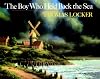
I like this book for its illustrations, plain and simple. I enjoyed the simple retelling of the classic tale, but it was Thomas Locker's epic landscapes that did it for me here.
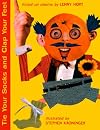
This was the strangest book I have ever read. The book cover warns that it is a compilation of mixed up poems, and that is definitely what you get. Every poem describes things that are completely backwards from what they should be. Take the title for instance, “Tie Your Socks and Clap Your Feet”. This is a model for the entire book. Readers will be entertained by the author’s ability to take such normal things and make them strange and interesting. The images that go along with these show more poems are just as strange. They are created with both real images and computer generated images that really give readers a visual picture of the poem. It is weird, but entertaining. Give it a try.
This book was written to interest children in grades K-3 and is on a 3.0 reading level. show less
This book was written to interest children in grades K-3 and is on a 3.0 reading level. show less
Lists
Awards


You May Also Like


Associated Authors
Statistics
- Works
- 16
- Also by
- 2
- Members
- 3,134
- Popularity
- #8,146
- Rating
- 4.0
- Reviews
- 60
- ISBNs
- 72
- Languages
- 1
- Favorited
- 1