
Mary Lavin (1912–1996)
Author of Selected Stories
About the Author
Works by Mary Lavin
The Great Wave and Other Stories 4 copies
The Patriot Son and Other Stories 2 copies
Happiness (short story) 1 copy
My Vocation 1 copy
Lavin, Mary Archive 1 copy
Two Stories by Mary Lavin 1 copy
The Great Wave 1 copy
The Living 1 copy
Associated Works
The World of the Short Story: A 20th Century Collection (1986) — Contributor — 514 copies, 4 reviews
Celtic Weird: Tales of Wicked Folklore and Dark Mythology (British Library Hardback Classics) (2022) — Contributor — 84 copies
Great Irish Writing: The Best from The Bell (Classic Irish Fiction) (1978) — Contributor — 23 copies
Many-Colored Fleece: An Anthology of Twentieth-Century Catholic Fiction (2022) — Contributor — 9 copies
Tagged
Common Knowledge
- Canonical name
- Lavin, Mary
- Birthdate
- 1912-06-10
- Date of death
- 1996-03-25
- Gender
- female
- Education
- University College Dublin
Loreto College - Occupations
- short story writer
novelist - Organizations
- Irish Academy of Letters
- Awards and honors
- Guggenheim Fellowship (1959, 1961)
- Relationships
- Walsh, Caroline (daughter)
Ryan, James (son-in-law) - Short biography
- Mary Josephine Lavin was born in East Walpole, Massachusetts to Irish immigrant parents. Her mother suffered from homesickness and eventually the family went to live in Ireland. Mary attended a convent school in Dublin before going on to study English and French at University College Dublin. In 1938, as a postgraduate student, she published her first short story, "Miss Holland," in the Dublin Magazine. Edward Plunkett, Lord Dunsany, became her literary mentor and wrote the preface to her first book, Tales from Bective Bridge (1943), a collection of 10 short stories. It was a critical success and won the James Tait Black Memorial Prize for fiction. That same year, Mary Lavin married William Walsh, a lawyer with whom she had three daughters and moved to Abbey Farm near Bective House in County Meath. Mary's first novel, The House in Clewe Street, was serialized in The Atlantic Monthly before being published in book form in 1945. After her husband died in 1954, Lavin kept the family farm going as well as literary career, continuing to publish and win awards for her work, including the Katherine Mansfield Prize (1961) and Guggenheim Fellowships in 1959 and 1961. She became a pioneering female author in the traditionally male-dominated world of Irish letters, and her work often addressed feminist issues. She became the first writer-in-residence at the University of Connecticut in the late 1960s. In 1969, she remarried to Michael Scott, an old college friend and a former priest. In 1992, Mary Lavin was elected Saoi by the members of Aosdána, one of the highest honors in Irish culture. Her daughter Caroline Walsh became a writer and the literary editor of the Irish Times.
- Nationality
- USA (birth)
Ireland - Birthplace
- East Walpole, Massachusetts, USA
- Places of residence
- East Walpole, Massachusetts, USA
Athenry, Ireland
Dublin, Ireland
Bective, County Meath, Ireland - Place of death
- Dublin, Ireland
- Associated Place (for map)
- Ireland
Members
Reviews
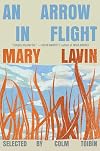
Mary Lavin’s stories represent a quiet but attentive exploration of ordinary life in mid-20th century Ireland, where the smallest domestic moments carry emotional and moral weight. She returns again and again to the textures of family life—conversations in kitchens, unspoken resentments, fleeting gestures of care—capturing a world that feels both intimate and socially constrained.
Many of the stories unfold against the subtle tension between rural life and the pull of Dublin, a divide show more that mirrors larger questions about tradition, independence, and change. Within this setting, Lavin’s protagonists are often women—navigating loss, autonomy, and social expectation. Despite many being widows, Lavin avoids reducing them to a single type. Instead, these women emerge as complex figures, sometimes resilient, sometimes uncertain, always shaped by the quiet pressures of their circumstances.
The collection’s title, “An Arrow in Flight,” offers a useful lens for understanding Lavin’s approach. An arrow, once released, cannot be recalled; it exists in a state of motion, its destination is determined but not yet realized. Her stories often capture lives in similar moments—mid-transition, suspended between past and future, without a clear resolution.
This helps explain the collection’s resistance to neat endings. Many of the stories close without clear lessons or dramatic conclusions, which can feel disorienting at first. But this lack of resolution seems central to Lavin’s vision: life, as she renders it, rarely provides tidy meanings. Instead, she leaves us with partial insights, emotional undercurrents, and the sense that something significant has occurred, even if it cannot be easily named.
This collection accumulates power gradually. Rather than delivering decisive statements, Lavin offers glimpses—precise, humane, and often haunting—into the inner lives of ordinary people. She trusts her readers to follow the arrow’s flight. show less
Many of the stories unfold against the subtle tension between rural life and the pull of Dublin, a divide show more that mirrors larger questions about tradition, independence, and change. Within this setting, Lavin’s protagonists are often women—navigating loss, autonomy, and social expectation. Despite many being widows, Lavin avoids reducing them to a single type. Instead, these women emerge as complex figures, sometimes resilient, sometimes uncertain, always shaped by the quiet pressures of their circumstances.
The collection’s title, “An Arrow in Flight,” offers a useful lens for understanding Lavin’s approach. An arrow, once released, cannot be recalled; it exists in a state of motion, its destination is determined but not yet realized. Her stories often capture lives in similar moments—mid-transition, suspended between past and future, without a clear resolution.
This helps explain the collection’s resistance to neat endings. Many of the stories close without clear lessons or dramatic conclusions, which can feel disorienting at first. But this lack of resolution seems central to Lavin’s vision: life, as she renders it, rarely provides tidy meanings. Instead, she leaves us with partial insights, emotional undercurrents, and the sense that something significant has occurred, even if it cannot be easily named.
This collection accumulates power gradually. Rather than delivering decisive statements, Lavin offers glimpses—precise, humane, and often haunting—into the inner lives of ordinary people. She trusts her readers to follow the arrow’s flight. show less
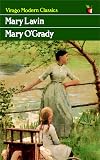
"If I am to see the children again..let them be as they were when they were small"
By sally tarbox on 23 June 2018
Format: Paperback
This is going to be one of my top reads of 2018!
Published in 1950 but set earlier in the century in Dublin, this is the story of the eponymous materfamilias, wife of a working class man and mother of five. And it's utterly unputdownable, an absolute blockbuster of a family saga, in the best Victorian tradition, with brilliant characterization and rending show more tragedy.
It's not a typical tale: there's no alcoholism, they seem to have enough money to manage, Mary's husband is a decent chap, the children are loved and healthy. But as Mary reaches middle age, things are about to change, with children seeking to fly the nest, and a tough world out there... The pretty selfless and religiously inclined (but only human) Mary has to contend with no longer being the focus of her offspring's lives and much more.
I've had this sitting on my TBR shelf for some years, never realised what a fabulous writer Mary Lavin is!! show less
By sally tarbox on 23 June 2018
Format: Paperback
This is going to be one of my top reads of 2018!
Published in 1950 but set earlier in the century in Dublin, this is the story of the eponymous materfamilias, wife of a working class man and mother of five. And it's utterly unputdownable, an absolute blockbuster of a family saga, in the best Victorian tradition, with brilliant characterization and rending show more tragedy.
It's not a typical tale: there's no alcoholism, they seem to have enough money to manage, Mary's husband is a decent chap, the children are loved and healthy. But as Mary reaches middle age, things are about to change, with children seeking to fly the nest, and a tough world out there... The pretty selfless and religiously inclined (but only human) Mary has to contend with no longer being the focus of her offspring's lives and much more.
I've had this sitting on my TBR shelf for some years, never realised what a fabulous writer Mary Lavin is!! show less

What's in those Irish waters that produces such marvelous creativity? I've only previously read Lavin's In a Cafe, so I was particularly excited to find and dig in to this collection.
These stories are remarkable because of how essentially centred on the experiences of womenhood they are. And that's not to say the people featured were epitomes of moral perfection. Petty and awful, the characters themselves are unforgettable. They're a study in contradictions in how they perceive themselves, show more and how others (other characters and the reader) perceive them. They are also often Irish ideas personified. I just love them!
For a prolific writer who had won "three Guggenheim Fellowships and a number of literary awards, including the Katherine Mansfield Prize, in 1961", and published regularly in The New Yorker, Lavin seems to have (unfairly) fallen out of favour with modern readers.. However, if you, a modern readers, are looking for a great short story writer, I highly recommend picking up a Lavin.
Extras: listen to Colm Toibin read and discuss In the Middle of the Fields on The New Yorker. Read Lavin's obituary in The New York Times. Read this fascinating paper analysing the essential Irishness of The Becker Wives. show less
These stories are remarkable because of how essentially centred on the experiences of womenhood they are. And that's not to say the people featured were epitomes of moral perfection. Petty and awful, the characters themselves are unforgettable. They're a study in contradictions in how they perceive themselves, show more and how others (other characters and the reader) perceive them. They are also often Irish ideas personified. I just love them!
For a prolific writer who had won "three Guggenheim Fellowships and a number of literary awards, including the Katherine Mansfield Prize, in 1961", and published regularly in The New Yorker, Lavin seems to have (unfairly) fallen out of favour with modern readers.. However, if you, a modern readers, are looking for a great short story writer, I highly recommend picking up a Lavin.
Extras: listen to Colm Toibin read and discuss In the Middle of the Fields on The New Yorker. Read Lavin's obituary in The New York Times. Read this fascinating paper analysing the essential Irishness of The Becker Wives. show less

Short story lovers unite! Mary Lavin deserves our attention and admiration. I have always loved short stories and view them as a unique art form. This was my first introduction into Mary Lavin's short stories. There were 22 stories in this collection varying from 7 pages in length to 70 pages. Mary Lavin writes of ordinary people living ordinary lives in her home country of Ireland, while making the stories extraordinarily interesting. The detail draws you in but does not overwhelm you or show more make you feel like the story is dragging. The detail creates a place, a time that makes you feel you are there. Her stories remind me of Alice Munro, who I also thoroughly enjoy. Overall, the consistency of Mary Lavin's stories are excellent, although there were a few that did not make much of an impression on me. Mary Lavin apparently published over a 100 short stories and published some of her short stories in multiple collections. If you enjoy short stories I highly recommend you try out Mary Lavin. show less
Lists
Awards


You May Also Like


Associated Authors
Statistics
- Works
- 36
- Also by
- 32
- Members
- 594
- Popularity
- #42,286
- Rating
- 3.7
- Reviews
- 11
- ISBNs
- 52
- Languages
- 4
- Favorited
- 4
