
Sayantani DasGupta
Author of The Serpent's Secret
About the Author
Image credit: By Abasar12
Series
Works by Sayantani DasGupta
Associated Works
Two and Twenty Dark Tales: Dark Retellings of Mother Goose Rhymes (2012) — Contributor — 90 copies, 18 reviews
The Door Is Open: Stories of Celebration and Community by 11 Desi Voices (2024) — Contributor — 27 copies, 2 reviews
Tagged
Common Knowledge
- Gender
- female
- Education
- Johns Hopkins University
- Occupations
- Medical doctor
Members
Reviews
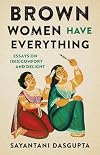
In a Nutshell: A delightful OwnVoices collection of essays about the author’s experiences as a brown woman in the USA. Note that the title and the blurb are somewhat misleading. This is not a generic book on racism or stereotyping or ‘othering’, but an anecdotal memoir: the story of ONE brown woman, and a privileged one at that. It’s wonderfully written, but don’t look for generalised ‘brown woman’ life experiences.
~~~~~~~~~~~~~~~~~~~~~~~~~~~~
There should be no doubt about why show more I grabbed this book. That title, “Brown women have everything”, beamed out to me like a beacon. As a brown Indian woman, I was thrilled to see someone of my skin colour (or at least in the same brown-shade family) pen a set of essays about brown experiences. This turned out to be a slightly incorrect estimation.
The title is taken from something a white woman said to the author, so in that context, it is represented in the book. Unfortunately, as a label, it makes the book sound like a generalised experience of brown women, as a kind of manifesto against racial or other discrimination experienced by women of this colour. But the book is very much an autobiographical memoir, with the author talking about her early life in India, her move to the USA, and her experiences in different cities in both countries (and beyond.) If you read this book expecting anything except a memoir, you might not enjoy it.
The tagline, ‘Essays on (Dis)comfort and Delight’, is more accurate. Both the moods are reflected variously in the book, with both positive and not so positive experiences getting equal focus.
The author’s note at the start clearly indicates her writing prowess and her sense of humour. The range of topics is quite clear from the quirky titles of the essays, so no write-up feels like it talks about the same topic. Sometimes, a part of the content (especially wrt her racial background) feels a little repetitive, as if she is introducing herself and her origin yet again. It is quite possible that some of these essays were published elsewhere and compiled in this book without being edited for redundant information.
The author is an Assistant Professor of Creative Writing at the University of North Carolina, and her writing talent is quite evident in this book. Her words have an easy conversational flow to them, which means that she sometimes goes flitting from topic to topic within an essay in a way that made me forget where she began. But after a roundabout narration of linked anecdotes, she smoothly returns to her initial point and the whole thing makes perfect sense in retrospect. Thanks to her personality seeping through the content, we get healthy doses of humour (Loved it when she called ‘chai latte’ a monstrosity!) and introspection. There are serious topics such as school shootings and body image issues as well as lighter ones such as the struggles of cooking desi food in a new country. The reading experience is akin to sitting next to a skilful raconteur while they are narrating something captivating.
It must be made clear that this is not a typical immigrant narrative, just in case you were expecting one. The author is a privileged Indian and not representative of a majority of the country. Her story is the authentic life experience of *one* Indian-American. This in no way nullifies her experiences as there's no standard or uniform Indian narrative anyway. But it is not as dark or gritty as some immigrant stories tend to be. The racial issue is not the dominant thread in most of the essays.
I thought I would not have much in common with the author, other than the colour of our skin, our nationality (well, before she got the green card), and our gender. But to my surprise, we are the same age as well! This means that our childhood experiences in urban India have some conjunction thanks to growing up in major metropolises around the same time. While she was born in Kolkata to Bengali Hindu parents and moved to New Delhi, I was born in Mangalore to Christian parents who moved to Mumbai. (Basically, between the two of us, we cover the North, South, East and West of India! show less
~~~~~~~~~~~~~~~~~~~~~~~~~~~~
There should be no doubt about why show more I grabbed this book. That title, “Brown women have everything”, beamed out to me like a beacon. As a brown Indian woman, I was thrilled to see someone of my skin colour (or at least in the same brown-shade family) pen a set of essays about brown experiences. This turned out to be a slightly incorrect estimation.
The title is taken from something a white woman said to the author, so in that context, it is represented in the book. Unfortunately, as a label, it makes the book sound like a generalised experience of brown women, as a kind of manifesto against racial or other discrimination experienced by women of this colour. But the book is very much an autobiographical memoir, with the author talking about her early life in India, her move to the USA, and her experiences in different cities in both countries (and beyond.) If you read this book expecting anything except a memoir, you might not enjoy it.
The tagline, ‘Essays on (Dis)comfort and Delight’, is more accurate. Both the moods are reflected variously in the book, with both positive and not so positive experiences getting equal focus.
The author’s note at the start clearly indicates her writing prowess and her sense of humour. The range of topics is quite clear from the quirky titles of the essays, so no write-up feels like it talks about the same topic. Sometimes, a part of the content (especially wrt her racial background) feels a little repetitive, as if she is introducing herself and her origin yet again. It is quite possible that some of these essays were published elsewhere and compiled in this book without being edited for redundant information.
The author is an Assistant Professor of Creative Writing at the University of North Carolina, and her writing talent is quite evident in this book. Her words have an easy conversational flow to them, which means that she sometimes goes flitting from topic to topic within an essay in a way that made me forget where she began. But after a roundabout narration of linked anecdotes, she smoothly returns to her initial point and the whole thing makes perfect sense in retrospect. Thanks to her personality seeping through the content, we get healthy doses of humour (Loved it when she called ‘chai latte’ a monstrosity!) and introspection. There are serious topics such as school shootings and body image issues as well as lighter ones such as the struggles of cooking desi food in a new country. The reading experience is akin to sitting next to a skilful raconteur while they are narrating something captivating.
It must be made clear that this is not a typical immigrant narrative, just in case you were expecting one. The author is a privileged Indian and not representative of a majority of the country. Her story is the authentic life experience of *one* Indian-American. This in no way nullifies her experiences as there's no standard or uniform Indian narrative anyway. But it is not as dark or gritty as some immigrant stories tend to be. The racial issue is not the dominant thread in most of the essays.
I thought I would not have much in common with the author, other than the colour of our skin, our nationality (well, before she got the green card), and our gender. But to my surprise, we are the same age as well! This means that our childhood experiences in urban India have some conjunction thanks to growing up in major metropolises around the same time. While she was born in Kolkata to Bengali Hindu parents and moved to New Delhi, I was born in Mangalore to Christian parents who moved to Mumbai. (Basically, between the two of us, we cover the North, South, East and West of India! show less
In a Nutshell: A delightful OwnVoices collection of essays about the author’s experiences as a brown woman in the USA. Note that the title and the blurb are somewhat misleading. This is not a generic book on racism or stereotyping or ‘othering’, but an anecdotal memoir: the story of ONE brown woman, and a privileged one at that. It’s wonderfully written, but don’t look for generalised ‘brown woman’ life experiences.
~~~~~~~~~~~~~~~~~~~~~~~~~~~~
There should be no doubt about why show more I grabbed this book. That title, “Brown women have everything”, beamed out to me like a beacon. As a brown Indian woman, I was thrilled to see someone of my skin colour (or at least in the same brown-shade family) pen a set of essays about brown experiences. This turned out to be a slightly incorrect estimation.
The title is taken from something a white woman said to the author, so in that context, it is represented in the book. Unfortunately, as a label, it makes the book sound like a generalised experience of brown women, as a kind of manifesto against racial or other discrimination experienced by women of this colour. But the book is very much an autobiographical memoir, with the author talking about her early life in India, her move to the USA, and her experiences in different cities in both countries (and beyond.) If you read this book expecting anything except a memoir, you might not enjoy it.
The tagline, ‘Essays on (Dis)comfort and Delight’, is more accurate. Both the moods are reflected variously in the book, with both positive and not so positive experiences getting equal focus.
The author’s note at the start clearly indicates her writing prowess and her sense of humour. The range of topics is quite clear from the quirky titles of the essays, so no write-up feels like it talks about the same topic. Sometimes, a part of the content (especially wrt her racial background) feels a little repetitive, as if she is introducing herself and her origin yet again. It is quite possible that some of these essays were published elsewhere and compiled in this book without being edited for redundant information.
The author is an Assistant Professor of Creative Writing at the University of North Carolina, and her writing talent is quite evident in this book. Her words have an easy conversational flow to them, which means that she sometimes goes flitting from topic to topic within an essay in a way that made me forget where she began. But after a roundabout narration of linked anecdotes, she smoothly returns to her initial point and the whole thing makes perfect sense in retrospect. Thanks to her personality seeping through the content, we get healthy doses of humour (Loved it when she called ‘chai latte’ a monstrosity!) and introspection. There are serious topics such as school shootings and body image issues as well as lighter ones such as the struggles of cooking desi food in a new country. The reading experience is akin to sitting next to a skilful raconteur while they are narrating something captivating.
It must be made clear that this is not a typical immigrant narrative, just in case you were expecting one. The author is a privileged Indian and not representative of a majority of the country. Her story is the authentic life experience of *one* Indian-American. This in no way nullifies her experiences as there's no standard or uniform Indian narrative anyway. But it is not as dark or gritty as some immigrant stories tend to be. The racial issue is not the dominant thread in most of the essays.
I thought I would not have much in common with the author, other than the colour of our skin, our nationality (well, before she got the green card), and our gender. But to my surprise, we are the same age as well! This means that our childhood experiences in urban India have some conjunction thanks to growing up in major metropolises around the same time. While she was born in Kolkata to Bengali Hindu parents and moved to New Delhi, I was born in Mangalore to Christian parents who moved to Mumbai. (Basically, between the two of us, we cover the North, South, East and West of India! show less
~~~~~~~~~~~~~~~~~~~~~~~~~~~~
There should be no doubt about why show more I grabbed this book. That title, “Brown women have everything”, beamed out to me like a beacon. As a brown Indian woman, I was thrilled to see someone of my skin colour (or at least in the same brown-shade family) pen a set of essays about brown experiences. This turned out to be a slightly incorrect estimation.
The title is taken from something a white woman said to the author, so in that context, it is represented in the book. Unfortunately, as a label, it makes the book sound like a generalised experience of brown women, as a kind of manifesto against racial or other discrimination experienced by women of this colour. But the book is very much an autobiographical memoir, with the author talking about her early life in India, her move to the USA, and her experiences in different cities in both countries (and beyond.) If you read this book expecting anything except a memoir, you might not enjoy it.
The tagline, ‘Essays on (Dis)comfort and Delight’, is more accurate. Both the moods are reflected variously in the book, with both positive and not so positive experiences getting equal focus.
The author’s note at the start clearly indicates her writing prowess and her sense of humour. The range of topics is quite clear from the quirky titles of the essays, so no write-up feels like it talks about the same topic. Sometimes, a part of the content (especially wrt her racial background) feels a little repetitive, as if she is introducing herself and her origin yet again. It is quite possible that some of these essays were published elsewhere and compiled in this book without being edited for redundant information.
The author is an Assistant Professor of Creative Writing at the University of North Carolina, and her writing talent is quite evident in this book. Her words have an easy conversational flow to them, which means that she sometimes goes flitting from topic to topic within an essay in a way that made me forget where she began. But after a roundabout narration of linked anecdotes, she smoothly returns to her initial point and the whole thing makes perfect sense in retrospect. Thanks to her personality seeping through the content, we get healthy doses of humour (Loved it when she called ‘chai latte’ a monstrosity!) and introspection. There are serious topics such as school shootings and body image issues as well as lighter ones such as the struggles of cooking desi food in a new country. The reading experience is akin to sitting next to a skilful raconteur while they are narrating something captivating.
It must be made clear that this is not a typical immigrant narrative, just in case you were expecting one. The author is a privileged Indian and not representative of a majority of the country. Her story is the authentic life experience of *one* Indian-American. This in no way nullifies her experiences as there's no standard or uniform Indian narrative anyway. But it is not as dark or gritty as some immigrant stories tend to be. The racial issue is not the dominant thread in most of the essays.
I thought I would not have much in common with the author, other than the colour of our skin, our nationality (well, before she got the green card), and our gender. But to my surprise, we are the same age as well! This means that our childhood experiences in urban India have some conjunction thanks to growing up in major metropolises around the same time. While she was born in Kolkata to Bengali Hindu parents and moved to New Delhi, I was born in Mangalore to Christian parents who moved to Mumbai. (Basically, between the two of us, we cover the North, South, East and West of India! show less

Clearly Bridgerton-inspired, the setup here is a Recency camp sponsored by the hit show Rosewood, which is scouting for extras and small roles. Eila and her younger sister Mallika attend - Eila reluctantly, as she has given up her dreams of acting to pursue a more sensible path, and Mallika to have fun, and also, secretly, for Eila's benefit. Eila feels a strong sense of duty, as the eldest daughter of immigrants, to be the responsible one, especially after their father died; but Mallika show more doesn't need her older sister's support as much as Eila thinks she does. Hijinks and romance ensue in this loose adaptation of Sense and Sensibility, full of Austen and Shakespeare references.
Quotes
It was like walking into a memory....It was strange to be both so sad and so happy to return to a place that was not your home. (38)
Why had I gone back on my own instincts and said yes to him when the safer answer was always no? (147)
"She's the kind of person who wants a lot of things, but is never satisfied with whatever it is once she gets it" (Rahul re: Lucy, 180)
No matter how much we were disagreeing, or even fighting, I'd never side with anyone but her. She was my family. She was my best friend. She was my everything. And I'd never turn my back on her. (223)
For all my acting skills, I was really not very good at lying. (262)
"It is not what we say or feel that make us what we are. It is what we do, or fail to do." --Andrew Davies, Sense and Sensibility [screenplay]
I was like an origami sculpture unfolded and smoother out into its original square paper, once again able to become anything I wanted. (303)
...because now, more than ever, books make things fictional so that they can be made real. (author's note) show less
Quotes
It was like walking into a memory....It was strange to be both so sad and so happy to return to a place that was not your home. (38)
Why had I gone back on my own instincts and said yes to him when the safer answer was always no? (147)
"She's the kind of person who wants a lot of things, but is never satisfied with whatever it is once she gets it" (Rahul re: Lucy, 180)
No matter how much we were disagreeing, or even fighting, I'd never side with anyone but her. She was my family. She was my best friend. She was my everything. And I'd never turn my back on her. (223)
For all my acting skills, I was really not very good at lying. (262)
"It is not what we say or feel that make us what we are. It is what we do, or fail to do." --Andrew Davies, Sense and Sensibility [screenplay]
I was like an origami sculpture unfolded and smoother out into its original square paper, once again able to become anything I wanted. (303)
...because now, more than ever, books make things fictional so that they can be made real. (author's note) show less
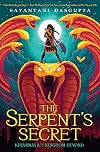
If you want something similar to Percy Jackson, try this novel. I wasn’t particularly keen on reading itl, but the author spoke at a luncheon and she was cute and funny and delightful. Then, I had a publisher tell me that I needed to read this book. I grabbed it to read while working a slow election. It made the last few hours fly by because the book is so engaging and fun.
Kiranmala has been told she’s a princess by her parents for her entire life, which is great unless you are a bit of show more a tomboy and would prefer dressing up as ANYTHING ELSE for Halloween as a 6th grader. It’s Kiran’s 12th’s birthday and she’s a little miffed with her parents, so she bypasses the homemade breakfast and dashes away to school. When she returns home, her life immediately changes. There appears to have been a struggle in the house, her parents are missing, and note from her mother says to trust the princes. A rakkhosh (monster) appears about the same time as two Indian princes show up at her door and suddenly Kiran discovers she is a princess and her parents are not her parents. Her “parents” are subject to the end of the protection spell and will shortly cease to be.
Kiran, with the two princes, travel to her real home that she’s never known about to save her parents and learn to be a princess. She is no ordinary princess; she is a fighting princess. Traveling to the Kingdom Beyond, Kiran must solve riddles on her quest to save everyone while also meeting her real, extraordinary parents.
This novel is a lot of fun and will have you turning pages quickly. Seriously, if you like Percy Jackson (yes, everyone says that about a lot of books and it’s not true; this one is true), try this novel. Instead of Greek mythology, you’ll meet Indian legends. It’s worth your time. show less
Kiranmala has been told she’s a princess by her parents for her entire life, which is great unless you are a bit of show more a tomboy and would prefer dressing up as ANYTHING ELSE for Halloween as a 6th grader. It’s Kiran’s 12th’s birthday and she’s a little miffed with her parents, so she bypasses the homemade breakfast and dashes away to school. When she returns home, her life immediately changes. There appears to have been a struggle in the house, her parents are missing, and note from her mother says to trust the princes. A rakkhosh (monster) appears about the same time as two Indian princes show up at her door and suddenly Kiran discovers she is a princess and her parents are not her parents. Her “parents” are subject to the end of the protection spell and will shortly cease to be.
Kiran, with the two princes, travel to her real home that she’s never known about to save her parents and learn to be a princess. She is no ordinary princess; she is a fighting princess. Traveling to the Kingdom Beyond, Kiran must solve riddles on her quest to save everyone while also meeting her real, extraordinary parents.
This novel is a lot of fun and will have you turning pages quickly. Seriously, if you like Percy Jackson (yes, everyone says that about a lot of books and it’s not true; this one is true), try this novel. Instead of Greek mythology, you’ll meet Indian legends. It’s worth your time. show less
Lists
Awards


You May Also Like


Associated Authors
Statistics
- Works
- 23
- Also by
- 4
- Members
- 1,947
- Popularity
- #13,217
- Rating
- 3.8
- Reviews
- 20
- ISBNs
- 100
- Languages
- 2