
Ahmed Ali (1) (1910–1994)
Author of Al-Qur'an: A Contemporary Translation (Ahmed Ali, 1984)
For other authors named Ahmed Ali, see the disambiguation page.
About the Author
Image credit: Ahmed Ali
Works by Ahmed Ali
GHALIB 1 copy
Associated Works
Tagged
Common Knowledge
- Birthdate
- 1910
- Date of death
- 1994-01-14
- Gender
- male
- Education
- Aligarh Muslim University
Lucknow University - Occupations
- English professor
BBC Director
diplomat
translator
novelist - Nationality
- India
Pakistan - Birthplace
- New Delhi, India
- Places of residence
- New Delhi, India
Aligarh, India
Lucknow, India
Calcutta, India
Nanking, China
Karachi, Pakistan - Place of death
- Karachi, Pakistan
- Map Location
- Pakistan
Members
Reviews
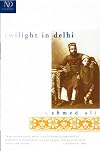
The story of a Muslim family in the Walled City of Delhi from around 1910 to 1920 or so. The book pays homage to a lost world: a world in which, among other things, conversations regularly quoted the classic poets, a world where many kept pigeons and flew them. The nostalgia permeates the story of the patriarch, Mir Nihal, and his family. His younger son, Asghar, declares he must marry a woman he knows next to nothing about—or he will commit suicide. Friends and relatives and servants and show more neighbors appear, disappear, and reappear. Ali depicts the life of a Muslim family at an important juncture in history: you see how life is changing, with a sometimes implicit, sometimes explicit criticism of the role of British colonialism. Much of the book deals with the irretrievable: the disappearing rituals, manners, and beliefs of a life. Ali shows how the pain of a people deeply wedded to religion and their way of life confronting the hard-boiled science of an alien culture and that culture as well. And for all their flaws—and they are not ignored—you can’t help but sympathize with Mir Nihal and his family as their world crumbles. (Although it’s not particularly relevant, the introduction tells a long and fascinating story about the very long journey the manuscript took in order to eventually find publication despite being championed vigorously by E.M. Forster.) show less

Richly atmospheric but a complete downer. Change and decay; death and loss. To be read only on a bright sunny day, preferably in a deck chair with a gin and tonic in hand.
This is a good translation to read in comparison with others. Ahmed Ali deliberately chooses some unorthodox renderings of a few passages. This helps those of us who are not fluent in Arabic to get a better feel for the implications or range of meanings in the original text.
A window to a world forgotten. Read like an author trying to impress by emulating.
Lists
Awards


Statistics
- Works
- 10
- Also by
- 1
- Members
- 842
- Popularity
- #30,363
- Rating
- 3.8
- Reviews
- 10
- ISBNs
- 27
- Languages
- 4