
Nina Planck
Author of Real Food: What to Eat and Why
About the Author
Nina Planck, author of Real Food and The Farmers' Market Cookbook, is an expert on local and traditional food. In 1999, she created the first farmers' markets in London, England. In New York City, she ran the legendary Greenmarkets. Nina lives in Greenwich Village with cheese monger Rob Kaufelt and show more their son, Julian. show less
Works by Nina Planck
Real Food for Mother and Baby: The Fertility Diet, Eating for Two, and Baby's First Foods (2009) 97 copies, 5 reviews
Tagged
Common Knowledge
Members
Reviews
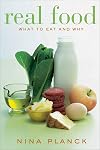
I'd really love to be able to believe everything in this book, but as someone who takes medicine every day for high this and that, I probably shouldn't. There has been a plethora of books lately about what one should eat, and I've read a good many of them: [a:Marion Nestle|11506|Marion Nestle|http://www.goodreads.com/images/nophoto/nophoto-U-50x66.jpg]'s [b:What to Eat|268963|What to Eat|Marion Nestle|http://photo.goodreads.com/books/1316727562s/268963.jpg|72722], [a:Michael show more Pollan|2121|Michael Pollan|http://photo.goodreads.com/authors/1258275549p2/2121.jpg]'s [b:Food Rules|7015635|Food Rules An Eater's Manual|Michael Pollan|http://photo.goodreads.com/books/1308972711s/7015635.jpg|7261546], [a:Barbara Kingsolver|3541|Barbara Kingsolver|http://photo.goodreads.com/authors/1257817545p2/3541.jpg]'s [b:Animal Vegetable Miracle|25460|Animal, Vegetable, Miracle|Barbara Kingsolver|http://photo.goodreads.com/books/1167733922s/25460.jpg|1582285] and [a:Marc Bittman|1785|Mark Bittman|http://photo.goodreads.com/authors/1272595204p2/1785.jpg]'s [b:Food Matters|3698601|Food Matters A Guide to Conscious Eating with More Than 75 Recipes|Mark Bittman|http://photo.goodreads.com/books/1225942065s/3698601.jpg|3742113]. They agree on many things, disagree on some, and each has different emphases. (There are also a number of books which focus more on how our eating habits affect the wider world, and I'll be reporting on a few of those in future.)
As I said, I'd like to be able to believe everything [a:Nina Planck|42682|Nina Planck|http://www.goodreads.com/images/nophoto/nophoto-F-50x66.jpg] says in this book, and to have the money to put it all into practice. Her basic thesis is that if we eat fresh food, raised, gathered or grown as naturally as possible, all foods are healthy for us (although she does encourage strict limitations on white sugar and flour). Grass-fed beef and raw dairy products from grass-fed cows; pork and lard from pigs who roam freely, rooting in woods and pasture; free-range eggs and chickens; wild-caught shrimp and salmon all figure in her ideal diet. No worries about cholesterol or saturated fats -- just steer clear of what she calls "industrial food" and you'll be fine. Industrial food includes not only things like cake mix, Twinkies and fast food, but margarine, canola oil, and of course, factory-farmed animals. I do, in fact, try to get the "good" foods whenever possible, but right now, for instance, I am struggling over whether it's OK to pay $4 a pound for a Thanksgiving turkey to get one that's organic and free-range.
There is a catch besides the economic one. Careful reading reveals that there is another secret to Planck's self-described good health: this woman eats lots and lots of fruits and vegetables. At a time when the public is urged (usually without much success) to eat 5 servings of produce a day, Planck reports that she often serves and eats four vegetables at a meal, in addition to so much salad that her household of two goes through two heads of lettuce a day. In other words, this is not the Atkins diet. It seems to me that eating this quantity of plants would make the meats, cheeses, eggs and fats Planck recommends more like condiments on the side rather than the centerpiece of the meal, and would fill you up so much that you'd be unable to fit in too much of the foods that doctors tell us to avoid.
The major thing I took from this book was a resolve to get more vegetables into the family diet. I'm also going to experiment with using olive oil and a few of the other fats she mentions in cooking and baking, rather than canola oil. The discussion of various oils and how heat affects them was quite informative. Ms. Planck does go overboard on occasion, but I would still recommend her book to anyone concerned about nutrition and ecology. show less
As I said, I'd like to be able to believe everything [a:Nina Planck|42682|Nina Planck|http://www.goodreads.com/images/nophoto/nophoto-F-50x66.jpg] says in this book, and to have the money to put it all into practice. Her basic thesis is that if we eat fresh food, raised, gathered or grown as naturally as possible, all foods are healthy for us (although she does encourage strict limitations on white sugar and flour). Grass-fed beef and raw dairy products from grass-fed cows; pork and lard from pigs who roam freely, rooting in woods and pasture; free-range eggs and chickens; wild-caught shrimp and salmon all figure in her ideal diet. No worries about cholesterol or saturated fats -- just steer clear of what she calls "industrial food" and you'll be fine. Industrial food includes not only things like cake mix, Twinkies and fast food, but margarine, canola oil, and of course, factory-farmed animals. I do, in fact, try to get the "good" foods whenever possible, but right now, for instance, I am struggling over whether it's OK to pay $4 a pound for a Thanksgiving turkey to get one that's organic and free-range.
There is a catch besides the economic one. Careful reading reveals that there is another secret to Planck's self-described good health: this woman eats lots and lots of fruits and vegetables. At a time when the public is urged (usually without much success) to eat 5 servings of produce a day, Planck reports that she often serves and eats four vegetables at a meal, in addition to so much salad that her household of two goes through two heads of lettuce a day. In other words, this is not the Atkins diet. It seems to me that eating this quantity of plants would make the meats, cheeses, eggs and fats Planck recommends more like condiments on the side rather than the centerpiece of the meal, and would fill you up so much that you'd be unable to fit in too much of the foods that doctors tell us to avoid.
The major thing I took from this book was a resolve to get more vegetables into the family diet. I'm also going to experiment with using olive oil and a few of the other fats she mentions in cooking and baking, rather than canola oil. The discussion of various oils and how heat affects them was quite informative. Ms. Planck does go overboard on occasion, but I would still recommend her book to anyone concerned about nutrition and ecology. show less
Real Food for Mother and Baby: The Fertility Diet, Eating for Two, and Baby's First Foods by Nina Planck
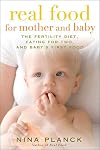
Nina Planck is a proponent of ‘real food.’ She had even written a book on the topic, and was touring for said book when she discovered she was pregnant. As a food activist, Nina did her research about eating before, during, and after pregnancy, as well as feeding young children. When the conventional wisdom sounded wrong to her, she dug deeper to find out what really is best for mothers and babies.
This book is broken into 5 parts: What is Real Food; The Fertility Diet; Forty Weeks; show more Nursing Your Baby; and First Foods. The most important thing to know is probably Nina’s definition of real food. Real food is “old and traditional.” If someone hasn’t been eating it for hundreds of years, you probably shouldn’t either.
What I really liked about this book was Nina’s approach. While scientific she was also very relational, sharing her experiences of pregnancy, nursing, and feeding her young baby. She laid out what sorts of foods one should eat and why, but she was not dictatorial about it and suggested certain supplements if you simply cannot eat that food for one reason or another.
This book is quite informative and an engaging read at the same time. If you have enjoyed any of Michael Pollan’s books or articles on food and are pregnant, have a young child, or are considering getting pregnant, this is something worth picking up. show less
This book is broken into 5 parts: What is Real Food; The Fertility Diet; Forty Weeks; show more Nursing Your Baby; and First Foods. The most important thing to know is probably Nina’s definition of real food. Real food is “old and traditional.” If someone hasn’t been eating it for hundreds of years, you probably shouldn’t either.
What I really liked about this book was Nina’s approach. While scientific she was also very relational, sharing her experiences of pregnancy, nursing, and feeding her young baby. She laid out what sorts of foods one should eat and why, but she was not dictatorial about it and suggested certain supplements if you simply cannot eat that food for one reason or another.
This book is quite informative and an engaging read at the same time. If you have enjoyed any of Michael Pollan’s books or articles on food and are pregnant, have a young child, or are considering getting pregnant, this is something worth picking up. show less
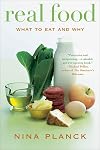
Real Food is not a cookbook, but it is a strident plea for a return to common sense eating at a time when our approach to food ventures on the manic and paranoid. Besieged by frightening reports of poisoned pet food on the one hand, and a bewildering array of “scientific” (and often contradictory) health reports on the other, left to navigate a veritable minefield of dietary regimens that measure your caloric intake and cholesterol levels with the kind of intensity the IRS usually show more reserves for corporate CEOs with too many offshore accounts, eating in this country has ceased to be an act of pleasure or an opportunity for social interaction. All too often it is now a source of stress and even fear.
“Enough!” cries Planck, “Get a grip!” Planck faces off against most of the current food fads and fashions in her book and argues—passionately—for a more reasoned approach to eating that can be summed up in the comment she makes when she talks about her own migration from strict vegetarian to a more rounded diet founded on the pleasures of eggs, dairy, and bacon. “Without really trying,” she says, “I stopped thinking about the food and started tasting it.” . . .read the full review show less
“Enough!” cries Planck, “Get a grip!” Planck faces off against most of the current food fads and fashions in her book and argues—passionately—for a more reasoned approach to eating that can be summed up in the comment she makes when she talks about her own migration from strict vegetarian to a more rounded diet founded on the pleasures of eggs, dairy, and bacon. “Without really trying,” she says, “I stopped thinking about the food and started tasting it.” . . .read the full review show less
Real Food for Mother and Baby: The Fertility Diet, Eating for Two, and Baby's First Foods by Nina Planck
While I’m not yet at that point in my life where I’m settling down and getting married and having babies, I really enjoyed reading through Real Food for Mother and Baby: The Fertility Diet, Eating for Two, and Baby’s First Foods by Nina Planck. It’s loaded with information about food and nutrition while maintaining an easy-to-read style, and perhaps best of all, it doesn’t preach. Planck tells you what she knows – which is, admittedly, a lot, and she brings in the experts to show more verify what she’s saying, so you don’t have to take only her word on it – and she relates stories about her own pregnancy, but then she leaves it up to you to decide what’s best for your body and your baby.
The book is broken down into five sections, beginning with the chapter entitled ‘What is Real Food?’ that starts with a basic explanation of, you guessed it, what the author calls ‘real food’: the old and the traditional. Foods that were eaten long before food became part of an industry, foods that aren’t processed within an inch of their life, and foods that haven’t been enhanced and added-to before they’re sold are the staples of the ‘real food’ diet. Planck then moves on to chapters covering ‘The Fertility Diet’ [what to eat when you’re trying to conceive, and what foods best prepare your body for the rigors of pregnancy], ‘Forty Weeks’ [how the foods you eat can influence your baby’s development], ‘Nursing Your Baby’ [championing the benefits of breastfeeding over formula use], and ‘First Foods’ [introducing your child to something a little more solid]. The back of the book also provides a list of resources for further reading on a range of topics, from postnatal depression to autism and allergies and various birthing techniques.
Overall, this is a stellar book. Like I said, I’m nowhere near ready for the baby-specific information, but I read this book cover to cover, and it’s now full of post-it flags for easier future reference. I’ve found myself returning to the first chapter on foods basics more than once. A lot of what Planck presents just makes sense, and with so much information and misinformation floating around in the media – eggs are bad! no, wait, eggs are good! – it’s great to have something to fall back on when everything gets confusing. I’ve even broken it out when having baby-related discussions with friends and plan on presenting a copy or two as gifts to friends in the future. And, yeah, maybe I do look forward to using the information for my own personal use some day. show less
The book is broken down into five sections, beginning with the chapter entitled ‘What is Real Food?’ that starts with a basic explanation of, you guessed it, what the author calls ‘real food’: the old and the traditional. Foods that were eaten long before food became part of an industry, foods that aren’t processed within an inch of their life, and foods that haven’t been enhanced and added-to before they’re sold are the staples of the ‘real food’ diet. Planck then moves on to chapters covering ‘The Fertility Diet’ [what to eat when you’re trying to conceive, and what foods best prepare your body for the rigors of pregnancy], ‘Forty Weeks’ [how the foods you eat can influence your baby’s development], ‘Nursing Your Baby’ [championing the benefits of breastfeeding over formula use], and ‘First Foods’ [introducing your child to something a little more solid]. The back of the book also provides a list of resources for further reading on a range of topics, from postnatal depression to autism and allergies and various birthing techniques.
Overall, this is a stellar book. Like I said, I’m nowhere near ready for the baby-specific information, but I read this book cover to cover, and it’s now full of post-it flags for easier future reference. I’ve found myself returning to the first chapter on foods basics more than once. A lot of what Planck presents just makes sense, and with so much information and misinformation floating around in the media – eggs are bad! no, wait, eggs are good! – it’s great to have something to fall back on when everything gets confusing. I’ve even broken it out when having baby-related discussions with friends and plan on presenting a copy or two as gifts to friends in the future. And, yeah, maybe I do look forward to using the information for my own personal use some day. show less
You May Also Like


Statistics
- Works
- 5
- Members
- 685
- Popularity
- #36,933
- Rating
- 3.8
- Reviews
- 19
- ISBNs
- 18
- Languages
- 1