

Jim Munroe (1) (1972–)
Author of Flyboy Action Figure Comes with Gasmask
For other authors named Jim Munroe, see the disambiguation page.
Works by Jim Munroe
We Are Raccoons 1 copy
Associated Works
Mythmakers and Lawbreakers: Anarchist Writers on Fiction (2010) — Contributor — 110 copies, 1 review
Tagged
Common Knowledge
Members
Reviews
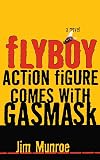
It's a little hard to decide on the genre of this book. There's people with superpowers as the main characters so maybe it is science fiction. But there's not really any scientific explanation of the superpowers so maybe it is fantasy. On the other hand the main characters seem so normal, fitting in their superpower escapades around their jobs and classes and other activities. So maybe it's literature, a little off the wall, but literature just the same. Whatever it is it was a really fun show more read. Who knew people in Toronto could be so cool? (she says with her western Canadian bias against anything based in TO)
Ryan is a university student in Toronto. He's from London, ON originally and he seems like a bit of a hick. After all he is 21 and still a virgin. He has a major crush on Cassandra, a waitress in the diner he frequents. Oh yes, and he can turn himself into a fly. Cassandra wasn't always a waitress. She is also 21 but she's seen a lot more of life than Ryan. She grew up in BC and was in a punk girl band for a few years. The band fell apart when Cassandra got pregnant (by an alien -- maybe it is science fiction after all). Cassandra decided to move to Toronto (do West Coast people really do that voluntarily?) to have her baby. She's been in Toronto for about 2 years when the book starts. Eventually Ryan works up the nerve to ask Cassandra out and they have a great time. He reveals his big secret to her, something he has never told another person. She invites him over to her place to demonstrate and one thing leads to another. Cassandra realizes that she has the ability to make things disappear and she and Ryan team up to right injustice. One of the first things they do is change a big cigarette billboard because Ryan's mom has breast cancer and Ryan blames it on his mother's cigarette habit.
There's some big issues in this book as well as the humour. Munroe published this book with Harper Collins but he now publishes independently and some of the issues with big media show up in this book. There are also subplots about sexuality and drug use and I've already mentioned the cancer and smoking issue. But, mostly, the book is about young love between two people with superpowers. Well worth the read. show less
Ryan is a university student in Toronto. He's from London, ON originally and he seems like a bit of a hick. After all he is 21 and still a virgin. He has a major crush on Cassandra, a waitress in the diner he frequents. Oh yes, and he can turn himself into a fly. Cassandra wasn't always a waitress. She is also 21 but she's seen a lot more of life than Ryan. She grew up in BC and was in a punk girl band for a few years. The band fell apart when Cassandra got pregnant (by an alien -- maybe it is science fiction after all). Cassandra decided to move to Toronto (do West Coast people really do that voluntarily?) to have her baby. She's been in Toronto for about 2 years when the book starts. Eventually Ryan works up the nerve to ask Cassandra out and they have a great time. He reveals his big secret to her, something he has never told another person. She invites him over to her place to demonstrate and one thing leads to another. Cassandra realizes that she has the ability to make things disappear and she and Ryan team up to right injustice. One of the first things they do is change a big cigarette billboard because Ryan's mom has breast cancer and Ryan blames it on his mother's cigarette habit.
There's some big issues in this book as well as the humour. Munroe published this book with Harper Collins but he now publishes independently and some of the issues with big media show up in this book. There are also subplots about sexuality and drug use and I've already mentioned the cancer and smoking issue. But, mostly, the book is about young love between two people with superpowers. Well worth the read. show less

Set in post-Rapture Chicago, the visual spaces depicted here are true to the city as I know it. (The use of the el system is a fun example.) Twist: the elect seemingly have become a paramilitary / peacekeeping force in the form of an army of angels, of questionable morality overall, while those left behind are most recognisably "like us", though ... not physically. Magic / demonic mutations appear to work, though no-one is quite sure why, or when, or by what rules.
The plot is driven by show more Raven and Mummy, a couple who are going through a rough patch, relationship-wise. The backstory of the Rapture is divulged as we go rather than in one big exposition: it's revealed in natural conversations between various characters, not a forced situation where someone "explains" to another character with the real point to fill in the reader.
The writing is humourous and doesn't spell everything out, the reader is left to make connections between various scenes. I made some of them a day later, thinking about the novel as I ran errands. For example, a drunk is encountered on the street by two characters, and subsequently found dead, but in a still later scene is walking around with characters who apparently never knew he was dead. Two angels separately talk about some of those left behind learning about the "three day rule". I like this piecewise telling of the story.
The novel closes on a cliffhanger which reveals just enough to make for a satisfying conclusion, while setting the stage (inevitably) for the sequel, in which presumably occurs the real battle between those left behind and those pesky angels.
I'll be looking out for the next volume. More precisely, the sequel appeared first in comic book installments, but typically I wait for the compendium in trade paper / hardback format. The sequel appears to be set in Detroit, not Chicago.
2016 RE-READING
A strong element of satire, taking Christian millenarianism literally and wondering: what next? Munroe sends up the idea of the Rapture in supposing the 'good guys' are found among those left behind, not those taken. Primarily, though, the story takes off from this premise and concerns itself with a character-driven plot centered on relationships and finding one’s way in a challenging environment. The theology is the basis of the setting, not the focus of the story. show less
The plot is driven by show more Raven and Mummy, a couple who are going through a rough patch, relationship-wise. The backstory of the Rapture is divulged as we go rather than in one big exposition: it's revealed in natural conversations between various characters, not a forced situation where someone "explains" to another character with the real point to fill in the reader.
The writing is humourous and doesn't spell everything out, the reader is left to make connections between various scenes. I made some of them a day later, thinking about the novel as I ran errands. For example, a drunk is encountered on the street by two characters, and subsequently found dead, but in a still later scene is walking around with characters who apparently never knew he was dead. Two angels separately talk about some of those left behind learning about the "three day rule". I like this piecewise telling of the story.
The novel closes on a cliffhanger which reveals just enough to make for a satisfying conclusion, while setting the stage (inevitably) for the sequel, in which presumably occurs the real battle between those left behind and those pesky angels.
I'll be looking out for the next volume. More precisely, the sequel appeared first in comic book installments, but typically I wait for the compendium in trade paper / hardback format. The sequel appears to be set in Detroit, not Chicago.
2016 RE-READING
A strong element of satire, taking Christian millenarianism literally and wondering: what next? Munroe sends up the idea of the Rapture in supposing the 'good guys' are found among those left behind, not those taken. Primarily, though, the story takes off from this premise and concerns itself with a character-driven plot centered on relationships and finding one’s way in a challenging environment. The theology is the basis of the setting, not the focus of the story. show less

"I'll have a tequila sunrise," declared a fresh-faced cartoon kid, looking around at the people in the bar with bright-eyed pride. He hopped up on a bar stool beside Paul.
The kid was your classic Fresh Off The Boat - the cartoon body favored by people getting to choose a body other than their own for the first time, corn-colored tufts of hair above freckles and a gargantuan grin. "Can't believe it! All looks so real," the kid said, sliding his hands over the bar.
It's the middle of the 21st show more century and the streets of Vancouver are emptying as more and more people decide to take up residence in Frisco, a virtual reality world based on San Francisco, run by a company called Self. But what happens to the bodies of those who have moved there. They are supposed to be stored in a secret location in case anybody decides to leave Frisco and return to the real world, but nobody really knows if they are.
The trickle of people signing up for Self's bronze, silver, gold and platinum packages has become a flood, schools and workplaces are moving into Frisco and closing down in the real world, and soon only the poor and disenfranchised will be left. But the resistance movement known as the Infiltrators is growing in both worlds, and the main characters in the book are drawn into it by the mysterious Paul.
What is it with cyberpunk novels and weak endings? The story fizzled to a halt as if the author was just bored with it, leaving me with a vague idea of Paul's plans, but no closure. show less
The kid was your classic Fresh Off The Boat - the cartoon body favored by people getting to choose a body other than their own for the first time, corn-colored tufts of hair above freckles and a gargantuan grin. "Can't believe it! All looks so real," the kid said, sliding his hands over the bar.
It's the middle of the 21st show more century and the streets of Vancouver are emptying as more and more people decide to take up residence in Frisco, a virtual reality world based on San Francisco, run by a company called Self. But what happens to the bodies of those who have moved there. They are supposed to be stored in a secret location in case anybody decides to leave Frisco and return to the real world, but nobody really knows if they are.
The trickle of people signing up for Self's bronze, silver, gold and platinum packages has become a flood, schools and workplaces are moving into Frisco and closing down in the real world, and soon only the poor and disenfranchised will be left. But the resistance movement known as the Infiltrators is growing in both worlds, and the main characters in the book are drawn into it by the mysterious Paul.
What is it with cyberpunk novels and weak endings? The story fizzled to a halt as if the author was just bored with it, leaving me with a vague idea of Paul's plans, but no closure. show less
How do I get myself into these books?
A twenty-something college student narrator, living with several roommates in Toronto, Canada, finds the girl of his dreams with whom he can share his deep, dark secret--he can turn himself into a fly. She is not shocked by this revelation at all. In fact, she has her own deep, dark secret--she has the ability to make things disappear from the face of the earth.
They were made for each other.
And, though it surprises me to admit this, they have show more something to say to this forty-something reader who discovered the book on the shelves of the local library and was drawn to the title and the promise of something a little different.
Flyboy Action Figure Comes With Gas Mask is not really about being a superhero. It's really about living through a stage when your life can go in any direction, and how this knowledge paralyzes when it should liberate. Someone is getting a band together and needs flyers handed out. Someone is performing at a poetry reading. Someone is having a party. There is this girl or this boy someone wants to meet. There's a demonstration this weekend. No one has any money once the rent is paid. Everyone wants school to end, but no one knows what to do after it does.
Why not use your superpowers to stir up the establishment?
I enjoyed Flyboy Action Figure Comes With Gas Mask because it captured the sense of stasis of my own college years. Mr. Munroe understands what that experience is like, much the same way that Bryan Lee O'Malley, author of the Scott Pilgrim vs. The World series does. I'm not going to argue one influenced the other here, Mr. Munroe's book is first (1995) for the record, but the two would make an interesting pairing. Being in one's 20's, trying to determine how to move forward and not wanting anything to change turns out to be a lot like falling for a girl with super-powers. show less
A twenty-something college student narrator, living with several roommates in Toronto, Canada, finds the girl of his dreams with whom he can share his deep, dark secret--he can turn himself into a fly. She is not shocked by this revelation at all. In fact, she has her own deep, dark secret--she has the ability to make things disappear from the face of the earth.
They were made for each other.
And, though it surprises me to admit this, they have show more something to say to this forty-something reader who discovered the book on the shelves of the local library and was drawn to the title and the promise of something a little different.
Flyboy Action Figure Comes With Gas Mask is not really about being a superhero. It's really about living through a stage when your life can go in any direction, and how this knowledge paralyzes when it should liberate. Someone is getting a band together and needs flyers handed out. Someone is performing at a poetry reading. Someone is having a party. There is this girl or this boy someone wants to meet. There's a demonstration this weekend. No one has any money once the rent is paid. Everyone wants school to end, but no one knows what to do after it does.
Why not use your superpowers to stir up the establishment?
I enjoyed Flyboy Action Figure Comes With Gas Mask because it captured the sense of stasis of my own college years. Mr. Munroe understands what that experience is like, much the same way that Bryan Lee O'Malley, author of the Scott Pilgrim vs. The World series does. I'm not going to argue one influenced the other here, Mr. Munroe's book is first (1995) for the record, but the two would make an interesting pairing. Being in one's 20's, trying to determine how to move forward and not wanting anything to change turns out to be a lot like falling for a girl with super-powers. show less
Awards


You May Also Like
Associated Authors
Statistics
- Works
- 13
- Also by
- 2
- Members
- 688
- Popularity
- #36,763
- Rating
- 3.5
- Reviews
- 38
- ISBNs
- 16
- Languages
- 1
