
Edward R. Ricciuti
Author of Rocks and Minerals: National Audubon Society First Field Guide
About the Author
Ewdard R. Ricciuti graduated from the University of Notre Dame with a bachelor's degree in communication arts and went on for his master's degree at the Columbia University Graduate School of Journalism. He was appointed a Sloan-Rockefeller Advanced Science Writing Fellow at Columbia. Ricciuti is show more also a former U.S. Marine reservist. His writing has included various topics related to his many interests. A few examples: The Natural History of North America, Rocks and Minerals, The Yakama, How to Box, The War in Yugoslavia, The Snake Almanac, Amphibians, Killer Animals, Killers of the Seas, and Science 101: Forensics. (Bowker Author Biography) show less
Works by Edward R. Ricciuti
Killer Animals: Shocking True Stories of Deadly Conflicts Between Humans and Animals (1976) 17 copies
The New York City wildlife guide : wild creatures of New York City and where to find them (1984) 10 copies
Forensics 3 copies
Vida selvagem nas montanhas 1 copy
Animals in atomic research 1 copy
Associated Works
Joe Kaufman's Wings, Paws, Hoofs and Flippers: A Book About Animals (1981) — Contributor — 35 copies
Cricket Magazine, Vol. 5, No. 11, July 1978 — Contributor — 1 copy
Tagged
Common Knowledge
- Legal name
- Ricciuti, Edward Raphael
- Birthdate
- 1938-05-27
- Gender
- male
- Education
- Notre Dame (AB)
Members
Reviews

Profound observations on the lives and social structures of wild cats, written in a poetic style. The pages are extremely thick, almost the thickness of an actual photograph, with excellently-chosen images. They are not of the same quality as, say, modern-day DK books, but the shots are generally memorable and even surprising or even humorous. An example of the latter: A series of pics of a standoff on a tree limb between a margay and an anteater, with a caption indicating the cat would be show more no match for the insectivore's claws. One that haunts me is a cheetah standing right above the neck region of a cowering caracal (a slightly slower, smaller cat with obviously no chance of escape), lacking any explanation in the caption. (Actually, I found another pic from the same incident near the front of the book, with them both running, captioned "A caracal retreats from an encounter with a cheetah.")
There's not a lot of gore in the predation photos, compared to other big cat books I've seen and owned. Generally, the moment before impact is pictured. The large text size means the book is a much quicker read than its lumbering size would indicate, and due to the thick paper stock, it's only 247 pages, about half of which are photos.
Overall, this purchase is a no-brainer, no matter how many similar books you have, or even if you've not yet fallen under the sway of these animals. show less
There's not a lot of gore in the predation photos, compared to other big cat books I've seen and owned. Generally, the moment before impact is pictured. The large text size means the book is a much quicker read than its lumbering size would indicate, and due to the thick paper stock, it's only 247 pages, about half of which are photos.
Overall, this purchase is a no-brainer, no matter how many similar books you have, or even if you've not yet fallen under the sway of these animals. show less
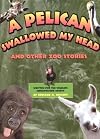
This book gives young readers a glimpse into the inner workings of the Brooklyn Zoo by peering behind the curtain and interviewing the keepers who care for the animals. The book is arranged in chapters focused on a particular animal or species at the zoo, and tells the issues their keepers have had to overcome. It also gives a history of the zoo and the modernization that has helped the zoo change the mold of the old style of animals on display in cages to the newer natural enviornments.
In show more picking up this book, I thought it would be focused more on humerous stories zookeepers had to tell. Other than the story that is the basis of the title, however, this book is more focused on the animals and the zoo itself, at some points sounding almost like a promotional ad for the zoo. After working nearly a decade in the animal field and having married and become friends with a zookeeper, this was a little bit of a disappointment to me as I know some of the stories of humerous mishaps zookeepers sometimes have to tell. However, for younger readers interested in the zoo field, this book should serve as an interesting glimpse behind the scenes into the life of a keeper. show less
In show more picking up this book, I thought it would be focused more on humerous stories zookeepers had to tell. Other than the story that is the basis of the title, however, this book is more focused on the animals and the zoo itself, at some points sounding almost like a promotional ad for the zoo. After working nearly a decade in the animal field and having married and become friends with a zookeeper, this was a little bit of a disappointment to me as I know some of the stories of humerous mishaps zookeepers sometimes have to tell. However, for younger readers interested in the zoo field, this book should serve as an interesting glimpse behind the scenes into the life of a keeper. show less
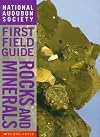
I give this book a three star rating because there are components of the book that I really like while at the same time having aspects that can be improved. One reason why I like the book is because it provides a clear understanding of the three types of rocks as well as minerals, gemstones, and fossils. The one thing that I do not like deals with the field guide section where children can read all about the different types of minerals, rocks, or gemstones. In this section, the illustrator show more takes a picture of the specific object being identified and blows it up and sticks a few boxes of information over top of it. I think that this is very distracting. If they wanted to show what the grains look like or other identifying features they could have chosen to do a blow up of a piece of the rock so that it was only a part of the page. Other than that the information was well written and useful. The big idea of this book is to give children a reference guide for classifying different types of rocks and minerals they may pick up outside and tells them how they formed. show less
This book is like a pocket book full of everything one would want to know about rocks and minerals. This book is a guide to take with you when you go exploring and looking for rocks and minerals. I enjoy how the book is organized, four sections... first section "The World of Rocks and Minerals" which is an introduction to geology and mineralogy. Second section "How to Look at Rocks and Minerals" gives you information on how to begin identyigying rocks and minerals. Third section "The Field show more Guide" give you detalied descriptions and photograhs of the important rocks and minerals. Fourth section " The Reference Section" there is a glossary, list of books, organizations, Web sites, etc... to pursue more infomration on rocks and minerals. This guide book is easy to follow, not so much of a read from cover to cover but more of a guide that is filled with everything to know about rocks and minerals. The photographs are high quality and the text is very informative and easy to read and follow. A must for anyone who has any of the slightest interest in rocks and minerals. The book is easy to follow but remains professional at the same time. Book offers a lot of knowledge and information.
Ages 7 and up. show less
Ages 7 and up. show less
Lists
Awards

You May Also Like


Associated Authors
Statistics
- Works
- 78
- Also by
- 3
- Members
- 1,600
- Popularity
- #16,111
- Rating
- 3.6
- Reviews
- 10
- ISBNs
- 135
- Languages
- 4