
Herbert Spencer Zim (1909–1994)
Author of Birds of North America: A Guide to Field Identification
About the Author
Herbert S. Zim was born in 1909 in New York City. He was a naturalist, author, editor and also known as the fonder and editor in chief of the Golden Guides series of nature books. Zim wrote or edited more than one hundred scientific books, and in a thirty-year career teaching in the public schools show more introduced laboratory instruction into elementary school science. He is best known as the founder in 1945, of the Golden Guides, pocket-size introductions for children to such subjects as fossils, zoology, microscopy, rocks and minerals, codes and secret writings, trees, wildflowers, dinosaurs, navigation and more. He was the sole or co-author for many of the books, which were valued for their clarity, accuracy and attractive presentation helped by the illustrations of James Gordon Irving. He continued to work on the Golden Guides series until Alzheimer's disease forced him to slow down in the 1990s. He died in 1994 at Plantation Key, Florida. (Bowker Author Biography) show less
Image credit: via hobbydb.com
Series
Works by Herbert Spencer Zim
Rocks and Minerals: A Guide to Familiar Minerals, Gems, Ores and Rocks (1957) 1,782 copies, 10 reviews
Trees of North America: A Field Guide to the Major Native and Introduced Species North of Mexico (1968) — Editor, some editions — 1,422 copies, 3 reviews
Stars: A Guide to the Constellations, Sun, Moon, Planets, and Other Features of the Heavens (1951) 1,167 copies, 3 reviews
Pond Life: A Guide to Common Plants and Animals of North American Ponds and Lakes (1967) 924 copies, 3 reviews
Non-Flowering Plants, a Guide to Ferns, Mosses, Lichens, Mushrooms And Other Plants (1967) 458 copies, 4 reviews
Birds of the world : a survey of the twenty-seven orders and one hundred and fifty-five families (1961) 220 copies
American Birds & Wildflowers, Over 120 of the Most Common & Best Known Birds, Flowers of United States Illustrated in Full Color (2007) 9 copies
Telephone Systems 3 copies
WHATS INSIDE ME By HERBERT S ZIM Morrow Junior Books HC 1952 1st [Hardcover] Herbert S. Zim 3 copies
Universe, The 2 copies
What's inside the earth? 2 copies
Air navigation 2 copies
Song Birds of the World 2 copies
What's Inside the Earth? 2 copies
How things grow 2 copies
Dinosaurs 1 copy
Sharks 1 copy
Frogs and Toads 1 copy
Seashores 1 copy
Planets 1 copy
Parrakeets 1 copy
Reptiles and Amphibians 1 copy
The Rocky Mountains 1 copy
People of Purpose 1 copy
Seashores a guide to shells, sea plants, shore birds, and other natural features of American coasts 1 copy
Elephants 1 copy
Waves 1 copy
Our Wonderful World: An Encyclopedic Anthology for the Entire Family - Volume 18 Index (1965) 1 copy
Lightening and Thunder 1 copy
Meteorología 1 copy
Associated Works
Rocks and Minerals (Field Guide and Introduction to the Geology and Chemistry of) (1973) — Editor, some editions — 397 copies
Cricket Magazine, Vol. 4, No. 11, July 1977 — Contributor — 2 copies
Tagged
Common Knowledge
- Legal name
- Zim, Herbert Spencer
- Other names
- Zim, Herbert S.
- Birthdate
- 1909-07-12
- Date of death
- 1994-12-05
- Gender
- male
- Education
- Columbia University (BS|1933|MS|1934|PhD|1940)
- Occupations
- teacher
naturalist
author
editor - Organizations
- Simon & Schuster
University of Illinois - Relationships
- Bleeker, Sonia (wife)
- Short biography
- editor in chief of the Golden Guides series of nature books
- Nationality
- USA
- Birthplace
- New York, New York, USA
- Places of residence
- California, USA
Port Washington, New York, USA - Place of death
- Plantation Key, Florida, USA
- Map Location
- California, USA
Members
Discussions
Found: Non-Fiction 50s-60s Children's Book About Birds of North America in Name that Book (March 2022)
Reviews
Spiders and Their Kin: A Fully Illustrated, Authoritative and Easy-to-Use Guide (A Golden Guide from St. Martin's Press) by Herbert W. Levi
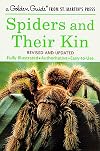
I found an interesting spider up on Mount Rainier a few years ago. The pale blue egg sac caught my attention. I guessed it was in the wolf spider family, roaming around at 1800 meters (6000 feet). I snapped a few photos and continued on to botanize.A few months later, I added an observation on iNaturalist. I know this was a wolf spider (family Lycosidae) but not much more. After a few hours,someone suggested this spider was in genus Pardosa.
A few years later, confirmed the ID at the genus show more level and noted that in Western Washington, only this genus has blue egg sacs. I then asked Rod about how to get to a species level ID. I asked them to recommend a good beginner's book on spiders. They suggested Spiders and Their Kin by Levi et al. I ordered a copy of the book, and when it arrived, I noticed it was a Golden Guide, which I had thought of as a children's book. I was wrong! This book was a perfect introduction. It covers land arthropods other than insects, including spiders, scorpions, harvestmen, mites, centipedes, millipedes, and wood lice. The book starts with the classification, anatomy, and behavior of spiders and their kin.
The book's core is an illustrated review by family of spiders, spider relatives, myriapods, and land crustaceans. It has worldwide coverage. The length of each section varies based on the number of species. For example, orbweavers (Araneidae) cover 19 pages, about 12% of the book. This section was helpful, especially a two-page spread on how orbweavers build their webs. The unit on wolf spiders (Lycosidae) helped me understand the behavior of the genus Pardosa.
This book will sit beside me while working on my iNaturalist observations of spiders and their relatives. It's a good introduction in 160 pages. One caveat is that this isn't a detailed species identification guide but should be helpful to classify down to the family level. show less
A few years later, confirmed the ID at the genus show more level and noted that in Western Washington, only this genus has blue egg sacs. I then asked Rod about how to get to a species level ID. I asked them to recommend a good beginner's book on spiders. They suggested Spiders and Their Kin by Levi et al. I ordered a copy of the book, and when it arrived, I noticed it was a Golden Guide, which I had thought of as a children's book. I was wrong! This book was a perfect introduction. It covers land arthropods other than insects, including spiders, scorpions, harvestmen, mites, centipedes, millipedes, and wood lice. The book starts with the classification, anatomy, and behavior of spiders and their kin.
The book's core is an illustrated review by family of spiders, spider relatives, myriapods, and land crustaceans. It has worldwide coverage. The length of each section varies based on the number of species. For example, orbweavers (Araneidae) cover 19 pages, about 12% of the book. This section was helpful, especially a two-page spread on how orbweavers build their webs. The unit on wolf spiders (Lycosidae) helped me understand the behavior of the genus Pardosa.
This book will sit beside me while working on my iNaturalist observations of spiders and their relatives. It's a good introduction in 160 pages. One caveat is that this isn't a detailed species identification guide but should be helpful to classify down to the family level. show less

I have a collection of Golden Press field guides, but I rarely have a use for them. Now I figure instead of waiting for camping trips as an excuse to bring and refer to guides, I should read them and pick animals that live in my area and scout for them.
The artwork, unsurprisingly, is amazing. It's a shame that the publication is so small because easily it could have been printed large to focus on the paintings and have the data paragraphed in corners to accent the visuals.
Usually I study show more the theories and phenomena in the natural world, but I don't take enough time to appreciate diversity. I had never heard of three quarters of the birds in this book, many of them live in my region. I definitely need to take my camera, pack for a day in the field, and stock these animals based on the information provided in this book (and perhaps a more specialized one). Otherwise I'll live in a neighborhood where I never see my neighbors, and I don't think that's the right approach to life. show less
The artwork, unsurprisingly, is amazing. It's a shame that the publication is so small because easily it could have been printed large to focus on the paintings and have the data paragraphed in corners to accent the visuals.
Usually I study show more the theories and phenomena in the natural world, but I don't take enough time to appreciate diversity. I had never heard of three quarters of the birds in this book, many of them live in my region. I definitely need to take my camera, pack for a day in the field, and stock these animals based on the information provided in this book (and perhaps a more specialized one). Otherwise I'll live in a neighborhood where I never see my neighbors, and I don't think that's the right approach to life. show less

How I loved this book as a boy. I read it cover to cover, and used it to construct secret codes. My copy did not make it into adulthood, but I'd like to think it's out there somewhere amusing some 10 or 14 year old. Oh, but they have cell phones and the internet now, so that's probably not so likely. Too bad.
Reptiles and Amphibians: A Guide to Familiar American Species (A Golden Nature Guide) by Herbert Spencer Zim

As kids, we had several Golden Guides, which offered a handy means of identification of animals we'd encounter in our yard, the woods, and the nearby park. This guide probably didn't get much use (since other than the occasional garter snake and frog, our paths weren't crossed very often by amphibians and reptiles. Nevertheless, it was fun to page through the guide to see the different types of lizards, snakes, and turtles. Who'd have imagined that someday I'd grow up and make such animals show more the subject of intensive study, and to build a research career out of them! show less
Lists
Awards


You May Also Like


Associated Authors
Statistics
- Works
- 185
- Also by
- 3
- Members
- 27,327
- Popularity
- #752
- Rating
- 3.7
- Reviews
- 136
- ISBNs
- 323
- Languages
- 4
- Favorited
- 1