
Joanne Rocklin
Author of How Much is That Guinea Pig in the Window?
About the Author
Joanne Rocklin is the acclaimed author of more than a dozen books for children, including the novel Strudel Stories, which follows a Jewish family through seven generations. A former elementary-school teacher and psychologist, she now writes full-time. She is a member of the Advisory Committee for show more the Museum of Tolerance "Once Upon a World" Storytelling Program of the Simon Wiesenthal Center in Los Angeles and is a founding member of the outreach organization California Readers. Originally from Montreal, Joanne Rocklin has two grown sons and lives in Los Angeles with her husband, Gerry, and three cats. show less
Image credit: via author's website
Works by Joanne Rocklin
Associated Works
Tagged
Common Knowledge
- Gender
- female
- Places of residence
- Montréal, Québec, Canada
Los Angeles, California, USA
Members
Reviews
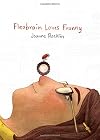
It's 1952, and Franny has polio, so badly that the book begins with Franny in an iron lung, the machine whooshing as a friendly nun reads to her from newly-published Charlotte's Web. Returning home should mean she's reunited with family and friends, but everything seems different now. Some parents still think her polio is contagious and keep their children away. Even her family seems different. Her visiting nurse thinks she's not trying. But someone is watching -- Fleabrain the flea, who show more interacts with Franny via her journal. At first, he is a welcome friend (albeit a bit overly intellectual for middle-grade Franny). But why can he not ever share her affection for Charlotte's Web? Is it because Fleabrain's friendship is really about Fleabrain's needs, and he cannot validate Franny's? While Fleabrain's trajectory is a bit too-fantastical, and it is Franny's story of increased physical and emotional strength that grips the reader, this is a story of a sweetness that we rarely see in today's fiction. Pair with Kehret's Small Steps: The Year I Got Polio. Recommended. (76) show less
I'm finally getting seriously to work on my to read pile...from ALA Midwinter 2011!
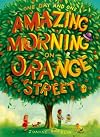
This is a slim chapter book, just a little over 200 pages, but it's packed full of emotions and evocative language. Throughout the course of one day and one morning the reader meets a variety of characters who live on Orange Street. Ali, who fights with her bossy friend Leandra and worries about her little brother Edgar, recovering from major surgery. Manny, Edgar's nanny, who gives advice to Robert who has a show more crush on Ali. Their elderly friend Ethel Finneymaker who grew up on Orange Street. Ethel's old friend's Larry and Pug, whose father was killed in Vietnam. One of them might be the stranger who has returned, putting the orange tree in jeopardy which leads to a brave action by Bunny, who worries about her mom.
As you can see, the focus of this story is on the connections that exist between the people in the neighborhood, the long-ago residents, and possible newcomers. All of these different stories are entwined around the orange tree, the last orange tree on the street which once was an orange grove before the houses were built. An author's note gives some historical information about the orange industry in California, a little background on some of the historical settings, and a recipe for ambrosia. Simple black and white pencil drawings decorate the story, marking out chapters and separating the voices of various protagonists.
The story builds slowly with warmth and feeling, but doesn't shy away from painful emotions - the death of Larry and Pug's father, Robert's worries about growing up and the disintegration of his family, and Leandra's resentment of a new sibling. Although it never falls into the "all kids are the same throughout history, they just wear different clothes" fallace (which I hate) it does show links between the various kids on Orange Street dealing with issues and struggling to handle change as pre-teens.
Verdict: This isn't likely to appeal to readers looking for action or detailed historical fiction, but if you have kids who enjoy character-rich stories where the setting is so strongly built it's a protagonist in its own right, you might have an audience for this title.
ISBN: 9780810997196; Published April 2011 by Amulet/Abrams; ARC received at ALA Midwinter 2011; Purchased for the library show less
This is a slim chapter book, just a little over 200 pages, but it's packed full of emotions and evocative language. Throughout the course of one day and one morning the reader meets a variety of characters who live on Orange Street. Ali, who fights with her bossy friend Leandra and worries about her little brother Edgar, recovering from major surgery. Manny, Edgar's nanny, who gives advice to Robert who has a show more crush on Ali. Their elderly friend Ethel Finneymaker who grew up on Orange Street. Ethel's old friend's Larry and Pug, whose father was killed in Vietnam. One of them might be the stranger who has returned, putting the orange tree in jeopardy which leads to a brave action by Bunny, who worries about her mom.
As you can see, the focus of this story is on the connections that exist between the people in the neighborhood, the long-ago residents, and possible newcomers. All of these different stories are entwined around the orange tree, the last orange tree on the street which once was an orange grove before the houses were built. An author's note gives some historical information about the orange industry in California, a little background on some of the historical settings, and a recipe for ambrosia. Simple black and white pencil drawings decorate the story, marking out chapters and separating the voices of various protagonists.
The story builds slowly with warmth and feeling, but doesn't shy away from painful emotions - the death of Larry and Pug's father, Robert's worries about growing up and the disintegration of his family, and Leandra's resentment of a new sibling. Although it never falls into the "all kids are the same throughout history, they just wear different clothes" fallace (which I hate) it does show links between the various kids on Orange Street dealing with issues and struggling to handle change as pre-teens.
Verdict: This isn't likely to appeal to readers looking for action or detailed historical fiction, but if you have kids who enjoy character-rich stories where the setting is so strongly built it's a protagonist in its own right, you might have an audience for this title.
ISBN: 9780810997196; Published April 2011 by Amulet/Abrams; ARC received at ALA Midwinter 2011; Purchased for the library show less
*****PLEASE NOTE THAT I WON THIS BOOK IN A GOODREADS GIVEAWAY*****
This review was originally posted on Melissa's Midnight Musings on August 6 2012.
I loved this book. The characters are loveable, the wordplay is fun, there are tons of interesting theories told only the way a child would tell them. I loved it for the variety in perspective. It was such a nice change from all the YA and Adult fiction that I normally read.
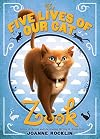
In this story we meet Freddy and Oona, brother and sister who are being show more raised by their mother after their father's death. They have a cat, named Zook, who has become a beloved member of their family. When Zook suddenly gets sick, it brings back memories for Oona of the time when her father is sick too, so she has to deal with all of those memories and emotions that she's kept hidden for so long.
This book is full of stories within stories. It's told from Oona's perspective, and man is she one smart kiddo. She has very creative and inventive theories. One is the Big Whopper theory, where all the lies people tell are color coded for the kind of lie that they are. Black Whoppers are meant to hurt someone, White Whoppers are meant to make someone feel better.
Or, there's the name theory, in which Oona declares that everyone's name is perfect for them, no matter what. Here's a quote to explain the theory:
"Gramma Dee's name is easy Dee RW (rhymes with) bee=honey=sweet like candy. Gramma Dee likes to make Russian taffy, which she learned from her Russian grandmother, who was born in Russia." (pg. 49)
I think what she's trying to say is that people grow into their name, or the meaning of it. They personify that meaning. I think to some extent that becomes true after a while.
I love the wordplay in this book. The play on words with Zook (the cat's) name. Then there's the fact that the kids get paid in fried Zuchinni and pizza is great, and so are the cute word games that Oona plays with Freddy to teach him to read. I love when authors take the time to add these small but important touches to their stories because it helps you become that more attached to the characters.
Oona also has a lot of responsibility for such a little girl. She picks her brother up from school, she's teaching him to read, (with rhyming games and pictures, which I loved) and she even has an after school job. She gets paid in food, but still. For someone so young, that's a lot to handle, but Oona handles most of what comes her way pretty well. She isn't too fond of her mother's new boyfriend, but for a girl whose beloved father passed away that's not a surprise.
Among all these inventive theories and stories about cats who have 9 lives there are a lot of real life observations and lessons which are told in only the way a child can see them. Children have such a different view of the world than adults. There's such innocence, and yet such depth, as well as insight. It's easy to forget how much insight kids have until you read a story like this. And when you do, boy can it pack a punch.
I feel a bit silly admitting this, but I found myself tearing up at the end of this novel, not because of what happens to the characters, but because of the depth and richness of the lessons that Oona learns and the changes that she goes through throughout the course of the book. Now, it takes a lot for me to cry at a book. I have to be really invested in the story, and this was definitely a story that I was invested in. It's got a little bit of everything. It's a sweet story about family, love, loss, friendships, and growing up. I'd recommend it to anyone who enjoys heartfelt stories.
What about you, do you have any interesting theories that you'd like to share? show less
This review was originally posted on Melissa's Midnight Musings on August 6 2012.
I loved this book. The characters are loveable, the wordplay is fun, there are tons of interesting theories told only the way a child would tell them. I loved it for the variety in perspective. It was such a nice change from all the YA and Adult fiction that I normally read.
In this story we meet Freddy and Oona, brother and sister who are being show more raised by their mother after their father's death. They have a cat, named Zook, who has become a beloved member of their family. When Zook suddenly gets sick, it brings back memories for Oona of the time when her father is sick too, so she has to deal with all of those memories and emotions that she's kept hidden for so long.
This book is full of stories within stories. It's told from Oona's perspective, and man is she one smart kiddo. She has very creative and inventive theories. One is the Big Whopper theory, where all the lies people tell are color coded for the kind of lie that they are. Black Whoppers are meant to hurt someone, White Whoppers are meant to make someone feel better.
Or, there's the name theory, in which Oona declares that everyone's name is perfect for them, no matter what. Here's a quote to explain the theory:
"Gramma Dee's name is easy Dee RW (rhymes with) bee=honey=sweet like candy. Gramma Dee likes to make Russian taffy, which she learned from her Russian grandmother, who was born in Russia." (pg. 49)
I think what she's trying to say is that people grow into their name, or the meaning of it. They personify that meaning. I think to some extent that becomes true after a while.
I love the wordplay in this book. The play on words with Zook (the cat's) name. Then there's the fact that the kids get paid in fried Zuchinni and pizza is great, and so are the cute word games that Oona plays with Freddy to teach him to read. I love when authors take the time to add these small but important touches to their stories because it helps you become that more attached to the characters.
Oona also has a lot of responsibility for such a little girl. She picks her brother up from school, she's teaching him to read, (with rhyming games and pictures, which I loved) and she even has an after school job. She gets paid in food, but still. For someone so young, that's a lot to handle, but Oona handles most of what comes her way pretty well. She isn't too fond of her mother's new boyfriend, but for a girl whose beloved father passed away that's not a surprise.
Among all these inventive theories and stories about cats who have 9 lives there are a lot of real life observations and lessons which are told in only the way a child can see them. Children have such a different view of the world than adults. There's such innocence, and yet such depth, as well as insight. It's easy to forget how much insight kids have until you read a story like this. And when you do, boy can it pack a punch.
I feel a bit silly admitting this, but I found myself tearing up at the end of this novel, not because of what happens to the characters, but because of the depth and richness of the lessons that Oona learns and the changes that she goes through throughout the course of the book. Now, it takes a lot for me to cry at a book. I have to be really invested in the story, and this was definitely a story that I was invested in. It's got a little bit of everything. It's a sweet story about family, love, loss, friendships, and growing up. I'd recommend it to anyone who enjoys heartfelt stories.
What about you, do you have any interesting theories that you'd like to share? show less
Surprisingly more interesting than the fluffy cover implies. Heartwarming, and not too intense, but full of stuff for 4th-graders and families to think about, maybe even talk about. And now I want a garden even more than before, and pizza from O'Leary's, and a "multi-culty" neighborhood....
"Stories are Green whoppers, because they're alive and growing and changing all the time."
I will look for more by the author.
"Stories are Green whoppers, because they're alive and growing and changing all the time."
I will look for more by the author.
Awards


You May Also Like


Associated Authors
Statistics
- Works
- 28
- Also by
- 1
- Members
- 3,470
- Popularity
- #7,328
- Rating
- 3.5
- Reviews
- 49
- ISBNs
- 97
- Languages
- 3