
Martin Limón (1) (1948–)
Author of Jade Lady Burning
For other authors named Martin Limón, see the disambiguation page.
Series
Works by Martin Limón
Pusan Nights 3 copies
The Opposite of O 2 copies
ASCOM City [story] 1 copy
The Cold Yellow Sea [story] 1 copy
The Widow Po [story] 1 copy
The Filial Wife [story] 1 copy
Payday [story] 1 copy
Seoul Morning [story] 1 copy
Seoul Story [story] 1 copy
The Gray Asian Sky [story] 1 copy
A Piece of Rice Cake [story] 1 copy
Nightmare Range [story] 1 copy
Associated Works
The Usual Santas: A Collection of Soho Crime Christmas Capers (2017) — Contributor — 158 copies, 10 reviews
Alfred Hitchcock's Mystery Magazine Presents Fifty Years of Crime and Suspense (2006) — Contributor — 78 copies, 1 review
Between the Dark and the Daylight and 27 More of the Best Crime and Mystery Stories of the Year (2009) — Contributor — 43 copies, 1 review
Private Investigations: Mystery Writers on the Secrets, Riddles, and Wonders in Their Lives (2020) — Contributor — 29 copies, 4 reviews
Tagged
Common Knowledge
- Canonical name
- Limón, Martin
- Birthdate
- 1948-11-21
- Gender
- male
- Occupations
- reporter
- Organizations
- United States Army
- Awards and honors
- Notable Book of the Year (The New York Times - 1992)
Hammett Prize (nomination) - Nationality
- USA
- Birthplace
- Detroit, Michigan, USA
- Associated Place (for map)
- Michigan, USA
Members
Reviews
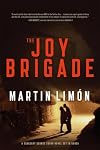
The Joy Brigade is Martin Limón’s ninth thriller featuring Sergeant George Sueño, and after reading it, I am pleased that I finally discovered the series. This time around (it’s1972), George is on a secret mission deep inside North Korea where the odds are heavily stacked against him. He knows that he will be lucky to survive the mission, but he has personal reasons for attempting it – a former lover of his, Doc Yong, possesses the ancient maps he has been assigned to get hold of, show more and George hopes that she will return to South Korea with him once contact is made.
George Sueño is a Military Police investigator with the U.S. Eighth Army in South Korea. Because his crime investigations often involve South Koreans, either as victims or as perpetrators, he has numerous Korean contacts, speaks the language quite well, and has a keen understanding of the culture. But he is not a spy, and he knows that his chances of surviving this assignment are ridiculously low. Getting himself north of the DMZ will turn out to be the least of his problems; shaking his handlers long enough to find Doc Young and her ancient maps and to make his escape will be the big challenge.
U.S. intelligence agencies know that something big is happening in the North. It appears that the People’s Army is preparing to invade South Korea, making the longtime rumors of the existence of a massive tunnel system linking the two countries more disturbing than ever. If the tunnels really exist, it is vital to the defense of South Korea that they are located, and Doc Yong’s ancient manuscript offers the best chance of finding them in time to stop the underground invaders in their tracks.
Despite some help from well-placed anti-government North Koreans, things soon get complicated for George. When he learns that his only chance of penetrating the upper echelons of the North Korean army is to win a foreigners-only martial arts tournament, it appears that his mission will end before he accomplishes anything other than getting himself tortured and killed.
Martin Limón offers a chilling look into North Korea that is very much reminiscent of George Orwell’s 1984. It is a world of blind obedience and general despair that citizens dare not challenge. A few people, however, do have the courage to work for change from within and they, along with one memorable villain, transform The Joy Brigade into a first-rate thriller. Limón’s description of the bleakness of everyday North Korean life is particularly striking because it is so easy to imagine that conditions are much the same there even forty years later.
The Joy Brigade is the best kind of thriller - one peopled with a host of memorable characters. George Sueño in his role as a vulnerable but determined spy is easy to root for, but my favorite character of them all is Rhee Mi-Sook, a beautiful leader of the North Korean secret police. This woman enjoys her work (in numerous ways, it turns out) – and she is good at it. I am looking forward to the tenth book in the series because what happens in the last paragraph of The Joy Brigade hints that Book Ten is going to be a doozy.
Rated at: 4.5 show less
George Sueño is a Military Police investigator with the U.S. Eighth Army in South Korea. Because his crime investigations often involve South Koreans, either as victims or as perpetrators, he has numerous Korean contacts, speaks the language quite well, and has a keen understanding of the culture. But he is not a spy, and he knows that his chances of surviving this assignment are ridiculously low. Getting himself north of the DMZ will turn out to be the least of his problems; shaking his handlers long enough to find Doc Young and her ancient maps and to make his escape will be the big challenge.
U.S. intelligence agencies know that something big is happening in the North. It appears that the People’s Army is preparing to invade South Korea, making the longtime rumors of the existence of a massive tunnel system linking the two countries more disturbing than ever. If the tunnels really exist, it is vital to the defense of South Korea that they are located, and Doc Yong’s ancient manuscript offers the best chance of finding them in time to stop the underground invaders in their tracks.
Despite some help from well-placed anti-government North Koreans, things soon get complicated for George. When he learns that his only chance of penetrating the upper echelons of the North Korean army is to win a foreigners-only martial arts tournament, it appears that his mission will end before he accomplishes anything other than getting himself tortured and killed.
Martin Limón offers a chilling look into North Korea that is very much reminiscent of George Orwell’s 1984. It is a world of blind obedience and general despair that citizens dare not challenge. A few people, however, do have the courage to work for change from within and they, along with one memorable villain, transform The Joy Brigade into a first-rate thriller. Limón’s description of the bleakness of everyday North Korean life is particularly striking because it is so easy to imagine that conditions are much the same there even forty years later.
The Joy Brigade is the best kind of thriller - one peopled with a host of memorable characters. George Sueño in his role as a vulnerable but determined spy is easy to root for, but my favorite character of them all is Rhee Mi-Sook, a beautiful leader of the North Korean secret police. This woman enjoys her work (in numerous ways, it turns out) – and she is good at it. I am looking forward to the tenth book in the series because what happens in the last paragraph of The Joy Brigade hints that Book Ten is going to be a doozy.
Rated at: 4.5 show less
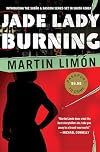
This is a very intriguing and original mystery set in Korea in the early 1970s and told through the narration of George Sueño, one of the American 8th Army CID investigators. He and his partner, Ernie Bascom, have been tasked with discovering who murdered Miss Pak Ok-Suk, a young Korean prostitute who worked the bars frequented by American soldiers.
George and Ernie are tremendously flawed characters but believable for the context of the time and the place. They drink, stop off at clubs for show more quickies with the local bar girls, and overlook much of the corruption they witness on a daily basis. They are total opposites and it makes sense that George narrates the story since he is the analytical one and Ernie is the stubborn one. This combination seems to work well for them and despite more dead bodies, threats and even physical assaults they continue their investigation. It becomes clear to George that the only reason for this to be happening is because it must involve powerful people.
I think many readers may be offended by the portrayal of the Korean business “girls” but these woman were struggling to survive and the American soldiers were a good way to do it. This was a great noir style, gritty mystery set in an exotic location and realistically combining both Korean and US Army culture. show less
George and Ernie are tremendously flawed characters but believable for the context of the time and the place. They drink, stop off at clubs for show more quickies with the local bar girls, and overlook much of the corruption they witness on a daily basis. They are total opposites and it makes sense that George narrates the story since he is the analytical one and Ernie is the stubborn one. This combination seems to work well for them and despite more dead bodies, threats and even physical assaults they continue their investigation. It becomes clear to George that the only reason for this to be happening is because it must involve powerful people.
I think many readers may be offended by the portrayal of the Korean business “girls” but these woman were struggling to survive and the American soldiers were a good way to do it. This was a great noir style, gritty mystery set in an exotic location and realistically combining both Korean and US Army culture. show less
Heavy on the military procedure but South Korea in the 1970's is full of characters, contradictions, culture, and the US Army. ML does a good job with his detectives. It was a little disconnected in a couple of places but it moved along fast and the chase scene near the end and how the book ended worked. Some deaths, some escapes, some happy, some sad, with surprises. A good first effort and I am looking forward to the second.

Set in and around the 8th US Army's compounds in the 70s in South Korea, Limón's series contains both a picture of the US army at the time and of the South Korean society (and the Northern in the previous book). This is the 9th novel in the series - and after the unusual 8th book, it is back to the normal storytelling and places. Or almost normal anyway.
Sueño is back in Seoul after his mission to North Korea in the previous book and with his lover and child gone into hiding, the dynamic show more duo of Sueño and Bascom is back to their usual behavior - annoying everyone in power and stumbling into embarrassing secrets.
The novel opens with a gruesome death - a Korean man walks into the compound and kills an officer with an iron sickle. Before long everyone in the army and in the Korean police and army seems to be hunting for the men except for our two sergeants - who are told to stay away from the case even if Sueño is the only American investigator who can speak and understand any Korean. That does not last long of course -- they are already digging into it when the police asks for them by name (Mr. Kill, who we met in a previous book, makes the request). And things start getting weirder and weirder. More Americans die by the sickle and it seems like the 3 organizations who supposedly are looking for him have their own agendas - and truth is not on anyone's agenda. Except Sueño and Bascom of course.
And as the story unfolds, the truth, and the reason why noone wants it out, starts emerging. As usual, its root is deep into the Korean war 20 years earlier but even for the standards of the series, it is a disturbing one.
Sueño gets beaten more often than usual, another doctor falls for him and we get to see another side of South Korea in the 70s - the lands away from the big cities and the American army, the mountains which unlike the valleys are almost bereft of people and the way mental illness is treated in the country (it is not a happy story...)
The novel stand on its own - even if some references will be unclear although there is a lot of nuances that may be missed - by now the author skips the long explanations about the girls who sell themselves and the mamasans who keep them - the basics are there but having read the whole series, a single sentence conjures a complete picture based on what one already knows.
Another strong entry in the series. The whole series is recommended - as long as you can handle the gruesomeness. But the South Korea of the 70s, seen from the eyes of the American soldier (both the author's (Limón was there as well) and his character's), is illuminating. show less
Sueño is back in Seoul after his mission to North Korea in the previous book and with his lover and child gone into hiding, the dynamic show more duo of Sueño and Bascom is back to their usual behavior - annoying everyone in power and stumbling into embarrassing secrets.
The novel opens with a gruesome death - a Korean man walks into the compound and kills an officer with an iron sickle. Before long everyone in the army and in the Korean police and army seems to be hunting for the men except for our two sergeants - who are told to stay away from the case even if Sueño is the only American investigator who can speak and understand any Korean. That does not last long of course -- they are already digging into it when the police asks for them by name (Mr. Kill, who we met in a previous book, makes the request). And things start getting weirder and weirder. More Americans die by the sickle and it seems like the 3 organizations who supposedly are looking for him have their own agendas - and truth is not on anyone's agenda. Except Sueño and Bascom of course.
And as the story unfolds, the truth, and the reason why noone wants it out, starts emerging. As usual, its root is deep into the Korean war 20 years earlier but even for the standards of the series, it is a disturbing one.
Sueño gets beaten more often than usual, another doctor falls for him and we get to see another side of South Korea in the 70s - the lands away from the big cities and the American army, the mountains which unlike the valleys are almost bereft of people and the way mental illness is treated in the country (it is not a happy story...)
The novel stand on its own - even if some references will be unclear although there is a lot of nuances that may be missed - by now the author skips the long explanations about the girls who sell themselves and the mamasans who keep them - the basics are there but having read the whole series, a single sentence conjures a complete picture based on what one already knows.
Another strong entry in the series. The whole series is recommended - as long as you can handle the gruesomeness. But the South Korea of the 70s, seen from the eyes of the American soldier (both the author's (Limón was there as well) and his character's), is illuminating. show less
Lists
Awards


You May Also Like
Associated Authors
Statistics
- Works
- 34
- Also by
- 5
- Members
- 956
- Popularity
- #26,956
- Rating
- 3.7
- Reviews
- 37
- ISBNs
- 78
- Favorited
- 2