
Jerome W. Berryman
Author of Young Children and Worship
About the Author
Jerome W. Berryman is Senior Fellow of the Center for the Theology of Childhood and with his wife, Thea, founded Godly Play. With wide experience working with children ages 2-18, he is the author of many titles, including The Complete Guide to Godly Play; Teaching Godly Play; Children and the show more Theologians; The Spiritual Guidance of Children: Montessori, Godly Play, and the Future; and Becoming Like a Child: The Curiosity of Maturity beyond the Norm. show less
Image credit: Godly Play Foundation
Series
Works by Jerome W. Berryman
The Complete Guide to Godly Play: Volume 1: How To Lead Godly Play Lessons [An imaginative method for presenting scripture stories to children] (2002) 84 copies
Teaching Godly Play: How to Mentor the Spiritual Development of Children (2009) 84 copies, 2 reviews
The Complete Guide to Godly Play, Vol. 3: An Imaginative Method for Presenting Scripture Stories to Children (2002) 76 copies
The Complete Guide to Godly Play, Vol. 4: An Imaginative Method for Presenting Scripture Stories to Children (2002) 61 copies, 1 review
The Complete Guide to Godly Play: An Imaginative Method for Pesenting Scripture Stories to Children, Vol. 6 (2006) 31 copies
Associated Works
Children's Spirituality: Christian Perspectives, Spirituality And Applications (2019) — Contributor — 5 copies, 1 review
Tagged
Common Knowledge
- Gender
- male
Members
Reviews
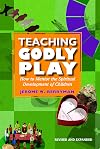
Summary: An introduction to the Godly Play approach to the Christian formation of pre-adolescent children.
I made a mistake in picking up this book. I thought this would be a discussion of play and how one might think as a Christian about the subject. So that you don’t make the same mistake, “Godly Play” is the name of an educational approach to the Christian education or formation of pre-adolescent children developed by Jerome and Thea Berryman.
That said, I’m glad to have made this show more mistake. The Christian education of children is often left to committed but poorly trained adult volunteers. One of the thing I appreciated here is that the Berrymans developed an approach to the Christian formation of children that thinks about the roles of the co-teachers (storyteller and door person), the flow of lessons, how one works with a community of children, and the setup of a classroom.
The dedication, which written shortly after the passing of Berryman’s wife, Thea, explains how they developed this approach out of their experience with Montessori education, including their training with Maria Montessori. The dedication concludes with a diagram of the Godly Play Room. Bookmark this for reference as you read the book. Then Berryman explains his use of the language of play and the idea that children might come to understand their faith through the medium of play. What he offers is a brief theology of play. An explanation follows of bringing a community of children together to play through listening, wondering, through artistic expression, feasting, and blessing. The goal of this is to form children in a Christian language that enables them to make sense of their faith for themselves.
Berryman then walks, chapter by chapter, through the flow of a Godly Play class. It begins at the threshold, where parents and children leave each other with the door person’s help. Children “get ready” to enter the circle, which involves sitting quietly on the floor with legs crossed and hands folded, resting on their ankles. When the child does this at the door, they can take a seat in the circle.
The co-teacher who is storyteller sits on the floor with the children. Berryman describes setting up the circle and presenting the story. Then comes the wondering time. This is where children are invited to ask wondering questions about the story. Along the way, Berryman also offers help in dealing with disruptions in a non-punitive fashion.
The next step involves dismissing children so they can work on their own responses to the story. Children are dismissed one at a time and helped by the door person to use art or lesson materials during this time. Examples are provided of the different ways children can “work’ during this time–really a kind of wondering play. The time concludes with clean-up, putting all materials away on the appropriate shelves.
Then the group prepares for “the feast.” The feast may be as simple as cookies and juice, prepared by volunteers. Each child has the chance to pray quietly or out loud. After prayer, they enjoy the feast, which can be a time for informal visiting with children. Then it’s time to clean up. One can see how this anticipates the Eucharist.
By then, parents are waiting. There is a process of saying good-bye to each child and to bless each other and commend them to their parents.
The final two chapters focus on growing as Godly Play teachers. The first asks, “How do you know Godly Play when you see it?” Berryman notes that both God and play must be present! He also outlines how the Godly Play curriculum uses a spiral approach to reinforce learning the Christian language. Finally, he contends that growth as a Godly Play teacher involves staying close to children.
The book serves as an introduction to the Godly Play approach of Christian education. On its own, it offers help to those who teach children. Better yet, seek out Godly Play training and use the Get Started resources and Godly Play resources to set up a classroom.
This book makes us consider how seriously do we take the Christian formation of children. Is it as carefully thought through as a regular classroom? Is teacher training and good curriculum materials offered? And are children treated as part of our community, with dignity? Whether or not a church adopts Godly Play, these are questions we must ask. show less
I made a mistake in picking up this book. I thought this would be a discussion of play and how one might think as a Christian about the subject. So that you don’t make the same mistake, “Godly Play” is the name of an educational approach to the Christian education or formation of pre-adolescent children developed by Jerome and Thea Berryman.
That said, I’m glad to have made this show more mistake. The Christian education of children is often left to committed but poorly trained adult volunteers. One of the thing I appreciated here is that the Berrymans developed an approach to the Christian formation of children that thinks about the roles of the co-teachers (storyteller and door person), the flow of lessons, how one works with a community of children, and the setup of a classroom.
The dedication, which written shortly after the passing of Berryman’s wife, Thea, explains how they developed this approach out of their experience with Montessori education, including their training with Maria Montessori. The dedication concludes with a diagram of the Godly Play Room. Bookmark this for reference as you read the book. Then Berryman explains his use of the language of play and the idea that children might come to understand their faith through the medium of play. What he offers is a brief theology of play. An explanation follows of bringing a community of children together to play through listening, wondering, through artistic expression, feasting, and blessing. The goal of this is to form children in a Christian language that enables them to make sense of their faith for themselves.
Berryman then walks, chapter by chapter, through the flow of a Godly Play class. It begins at the threshold, where parents and children leave each other with the door person’s help. Children “get ready” to enter the circle, which involves sitting quietly on the floor with legs crossed and hands folded, resting on their ankles. When the child does this at the door, they can take a seat in the circle.
The co-teacher who is storyteller sits on the floor with the children. Berryman describes setting up the circle and presenting the story. Then comes the wondering time. This is where children are invited to ask wondering questions about the story. Along the way, Berryman also offers help in dealing with disruptions in a non-punitive fashion.
The next step involves dismissing children so they can work on their own responses to the story. Children are dismissed one at a time and helped by the door person to use art or lesson materials during this time. Examples are provided of the different ways children can “work’ during this time–really a kind of wondering play. The time concludes with clean-up, putting all materials away on the appropriate shelves.
Then the group prepares for “the feast.” The feast may be as simple as cookies and juice, prepared by volunteers. Each child has the chance to pray quietly or out loud. After prayer, they enjoy the feast, which can be a time for informal visiting with children. Then it’s time to clean up. One can see how this anticipates the Eucharist.
By then, parents are waiting. There is a process of saying good-bye to each child and to bless each other and commend them to their parents.
The final two chapters focus on growing as Godly Play teachers. The first asks, “How do you know Godly Play when you see it?” Berryman notes that both God and play must be present! He also outlines how the Godly Play curriculum uses a spiral approach to reinforce learning the Christian language. Finally, he contends that growth as a Godly Play teacher involves staying close to children.
The book serves as an introduction to the Godly Play approach of Christian education. On its own, it offers help to those who teach children. Better yet, seek out Godly Play training and use the Get Started resources and Godly Play resources to set up a classroom.
This book makes us consider how seriously do we take the Christian formation of children. Is it as carefully thought through as a regular classroom? Is teacher training and good curriculum materials offered? And are children treated as part of our community, with dignity? Whether or not a church adopts Godly Play, these are questions we must ask. show less
This excellent book does two things: It provides a new and powerful model for teaching children in the Sunday School setting, and it takes the reader on a fascinating voyage into the question, "What do we really want children to learn in Sunday School?"
Jerome Berryman is an Episcopal (Anglican) priest at Christ Church Cathedral in Houston, Texas. He was previously a Presbyterian minister, and is also a trained Montessori teacher.
This Montessori background provides to the ethos of Berryman's show more Sunday School class at the Cathedral. I would love to see his room
He discerns four levels of language about God. "AH", (the deep sigh of recognition that God is with us), the insight "AHA!", and the awareness of paradox and fun in God's creativity - "HAHA!"
Berryman builds these four responses into a theology of ritual, sacred story, parable and silence and shows how these relate to developmental processes and how there is a need for balance between the four for healthy Christian living.
Back in his classroom, the Children's Center is the desert - a transparent plastic box containing sand (a piece of the desert) - where so many things happened.
I have a suspicion that many important things in our children's learning could happen if we took Fr Berryman's insights seriously - and playfully. show less
Jerome Berryman is an Episcopal (Anglican) priest at Christ Church Cathedral in Houston, Texas. He was previously a Presbyterian minister, and is also a trained Montessori teacher.
This Montessori background provides to the ethos of Berryman's show more Sunday School class at the Cathedral. I would love to see his room
He discerns four levels of language about God. "AH", (the deep sigh of recognition that God is with us), the insight "AHA!", and the awareness of paradox and fun in God's creativity - "HAHA!"
Berryman builds these four responses into a theology of ritual, sacred story, parable and silence and shows how these relate to developmental processes and how there is a need for balance between the four for healthy Christian living.
Back in his classroom, the Children's Center is the desert - a transparent plastic box containing sand (a piece of the desert) - where so many things happened.
I have a suspicion that many important things in our children's learning could happen if we took Fr Berryman's insights seriously - and playfully. show less
Berryman's Montessori style approach to religious education is amazing. Godly Play has been adapted by the Unitarian Universalists as "Spirit Play" and we love it. Recommended to educators, religious or non.
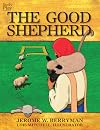
The Good Shepherd is a visual retelling of the biblical lesson as taken from The Complete Guide to Godly Play and told with revised text and original art. The book recreates the experience of hearing this core and possibly best-loved, best-known Bible story.
Lists
You May Also Like


Associated Authors
Statistics
- Works
- 48
- Also by
- 2
- Members
- 1,284
- Popularity
- #19,973
- Rating
- 4.4
- Reviews
- 11
- ISBNs
- 66
- Languages
- 3
- Favorited
- 2