
Stan C. Smith
Author of Infinity: A Bridger's Origin
Series
Works by Stan C. Smith
Tagged
Common Knowledge
There is no Common Knowledge data for this author yet. You can help.
Members
Reviews
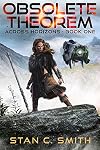
I start and stop reading more books than I finish. There are enough great books out there to last beyond my years on this earth, so that, combined with my sense of how precious time is as I get older, means I cannot justify the time spent on a book that doesn’t measure up. This demeanor also stems from my 30 years as an Indie author who is constantly polishing her craft. The work never ends, and there is no such thing as perfect, but I appreciate authors who excel at the craft. Stan C. show more Smith is one of those authors.
As an adolescent, teen, and young adult, I read lots of Robert A. Heinlein. Recently, I went back to read some of those beloved works, and realized I wasn’t quite as impressed with some of them. (Bear with me, here, I’ll circle back to the book review). I started re-reading Stranger in a Strange Land. An award-winning, and some think, quintessential work by a science fiction master. Honestly, I stopped reading it this time halfway through, because it seemed artificially padded and verbose, and ultimately, I couldn’t stand the bombastic tone that pretended to be one of the characters, but was really the narrator—which was Heinlein himself. He didn’t do that with many of his other works, especially the ones they categorize as the Juveniles. So here’s the point: if I can stop reading and put away the work of a master, whom I have admired my entire life, I can put away anyone else’s book. And when I don’t do that, it’s a significant action.
I read Obsolete Theorem in one sitting. One day. And I often read more slowly than I should because I am too busy studying the books I read. It’s hard for me to take off that editor/critic hat. But I sailed through this book, fingers full of virtual paper cuts. This book was like The Best of Heinlein meets Clan of the Cave Bear. Everything was handled with expert finesse: The grammar and mechanics and spelling (don’t recall any issues at all, but maybe that was because I was carried so quickly through the story), the plot (intriguing enough to make me download the book), the characters (authentic, quirky, relatable), the concept (adventurous, thought-provoking and exciting), the setting (unusual, vivid, visual), the descriptions (clean, succinct, and effective). Even the ending tied up the storyline neatly, while still leaving just enough intrigue to make me immediately download the next in the series, and mentally make a stack on my reading table with this author’s other work.
Notably, I am not a physicist, and I can’t say for sure how sound that science is in this book, but I’ve written some similar books, and done the research, and I’m educated enough to know that it all seems perfectly plausible, and it’s obvious the author took great pains to understand the material. I also enjoyed and appreciated that he managed to fold that complex material into the book in an easily understood way, without talking down to the reader. So often, in these theoretical and speculative fiction books, the author is found standing on a lectern, bloviating about brainy subjects, as if to say, “Look how smart I am, and how dumb you are.” There’s nothing worse that a haughty, stuffed-shirt author, but you will find none of that here.
I’m excited to be excited about a book and its author. I’ve already begun the second one, and will be reading the author’s entire catalog, whatever that may be, because he's hooked me. I can taste the metal in my mouth. If you care about intelligent, entertaining, intriguing, and well-rendered novels, this one cannot be missed. show less
As an adolescent, teen, and young adult, I read lots of Robert A. Heinlein. Recently, I went back to read some of those beloved works, and realized I wasn’t quite as impressed with some of them. (Bear with me, here, I’ll circle back to the book review). I started re-reading Stranger in a Strange Land. An award-winning, and some think, quintessential work by a science fiction master. Honestly, I stopped reading it this time halfway through, because it seemed artificially padded and verbose, and ultimately, I couldn’t stand the bombastic tone that pretended to be one of the characters, but was really the narrator—which was Heinlein himself. He didn’t do that with many of his other works, especially the ones they categorize as the Juveniles. So here’s the point: if I can stop reading and put away the work of a master, whom I have admired my entire life, I can put away anyone else’s book. And when I don’t do that, it’s a significant action.
I read Obsolete Theorem in one sitting. One day. And I often read more slowly than I should because I am too busy studying the books I read. It’s hard for me to take off that editor/critic hat. But I sailed through this book, fingers full of virtual paper cuts. This book was like The Best of Heinlein meets Clan of the Cave Bear. Everything was handled with expert finesse: The grammar and mechanics and spelling (don’t recall any issues at all, but maybe that was because I was carried so quickly through the story), the plot (intriguing enough to make me download the book), the characters (authentic, quirky, relatable), the concept (adventurous, thought-provoking and exciting), the setting (unusual, vivid, visual), the descriptions (clean, succinct, and effective). Even the ending tied up the storyline neatly, while still leaving just enough intrigue to make me immediately download the next in the series, and mentally make a stack on my reading table with this author’s other work.
Notably, I am not a physicist, and I can’t say for sure how sound that science is in this book, but I’ve written some similar books, and done the research, and I’m educated enough to know that it all seems perfectly plausible, and it’s obvious the author took great pains to understand the material. I also enjoyed and appreciated that he managed to fold that complex material into the book in an easily understood way, without talking down to the reader. So often, in these theoretical and speculative fiction books, the author is found standing on a lectern, bloviating about brainy subjects, as if to say, “Look how smart I am, and how dumb you are.” There’s nothing worse that a haughty, stuffed-shirt author, but you will find none of that here.
I’m excited to be excited about a book and its author. I’ve already begun the second one, and will be reading the author’s entire catalog, whatever that may be, because he's hooked me. I can taste the metal in my mouth. If you care about intelligent, entertaining, intriguing, and well-rendered novels, this one cannot be missed. show less
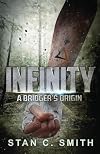
I liked the premise, the writing, the characters, and the action. However, if only living tissue can go across a bridge, meaning a loss of all hair, how do teeth survive the trips? How about fingernails and toenails? The body has a lot of tissue that isn't necessarily living. Wouldn't the body "decompress" when all of the non-living liquids and vapors suddenly go missing?
When Jeffrey Lord's Richard Blade series had a similar premise, they actually developed some weapons made up of living show more tissue (but maybe there it had to be surrounded by living tissue?). I would think that should have been a priority before doing any "bridging". Even simply bringing along something like living bamboo plants that could easily be formed into spears. Would some variation of razor sharp coral reef work?
Maybe these are addressed later in the series. I will be continuing...so the free prequel was a success in that regard. :) show less
When Jeffrey Lord's Richard Blade series had a similar premise, they actually developed some weapons made up of living show more tissue (but maybe there it had to be surrounded by living tissue?). I would think that should have been a priority before doing any "bridging". Even simply bringing along something like living bamboo plants that could easily be formed into spears. Would some variation of razor sharp coral reef work?
Maybe these are addressed later in the series. I will be continuing...so the free prequel was a success in that regard. :) show less

The literary equivalent of a movie with 15 minutes of plot and an hour and a half of explosions. But this time the explosions are really big bugs trying to kill people. I’m not against mindless entertainment (I love explosions) and I dislike bugs, but I felt a bit bad for all the giant bugs that died in the making of this plot. Perhaps because they were large enough that they became less “bugs” and more “creepy but possibly misunderstood animals”. I liked the ending of this one but show more I’m not quite sure I want to continue the series as each book is pretty much drama with just a tiny advancement of the overall story but this gives me a nice, complete potential end. show less
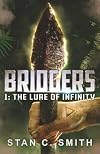
Bridgers 1 gives a well written ride into interesting scenarios - present day humans without any technology encountering possible past Earth with its plants and creatures. Lively survival adventures in nature make this book a gripping read. The characters, plot and pace do not pause for much introspection although the concept of the book raises vexing issues to ponder after the reading fun has ended.
You May Also Like


Statistics
- Works
- 31
- Members
- 270
- Popularity
- #85,637
- Rating
- 3.8
- Reviews
- 31
- ISBNs
- 10